
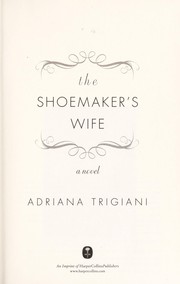
The Shoemaker's Wife
2,261-word summary 10 min read 496 pages in the book
- First published
- 2012
- Publisher
- Harper
- Pages
- 496
- ISBN
- 9780061257094
Reading options
What's inside (9 sections)
I picked this one up on a recommendation from someone who said it was the book Trigiani was "born to write," and it turns out there is a reason for that. The story came from her own family, from Italian immigrant grandparents whose lives crossed an ocean and ended up in Minnesota. That origin shows in the amount of detail she pours into the daily work, the shoemaking and the sewing, because this is material she inherited rather than researched. It is a long book, 496 pages in the first Harper hardcover from 2012, and it covers roughly four decades. By the last page I felt I had lived through all of them with Enza and Ciro. I also felt the strain of a story trying to hold quite so much.
A valley, a grave, and a sent-away boy
The book opens in 1905 in the Italian Alps, in a valley where the Ravanellis and the Lazzaris live within sight of each other. Ciro Lazzari is ten when his father Carlo dies in a mining accident in Minnesota, where Carlo had gone to earn money for the family back home. His mother Caterina is undone by the news. She leaves Ciro and his older brother Eduardo at the convent of San Nicola in Vilminore, promising to come back when she can afford to keep them. She never does. That early abandonment hangs over Ciro for the rest of the book, and it explains a lot about why he is so hungry for a home of his own.
The convent years are drawn with the patient detail of someone who has heard these stories at the kitchen table. The boys learn the rhythms of church school, know which nuns are kind and which are strict, and slowly form their own opinions about the world beyond the valley. Ciro grows into a boy who notices girls and takes chances, while Eduardo, the elder, is steadier and more drawn to the life of the church. Their mother's absence is a thing they talk around rather than name, and Trigiani is good on the way children build a story about a parent who has gone away and never come back.
The boys grow up with the nuns, and Ciro turns into a restless, flirtatious teenager. He falls for a girl named Concetta and is crushed to learn she is involved with Don Gregorio, the priest. When Ciro tells the nuns, they protect him as best they can, but everyone knows the priest can make his life miserable. The solution they arrive at is to get him out of the village. Eduardo is sent toward Rome and the clergy. Ciro is sent to New York to apprentice with a shoemaker.
Before he goes, there is the scene that starts everything. Ciro is sent up the mountain to Schilpario to dig the grave of a girl who has died. He keeps his distance while the family buries her, then sets to work once they leave. The girl's sister, Enza Ravanelli, comes back to the grave alone. She talks about her sister Stella, about her own guilt over her death, and Ciro, who knows something about being left, takes her in his arms. She lets him kiss her. It is a brief, almost accidental meeting, the kind of moment a lesser writer might stretch into a whole courtship. Trigiani lets it be brief, which is why it stays with you.
Then Ciro is gone, and Enza goes looking for him at the convent only to be told he has left. The nuns will not say where. She is left with the memory of a boy who held her at a grave and then vanished, and Trigiani does not rush to resolve it. The long separations in this book are part of its design, and this is the first of them.
Enza follows across the ocean
Not long after, Enza's family loses their house, and she talks her father Marco into going to America with her. The plan is to earn wages and send money home until they can rebuild. She gets gravely ill on the crossing and wakes in a Manhattan hospital, where doctors tell her she can never make another sea voyage. That detail matters later, because it becomes the reason she cannot simply go home when her life in America goes wrong.
In the hospital chapel she runs into Ciro, who is being treated for an injury to his hand from the shoe shop. They are delighted to see each other. Then his girlfriend arrives to collect him, and Enza's hope collapses. This is the pattern of their relationship for years: they find each other, and something intervenes.
What follows is a long stretch where they live separate lives in the same city. Trigiani is patient here in a way that sometimes tests the reader. Ciro works the repair cart, first in Little Italy and then out in Queens, with his friend Luigi. Enza labors in a sweatshop in Hoboken for the Buffa family, where a neighborhood man attacks her and Laura, the friend she makes there, saves her with a pair of sewing scissors. The two women flee Hoboken and land at the Milbank House in Greenwich Village. It is one of the stronger passages in the book, because the fear is concrete and the escape is earned rather than arranged.
New York: shoe carts and opera costumes
Enza's threading skill gets her into the costume shop at the Metropolitan Opera, where Miss Meier and Serafina Ramunni hire her and Laura. This is the part of the book that sparkles, and I understand why reviewers keep coming back to it. Enza sews for Enrico Caruso, converses with him while she fits him, and is asked to make gnocchi for the cast. For a young immigrant woman who has spent years being invisible, being valued for a craft she loves is its own kind of freedom. Trigiani clearly loved writing these scenes.
Ciro, meanwhile, is learning a trade. The shoemaker's shop is one of the quiet strengths of the book, and Trigiani writes about leather, lasts, and repair work with the same care she gives to Enza's needlework. It is honest work that he comes to respect, and it gives him a way to imagine a future in a country that does not yet want him. And yet he is also drifting. He thinks about Enza but keeps putting off seeing her, eventually writing her a letter to buy time. He considers enlisting. The two keep missing each other by a few weeks, and when they do meet, he never quite does what he promises. I found this frustrating in the moment, which I think is the point. Ciro is not a bad man, but he is young and easily distracted, and the book wants you to feel the cost of his hesitations.
Enza starts seeing a baritone named Vito Blazek. With him she experiences a life she had not imagined for herself, with nice dinners, real attention, and the chance to think about her own wants. Later, when Caruso dies in 1921, she grieves him as a mentor and feels the pull of Manhattan again. This is also when the book starts to widen its cast and slow its pace, because Trigiani is tracking a whole immigrant world rather than just two people.
The war, and the wedding that almost happened
Ciro enlists and reports to New Haven before shipping out to the front in France. The war sections are grim without being sensational. He writes to Eduardo, befriends fellow soldiers, and tries to stay alive in a conflict he does not believe in. The lasting consequence is physical: he inhales mustard gas, and the damage shows up decades later.
Before he leaves, he sees Enza on the street in his uniform. She confronts him about the letter, refuses his offer to write while he is away because she does not trust him to follow through, and gives him a kiss on the cheek rather than the kiss he wants. It is a small, sharp scene and one of the best in the book. Reunions here are never simple.
While he is overseas, Vito proposes, and Enza accepts. She is done waiting for a man who cannot commit. When Ciro returns, he stops in Rome and finally finds Eduardo, who gives him a note their mother wrote explaining why she left them. That note closes a wound that had been open since the first chapter. Then Ciro goes back to New York convinced of one thing: Enza is the only life he wants. He finds her outside the church where she is about to marry Vito, confesses, and talks her into taking off the ring. She argues that she owes him nothing, then admits she has always loved him. It is a sweeping romantic gesture, and it works because Trigiani has made us wait for it across hundreds of pages.
Minnesota and the Caterina Shoe Company
Marco comes to New York to take Enza home, but Ciro wins him over in a long conversation about his work and his intentions, and Enza's father gives his blessing. In December 1918 they marry. They decide not to stay in a city already full of shoemakers. Instead they head for the Iron Range in Minnesota, where Ciro's father died and where a mining town will actually need their trade.
They travel with Luigi and his new wife Pappina, and on the train they plan the Caterina Shoe Company, named for the mother Ciro barely knew. On the way, Enza tells Ciro about the assault in Hoboken, the scar on her face, and the fear she has carried. It is the most intimate the book gets, and it lands because Trigiani has earned the trust.
In Minnesota a businessman named Mel Butorac leases them space and advises the two couples to split up, one shop in Hibbing and one in Chisholm. They take the advice, and the split gives each pair its own place to build. The Iron Range is a world of miners and cold and long distances, and the fact that Ciro's own father died in a Minnesota mine gives their arrival an uneasy weight. They are going back to the place that took him, but this time they are the ones with a trade to offer. Enza gives birth to their son Antonio in July 1919. Their friend Laura turns up heartbroken over Colin Chapin, the man who will not marry her because his mother disapproves, and Colin follows her to Minnesota and proposes. Later, Pappina dies, and Enza takes in their daughter Angela. The book keeps adding people to this household, and there is a warmth to the accumulation that I enjoyed.
The last years and the cost of survival
The ending asks the reader to accept a great deal. Ciro develops cancer traced to the mustard gas he inhaled in the war and is told he has a year to live. He grieves the life he will leave behind, Enza and young Antonio, and dies. Enza raises Antonio and Angela, and when Antonio goes off to fight in the Second World War and Angela moves to New York to study music, the house empties out. Both come back, fall in love, and marry. The final scene is Enza in her room on the night of their announcement, studying her own wedding photograph and thinking about everything Ciro gave her. It is a deliberately quiet close to a very loud life.
Where the book loses its footing
I want to be honest about what did not work for me. The first section, in the Alps, is the best part of the novel, full of sharp observation and a real sense of place. Once everyone reaches America, the pace slows and the focus scatters. There are a lot of characters, and Trigiani follows most of them for a while before setting them aside. The coincidences pile up too, from chance meetings in hospital chapels to running into a former lover outside a church on his wedding day. This is the idiom of epic historical romance, and if you want that, it delivers. If you want restraint, you will find plenty to be impatient with.
The ending in particular feels arranged. Ciro's death from a war gas injury decades later is heartbreaking, but the machinery behind it is obvious, and the final pairing of Antonio and Angela ties everything up a little too neatly. There is also a habit of resolving emotional knots with a convenient letter or a timely arrival, so that difficulty is often removed for the characters rather than worked through by them. The book is at its best when it stays with the daily work of two people making a life. It is at its weakest when it insists on a grand design.
Still, I closed it glad I had read it. Trigiani writes about craft and immigrant labor with respect, and she understands that love is often a matter of showing up after the feeling has been tested. The title is earned: this is a book about what a wife carries, and about how a man's trade becomes the shape of a family's life. I would hand it to someone who enjoys long, warm historical sagas and does not mind being swept along. I would be careful with a reader who wants a tighter novel, because Trigiani has written something bigger and messier than that.
FAQ
Is The Shoemaker's Wife based on a true story?
It is historical fiction inspired by Adriana Trigiani's own family history, drawn from the lives of her Italian immigrant grandparents. The story grew out of that heritage rather than being a documented family record.
When and where does the story take place?
It begins in the Italian Alps in 1905, moves to New York and New Jersey, and ends in the Iron Range of Minnesota, spanning from the early 1900s into the years of the Second World War.
Does the book have a happy ending?
Enza and Ciro marry and build a life together, but Ciro dies of cancer linked to mustard gas exposure during the war. The closing chapters focus on Enza raising their son and the next generation finding love.
Similar books
The Stationery Shop
Two teenagers fall in love in a Tehran stationery shop in 1953, are separated by the coup and a family deception, and meet again sixty years later.
2,024-word summary · 9 min read
The Loneliness of Sonia and Sunny
Two Indian families, a failed arranged match, and years between Allahabad and New York shape a slow, sprawling romance.
2,092-word summary · 9 min read
My Policeman
In 1999 a retired teacher writes a confession to the dying man her husband once loved, unpacking a 1950s Brighton love triangle that cost three people…
2,450-word summary · 11 min read
Birdsong
A love affair in Amiens before the First World War and a granddaughter's search through encoded journals decades later, joined by the tunnels of the Somme.
2,041-word summary · 9 min read

The Shadow Sister
Star D'Apliese steps out of her sister's shadow and follows a bookshop clue into the Edwardian life of Flora MacNichol, a woman who gave up love for duty.
2,260-word summary · 10 min read
The Lowland
Two brothers grow up beside a marshy lowland in Calcutta, and the choices of the younger one draw the older into a life of duty, distance, and quiet grief that…
2,213-word summary · 10 min read
Loving Frank
Mamah Borthwick Cheney leaves her family for Frank Lloyd Wright, and their affair becomes a public scandal that ends in tragedy at Taliesin.
2,034-word summary · 9 min read
A Long Petal of the Sea
A pregnant widow and her brother-in-law marry for passage on a ship of Spanish exiles bound for Chile, then spend decades building and losing homes together.
2,016-word summary · 9 min read
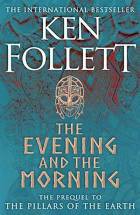
The Evening and the Morning
Edgar, Ragna, and Aldred build a bridge town that becomes Kingsbridge around 997, facing Viking raids, harsh law, and a scheming bishop in Follett's prequel.
2,833-word summary · 13 min read
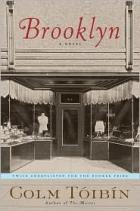
Brooklyn
Eilis Lacey leaves Enniscorthy for Brooklyn boarding house work, love with Tony, then a home death forces divided choice.
2,143-word summary · 10 min read

Evidence of the Affair
Two strangers trade letters after learning their spouses are having an affair in 1970s California.
3,000-word summary · 13 min read
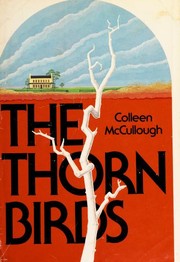
The Thorn Birds
Meggie loves priest Ralph across decades on Drogheda sheep station.
2,280-word summary · 10 min read
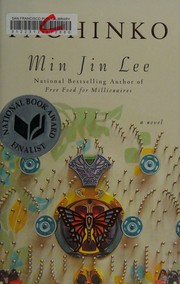
Pachinko
Four generations of a Korean family in Japan, from Sunja's fall and brave marriage to pachinko parlors, discrimination, and sons who choose different ways to…
2,210-word summary · 10 min read

The Land in Winter
In the West Country during the Big Freeze of 1962, two young couples are shut in together, and the cold draws out every buried want.
2,265-word summary · 10 min read

Of Love and Other Demons
In colonial Cartagena, a twelve-year-old girl bitten by a rabid dog is locked in a convent, where the priest sent to exorcise her falls in love.
2,258-word summary · 10 min read
The Wrong Bride
In Catharina Maura's Windsors opener, model Raven Du Pont takes her absent sister's place at the altar beside billionaire Ares Windsor, the man she has…
2,397-word summary · 11 min read
The Paying Guests
A widowed mother and her unmarried daughter take in lodgers in 1922 south London, and a secret affair between Frances and Lilian pulls them into a murder case.
2,661-word summary · 12 min read
The Love of My Life
Emma loves her husband Leo and their little girl. Then Leo, an obituary writer, starts filing the facts of her life, and the woman he thinks he married begins…
2,803-word summary · 12 min read
The Binding
In an alternate Victorian England, binders remove unbearable memories into books, and a young apprentice discovers his own past was erased from him.
2,036-word summary · 9 min read

The Art of Hearing Heartbeats
When a New York lawyer vanishes, his daughter follows an old love letter to Burma, where a stranger narrates the story of the father she never knew.
2,950-word summary · 13 min read
Secrets of a Summer Night
Four London wallflowers pledge to find one another husbands, but penniless Annabelle Peyton needs money, and Simon Hunt offers it on terms she almost accepts.
2,250-word summary · 10 min read
Roomies
A Broadway archivist with a crush on a subway busker marries him to solve his visa problem, and finds the roommates arrangement harder to keep practical than…
2,030-word summary · 9 min read
Possession: A Romance
A London Library discovery sends two scholars chasing a secret Victorian love affair, in a Booker-winning novel of invented letters, poetry and the race to own…
2,394-word summary · 11 min read

Marina
A fifteen-year-old boarder in 1979 Barcelona follows a singing voice into a ruined mansion and finds a girl, a watch, and a mystery the city has kept buried…
2,352-word summary · 10 min read

Love Her or Lose Her
Rosie Vega wants more from life than a perfume counter and a silent marriage, so she asks her stoic husband Dominic to try therapy.
2,433-word summary · 11 min read
Chain of Iron
In Edwardian London, a fake marriage, a murderer stripping Shadowhunters of their runes and a dead brother in a glass coffin draw the Herondales into a bargain…
2,029-word summary · 9 min read
Carnegie's Maid
An Irish immigrant answers to a dead woman's name and lands a job as lady's maid in Andrew Carnegie's Pittsburgh household, where her mind for business draws…
2,271-word summary · 10 min read
Broken Country
A historical love story built like a thriller: a farmer's wife in 1968, a son lost two years before, and the return of the man who once broke her heart.
2,461-word summary · 11 min read
Bringing Down the Duke
In 1879 Oxford, a scholarship student and suffragist is tasked with winning over a powerful duke, only to be undone by the man she must persuade.
2,456-word summary · 11 min read

At the Water's Edge
A Philadelphia socialite follows her husband and his friend to wartime Scotland to hunt the Loch Ness monster, and finds herself instead: a novel of friendship…
2,906-word summary · 13 min read