
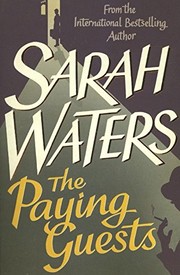
The Paying Guests
2,661-word summary 12 min read 566 pages in the book
- First published
- 2014
- Publisher
- Virago
- Pages
- 566
- ISBN
- 9780349004587
Reading options
What's inside (10 sections)
I came to this book after Fingersmith, which is a hard act to follow. Sarah Waters published The Paying Guests in 2014, her sixth novel, and it moves twenty years forward from the Victorian London of her best known book. The first edition came from Virago in Britain and runs a little over five hundred pages. It is set in 1922, in a large, quiet house on Champion Hill in south London, and it begins with a family that has run out of money and men. I had heard it called her most grown-up book and also her most claustrophobic. Both turned out to be true. It takes its time, then turns into a story about a murder trial and the awful gap between what a person did and what a court can prove.
A house with the men gone
Frances Wray is around thirty, unmarried, and living with her mother, Mrs Wray, in a villa that used to hold a full household. The men are gone. Frances's brothers, Noel and John Arthur, died in the Great War, and her father is dead too, having left debts where his daughters expected security. The servants have gone as well, which means Frances does the scrubbing, the cooking and the heavy work herself while her mother fussily guards the remains of their gentility. Mrs Wray is embarrassed by their fall in status. Frances is more practical, but she is also angry, and a visit to her father's grave early on brings that anger to the surface. She resents him for leaving them in this fix.
The money problem has one solution: rent out the upstairs rooms. So Frances and Mrs Wray take in Lilian and Leonard Barber, a young married couple of the clerk class. The Barbers are not poor, exactly, but they are not the sort of people the Wrays once moved among. Leonard works in an office and likes to think of himself as a man of the world. Lilian is his wife, flashy and quick with a cigarette, and her arrival disturbs the stillness of the house at once. Frances feels the relief of the rent money and the intrusion of strangers at the same time.
What struck me first was how small Frances's life has become. She visits Christina, a woman she loved years earlier, who now lives an independent life with a partner called Stevie. Christina and Stevie have the freedom Frances gave up when she stayed home to look after her parents. That contrast hangs over the early chapters. Frances also has a past in political activism that she speaks about only in passing, and she keeps her earlier romance with a woman largely hidden. Warren is not a word anyone in this house would say aloud, but the book builds its whole first half out of things nobody says aloud.
Lilian moves in and the house wakes up
The Barbers bring gramophone records, laughter and a kind of easy physical confidence that the Wrays lack. Lilian drifts into the kitchen, borrows a chair, jokes with Frances and talks about her family. She is the daughter of a woman called Mrs Viney and has sisters, including one named Vera, and a crowd of relatives who come and go. The class difference between the women is real, but cigarettes and shared chores wear it down. Frances finds herself confessing that her present life is nothing like the one she once imagined.
Then there is Leonard. He makes overfamiliar remarks, touches Frances in the garden, and seems unsure himself whether he is flirting or being friendly. Frances kills a badly injured mouse caught in a trap one afternoon, a small, grim scene that stays with you, and shortly after overhears an unloving exchange between the Barbers that makes her wonder what their marriage is actually like. The household's uneasy routine is punctured by a dinner arranged by Mrs Playfair, with matchmaking implications Frances does not welcome, and by an evening of drinking and a game of Snakes and Ladders that acquires humiliating strip-game rules. Leonard's cruelty toward Lilian shows through his sociability, and Frances realises that by joining in she has helped humiliate her.
Frances and Lilian grow closer in the gaps. They picnic, read, share chores and start using first names. Lilian gives Frances a makeover and cuts her hair before a family party. Emboldened, Frances tells Lilian that the great romance of her life was with a woman, not a man. Lilian recoils, and Frances is left ashamed, certain she has wrecked the friendship. The withdrawal is not simple disgust, as she later learns. Lilian has her own history, including a marriage entered while she was pregnant and a baby who died at birth. The book is patient about how these women circle each other before they touch.
The affair, hidden in plain sight
At a party held by a woman called Netta, Frances finally admits to herself that she wants Lilian. They come home to find Leonard injured after an attack near the house. He claims not to know who hit him, and Frances tends his wounds. That attack matters later, but it is separate from what eventually happens to him. Later that night, alone downstairs, Frances and Lilian kiss and become lovers.
The affair is carried out in the cramped spaces of a shared house. The women steal moments around Leonard's shifts and Mrs Wray's movements, and the danger of discovery gives the middle section its pulse. Frances buys Lilian a small china ornament of a caravan and pony as a private emblem of what they are to each other. She tells Christina about the relationship, and Christina is worried, because she can see how much Frances is risking. Mrs Wray nearly catches them together and Frances improvises a clumsy innocent explanation. Her mother objects to the closeness and to the neglected housework, without knowing the half of it.
Frances becomes jealous of Leonard's ordinary marital access to the woman she loves. The two women talk about leaving and setting up a home together, but Frances will not abandon her mother and Lilian is frightened of upheaval. Lilian is also afraid that Frances will one day leave her the way she believes Frances left Christina. Before the Barbers go away, the women go roller-skating and revisit the idea of a shared future. While they are apart Frances waits anxiously for a letter, and a visit from Edith, the woman her dead brother John Arthur was once engaged to, now promised to someone else, rubs in the difference between a recognised future and a hidden love. Lilian's letter finally reassures her that the feeling is returned. When the Barbers come back, Frances urges Lilian to leave Leonard. Lilian says she sometimes wishes he were dead, and then reveals the obstacle to any plan: she believes she is pregnant.
A pregnancy, a pill, and a death in the lane
The pregnancy is Leonard's. Lilian says he failed to take care during sex, and she is determined to end it. She obtains Dr Ridley's Pills, a patent remedy that does what she wants but at a terrible cost. The abortion brings severe pain and bleeding, and Frances nurses her while Mrs Wray is out. Then Leonard comes back early and sees the blood on the bedding and in the basin. What begins as a suspicion of abortion turns into accusations of infidelity, and Lilian asks for a separation. When Frances reveals that she is Lilian's lover, Leonard turns on her violently.
Lilian strikes him from behind with a heavy stand-ashtray and fatally injures him. What happens next is the part I found hardest to read, not because of the violence but because of the calm. Instead of calling for help, the two women carry Leonard's body out into the lane, arrange his head by a stone so that it looks as if he fell, and clean up and destroy what they can before Mrs Wray gets home. Waters does not sensationalise this. She writes it with a flat, practical attention to detail that made me feel complicit, as though I were standing in the room watching them decide. It is the book at its most claustrophobic, and also at its most alive.
This is where Waters's own research shows. She has said that while gathering detail about interwar domestic life she came across real murder cases, those of Edith Thompson and Frederick Bywaters in 1922 and Alma Rattenbury and Percy Stoner in 1935, each involving a husband, a wife and a younger lover, where a moment of reckless violence ruined nearly everyone. She wondered what would change if the lover were a woman. You can feel that question driving the plot, though the book never stops being a novel about two particular people in one particular house.
The investigation closes in
Constable Hardy brings the news that Leonard has been found, and Frances goes with Lilian to identify the body. What could have passed for an accident starts to look like homicide. Sergeant Heath and Inspector Kempe question the women, who hide both the affair and the truth about the death. Kempe reveals that Leonard never reported the earlier attack, which means that story was another of his inventions. Lilian is still physically unwell, and a doctor puts it down to a miscarriage brought on by the shock of her husband's death, which conveniently conceals the abortion.
The cover story is tested again and again. The inquest makes them repeat their false account. Leonard's friend Charles, usually called Charlie, Wismuth supplies a story about their movements that Frances knows cannot be true, because Leonard was already dead at the time. Kempe asks for hair samples and goes through Leonard's possessions. In one frightening moment Lilian's sister Vera finds the stand-ashtray behind the sofa and sets it out in plain view, and the police still do not recognise it as the weapon. A couple report hearing noises in the lane while the women were moving the body. Kempe learns that Lilian stands to gain from a life insurance policy Leonard had recently enlarged, and Frances begins to wonder whether her lover's motives were more complicated than she assumed. Lilian considers confessing, and Frances talks her out of it.
The noose tightens from an unexpected direction. After Leonard's funeral, a man called Spencer Ward is arrested. Charlie's revised account reveals that Leonard had been having an affair with Billie Grey, the girlfriend of Ward, and that Ward was the man who attacked Leonard in the first place, which explains why Leonard was reluctant to involve the police. Lilian admits she already knew about her husband's infidelity. Frances starts to suspect that revenge, money or a clean escape might have been part of Lilian's reasoning, though the book is careful to leave that as Frances's suspicion rather than a settled fact. What is certain is that an innocent man may suffer for something the two women did.
A man in the dock who did not do it
At the police court, the case against Ward takes shape. The proceedings drag up the affairs involving Leonard, Charlie and the Grey sisters. Ward admits the earlier assault and admits he threatened Leonard, but he denies the killing. The police produce a bloodstained cosh as the murder weapon. His manner and his history make him an unsympathetic figure, and his first alibi is weak. Frances, who knows exactly what happened in the lane, watches all of this with a dread I found almost unbearable. Ward's violence and jealousy are real, and neither makes him guilty of this particular murder. Kempe waves her doubts away and presses ahead.
As the case moves toward the Old Bailey, the relationship between the two women comes apart. Frances obsesses over Lilian's motives, destroys the small reminders of their romance, and suffers a nervous collapse. Lilian comes back for her belongings and offers overdue rent paid out of the insurance money, and Frances treats the payment as something that could either incriminate or buy her. Their confrontation ends in separation. Meanwhile the medical evidence and the supposed weapon look worse for Ward, and he is sent to trial for murder.
At the trial Lilian gives evidence for the prosecution and Frances sits watching. The prosecutor, Humphrey Ives, lays out Ward's jealousy, his threats, the earlier attack and the cosh. His defence counsel, Tresillian, picks at the forensic links, pointing out that the blood and the hair do not prove Ward killed Leonard. Ward insists he is innocent. The turning point comes when a veteran neighbour corroborates that Ward was at home on the night of the killing, having stayed quiet at first because admitting his own whereabouts would have exposed a deception at work. Frances thinks about confessing as the risk of conviction grows. Then the jury returns a verdict of not guilty. The women have said nothing, so the killer and her accomplice walk free, and the policemen who believe they have failed the victim never learn how close they were to the truth.
The walk to Blackfriars Bridge
The ending is quieter than the trial. Frances leaves the Old Bailey believing Lilian has turned away from her. She walks beside the river to Blackfriars Bridge and, in a bleak few pages, thinks about ending her life. She sits down instead. Lilian follows and finds her there, and they talk. Frances admits her shame and her fear that Lilian can no longer bear to look at her. Lilian says she regrets what has happened but does not regret kissing Frances in the first place. They are still together as the light fades, with no promise of a future and no guarantee of happiness. It is a reconciliation with the dust still in the air, and it felt exactly right to me. A neat resolution would have been a lie after everything these two have put each other through.
What works and what grates
This is not a book without faults. Hannah Britt in the Daily Express said the first third could be much shorter, and I understood her point. Waters spends a long time on the rhythms of the household, on meals and errands and small embarrassments, before the affair really gathers speed. I like that material, but I can see why a reader waiting for the story to start would get restless. Rachel Cusk, writing in the Guardian, went further and disliked the book's period mannerisms, its characters forever colouring and crimsoning and putting themselves tidy, and thought the descent into melodrama turned an engaging literary exercise into a soap opera. There is something to that complaint. The trial section is engineered, and people behave in ways that suit the machinery of the plot rather than their own established selves. Arifa Akbar in the Independent found it less imaginative than Fingersmith, and on pure plot invention I would agree.
What kept me with it, though, is the physical attention Waters brings to desire and to domestic work. Lucy Daniel in the Telegraph wrote that her characters recede from one another even as they become more entangled, and that seems to me the whole point. Frances and Lilian share a bed and still misread each other completely. The book is shortlisted for the Baileys Women's Prize for Fiction and was named fiction book of the year by the Sunday Times, and the praise is mostly deserved. It is a love story that understands how much a secret can cost, and a crime story that refuses the easy comfort of solving anything. I would give it to a reader who likes their historical fiction slow, sensual and morally uncomfortable. I would keep it away from anyone who wants the neat turns of Fingersmith or a courtroom finale that ties every thread into a bow. Neither of those books is here, and the book is better for knowing it.
FAQ
Is The Paying Guests based on a true story?
No, but Waters drew on real 1920s murder cases, including those of Edith Thompson and Frederick Bywaters and of Alma Rattenbury and Percy Stoner, for period detail and atmosphere.
Who is on trial in The Paying Guests?
It is Spencer Ward, a man who did not kill Leonard Barber. Lilian and Frances are never charged, and the real killer walks free.
Does the book have a happy ending?
Only a qualified one. Frances and Lilian are reconciled beside the river after Ward's acquittal, but guilt, damage and uncertainty all remain.
Similar books
Fingersmith
A thief plots to cheat an heiress, then the scheme flips twice in Victorian London.
2,532-word summary · 11 min read

The Luminaries
Eleanor Catton's Booker-winning novel drops a young prospector into an 1866 New Zealand gold town where twelve men untangle a web of hidden gold, murder and…
2,949-word summary · 13 min read
Possession: A Romance
A London Library discovery sends two scholars chasing a secret Victorian love affair, in a Booker-winning novel of invented letters, poetry and the race to own…
2,394-word summary · 11 min read
My Policeman
In 1999 a retired teacher writes a confession to the dying man her husband once loved, unpacking a 1950s Brighton love triangle that cost three people…
2,450-word summary · 11 min read
The Christie Affair
Agatha Christie vanishes for eleven days in 1926, and her husband's mistress claims to know why. Nan O'Dea's account runs from an Irish convent to a Yorkshire…
2,384-word summary · 11 min read

Last Night at the Telegraph Club
The 2021 National Book Award winner follows Lily Hu, a Chinese American teenager in 1954 San Francisco, as she falls for Kath and learns what it costs to be…
2,336-word summary · 10 min read
Notes on an Execution
Ansel waits on death row while three women carry what he broke.
2,527-word summary · 11 min read
The Song of Achilles
Song of Achilles retold: Patroclus and Achilles from boys to Troy, love and war in Miller prose.
1,925-word summary · 9 min read

There Will Be Bodies
Digging out a villa buried by Vesuvius, Flavia Albia finds chained corpses and a death someone tried to hide for ten years.
2,152-word summary · 10 min read
The Hangman's Daughter
In 1659 Bavaria, a hangman ordered to torture an innocent midwife instead investigates the deaths of children marked with a strange tattoo.
2,523-word summary · 11 min read

Of Love and Other Demons
In colonial Cartagena, a twelve-year-old girl bitten by a rabid dog is locked in a convent, where the priest sent to exorcise her falls in love.
2,258-word summary · 10 min read
The Pull of the Stars
Over three days in a Dublin maternity ward in 1918, a nurse, a suffragette doctor on the run and a young volunteer face the flu, childbirth and unexpected love.
2,578-word summary · 11 min read
The Paris Express
Emma Donoghue turns the real 1895 Montparnasse rail disaster into a crowded historical thriller, following a bomb-carrying anarchist and a carriage of…
2,785-word summary · 12 min read

The Kitchen God's Wife
Amy Tan's second novel pairs a San Jose speech therapist with her Chinese mother, whose account of war, an abusive husband, and a narrow escape comes out in a…
2,896-word summary · 13 min read
The Binding
In an alternate Victorian England, binders remove unbearable memories into books, and a young apprentice discovers his own past was erased from him.
2,036-word summary · 9 min read
Smokin' Seventeen
Stephanie's bonds office is a motor home on a construction site where dead bodies keep turning up, and the killer seems to know her name.
2,342-word summary · 10 min read
Sizzling Sixteen
Stephanie Plum has five days to raise nearly $800,000 when her cousin Vinnie is kidnapped over a gambling debt, and the only plan involves an alligator and two…
2,533-word summary · 11 min read

Marina
A fifteen-year-old boarder in 1979 Barcelona follows a singing voice into a ruined mansion and finds a girl, a watch, and a mystery the city has kept buried…
2,352-word summary · 10 min read

Explosive Eighteen
Stephanie Plum flies home from a ruined Hawaii trip to find her seatmate murdered and a photograph that has the FBI, fake agents and a killer on her trail.
2,393-word summary · 11 min read

Endling
A Ukrainian scientist breeds endangered snails from her van and funds the work by posing as a mail-order bride, until a kidnapping plot meets the outbreak of…
3,041-word summary · 14 min read
Broken Country
A historical love story built like a thriller: a farmer's wife in 1968, a son lost two years before, and the return of the man who once broke her heart.
2,461-word summary · 11 min read
Bringing Down the Duke
In 1879 Oxford, a scholarship student and suffragist is tasked with winning over a powerful duke, only to be undone by the man she must persuade.
2,456-word summary · 11 min read
Birdsong
A love affair in Amiens before the First World War and a granddaughter's search through encoded journals decades later, joined by the tunnels of the Somme.
2,041-word summary · 9 min read
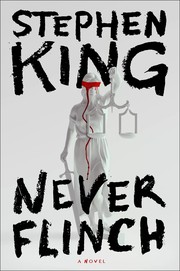
Never Flinch
Holly Gibney works two cases at once: a killer promising fourteen deaths and a threat against a feminist writer's lecture tour. King braids them into a…
2,245-word summary · 10 min read
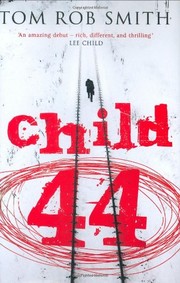
Child 44
Tom Rob Smith's 2008 debut follows Soviet secret policeman Leo Demidov as he hunts a child killer in a country that officially has no crime.
2,428-word summary · 11 min read

Atmosphere
A 1984 shuttle disaster opens this love story between two NASA astronauts who must hide their relationship. Reid builds toward the radio call that changes…
2,261-word summary · 10 min read
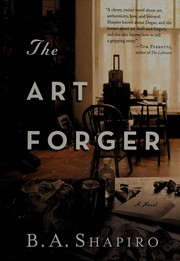
The Art Forger
A disgraced Boston painter agrees to copy a Degas stolen from the Gardner Museum, then begins to suspect the original she is copying is itself a forgery.
2,117-word summary · 9 min read

Anatomy: A Love Story
In 1817 Edinburgh, a noblewoman who wants to be a surgeon disguises herself to study anatomy and falls for the grave robber who supplies her with bodies.
2,031-word summary · 9 min read
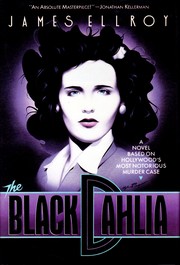
The Black Dahlia
James Ellroy builds a fiction around the real Black Dahlia murder, following two Los Angeles cops whose partnership and obsessions destroy them.
2,533-word summary · 11 min read
I Kissed Shara Wheeler
Shara Wheeler kisses her rival Chloe Green at prom and disappears, leaving a scavenger hunt that forces Chloe to rethink everything she knew about her.
2,083-word summary · 9 min read