
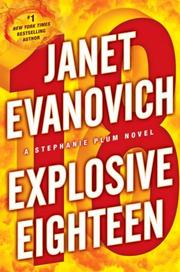
Explosive Eighteen
2,393-word summary 11 min read 305 pages in the book
- First published
- 2011
- Publisher
- Bantam Books
- Pages
- 305
- ISBN
- 9780345527714
- Series
- Stephanie Plum (#18)
Reading options
What's inside (9 sections)
- A plane from hell and a photograph in the bag
- Two lots of FBI agents and a terrible sketch
- Joyce, Frank Korda and the missing treasure chest
- Brenda Schwartz, her son and the code in the photograph
- A cemetery, a knife and a man called Razzle Dazzle
- The Rug at the airport
- Where the book loses its way
- Key takeaways
- FAQ
I picked this one up right after finishing Smokin' Seventeen, mostly because that book ended with Stephanie holding plane tickets to Hawaii and refusing to say who was going with her. Eighteen is the book where that question gets answered, sort of. It came out in 2011, the eighteenth Stephanie Plum novel, published by Bantam, and the first edition runs to about 305 pages. What I got was a book that spends its whole length talking around one weekend while chasing a photograph through Trenton, and the gap between those two things is where the fun and the frustration both live.
A plane from hell and a photograph in the bag
The book opens at forty thousand feet, with New Jersey under cloud cover and what Stephanie calls hell sitting four rows back. Hell is a guy who looks like Sasquatch and snores like a bear in a cave. The snoring starts over Denver, gets ugly over Kansas City, and eventually the flight attendants confiscate the pillows and start handing out free drinks, which is how a whole plane ends up drunk before landing. Stephanie has just come back from a Hawaiian vacation she describes as unique, and she has left two angry men in Honolulu. She will only say one thing about the trip: it is complicated.
Lula picks her up at Newark. Stephanie goes to her parents' house to do laundry, get her emergency clothes, and collect her hamster Rex, and Grandma Mazur is waiting at the door. Grandma notices a tan line on Stephanie's left ring finger and decides she eloped. I laughed at that, because it is exactly the sort of leap Grandma makes, and because it lands close enough to the truth to be annoying. Connie Rosolli calls from the bonds office with bad news. Vinnie has been arrested after an argument with a contractor named DeAngelo turned physical, so Stephanie is now minding the office, which is a bus parked on a construction site.
While she is dumping the contents of her messenger bag on the kitchen table, she finds a large yellow envelope she does not remember putting there. Inside is an 8 by 10 glossy photograph of a man standing on a street corner, looking past the camera, maybe mid thirties or early forties, short brown hair, fair skin, a dark suit. Stephanie assumes she picked it up with a magazine at the airport newsstand and throws it away at her parents' house. Then the television news reports a man found dead at LAX, beaten with a blunt instrument, throat cut, stuffed into a trash can. His name is Richard Crick, a fifty six year old surgeon with a Princeton office who spent ten years as an army doctor, three of them in Afghanistan. Crick was her seatmate on the first leg of the flight home. He never reboarded in Los Angeles. Somewhere in the air, while she slept, he slipped that envelope into her bag.
That is a strong opening hook. A dead man, a photograph she threw in the trash, and a heroine who is the only person left who can describe the face in it. Evanovich keeps the identity of the man in the photograph just out of reach for most of the book, and the withheld answer does a lot of work.
Two lots of FBI agents and a terrible sketch
Back at her apartment, Stephanie gets two visitors. The first pair call themselves Lance Lancer and Sly Slasher, which is the kind of name that should not survive a badge check, and they want the yellow envelope in connection with an international murder and a kidnapping. Stephanie does not let them in and asks Morelli to run them. They are not with the Bureau. A second pair, Bill Berger and Chuck Gooley, are the real thing. Berger tells her that only one person knew who was in the photograph and that person is dead. He also says the matter touches national security and that protection has been cut from the budget, which is the book's way of saying Stephanie is on her own.
The sketch scene is one of the best running jokes here. Berger puts her with a forensic artist, and Stephanie's description produces a face that looks like Tom Cruise, then one that looks like Ashton Kutcher. Neither is much use. It is funny, and it is also a neat bit of plot logic: the whole investigation depends on a witness who barely glanced at the photograph and then threw it away. She tries to retrieve it from her parents' garbage and finds the truck has already been picked up. Meanwhile the bonds bus goes up in smoke, Lula falls for their largest skip yet, and Joyce Barnhardt, Stephanie's lifetime nemesis, moves into her apartment by way of the fire escape.
I should say something about the structure, because it is unusual. The photograph plot keeps interrupting and being interrupted by the ordinary Trenton business. Stephanie has skips to catch, a car to replace, a family to eat dinner with, and two men who each have bruises from Hawaii and neither will explain them. The comedy works because the threats and the errands are given equal weight. A shootout and a laundry trip sit in the same chapter without either one being treated as more important.
Joyce, Frank Korda and the missing treasure chest
The Joyce thread is the strangest piece of the book. Joyce is a serial divorcée and a shoplifter with a new house in a development, and Stephanie is supposed to bring her in. Instead Joyce shows up in Stephanie's living room with a story about Frank Korda, a small time jeweler who promised her a stolen necklace. The Pink Panthers, an international network of jewel thieves, are supposedly involved, and Frank turns up dead. Joyce thinks a treasure chest hidden in Frank's store holds contact information she can use to bargain with the Panthers. They break in, and the chest is gone.
Morelli, who is practical about these things, suspects the Pink Panthers are not even real. By the time Joyce finally leaves, the chest has turned out to be the remains of a cat, and her grand scheme was to sell the combination to a safe. I enjoyed the way that deflates, but I also felt the thread runs longer than it deserves. The jewel thief angle is a good joke with a thin plot wrapped around it, and it takes attention away from the much tighter photograph mystery. Joyce is funny for a chapter or two and then becomes a guest who will not leave, which is presumably the point, but it made me impatient.
Still, this is where Stephanie first shoots Razzle Dazzle outside her apartment. He is a scary presence, and he will be back.
Brenda Schwartz, her son and the code in the photograph
The photograph starts to make sense when Stephanie follows the trail to Brenda Schwartz, a hairdresser who chain smokes and gives Stephanie a set of red and yellow highlights she calls Route 1 Sunrise. The result is spectacular in the way only an Evanovich gag can be. Stephanie's hair stands six inches off her head, sticks to the roof of the truck, and will not take a brush. Lula decides she has become Super Bitch, which is a line I still hear in my head.
Brenda's story reaches back a long way. The whole chain of deaths was set in motion when Bernie Schwartz borrowed money from Sammy the Pig. Brenda's son Jason is a hacker, a genius who treats breaking into systems like a chess game. He and a few friends used to break into government computers and leave funny messages, nothing destructive, but the FBI took a dim view and the group went underground a year ago. Jason sent the photograph from Hawaii to help his mother get a car back. More importantly, the photograph is a composite that hides a computer message. The Bureau thinks it is a picture of a hacker they have been hunting. Razzle Dazzle knows Jason only by what Brenda calls his electronic imprint, which is why he wanted the photograph and why he has been chasing the boy for over a year.
Brenda's brother Chester has kidnapped Jason. The rescue at a warehouse involves Lula, a rocket launcher she bought at a yard sale, guns, an explosion, a fire, and the police and fire trucks arriving at once. Ranger turns up having tracked someone called Flutter through a watch, which is the sort of detail this series throws away casually. There is a Ferrari in Brenda's garage, and there is a brief, quiet moment where Lula talks about her rough upbringing and wanting to be a mother. That moment gives her more depth than most comics get in this series, and it arrives at exactly the right time.
Brenda eventually skips bail with Jason, and Stephanie lets her go, because there is someone else she wants more.
A cemetery, a knife and a man called Razzle Dazzle
Morelli brings the pieces together. The man who did not reboard at LAX besides Crick was a Somali national named Archie Ahmed, also known as Razzle Dazzle or Raz. He has something like sixty four identities and works as an operative for the Somali government, doing everything from running guns to wet work. Security tapes put him at the gate in Honolulu and leaving the gate area at LAX. He was on the plane with Stephanie. She does not remember him, which Morelli explains by saying that with a hat on he might look human.
The confrontation happens at All Saints Cemetery on Nottingham, where Stephanie and Lula go to catch a skip named Magpie. Magpie is sitting at a campfire when Raz comes out of the shadows with a knife and a semiautomatic, hair wild, eyes lit by the fire, shouting that he will burn her and make Lula into bacon. Lula shrieks that Satan has a gun and disappears into the bushes. Magpie faints. Stephanie dives behind a tombstone while bullets ping off marble, gets to her gun, and shoots out Raz's tires. She calls Berger, waits in the car with Lula, listens for footsteps, and leaves when the police arrive. It is a terrific scene, tense and silly at the same time, and Lula's running commentary about being compared to a roast pig is worth the price of admission.
Raz gets away on foot, steals a car during the night, and dies the next morning after a chase, when he loses control and hits a bridge abutment. That is how the murder case ends, with a dead man and a closed file rather than a courtroom.
The Rug at the airport
Stephanie follows Brenda to Newark short term parking, guesses correctly that she is jumping bail, and watches her head for the terminal with Jason and suitcases. Then she sees Simon Ruguzzi, known as The Rug, the skip she holds responsible for everything that went wrong in Hawaii. He recognizes her from the advertisement Vinnie put on the side of a bus, drops his suitcase and runs. Stephanie tackles him, Lula sits on him, and they cuff him. He is worth real money, and Vinnie had been counting on Brenda skipping anyway so he could take her Ferrari and hand it over to DeAngelo.
At her parents' house, Grandma produces the photograph. She pulled it out of the garbage, and Stephanie takes it back, thinking she might give it to Ranger for safekeeping or to Berger for a laugh. As far as anyone knows, neither Berger nor Raz ever learned that the picture was a composite carrying a hidden computer message. It is a tidy resolution to the central object, and I liked that the payoff was quiet rather than loud.
The last pages go back to the apartment. Morelli is there with his cat Bob. Annie Hart, who believes she is the reincarnation of Cupid, has left a little bottle of pink liquid she insists is the real thing. Morelli thinks it is heartburn medicine and drinks it before Stephanie can stop him. He says he feels warm and very friendly, then pulls her toward him with the line he always uses. It is a comic button on a book that has spent three hundred pages refusing to say what happened in Hawaii. Morelli will not talk, Ranger will not talk, and Stephanie will only say it is complicated.
Where the book loses its way
I finished this in good spirits, but I want to be fair about the parts that drag. The mystery is intricate in a way that mostly does not pay off. There are fake FBI agents, real FBI agents, a Somali operative, international jewel thieves, a hacker, a kidnapping, and a murder, and the threads connect only loosely. The photograph is a clever device, but the reader is asked to accept a lot of coincidence to keep it in Stephanie's hands. The Hawaii secret is withheld so long that the reveal, when it finally arrives in pieces, feels less like a payoff and more like an excuse to keep two men glowering at each other.
The book also repeats a pattern. Stephanie is threatened, she runs, Lula shouts something funny, a car is destroyed, and the case moves a little. That rhythm is the series' engine and I enjoy it, but by the end of eighteen I could feel the repetitions. A reader looking for a clean puzzle or a decisive romantic choice will not find either. This is a book for people who already know Lula, Grandma Mazur, Connie, Vinnie and Rex, and who come for the voices more than the plot.
What I keep coming back to is the photograph itself. It is a small object that everybody wants and nobody understands, and the least important person in the chain is the one who can describe it. Evanovich is very good at that kind of setup. She is less interested in tying it all up neatly, and the ending chooses a joke and a shrug over an explanation. That works if you are here for the cast and the voice. It will not satisfy anyone who wants a clean answer to what happened in Hawaii.
FAQ
Is Explosive Eighteen a good place to start the Stephanie Plum series?
Not really. It is the eighteenth book and assumes you already know Lula, Grandma Mazur, Morelli, Ranger and the bonds office crew. Much of the humor comes from those familiar relationships.
Who is the man in the photograph?
The photograph is a composite hiding a computer message, not a simple portrait. The FBI believes it shows a hacker they have been hunting, and the picture itself matters more than the face.
Does the book finally reveal what happened in Hawaii?
Only partly. Morelli and Ranger both carry bruises and refuse to talk, while Stephanie insists it is complicated. The question is left open for later books.
Similar books
More from Stephanie Plum first, then related titles.
One for the Money
Janet Evanovich's One for the Money fully retold: Stephanie Plum's first bounty hunt, Morelli on a murder charge, Ranger, Lula, Ramirez, and why Trenton still…
2,339-word summary · 10 min read
Two for the Dough
Janet Evanovich's Two for the Dough retold: Stephanie Plum's second hunt, a missing gun dealer, Morelli and Ranger, and why Trenton still charms.
3,677-word summary · 16 min read
Three to Get Deadly
Stephanie hunts a beloved candy man holding army money everyone wants.
1,981-word summary · 9 min read
Four to Score
Stephanie hunts waitress Maxine Nowicki through coded clues, firebombs, and counterfeit cash while living with Morelli in Trenton.
2,870-word summary · 13 min read
High Five
Stephanie hunts missing Fred with Ranger's help while Morelli sulks and Grandma shops for funerals and husbands.
2,228-word summary · 10 min read

Hot Six
Stephanie Plum hunts a missing bail jumper tied to Ranger's mentor while Morelli, Lula, and Grandma Mazur stir Trenton chaos.
2,035-word summary · 9 min read
Seven Up
Stephanie hunts old mobster Eddie DeChooch, finds a body, a missing heart, and trouble from Morelli to Ranger.
2,798-word summary · 12 min read
Hard Eight
Janet Evanovich's Hard Eight fully retold: a missing mother and child, Abruzzi's medal hunt, Valerie's rescue, and Ranger crossing a line.
2,961-word summary · 13 min read

Visions of Sugar Plums
A strange man named Diesel appears in Stephanie Plum's kitchen days before Christmas and pulls her into hunting a bail-jumping toy maker. A short, silly, warm…
2,193-word summary · 10 min read
To the Nines
Janet Evanovich's ninth Stephanie Plum case retold: a missing skip, threats in Trenton, and a rescue run to Las Vegas.
2,839-word summary · 13 min read

Ten Big Ones
Stephanie witnesses a gang robbery dressed as a devil, and the Comstock Street Slayers put her on a list of people to kill.
2,062-word summary · 9 min read
Eleven on Top
Stephanie quits bounty hunting for normal jobs, but a killer and a wedding keep pulling her back.
2,508-word summary · 11 min read
Twelve Sharp
Stephanie Plum is stalked by a woman claiming to be Ranger's wife, and when Ranger's daughter is kidnapped, Stephanie becomes both bait and target.
2,064-word summary · 9 min read
Lean Mean Thirteen
Stephanie Plum's ex-husband disappears after she attacks him, leaving her suspected of murder and chasing a forty-million-dollar secret through Trenton.
2,100-word summary · 9 min read
Fearless Fourteen
Bounty hunter Stephanie Plum babysits a teenager, guards a fading singer, and hunts nine stolen million dollars under her boyfriend's basement.
2,466-word summary · 11 min read
Finger Lickin' Fifteen
Lula sees a celebrity chef decapitated and talks Stephanie into entering a barbecue contest to lure the killers, while Ranger hires her to find a security leak…
2,248-word summary · 10 min read
Sizzling Sixteen
Stephanie Plum has five days to raise nearly $800,000 when her cousin Vinnie is kidnapped over a gambling debt, and the only plan involves an alligator and two…
2,533-word summary · 11 min read
Smokin' Seventeen
Stephanie's bonds office is a motor home on a construction site where dead bodies keep turning up, and the killer seems to know her name.
2,342-word summary · 10 min read
Finlay Donovan Is Killing It
A broke single mom novelist is mistaken for a hitwoman over lunch and takes the job. Funny crime caper, first in the series.
2,538-word summary · 11 min read
The Paying Guests
A widowed mother and her unmarried daughter take in lodgers in 1922 south London, and a secret affair between Frances and Lilian pulls them into a murder case.
2,661-word summary · 12 min read
Feet of Clay
A clay golem goes mad and a Patrician is poisoned as Vimes and the Watch untangle a murder plot in the nineteenth Discworld novel.
2,308-word summary · 10 min read

Size 12 Is Not Fat
Former teen pop star Heather Wells investigates two dorm elevator deaths while juggling her ex, her crush, and a size-12 wardrobe.
2,805-word summary · 12 min read
First Grave on the Right
Charley Davidson is a private investigator in Albuquerque and the grim reaper. When three murdered lawyers come back as ghosts, her two jobs collide.
2,770-word summary · 12 min read

Say You're Sorry
A widowed prosecutor defends the teenager accused of killing her babysitter, uncovering a small town's secrets and a killer hiding in plain sight.
2,116-word summary · 9 min read
Finlay Donovan Knocks 'Em Dead
Someone has put a contract on Finlay Donovan's ex-husband, and the novelist and her nanny have to find the hitman before the school pickup.
1,990-word summary · 9 min read
Men at Arms
The City Watch gets new recruits and a murder case when the Disc's only handgun turns up in Ankh-Morpork, in the fifteenth Discworld novel.
2,216-word summary · 10 min read
Dial A for Aunties
A wedding photographer accidentally kills her blind date, and her mother and three aunties help her hide the body during the biggest wedding of their careers.
2,076-word summary · 9 min read

Bridget Jones: The Edge of Reason
Bridget doubts Mark, takes a job with Daniel, and lands in trouble in Thailand.
2,198-word summary · 10 min read

Tangled
Told by a cocky businessman, a bet to win the new associate who rejects him turns into real pursuit, strict rules, a painful reveal and a wedding-level happy…
2,868-word summary · 13 min read

The Roommate
Uptight Clara shares a flat with porn star Josh and teams up to build ethical adult films for women.
2,362-word summary · 10 min read