
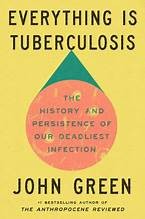
Everything Is Tuberculosis
2,015-word summary 9 min read 208 pages in the book
- First published
- 2025
- Publisher
- Crash Course Books (Penguin Random House)
- Pages
- 208
- ISBN
- 9780525556572
Reading options
What's inside (9 sections)
A boy who looked about nine
I picked this book up expecting a short, tidy explainer about a disease I knew almost nothing about. What I got instead was a story that begins with a seventeen-year-old who looked about nine, and that never quite let go of me. John Green first met Henry Reider in 2019 at Lakka Government Hospital in Sierra Leone. Henry had had tuberculosis since childhood, and the disease, compounded by malnutrition, had stopped his body from growing. He was small, he was often in pain, and he was also, Green discovered quickly, funny and stubborn and intensely curious about the world in front of him. The book is built around Henry, and it is also about the thing that killed him. It is an odd combination, a medical history told through one friendship, and it works better than I expected it to.
Green is best known as a novelist for young adults, and that training shows in every paragraph. He writes direct, plain sentences. He is not trying to impress you with how much he knows. He wants you to hold onto one idea: tuberculosis is curable. It has been curable since the middle of the 1950s. And still, every year, more than a million people die of it. The whole book is an attempt to explain the gap between those two facts. Green's answer is not that the bacterium is especially clever or that the medicine is too hard to make. His answer is that the people who die are poor, and that the world has decided, over and over again, that their lives are not worth the trouble.
That sounds like a thesis you could write in a single paragraph, and part of the pleasure of the book is watching Green resist the urge to do that. He keeps returning to Henry, to the specific texture of a hospital in Sierra Leone, and to the small humiliations and kindnesses that make up a life there. The history is woven in rather than laid on top. It is a method that can feel a bit like a lecture at times, but more often it feels like a friend who has read a great deal and cannot wait to tell you the parts that surprised him.
When consumption was fashionable
The first big turn in the book is historical. Green takes us back to eighteenth- and nineteenth-century Europe, when tuberculosis was called consumption and was treated less like a plague than a mood. The disease was romanticized. It was associated with a certain kind of beauty, the pale complexion, the slight frame, the luminous and doomed artist. Being consumptive became, for a while, a look that people cultivated. Green describes the fashion for pallor among fashionable women, and the way a wasting illness was read as evidence of sensitivity and genius rather than of a bacterial infection.
He is especially good on the literary and musical associations. The Brontës, Chopin, Keats, all of them are pulled into the story, not as trivia but as evidence of how thoroughly the disease was folded into the idea of the artistic life. Green tells the story of the Stetson hatmaker who moved west for his health, one of many people who tried to outrun the illness by changing climate and altitude. Sanatoriums grew up around this belief, and for a long time the only treatment was rest, fresh air and patience, with outcomes that depended mostly on luck and class.
This section is the most obviously "Green" part of the book, in the sense that it delights in the strange details of the past. He clearly enjoyed finding the story of the pale complexion and the hatmaker. But it is not nostalgia. He is setting up a contrast. Once you understand that tuberculosis was once treated as a marking of the sensitive and the gifted, you can see how completely its meaning flipped when germ theory arrived. The disease did not change. The story people told about it did.
The bacteria, and the great retreat
Green moves next to the science. He explains, in the plainest possible language, what Mycobacterium tuberculosis is and how it moves from person to person. He is careful about the distinction between infection and disease, and about the fact that most people who carry the bacterium never become sick. The book does not linger in the laboratory. What interests Green is what happened when the laboratory findings reached the world.
He credits germ theory, and specifically the work of Robert Koch and Louis Pasteur, with changing everything. Once the cause of tuberculosis was understood, and once drugs were developed that could actually kill it, the disease began a long retreat from the wealthy countries. Green walks through this decline with a sense of wonder. Cities cleaned up their water and their housing. Sanatoria did their work. Drugs arrived. By the middle of the twentieth century, tuberculosis had gone from being one of the leading causes of death in places like London and New York to being something that mostly happened somewhere else, to someone else.
The phrase "somewhere else" matters enormously here, and Green knows it. He traces how the disease became racialized, how it acquired a new reputation as an affliction of the poor and of immigrants and of people of color. In the rich countries it was recast as a problem that other people had, a problem of the tropics or the slums or the developing world. The biomedical fact was real, the bacterium was real, but the social story around it did the quiet work of letting wealthy nations stop worrying. Green's point is that tuberculosis never disappeared. It was simply pushed out of sight, and the people it continued to kill were people whose deaths did not register as a crisis.
A disease of injustice
This is where the book's argument becomes sharpest. Green's central claim is that twenty-first-century tuberculosis is a disease of injustice rather than of bacteria. He repeats, in different forms, that the bacillus has been defeated, that we have had the tools since the 1950s, and that the reason a million people still die each year has to do with food, housing and healthcare. Malnutrition makes infection far more likely to turn into disease. Overcrowded housing makes transmission far more likely. A health system that cannot afford to diagnose and treat people makes a curable illness fatal.
He makes this concrete through Henry's story. Henry's tuberculosis was compounded by malnutrition. He was in a hospital in Sierra Leone, a country that has had to contend with an Ebola outbreak and with chronic food insecurity, and Green does not treat those as background details. They are part of the mechanism. A body that is not fed cannot fight the infection. A country that is recovering from Ebola has other things to worry about. A family that cannot get to a clinic cannot be treated.
The most pointed example in the book concerns drug pricing. Green describes the price of the drugs made by Johnson & Johnson, and the fact that Sierra Leone's health ministry could not afford them. This is the argument in miniature. The medicine exists. It works. A government cannot pay for it. People die. Green is careful with the facts here and careful not to turn the drug companies into cartoon villains, but he is not shy about naming the outcome. When he says that we are the cause and must also be the cure, he means something specific: the cure is not a new molecule, it is a decision about who gets the existing one.
The virtuous cycle
Green does not leave the reader in despair. He spends time with the people and organizations that break the chain. He profiles what he calls the virtuous cycles of Partners in Health and Doctors Without Borders, in Haiti, in Sierra Leone and in Peru. The idea is simple and, in the book's telling, powerful. You treat the people who are sick, you treat them well, you pay attention to the social conditions that made them sick, and the result is that fewer people get sick in the next round. Success feeds on itself. Failure feeds on itself too, which is what has been happening in the places the world has ignored.
These passages give the book its emotional shape. Green is not writing a policy paper. He is writing about nurses and doctors and patients who decided that the expected outcome was unacceptable. He writes about them with real affection, and with the same attention to the individual person that he brought to Henry. The organizations are not abstract. They are the people who show up in the ward, who find the drug that the ministry cannot pay for, who keep a seventeen-year-old alive long enough to be a person rather than a statistic.
I found these sections the most convincing part of the book, precisely because they are the least grand. Green does not claim that Partners in Health has solved tuberculosis. He claims that it has shown what a different set of choices looks like. That is a smaller claim, and it is a lot easier to believe.
Why this book, why this writer
Part of what makes the book unusual is Green's willingness to explain why he cared so much. He connects his own obsession with the disease to his obsessive-compulsive disorder, and to his brother Hank's cancer. This is not a digression. Green is interested in the way a person comes to fixate on an illness, in the way a family history of sickness can make a distant statistic feel immediate and personal. He admits that his interest is partly irrational. He is drawn to the subject in a way that he cannot fully control, and the book is more honest for saying so.
That honesty is also, I think, the source of the book's main weakness. Green writes with the energy of someone who has discovered something enormous and wants to make sure you feel it too. At times that energy tips into a kind of YA-style philosophizing, a tendency to pull back from the specific and offer a large, rounded observation about humanity. Publishers Weekly called the tone congenial, and that seems right. There is a warmth to the book that is genuinely appealing, but there are moments when the warmth starts to feel like a substitute for a harder argument.
Where the book stops
The criticism is worth taking seriously. A review in a medical journal put it plainly: for a reader looking for rigorous academic literature on tuberculosis, this is admittedly not the book. It is a work of narrative nonfiction by a novelist, not an epidemiological study. Science News said Green argues convincingly that twenty-first-century tuberculosis is caused by injustice rather than bacteria, which is a endorsement of the argument, but other reviewers have noted that the book moves quickly over the medical detail and leans heavily on the moral frame.
That is a fair description of what it is. If you want the full clinical picture, you will need another book. If you want to understand why a disease that has been curable for seventy years still kills more than a million people a year, and why the people who die are almost always poor, this one does an unusually good job. It does not solve the problem. It does something perhaps more useful first: it makes the problem impossible to file away as someone else's trouble.
Henry Reider died of tuberculosis. Green does not let that be the end of the story, but he does not look away from it either. The last movement of the book is an argument that the disease is a choice we make, collectively, about food and housing and medicine and whose lives count. It is a hard thing to hold onto after you close the book. I have thought about Henry more than I expected to.
FAQ
Who is Henry Reider in Everything Is Tuberculosis?
Henry Reider was a teenager John Green met in 2019 at Lakka Government Hospital in Sierra Leone. Childhood tuberculosis and malnutrition had stunted his growth so that he looked about nine, and his story anchors the book.
Why does Green say tuberculosis is a disease of injustice rather than bacteria?
Because effective drugs have existed since the mid-1950s. Green argues that the million annual deaths come from poverty, malnutrition, overcrowded housing and unaffordable healthcare, not from a bacterium that medicine cannot defeat.
Is Everything Is Tuberculosis a medical textbook?
No. It is narrative nonfiction by a novelist. A review in a medical journal noted that readers wanting rigorous academic literature on the disease will need another book.
Similar books
The Body: A Guide for Occupants
Bill Bryson tours the human body from atoms to aches, mixing wonder at how we work with a sharp account of how our lives cut that short.
2,249-word summary · 10 min read
Breath: The New Science of a Lost Art
Journalist James Nestor investigates how modern humans learned to breathe badly, and what researchers, athletes, and breathwork practitioners have found about…
2,011-word summary · 9 min read
The Emperor of All Maladies
A biography of cancer from Galen to chemo through one doctor cases.
2,255-word summary · 10 min read
The Hot Zone
Ebola and Marburg move from African outbreaks to a Virginia monkey house and an Army response in suits.
2,291-word summary · 10 min read
How to Change Your Mind
Pollan blends the history of psychedelic research, his own guided trips, and current neuroscience to ask what these drugs reveal about consciousness.
2,466-word summary · 11 min read
Mountains Beyond Mountains: The Quest of Dr. Paul Farmer, a Man Who Would Cure the World
Tracy Kidder travels with Dr. Paul Farmer from Haiti to Peru, tracing how a Harvard doctor built a health system for the poor and what that work cost him.
3,095-word summary · 14 min read

Nothing to Envy
Barbara Demick follows six defectors from Chongjin through the North Korean famine, showing how ordinary people lived, believed, and finally left.
2,068-word summary · 9 min read
Down and Out in Paris and London
Orwell's account of washing dishes in Paris hotels and tramping through London does not ask for pity, only for a clear look at how poverty actually works.
2,282-word summary · 10 min read
Hidden Figures
Black women computers at Langley launch rockets past Jim Crow.
2,385-word summary · 11 min read
On the Origin of Species
Darwin's 1859 case for evolution by natural selection, from Beagle finches and breeding pigeons to fossils and anatomy.
2,589-word summary · 12 min read
In Defense of Food
Pollan argues we stopped eating food and started eating nutrients, and offers a plain way back.
2,320-word summary · 10 min read
A Beautiful Mind
Mathematician John Nash's brilliant game theory rise, schizophrenia collapse, and Nobel return, with wife Alicia's care.
2,142-word summary · 10 min read
Cosmos
Sagan tours galaxies, evolution, and Alexandria to argue for science.
2,416-word summary · 11 min read
Why We Sleep: Unlocking the Power of Sleep and Dreams
A Berkeley sleep scientist explains how sleep shapes memory, mood, and health, and what happens when we miss it.
2,755-word summary · 12 min read
Einstein: His Life and Universe
Isaacson traces Einstein from patent clerk to world fame using newly opened papers, through 1905, relativity, exile, and the long unified theory search.
2,773-word summary · 12 min read
The Omnivore's Dilemma
Four meals traced from corn fields to foraging show what industrial food costs and what else is possible.
1,918-word summary · 9 min read
Stiff: The Curious Lives of Human Cadavers
What happens to donated bodies, from crash labs and decay farms to composting and space tests.
2,051-word summary · 9 min read
Guns, Germs, and Steel: The Fates of Human Societies
Diamond argues geography and crops explain why some societies expanded faster than others.
3,432-word summary · 15 min read
The Immortal Life of Henrietta Lacks
The cells of a poor Black tobacco farmer revolutionized medicine, taken without her knowledge in 1951.
2,139-word summary · 10 min read
Sapiens: A Brief History of Humankind
Harari's Sapiens from cover to cover: the cognitive revolution, the agricultural bargain, shared fictions like money and nations, and the scientific centuries…
2,145-word summary · 10 min read
The Anthropocene Reviewed: Essays on a Human-Centered Planet
John Green reviews ordinary parts of human life on a five-star scale, turning geese, keyboards, and sunsets into a warm memoir about attention.
2,982-word summary · 13 min read
Zeitoun
A Syrian-American contractor rides out Hurricane Katrina by canoe, rescuing neighbors and stray dogs, until a routine arrest turns into twenty-three days…
2,097-word summary · 9 min read
The Hidden Life of Trees
A German forester argues that trees communicate through root networks and that forests thrive when left largely undisturbed.
2,078-word summary · 9 min read
The Guns of August
Tuchman narrates the first month of World War I, from a 1910 royal funeral to the Marne, and the decisions that trapped Europe.
2,405-word summary · 11 min read
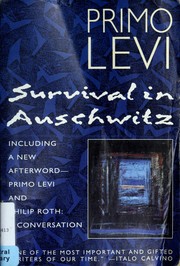
Survival in Auschwitz
A chemist deported from Turin records ten months in Auschwitz with a restraint that makes the horror impossible to look away from.
2,177-word summary · 10 min read
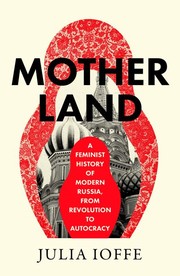
Motherland: A Feminist History of Modern Russia, from Revolution to Autocracy
A feminist history of modern Russia told through women's lives, from the revolutionaries of 1917 to Pussy Riot and the politics of today.
2,191-word summary · 10 min read
Brief Answers to the Big Questions
A short posthumous collection in which Hawking answers ten big questions about God, the universe, time, and humanity's future.
2,464-word summary · 11 min read
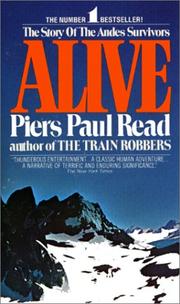
Alive: The Story of the Andes Survivors
After a rugby team's plane crashes in the Andes in 1972, Piers Paul Read tells the survivors' 72-day fight to live, drawn from interviews with the men and…
2,179-word summary · 10 min read
You Can Heal Your Life
Louise Hay's 1984 bestseller argues that thoughts and beliefs shape the body, pairing a mirror-and-affirmation workbook with an A to Z list of ailments and…
3,672-word summary · 16 min read
The Spirit Catches You and You Fall Down: A Hmong Child, Her American Doctors, and the Collision of Two Cultures
Anne Fadiman's account of a Hmong girl's epilepsy and the two cultures that tried to treat her, literary journalism about translation, trust and the limits of…
2,972-word summary · 13 min read