
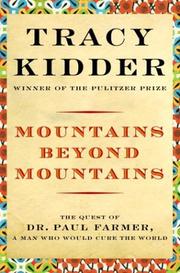
Mountains Beyond Mountains: The Quest of Dr. Paul Farmer, a Man Who Would Cure the World
3,095-word summary 14 min read 336 pages in the book
- First published
- 2003
- Publisher
- Random House
- Pages
- 336
- ISBN
- 9780375506161
Reading options
What's inside (9 sections)
I picked this up expecting a profile of a saint and found something less comfortable and more useful. Tracy Kidder first met Paul Farmer in Haiti in 1994, during the military coup that had thrown the country into turmoil. He watched the doctor negotiate with American soldiers on behalf of Haitian patients who had almost nothing. Five years later they met again at Harvard Medical School, where patients called him a saint and Kidder found a man who seemed to live without hypocrisy. In 2000 Kidder flew back to Haiti to travel with him and see whether the reputation held up. The result, published by Random House in 2003, keeps its distance from the word saint even while it describes work that invites the comparison.
Kidder has said he was drawn to the man himself, to someone who worked extraordinary hours and slept perhaps an hour or two most nights. He describes a person whose example can irritate you by making you feel you have never done anything as important, and yet in his presence that feeling tends to vanish. That tension is the engine of the book. Farmer is stubborn, funny, irreverent, impatient with fools, and capable of snapping at a collaborator in English before translating the insult into a program that might actually work. Kidder does not smooth those edges away.
The doctor who would not sleep
The opening sections introduce Farmer at work in two places at once. In Boston he is an infectious disease specialist at Brigham and Women's Hospital, a Harvard professor with an MD and a PhD in medical anthropology. In Haiti he is Doktè Paul, the founder of a clinic in the Central Plateau town of Cange and of the organization that supports it. He moves between them constantly, often on redeye flights, carrying sputum samples or lab results in his luggage.
Kidder, who is again the narrator here, notes the small facts that accumulate into a portrait. Farmer's MacArthur grant went to the organization rather than to him. His paychecks sometimes sat unopened. He could go days on very little sleep and still make rounds with the steadiness of someone who has all the time in the world. When Kidder asks about the hours, Farmer says he cannot sleep because there is always somebody not getting treatment. The line lands because it is not delivered as a slogan. He says it while looking at a patient who needs a decision.
Farmer tells Kidder he will be his Virgil in Haiti, a guide through a place the writer does not fully understand. That choosing of a guide matters. The book is a biography written by a companion who walked alongside his subject, and Kidder keeps admitting when he is out of his depth. He watches, asks clumsy questions, gets corrected, and tries again. The method is reported rather than performed, and the reader sees how hard it is to write about a person who does not stop working long enough to be interviewed.
Cange and the missing tin roofs
The book then goes backward to explain how a boy from Massachusetts ended up in a Haitian village. Farmer first saw Cange in 1983, riding with the Haitian Anglican priest Fritz Lafontant. It was a settlement of water refugees above the Péligre reservoir, created when a dam flooded the valley and pushed peasants uphill. The roofs were the first thing he noticed by their absence. Where other Haitian towns had tin, the shelters here were covered in banana bark and rags. He came down with dysentery, recovered, and kept moving.
At a hospital in Léogâne he watched a pregnant woman with malaria die because there was no blood for a transfusion. Her sister kept saying that they were all human beings. Farmer raised money for blood banking equipment, then learned the hospital would charge patients to use it. That was the moment he decided to build a hospital of his own, one where the poor would not be billed. He returned to the Central Plateau, worked for a time in Lafontant's clinic in Mirebalais, and found the place humiliating to patients. With Lafontant's blessing he turned his attention to Cange.
He began a health census with five Haitian assistants and confirmed what the eye could already see: terrible infant and maternal mortality, tuberculosis everywhere, hunger as a daily condition. The clinic that grew from that survey became Zanmi Lasante, Haitian Creole for Partners in Health. Its first line of defense was unglamorous. Vaccination, clean water, sanitation, and a gravity fed water system from an underground river did as much to reduce infant deaths as any drug. Kidder is good on this kind of work, the unphotogenic plumbing of a health system, and he gives it more space than the heroic moments.
One of the book's best scenes is a consultation about a woman accused of sorcery. A family has torn itself apart over the accusation. Farmer does not tell the mother that sorcery is unreal. He says only that it was not involved in this case, and he treats the illness in front of him. Elsewhere he sees tuberculosis, AIDS, starvation, and Pott's disease in the same morning. He hands the drug indinavir to a patient named Ti Ofa, one of the few poor Haitians then receiving antiretrovirals, though experts said such treatment was too expensive and too complicated to attempt. No one is turned away at Zanmi Lasante, and Farmer has found ways to waive the user fees that would send most patients home.
How Partners in Health was made
Farmer was born in 1959 and grew up in a poor household with five siblings, spending parts of his childhood in Florida and in a commune in Tennessee. He went to Duke and then to Harvard, where he pursued both medicine and medical anthropology. Liberation theology mattered to him, the idea that faith should address concrete suffering in this world. He spent so much time in Haiti during medical school that other students called him Paul Foreigner.
The organization that eventually employed him began as a small circle of friends. Ophelia Dahl, daughter of the writer Roald Dahl and the actress Patricia Neal, became its financial manager and one of Farmer's closest collaborators. Tom White, an American businessman, supplied early money and legal help. Todd McCormack joined the board. Jim Yong Kim, a Harvard medical and anthropology student, came in after long conversations with Farmer and became the strategist who could argue policy with him. Partners in Health was set up in Boston in 1987, with Zanmi Lasante as its Haitian arm. The first office was a tiny charity above a seafood restaurant.
Kidder reconstructs the early meetings with care. The founders argued about political correctness, cultural barriers, and what they called pragmatic solidarity. They coined the phrase areas of moral clarity for the moments when a decision could not be left to committee. They used money from Ophelia's father to build a school in Kay Epin, on the logic that medicine without education and housing was only half an answer. The point is not that these people agreed. It is that they built an institution out of arguments, and kept arguing after it existed.
The personal cost comes into view in the same stretch of pages. In 1988 Farmer was hit by a car and shattered his knee. Ophelia nursed him, but he was restless to return to Haiti, and something between them ended that December. When he later proposed, she could not say yes. He told her that if he could not be her husband he could not be her friend. She eventually came back to run the organization's finances, and they remained close. Kidder handles this with restraint. He does not turn Ophelia into a saintly figure who sacrifices herself for the cause. He shows a woman who chose a different life and kept the work anyway. Farmer was also exiled twice from Haiti under military governments because of his ties to Jean Bertrand Aristide, and each return meant starting again in the same places.
The epi divide and the sorcery study
Part of the book steps back from narrative to explain Farmer's argument. He called it the great epi divide: the gap between populations who die in their seventies of diseases of ageing and those who die ten to forty years earlier from violence, hunger, and infections that are already curable. What people on the wrong side of that line share is poverty. Tuberculosis is his clearest example. It can be cured with cheap first line drugs over six or eight months, and still killed around two million people a year at the end of the twentieth century. It has what he called a noxious synergy with AIDS. Because it mostly strikes the poor, drug companies had little reason to research it.
This is where the book becomes an argument about cost effectiveness, and where Kidder's loyalty to his subject sometimes becomes a problem. He lets Farmer's critique of public health orthodoxy run at length. But he also gives it evidence. Farmer once designed a study after a patient died while he was away in Boston. Community health workers blamed poverty and malnutrition; the professionals blamed beliefs in sorcery and failure to take medicines. Farmer tested both explanations. Everyone received free treatment. One group also got home visits, cash stipends, food support, and help with transportation. Belief in sorcery made no difference to the outcome. Only 48 percent of the group given medicine alone were cured, while everyone who received the fuller package recovered.
An elderly woman who had denied believing in sorcery later told Farmer she knew who had sent her sickness. When he asked why she had taken her medicines anyway, she said, Honey, are you incapable of complexity. Kidder does not make that anecdote into a moral. It sits next to the numbers and does its work quietly.
He then follows Farmer on a five hour hike to Morne Michel to find a patient who missed an appointment. They pass the Péligre dam, the same structure that displaced the peasants who became Cange's first residents. The patient had not skipped doses. He had confusing instructions and no stipend to get to the clinic. Farmer's conclusion is that you can never invest too much in making sure treatment works. When someone challenges him on whether such a program could ever be replicated, he snaps, then translates the outburst into the language of measurable outcomes. At a cockfight and among women in the hills, Kidder hears the Haitian proverb that gives the book its title: beyond mountains there are mountains. The phrase is not offered as consolation. It means the work never ends.
Father Jack and the adventurer doctors
The Peru section is the strongest stretch of the book, because it turns an argument into a detective story. During medical school Farmer lived at a Roxbury parish called St. Mary of the Angels, run by a priest named Jack Roussin. Jack was a large, blunt man who mediated gang disputes and led vigils against drug dealing. When Farmer had misgivings about animal labs, Jack listened, and the next morning Farmer woke to the sound of dogs outside his door. In the early 1990s Jack moved to Carabayllo, a shantytown outside Lima, and urged Partners in Health to start a project there. Jim Yong Kim agreed and built Socios en Salud, the Spanish version of the organization, with community health workers of its own.
They put a pharmacy next to Jack's church. Guerrillas bombed it, calling it crumbs for the poor. They rebuilt it somewhere else. Then Jack got sick. He was diagnosed with tuberculosis at the Brigham, given four first line drugs, and died about a month later. The cultures showed resistance to those four drugs and a fifth. Farmer wept at the memorial. Jack had never been treated for TB before, which meant he must have caught a resistant strain in Carabayllo.
Jaime Bayona, who ran Socios, went looking for the source. Doctors insisted they had no resistant patients. Nurses hesitated until he asked better questions, and he found a woman named Señora Brigida whose TB had relapsed after treatment and whose son had died of the disease. Her records showed resistance to four drugs. Bayona began reading records upside down in clinics and emailing Farmer and Kim. Farmer carried sputum samples from ten suspected cases to the Massachusetts State Lab, labeling the package Paul Farmer, TB Commissioner. Most turned out to be resistant to all five first line drugs, just as Jack's had been.
The explanation was amplification. These patients had received free, directly observed treatment under the World Health Organization's much praised DOTS program, then been retreated with the same drugs plus one, as official policy required. They went to doctors sick and came out sicker because they followed the rules. Some sold their possessions to buy second line drugs on the open market, enough to breed more resistance but not enough to cure them. Others went home to die. Farmer contrasted this with New York City's outbreak of the late 1980s, which cost roughly a billion dollars to contain, while Peru was paying more than a billion a year in debt service. Peruvian officials called him and Kim médicos aventureros, adventurer doctors. One young patient, David Carbajal, was denied permission for treatment and died. Farmer's response to the scale of the problem was characteristic: let us try ten patients first. They began in August 1996.
Making the drugs cheap
The next sections follow Jim Kim, and they are the book's best account of how a campaign changes a price. Kim was born in South Korea, raised in Muscatine, Iowa, the son of a periodontist and a Confucian scholar. He was a quarterback and valedictorian, went to Brown, and arrived at Harvard already thinking about race and the Third World. There he met Farmer and decided to make the preferential option for the poor the work of his life. His research on Korea had taught him that drug prices often reflect monopoly rather than usefulness.
In Geneva he found that nobody at the World Health Organization knew the patents on most second line tuberculosis antibiotics had expired. Capreomycin cost twenty one dollars a vial when Partners in Health bought it for Peru, and eight dollars eighty in Paris. The Paris agent explained the difference by pointing to an emergency in Peru. Howard Hiatt called it price gouging. Kim convened a meeting, the International Dispensary Association agreed to look for generic manufacturers, and Doctors Without Borders joined the pressure. He lobbied the WHO to put second line antibiotics on its essential drugs list, despite warnings that cheap drugs would be misused and breed still more resistance. The compromise was a Green Light Committee to control distribution and demand good programs. By 2000 the price of four drugs had fallen by 95 percent and two others by 84 percent. Capreomycin dropped to ninety eight cents a vial. Treating a case resistant to four drugs cost Partners in Health around fifteen hundred dollars instead of fifteen thousand.
That same year the organization learned it had been awarded a forty five million dollar grant from the Bill and Melinda Gates Foundation to fight multidrug resistant TB in Lima. The money arrives late in the story, after years of improvised funding, and it changes the scale without changing the method. Kidder also explains the phrase O for the P, used inside the organization as shorthand for a preferential option for the poor. Farmer once said he had fought the long defeat and brought other people along to fight it, and that he would not stop because they kept losing. It is the closest the book comes to a statement of faith.
John, Casse, and what the book leaves alone
Near the end, Kidder tells the story of a Haitian boy named John, brought to Zanmi Lasante with swellings in his neck, fever, and weight loss. Farmer suspected cancer rather than the scrofula others saw. A biopsy was arranged, the samples crossed to Boston in a plastic bag, and the diagnosis came back as nasopharyngeal carcinoma, a rare childhood cancer that is curable if caught early. The boy was too weak for a commercial flight, so a medical evacuation was organized to bring him to Boston. Ti Fifi, Farmer's Haitian fixer, helped with the documents and the passport. John died peacefully. The episode is hard to read because everything possible was done and it was still too late. A young man named Wilnot had been flown to the Brigham for heart surgery earlier, and that story sits beside it without a lesson attached.
The book closes with Kidder, Farmer, and two others setting out on a journey of several days on foot to visit a poor family with tuberculosis near Casse, Haiti. There is no speech at the end and no summary of the achievements. They simply walk, and the reader understands that the next mountain is the point.
I should be honest about what did not work for me. The middle of the book can read like a lecture on health economics, and the sections on cost effectiveness and drug policy ask a great deal of patience. Kidder's admiration is never in doubt, and there are stretches where the retelling tips into reverence, exactly the risk he said he wanted to avoid. Some readers have also argued that the book tells a single story of Haiti, leaning on the views of foreigners and specialists while the voices of ordinary Haitians stay mostly in the background. The five part structure is tidy in a way that the lives inside it are not.
Still, the achievement is hard to dismiss. Kidder gives us the machinery of a health system rather than a monument to one man: the census, the water pipe, the community health worker, the stipend, the sputum sample in a suitcase, the patient who misses an appointment. He shows that the expensive thing is not always the drug but the attention required to deliver it. When a critic calls a program impractical, the book answers with a list of people who were treated. That is a narrow kind of argument, and it is more convincing for being narrow. I finished it wanting to know what happened to Cange after the last page, which is probably the best thing a book like this can leave you with.
FAQ
Is Mountains Beyond Mountains a novel?
No. It is narrative nonfiction, a biography of Dr. Paul Farmer written after Tracy Kidder traveled with him to Haiti in 2000.
What does the title mean?
It comes from a Haitian proverb about mountains beyond mountains, which Kidder hears near Cange and takes to mean that the work never ends.
Who was Father Jack and why does his death matter in the book?
Jack Roussin was a Boston priest and Farmer's friend who moved to a shantytown outside Lima. His death from drug resistant tuberculosis pushed Partners in Health to examine the official tuberculosis program in Peru.
Similar books
All or Nothing: How Trump Recaptured America
Wolff's fourth Trump book reconstructs the 2024 campaign and the return to the White House from Mar-a-Lago sources, phone monologues and unnamed confidants.
2,248-word summary · 10 min read

Nothing to Envy
Barbara Demick follows six defectors from Chongjin through the North Korean famine, showing how ordinary people lived, believed, and finally left.
2,068-word summary · 9 min read
One Day, Everyone Will Have Always Been Against This
From a viral 2023 post, Omar El Akkad builds a furious short argument about Western promises, silence and complicity during the Gaza war.
2,218-word summary · 10 min read
Everything Is Tuberculosis
John Green tells the story of a boy with tuberculosis in Sierra Leone and argues that a disease curable since the 1950s still kills a million people a year…
2,015-word summary · 9 min read
Apple in China
A former Financial Times reporter argues that Apple poured about $275 billion into China, training a generation of engineers and leaving itself dependent on…
2,094-word summary · 9 min read
107 Days
Kamala Harris's memoir of the 107 days between Biden's withdrawal and Election Day, drawn from a journal kept during a campaign she believes she was best…
2,132-word summary · 9 min read
Sybil
A 1973 case study of a woman treated for multiple personalities, and the book that made dissociative identity disorder a household phrase.
2,054-word summary · 9 min read

Long Walk to Freedom
Mandela's account of a Thembu childhood, a law practice, a banned movement, twenty-seven years in prison, and the negotiation that ended apartheid.
2,454-word summary · 11 min read

Infidel
Ayaan Hirsi Ali's memoir of a Somali childhood, a forced marriage, a Dutch asylum claim, and the political fight that followed the murder of Theo van Gogh.
2,041-word summary · 9 min read

Down and Out in Paris and London
Orwell's account of washing dishes in Paris hotels and tramping through London does not ask for pity, only for a clear look at how poverty actually works.
2,282-word summary · 10 min read
The Girl with Seven Names: A North Korean Defector's Story
Hyeonseo Lee crossed the frozen Yalu River at seventeen, spent years hidden in China, escaped to South Korea, and later returned to rescue her family.
2,404-word summary · 11 min read
The Blind Side: Evolution of a Game
Michael Lewis traces how the left tackle became a premium position and tells the story of Michael Oher, a homeless Memphis teenager whose size and speed made…
2,038-word summary · 9 min read
Catch and Kill: Lies, Spies, and a Conspiracy to Protect Predators
Ronan Farrow recounts how NBC killed his Harvey Weinstein reporting, then how The New Yorker published it and helped ignite #MeToo.
2,057-word summary · 9 min read
The Stranger Beside Me
Ann Rule's classic memoir of her friendship with Ted Bundy, written by the true-crime author who knew him long before the world learned what he had done.
2,481-word summary · 11 min read

The Emperor of All Maladies
A biography of cancer from Galen to chemo through one doctor cases.
2,255-word summary · 10 min read
Behind the Beautiful Forevers: Life, Death, and Hope in a Mumbai Undercity
Life in a Mumbai slum near the airport, where families hustle for a better future.
2,406-word summary · 11 min read

Cleopatra: A Life
Pulitzer winner Schiff restores Cleopatra as a capable ruler, from Ptolemy debts and Caesar to Antony, Actium, and her death in 30 BC, built from coins and…
3,586-word summary · 16 min read
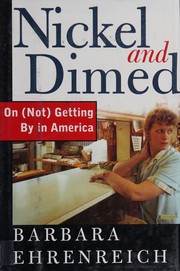
Nickel and Dimed: On (Not) Getting By in America
A journalist works waitress, cleaning, retail, and care jobs undercover to test whether full-time work keeps a person housed and fed.
2,328-word summary · 10 min read
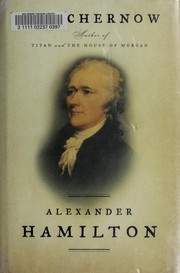
Alexander Hamilton
Orphaned Caribbean immigrant becomes Washington's aide and America's first Treasury secretary, then falls in a duel.
2,004-word summary · 9 min read
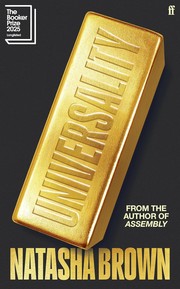
Universality
Natasha Brown's short second novel turns a lockdown fracas over a gold bar into a sharp satire of money, identity and public argument.
2,302-word summary · 10 min read
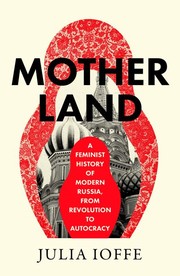
Motherland: A Feminist History of Modern Russia, from Revolution to Autocracy
A feminist history of modern Russia told through women's lives, from the revolutionaries of 1917 to Pussy Riot and the politics of today.
2,191-word summary · 10 min read
How to Change Your Mind
Pollan blends the history of psychedelic research, his own guided trips, and current neuroscience to ask what these drugs reveal about consciousness.
2,466-word summary · 11 min read
The Spirit Catches You and You Fall Down: A Hmong Child, Her American Doctors, and the Collision of Two Cultures
Anne Fadiman's account of a Hmong girl's epilepsy and the two cultures that tried to treat her, literary journalism about translation, trust and the limits of…
2,972-word summary · 13 min read
Men Explain Things to Me
A short collection of essays that begins with a man explaining Solnit's own book to her and expands into an argument about who gets believed, who gets heard…
2,019-word summary · 9 min read
Mark Twain
Ron Chernow's 1,200-page biography follows Samuel Clemens from the Mississippi River to worldwide fame, weighing a literary genius against a lifetime of…
2,501-word summary · 11 min read

I Am America (And So Can You!)
Stephen Colbert's 2007 debut extends his Colbert Report pundit into print, a mock-conservative tour of American life with margin notes, stickers and Fun Zones.
2,635-word summary · 12 min read
Hiroshima
In 1946 John Hersey followed six ordinary people through the atomic bombing of Hiroshima and its aftermath, using a plain style that made the reporting feel…
2,991-word summary · 13 min read
Careless People
A former New Zealand diplomat recounts seven years at Facebook, from a Myanmar launch to a hospital bed where the job followed her between contractions.
2,413-word summary · 11 min read
Breakneck: China's Quest to Engineer the Future
Dan Wang argues that America is run by lawyers and China by engineers, from a bicycle ride through Guizhou to the human cost of the one-child policy.
2,281-word summary · 10 min read
Abundance
Two journalists argue that rules written to fix the abuses of the 1970s now block the housing, energy and clean construction the 2020s need, and propose a…
2,306-word summary · 10 min read