
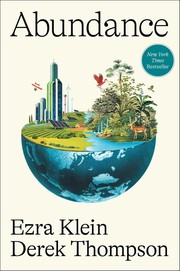
Abundance
2,306-word summary 10 min read 304 pages in the book
- First published
- 2025
- Publisher
- Avid Reader Press (Simon & Schuster)
- Pages
- 304
- ISBN
- 9781668023488
Reading options
What's inside (9 sections)
I picked up Abundance with a suspicion that it would be a policy book written by people who had never had to live inside a bad policy. That suspicion was unfair, but it points to the book's central tension. It is written by two journalists who are genuinely angry about the gap between the world America can imagine and the world it manages to build, and it is also written from a comfortable distance from the people stuck in that gap. Both things are true at once, and the book is more interesting for not smoothing them over.
Abundance was published on 18 March 2025 by Avid Reader Press, an imprint of Simon & Schuster, at 304 pages. It grew out of a January 2022 essay by Derek Thompson in The Atlantic, and it pairs him with Ezra Klein, a columnist at The New York Times. The two of them are not writing as outsiders. They are writing as people who have spent years explaining American politics to an audience that wants to believe something better is possible. That is the energy of the book. It is a work of persuasion, not a technical manual, and it wants to move the reader from a mood of resignation to a mood of expectation.
The argument in one sentence
The core claim is easy to state and hard to absorb. American liberalism, they argue, has drifted into a politics of chosen scarcity. By that they mean that the tools built to stop bad things have become the tools that stop good things. One generation's solutions have turned into the next generation's problems. The rules written to remedy the abuses of the 1970s now stand in the way of the housing, transmission lines and clean-energy construction that the 2020s need.
This is a deliberately testable claim, in the sense that the authors want you to see the mechanism at work. A regulation passed for a good reason does not expire when the reason fades. It stays on the books, accumulating procedures, and eventually it blocks something everyone now agrees should exist. The book's great strength is that it treats this as a structural problem rather than a matter of individual villains. Nobody has to be corrupt for the system to stall. Ordinary, defensible caution, repeated across dozens of agencies and decades, is enough.
There is a generational argument tucked inside this one, and it gives the book its title a second meaning. The activists and lawmakers of the 1970s inherited a country with real abuses and built safeguards against them. Those safeguards worked, in the sense that they stopped the worst of what they were designed to stop. A later generation grew up inside those safeguards and came to see them as the natural order of things, forgetting that they were a response to a particular moment. Klein and Thompson are asking that generation to remember that rules have authors and purposes, and that a rule which has outlived its purpose is not neutral.
A politics that protects instead of builds
Klein and Thompson draw a line between two kinds of liberalism. The first sees its job as protection: guarding against harm, preventing abuse, making sure nothing bad happens. The second sees its job as construction: building things that make life larger and easier. They want American liberalism to become the second kind. Their phrase for it is an abundance agenda, and the contrast they keep returning to is a liberalism that merely protects versus one that builds.
I want to be careful here, because it is easy to make this sound simpler than it is. The authors are not arguing that protection is worthless. They are arguing that a political movement which only knows how to say no will eventually lose the confidence of the people it is meant to serve. A politics of protection can prevent a bad project, but it cannot deliver a good one, and over time the people who wanted the good one stop believing the movement has anything to offer them. That is the wager of the book. If liberalism can learn to build again, it can answer the anger that currently sends people toward other, harsher answers.
The word abundance is chosen with care. It is not the same as growth, which can be measured in numbers and argued about endlessly. Abundance is a condition of everyday life. It means there is enough energy, enough housing, enough of the things that make a decent life possible that people can plan ahead instead of competing over scraps. By moving the argument to abundance, the authors shift the question from how much the economy grows to what the economy actually provides. That is a more human standard, and it is harder to game with statistics.
The examples that stick
The book makes its case through concrete examples, and two of them stayed with me. The first is high-speed rail whose environmental reviews began in 2012 and were still not complete sixteen years later. Think about what that sentence means. A project meant to move people quickly spent more than a decade and a half in the paperwork meant to make sure it was safe and fair. The review process was designed to catch harm. Instead it caught the project itself.
The second example is quieter but just as damaging. The authors note that researchers may spend up to forty percent of their time on grant administration. Forty percent. That is not a rounding error. It is a large fraction of the working lives of the people society pays to discover things, spent on the paperwork that pays for the discovering. When you put the rail example and the research example side by side, a pattern emerges. The procedures are not abstract. They consume years and careers, and they do it in the name of values almost everyone shares.
That shared commitment is what makes the problem so hard to fix. Nobody in these stories is setting out to delay a train or waste a scientist's afternoon. Each step in the process was added for a reason that seemed good at the time, and each person applying it is doing what their job requires. The result is a machine that no single person controls and that nobody can easily be asked to change. Klein and Thompson are at their best when they describe this kind of frustration. They understand that modern government rarely fails through dramatic sabotage. It fails through the slow accumulation of reasonable demands.
Opening with a dream
The book does not begin with the paperwork. It opens with a vision of what abundance would look like. Klein and Thompson imagine plentiful energy from nuclear plants and rooftop solar, medical advances that ease suffering, and artificial intelligence that takes away some of the drudgery of daily work. It is an optimistic opening, almost lyrical, and it sets the terms of everything that follows. The point is not that these things are guaranteed. The point is that they are possible, and that a political movement which cannot talk about them has ceded the future to people who talk about it in darker terms.
That opening is the most persuasive part of the book. It is hard to read that list of possibilities and stay in a mood of small thinking. The authors understand that politics runs on imagination as much as on policy. If you can get a reader to picture a world with more energy and less drudgery, you have already done half the work of getting them to ask why we do not have it. The answer the book gives is that our rules, not our technology, are the binding constraint. We know how to build. We have forgotten how to permit.
There is an implied challenge in that opening, and it is aimed at the book's own side of the political spectrum. The left, in the authors' telling, has become very good at naming what is wrong and much less good at describing what should exist in its place. A movement that cannot say what it wants to build will always be vulnerable to a movement that can, even if what the other side wants to build is ugly. The dream of abundance is meant to repair that deficit. It gives the reader something to want, and it asks the movement to organize around getting it.
Answering the fury
Klein and Thompson are explicit that they are trying to answer honestly the fury many people feel. They do not treat that anger as a misunderstanding or a failure of communication. They take it as evidence that something real has gone wrong. Their claim is that an abundance agenda could pull the ground out from under the two movements feeding on that fury: the socialist left, which they see as promising redistribution without growth, and the populist-authoritarian right, which they see as promising restoration without competence. The argument is that if liberalism can deliver material improvement, the appeal of both will shrink.
This is the most ambitious part of the book, and also the most contested. It assumes that the fury is mostly about material conditions, and that people who feel it will change their minds when the material conditions improve. That may be true. It may also be that the fury is about status, or identity, or a sense of being disrespected, and that a new power line does not touch any of those. The book does not spend much time on that possibility. Its wager is that delivery is the answer, and it is willing to stake the whole argument on that wager. Whether the wager holds is the question a reader has to decide alone.
The book became a number-one New York Times bestseller and an Obama favourite of 2025, and that reception tells you something about who was ready for this argument. There is a real appetite among a certain kind of liberal for a politics that stops apologizing and starts producing. Klein and Thompson speak directly to that appetite. They tell its holders that the problem is not that they were wrong to want things, but that they accepted a set of rules that made getting things impossible. It is a liberating message for anyone who has ever felt trapped by a process they secretly believed in.
The critics, mostly from the left
The criticism of Abundance has been substantial, and it has come mostly from the left. In The Guardian, Noah Kazis argued that the book ducks the hardest question, which is what should actually replace the procedural obstacles it describes. This is a sharp point. It is one thing to say that a review process has failed. It is another to design the process that should take its place, and the book is much stronger on the first than the second.
Hannah Story Brown, writing in The American Prospect, made a related but more pointed objection. She argued that the authors ignore who profits from gridlock and propose stripping away levers of accountability that were already inadequate. Her warning invokes the unchecked power of a figure like Robert Moses, the builder whose achievements came with a heavy cost to the people in their path. The worry is that an agenda focused on building can become an agenda focused on building whatever powerful people want, with the safeguards removed. If the only question is whether something got built, then the distribution of its benefits and costs drops out of view.
Isabella Weber, in Foreign Policy, wrote that the vision mostly neglects questions of power and redistribution. Her complaint is that the book celebrates visible plenty while missing the lived scarcity of service workers, the people who scrub offices and staff hospitals and still cannot afford the cities they work in. This is the criticism that goes deepest, because it attacks the book at the level of its imagined reader. The abundance the authors describe is real, but it is unevenly distributed, and a politics that does not ask who gets the abundance is a politics that will reproduce the old inequalities in a new, greener package.
These objections are not footnotes. They identify the real gaps in the argument. The book is excellent at explaining why a thing cannot be built and vague about who should decide what gets built instead. It is eloquent about the cost of procedure and quiet about the cost of removing it. A reader who finishes Abundance and wants a full political program will have to look elsewhere, but a reader who finishes it unaware of these criticisms has only absorbed half the case.
Who should read it
I finished Abundance more convinced of the problem than of the solution, and I think that is the honest response to it. The diagnosis of chosen scarcity is powerful and, once you see it, hard to unsee. The prescription is thinner. The book is best read as a provocation from two journalists who are impatient with a political culture that has forgotten how to build, not as a complete program.
Read it alongside its critics rather than instead of them. Kazis, Brown and Weber are not enemies of the idea of abundance. They are people who think the authors have left out the parts that decide who benefits. Put the book and the criticisms together and you get a much richer argument than the book alone provides. That argument is worth having, because the question of how a country builds again is not going away. Klein and Thompson have made it impossible for anyone interested in the future to pretend the question does not exist. That is a real achievement, even if the answer they offer is only the beginning of one.
FAQ
What is the abundance agenda?
It is Klein and Thompson's proposal to replace a liberalism focused on protecting against harm with one focused on building things like housing, transmission lines and clean energy.
Where did the book come from?
It grew out of a January 2022 Atlantic essay by Derek Thompson and was published in March 2025 by Avid Reader Press, a Simon & Schuster imprint.
What is the main criticism of Abundance?
Most criticism came from the left. Reviewers argued the book does not say what should replace the procedural obstacles it describes, ignores who profits from gridlock and neglects power, redistribution and the lived scarcity of service workers.
Similar books
Nudge: Improving Decisions About Health, Wealth, and Happiness
Thaler and Sunstein show how defaults, framing, and social cues steer choices, and argue for choice architecture with an opt-out.
3,146-word summary · 14 min read

One Day, Everyone Will Have Always Been Against This
From a viral 2023 post, Omar El Akkad builds a furious short argument about Western promises, silence and complicity during the Gaza war.
2,218-word summary · 10 min read
Men Explain Things to Me
A short collection of essays that begins with a man explaining Solnit's own book to her and expands into an argument about who gets believed, who gets heard…
2,019-word summary · 9 min read
Breakneck: China's Quest to Engineer the Future
Dan Wang argues that America is run by lawyers and China by engineers, from a bicycle ride through Guizhou to the human cost of the one-child policy.
2,281-word summary · 10 min read
All or Nothing: How Trump Recaptured America
Wolff's fourth Trump book reconstructs the 2024 campaign and the return to the White House from Mar-a-Lago sources, phone monologues and unnamed confidants.
2,248-word summary · 10 min read

Nothing to Envy
Barbara Demick follows six defectors from Chongjin through the North Korean famine, showing how ordinary people lived, believed, and finally left.
2,068-word summary · 9 min read

Why I'm No Longer Talking to White People About Race
Reni Eddo-Lodge traces black British history and shows how institutions, culture, and everyday assumptions keep producing racial inequality.
2,071-word summary · 9 min read
Prisoners of Geography: Ten Maps That Tell You Everything You Need to Know About Global Politics
Tim Marshall explains how mountains, rivers, coasts, and resources shape the choices of nations, from Russia's flat borders to the chokepoints of the South…
2,328-word summary · 10 min read
The World Is Flat: A Brief History of the Twenty-first Century
Thomas L. Friedman's 2005 bestseller argues that technology, trade, and open borders leveled the global playing field, and it names the ten forces that did it.
2,369-word summary · 11 min read

How to Be an Antiracist
Kendi blends memoir and history to argue that fair policy, not self fixing, creates an equal society.
2,513-word summary · 11 min read
21 Lessons for the 21st Century
Twenty one essays on work, liberty, truth, and meaning when algorithms flood the world with noise.
2,101-word summary · 9 min read
Freakonomics
Levitt asks why cheating teachers, sumo wrestlers and crime drops share incentives.
4,055-word summary · 18 min read
The Hidden Life of Trees
A German forester argues that trees communicate through root networks and that forests thrive when left largely undisturbed.
2,078-word summary · 9 min read
Motherland: A Feminist History of Modern Russia, from Revolution to Autocracy
A feminist history of modern Russia told through women's lives, from the revolutionaries of 1917 to Pussy Riot and the politics of today.
2,191-word summary · 10 min read

Eating Animals
A new father's question about what to feed his son becomes a wide-ranging investigation of factory farming, food labels, and the stories we tell about meat.
2,100-word summary · 9 min read
Mountains Beyond Mountains: The Quest of Dr. Paul Farmer, a Man Who Would Cure the World
Tracy Kidder travels with Dr. Paul Farmer from Haiti to Peru, tracing how a Harvard doctor built a health system for the poor and what that work cost him.
3,095-word summary · 14 min read

I Am America (And So Can You!)
Stephen Colbert's 2007 debut extends his Colbert Report pundit into print, a mock-conservative tour of American life with margin notes, stickers and Fun Zones.
2,635-word summary · 12 min read
Flash Boys: A Wall Street Revolt
Michael Lewis follows a Canadian trader and his band of Wall Street outsiders as they discover how speed was used to rig the stock market, then build an…
3,009-word summary · 13 min read
Careless People
A former New Zealand diplomat recounts seven years at Facebook, from a Myanmar launch to a hospital bed where the job followed her between contractions.
2,413-word summary · 11 min read
Blue Ocean Strategy: How to Create Uncontested Market Space and Make the Competition Irrelevant
Two INSEAD professors argue that companies win by creating uncontested markets rather than fighting rivals, and give managers tools to do it.
2,333-word summary · 10 min read
Apple in China
A former Financial Times reporter argues that Apple poured about $275 billion into China, training a generation of engineers and leaving itself dependent on…
2,094-word summary · 9 min read
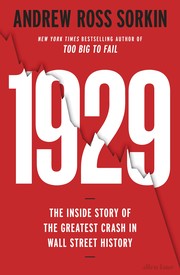
1929
Sorkin's narrative history of the 1929 crash opens on 1 February of that year, seven months before the fall, and follows bankers and speculators through to…
2,953-word summary · 13 min read
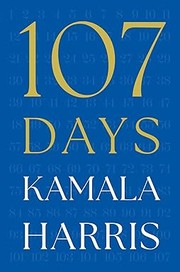
107 Days
Kamala Harris's memoir of the 107 days between Biden's withdrawal and Election Day, drawn from a journal kept during a campaign she believes she was best…
2,132-word summary · 9 min read
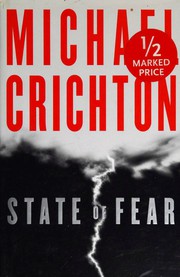
State of Fear
In Michael Crichton's 2004 thriller, a lawyer is pulled into a plot in which eco-terrorists stage natural disasters to sell the public on climate catastrophe.
2,292-word summary · 10 min read

Long Walk to Freedom
Mandela's account of a Thembu childhood, a law practice, a banned movement, twenty-seven years in prison, and the negotiation that ended apartheid.
2,454-word summary · 11 min read

In Order to Live: A North Korean Girl's Journey to Freedom
A young North Korean girl crosses the Yalu, survives trafficking in China, and rebuilds her life in Seoul in this unsparing memoir.
2,027-word summary · 9 min read

Too Much and Never Enough: How My Family Created the World's Most Dangerous Man
Mary L. Trump's 2020 memoir traces how a cold, zero-sum Queens household shaped her uncle, and uses family tax documents to challenge his self-made story.
2,059-word summary · 9 min read

Infidel
Ayaan Hirsi Ali's memoir of a Somali childhood, a forced marriage, a Dutch asylum claim, and the political fight that followed the murder of Theo van Gogh.
2,041-word summary · 9 min read
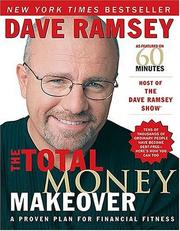
The Total Money Makeover: A Proven Plan for Financial Fitness
Dave Ramsey lays out seven Baby Steps, from a $1,000 starter fund to a paid-off house, with the debt snowball at the center.
2,663-word summary · 12 min read

Down and Out in Paris and London
Orwell's account of washing dishes in Paris hotels and tramping through London does not ask for pity, only for a clear look at how poverty actually works.
2,282-word summary · 10 min read