
Airframe
2,436-word summary 11 min read 351 pages in the book
- First published
- 1996
- Publisher
- Alfred A. Knopf
- Pages
- 351
- ISBN
- 9780679446484
Reading options
What's inside (9 sections)
I picked this one up on a wet Sunday with the vague memory that it was the Crichton book about a plane crash, and I expected a fairly simple ride. Something breaks, an engineer finds it, the bad guys get exposed. What I found instead was a book that spends most of its length arguing that the neat story is usually the one people get wrong. Airframe came out in 1996, published in hardcover by Knopf, and it runs to 351 pages in the first trade edition. It is Crichton's eleventh novel under his own name, and it carries the particular texture of a book written by someone who read accident reports for pleasure. That shows up as real rigor in the technical passages and as a certain impatience with people who are not engineers.
The idea at the center of the book stayed with me after I finished it. A perfectly airworthy aircraft can be involved in a disaster, and the fault can sit with a person in a seat rather than with the manufacturer. Crichton builds a thriller around that distinction, then adds a second layer about a television news machine that prefers a clean villain to a messy truth. I kept thinking about how little the actual mechanics of an accident matter to the public conversation that follows one. That gap is what the novel is really about, and it is a more interesting subject than the crash itself.
The accident and the one-week clock
The story opens with TransPacific Airlines Flight 545, a Norton Aircraft N-22 widebody, going through severe pitch oscillations over the Pacific. The plane dives and rises, passengers are thrown around the cabin, three people die and 56 are injured. The N-22 has an excellent safety record and the captain is highly skilled, so human error looks unlikely at first glance. Norton Aircraft is in the middle of negotiations for a major sale to China, and the company cannot afford a cloud hanging over its flagship widebody.
Casey Singleton is a vice president in quality assurance at Norton, and she gets tapped by chief operating officer John Marder to join the company's Incident Review Team. The team has one week to work out what happened. That deadline is the engine of the whole book. Every phone call, every document, every awkward conversation happens under the shadow of a deal that will collapse if the N-22 looks unsafe. Crichton keeps the clock running quietly in the background, and it gives even the duller technical scenes a pulse.
The flight recorders are in poor shape, which forces the team to check the aircraft's systems by hand. That is where the novel earns its reputation for detail. Crichton walks through slats, sensors, autopilots and maintenance records with the patience of someone who wants you to understand the machine. Some readers will find this fascinating. Others will feel the pace sag. I enjoyed most of it, though I noticed myself skimming a couple of the longer explanations.
Casey Singleton and the people around her
Casey is a believable protagonist in a way that Crichton's characters often are not. She is competent and tired, and she knows she is being watched. She has a veteran secretary named Norma who knows the company's history and can tell when someone is being slippery, and she has a small team of specialists. Doug Doherty handles structures and mechanics, Nguyen Van Trung covers avionics and the autopilot, Ken Burne is the power plant expert, and Ron Smith takes the electrical side. Crichton uses them well, giving each a moment to explain a piece of the puzzle before Casey pulls it together.
The person she distrusts is Bob Richman, an arrogant Norton employee assigned to help her. Richman is connected to the Norton family tree and is working his way through the company's divisions, and Casey picks up early that his assistance is not entirely benign. There is also a factory union that worries the China sale will move wing production overseas and cost jobs. The union's anger gives the story a second pressure source that has nothing to do with the physics of the crash.
Crichton is good at showing a company as a collection of competing interests rather than a single mind. Norton is not a villain. It is a place where people want different things, and some of them are willing to bend the truth to get them. That is a more interesting way to write corporate intrigue than the usual approach of giving one executive a mustache and letting him explain his scheme.
Following the slats and the counterfeit part
The first theory is that the plane's slats deployed in flight. Slats are movable surfaces on the leading edge of the wing that change its shape at low speeds, and deploying them at cruise would be a serious problem. Norton had seen similar slat errors on other N-22s and assumed the issue had been fixed. The team digs into the maintenance history and finds a counterfeit part in the wing of the accident aircraft. It looks like the answer, until someone points out that the part alone could not have caused the oscillations.
That is the pattern of the investigation. Each apparent answer turns out to be incomplete. Crichton is careful to show why a plausible explanation can still be wrong, and the technical argument never feels invented for the sake of a twist. He drew on National Transportation Safety Board accident report archives while writing, and it shows in the way the evidence behaves like real evidence rather than like a prop. When the characters discuss how bad press can ruin a good aircraft, the book's account of American Airlines Flight 191 lines up with what was understood at the time.
The book takes pains to defend the N-22 against the kind of public condemnation that damaged the DC-10's reputation. The argument is that a design can be sound and still be destroyed in the court of public opinion. I found this part convincing, and also a little preachy in places, because Crichton plainly wants to win the case rather than merely describe it. His sympathy for engineers is never in doubt, and that is both the charm and the limitation of the book.
The Newsline circus
Running alongside the investigation is a satire of television news that I enjoyed more than I expected to. Jennifer Malone is a producer for a program called Newsline, and she smells a story in the N-22. She works with Dick Shenk, who organizes the segment, and Marty Reardon, the on-talent interviewer. Frederick Barker, a former FAA employee and severe critic of the N-22, is happy to give them a quote. An unrelated N-22 engine failure and leaked passenger camera footage from Flight 545 pour fuel on the story.
Marder asks Casey to handle Malone's interview, which is a little like asking a suspect to tutor the detective. The scenes between Casey and the Newsline people are sharp, and Crichton clearly had fun writing them. Entertainment Weekly called that strand brutal and fresh and very funny, and I think that is fair. Malone is not a cartoon villain. She is a producer who knows what holds an audience, and her instincts are professional even when they are ugly.
The media plot is also where the book makes its second big argument. A sensational outlet can distort a technical story into something that sells better, and the distortion does real damage. The San Francisco Chronicle noted that Crichton does not mind making enemies, and this is the part of the novel where that shows most. I laughed at the Newsline scenes, then felt uneasy about how accurately they land. A newsroom that exists to fill airtime will always have a use for a simple accusation, and the book understands that better than most thrillers do.
The recorder that was not supposed to be there
The breakthrough comes from a piece of equipment nobody knew the aircraft carried. A quick access recorder, or QAR, is optional, and the accident plane happened to have one. Casey realizes this late in the week and locates the unit. From its data she can reconstruct the actual chain of events, and it is more complicated than the slat theory.
A counterfeit part caused a sensor in the wing to malfunction, which produced an error message in the cockpit. That message could be cleared by deploying and retracting the slats. Deploying the slats changes the shape of the wing, but the autopilot could compensate without trouble. The problem was who was flying. The captain's son, a pilot who was not certified on the N-22, was at the controls. He overcorrected by hand, overriding the autopilot, and the plane went into the oscillations that hurt so many people.
This is the moment the book has been building toward, and it is satisfying because it explains every earlier clue. Crichton ties the physical evidence to a human decision without letting either side off easily. The plane had a real defect in the form of a counterfeit part. The defect alone was survivable. The disaster required a person in the wrong seat making the wrong correction. That is a more honest account of most accidents than any single-cause headline can deliver.
The real-life echoes are hard to miss. The oscillations and the dislodged flap and slat handle are modeled closely on China Eastern Airlines Flight 583 in 1993, and the pilot allowing a son to sit at the controls recalls Aeroflot Flight 593 in 1994. Crichton said he drew on accident report archives, and the resemblance is deliberate. The Aeroflot crash killed everyone aboard, which gives the fictional version a grim weight it does not need to spell out.
The setup and the test flight
Knowing the truth turns out to be less useful than Casey expects. She cannot publicly blame a TransPacific employee without souring relations with the airline and damaging future sales just as surely as a safety scandal would. During her Newsline interview she also realizes that Richman has set her up to fail. He and Marder have quietly prepared a larger sale to a South Korean airline, one that included offsetting the wing to Korea. They planned to use the accident to sink the China deal and push out CEO Harold Edgarton, on the assumption that the Korean deal would survive the bad publicity.
Casey's counter move is clever and, I will admit, a bit too neat. She lets Malone onto a test flight of the accident aircraft, where the team reproduces the event. The demonstration shows that slat deployment alone does not cause the oscillations. Once Malone sees the evidence, she cannot air her segment as planned without opening herself to a defamation suit. She also cannot report the true story, because her boss decides it is not exciting enough to hold an audience. Both outcomes are bitterly funny, and they make the point that truth is not the same thing as a good story.
The China deal goes ahead, with the tail used as the offset instead of the wing. Edgarton promotes Casey to head the Media Relations Division. Richman is arrested in Singapore on narcotics possession charges, Marder leaves the company on supposedly good terms, and Malone departs Newsline after a contract dispute to join Hard Copy. There is a test pilot named Ted Rawley with whom Casey has an occasional relationship, and that thread is handled lightly. The ending ties up its loose ends with a tidiness that felt slightly manufactured to me, but it did not spoil the book for me.
What the book is arguing, and what grates
Crichton is making a case about air safety, about the redundancies built into every step of building a plane, and about the way blame gets assigned after a crash. He is also writing about how badly a news organization can distort a technical story, and about an older theme in his work of human failure inside a machine that is doing its job. These are good subjects, and the book is at its best when it trusts the reader to follow the evidence.
The praise it received was mostly deserved. Patricia Holt called it classic Crichton in the San Francisco Chronicle, and Christopher Lehmann-Haupt said in the New York Times that Crichton made a complex subject dramatically vivid. The Boston Globe's Nancy Harris praised his ability to simplify aviation's technical intricacies. Those readings match my own experience of the book. It is genuinely readable, and the research is not decoration. Entertainment Weekly's Tom De Haven went so far as to imagine Crichton as a boy who triple-checked his homework, which is a fair way of describing the attention on display here.
The criticisms also hold up. Holt called the book formulaic and its characters cardboard, and De Haven objected to genre clichés and what he called the clunkiest of plot gimmicks. Lehmann-Haupt went further, arguing that a writer clever enough to bring the material to life should have been able to tell the story without playing manipulative games with the reader. I felt some of that. Crichton hides information until it suits him, and the people on the television side are drawn with a broad brush. The engineering details are exact while the human ones are loose.
There is also the question of timing. Mark Lawson of the Guardian accused Crichton and his publishers of capitalizing on the loss of TWA Flight 800, noting that the novel landed in airport bookstores shortly after that disaster. The resemblance to the real accidents is closer to China Eastern 583 and Aeroflot 593, so the charge is a little unfair, but the observation about topicality is not wrong. Crichton's profile depended on being current, and Airframe is very much a book of its moment.
I still think it is worth reading. It is one of the few Crichton novels never adapted for film, which he attributed to the cost of making one, and I can see why. The drama is in a data recorder and a newsroom rather than in spectacle. What stayed with me was the stubborn idea that a machine can be sound and a crash can still happen, and that the people who explain it afterward often have an interest in getting the explanation wrong. That is a useful thing to carry away from a thriller, and Crichton earns it with more patience than he usually gets credit for.
FAQ
What really caused the crash in Airframe?
A counterfeit part made a wing sensor fail and send an error message to the cockpit. The captain's son, a pilot not certified on the N-22, was at the controls and overcorrected by hand, overriding the autopilot and starting the oscillations.
Is Airframe based on a real air disaster?
Crichton drew on National Transportation Safety Board accident report archives. The oscillations follow China Eastern Airlines Flight 583 in 1993, while a pilot letting his son fly echoes Aeroflot Flight 593 in 1994, though the fictional outcome is different.
Why was Airframe never made into a film?
Crichton attributed this to the expense of making such a film. It remains one of his few novels never brought to the screen.
Similar books
The Rooster Bar
Three law students buried in debt discover their for-profit law school is a scam, and decide the only way out is to con their way into practicing law before…
2,837-word summary · 13 min read
Prey
Jack Forman takes a contract job at a Nevada lab in Michael Crichton's 2002 thriller Prey, where self replicating nanoparticle swarms have started hunting on…
2,959-word summary · 13 min read
The Atlantis Gene
A geneticist and an intelligence operative chase two kidnapped boys through a global conspiracy about human evolution and a weapon built to cull humanity.
2,369-word summary · 11 min read
State of Terror
A new secretary of state and her team unpick a web of attacks across Pakistan, Afghanistan, and Iran in this 2021 political thriller.
2,307-word summary · 10 min read
Zero Day
Army investigator John Puller is sent alone to a West Virginia coal town to solve a colonel's murder, and finds a much larger secret buried nearby.
3,434-word summary · 15 min read
Gone Before Goodbye
Reese Witherspoon's first novel, written with Harlan Coben, follows a bereaved surgeon whose griefbot guides her into a medical conspiracy stretching from…
2,648-word summary · 12 min read
Falling
A pilot is told his family will be killed unless he crashes his Los Angeles to New York flight. Newman's debut turns one clean premise into a relentless…
2,507-word summary · 11 min read

Six Years
A professor who promised to forget the woman he loved sees her husband's obituary and discovers that the wedding, the marriage, and the woman herself may never…
2,076-word summary · 9 min read
When No One Is Watching
Sydney Green watches her Brooklyn block's Black residents vanish one by one in Cole's Edgar-winning thriller about gentrification as a crime scene.
2,165-word summary · 10 min read
Upgrade
A Gene Protection agent is infected with an upgrade virus that makes him stronger and faster than human, and only he can stop his sister from releasing it on…
2,166-word summary · 10 min read
Gone Tomorrow
Reacher stops a suicide bomber on the subway, then hunts her handlers.
2,308-word summary · 10 min read
Absolute Power
A thief watches the president kill, then runs with a lawyer who believes him.
2,401-word summary · 11 min read
The President Is Missing
President Jonathan Duncan faces impeachment over a secret call while a virus called Dark Ages threatens to erase American data in this 2018 Clinton and…
2,324-word summary · 10 min read
The Partner
A Biloxi lawyer fakes his death, steals $90 million, and hides in Brazil until hired muscle drags him home to trial.
2,221-word summary · 10 min read
Before the Fall
A private jet falls off Martha's Vineyard. A painter and a small boy survive, then face grief and the news cycle.
2,185-word summary · 10 min read
Tell No One
Harlan Coben's Tell No One fully retold: Beck, his wife's murder eight years back, a tell no one email, and a run from police. A 2001 Delacorte standalone with…
3,579-word summary · 16 min read
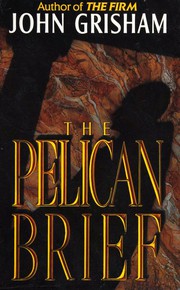
The Pelican Brief
Law student Darby Shaw writes a brief on murdered justices and becomes a target, fleeing with a reporter.
2,994-word summary · 13 min read
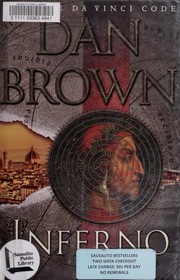
Inferno
Dan Brown's Inferno retold: Robert Langdon wakes in Florence with lost memory, follows Dante's clues with Sienna Brooks from Palazzo Vecchio to Venice and…
2,395-word summary · 11 min read
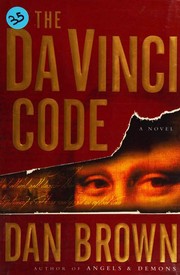
The Da Vinci Code
Dan Brown's The Da Vinci Code retold: a Louvre murder, Sophie Neveu, the Grail cryptex, and the chase to Rosslyn.
2,590-word summary · 12 min read

Angels & Demons
Dan Brown's Angels & Demons explained: a murdered physicist, the Illuminati, four missing cardinals, and Robert Langdon racing through Rome to stop an…
2,548-word summary · 11 min read
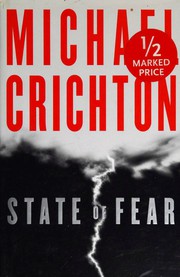
State of Fear
In Michael Crichton's 2004 thriller, a lawyer is pulled into a plot in which eco-terrorists stage natural disasters to sell the public on climate catastrophe.
2,292-word summary · 10 min read
Congo
In Crichton's 1980 jungle thriller, Karen Ross leads a Congo expedition to find lost Zinj and its diamonds, bringing Amy, a signing gorilla, into grey gorilla…
3,013-word summary · 13 min read
The Andromeda Strain
A town dies in seconds, and a sealed lab team races a germ that learns to eat seals.
2,013-word summary · 9 min read
Jurassic Park
Hammond clones dinosaurs on Isla Nublar and invites Grant, Sattler and Malcolm to certify safety before opening.
2,388-word summary · 11 min read
Wayward
With Ethan Burke now sheriff, Wayward Pines runs on cameras, fear and a founder's private plan, until a murder forces him to choose between order and the truth.
2,252-word summary · 10 min read

The Moonlight Child
On a cold January night, Sharon Lemke sees a child washing dishes in a neighbour's kitchen and decides she cannot ignore it.
2,169-word summary · 10 min read
The 5th Horseman
Two linked cases pull Lindsay Boxer and the Women's Murder Club into a hospital full of strange deaths and a luxury-car murder spree.
2,609-word summary · 12 min read
Th1rt3en
A former con artist turned defense lawyer takes a celebrity murder trial while a serial killer sits on the jury, steering the verdict.
2,254-word summary · 10 min read

Perfect Match
A Maine prosecutor shoots the priest she believes abused her son, then faces a trial that questions what justice can mean.
2,241-word summary · 10 min read
Make Me
Reacher drifts into a quiet Midwestern town and finds a missing investigator, a trail of killers, and a deep web secret.
2,352-word summary · 10 min read