
Reading options
What's inside (7 sections)
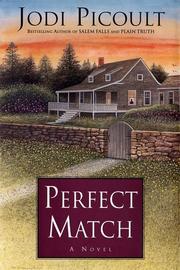
I came to this one expecting the usual Jodi Picoult arrangement: several voices, a family under pressure, and a moral argument that refuses to pick a side. Perfect Match has those ingredients, but the shape is different. It is a tighter, angrier book than her later work, and it spends much of its length inside a single question: what should a mother do when the courts cannot protect her child? I finished it feeling less persuaded than shaken, which may be exactly what Picoult intended.
The novel was published in 2002, when Picoult was already an established writer of domestic and legal fiction. It is her ninth novel, and it is set in York County, Maine. Unlike many of her other books, it does not move through overlapping flashbacks and competing narrators. That choice gives the story a straight line, and the line is deliberately hard to follow without judging the people on it.
A warning about the title, because it causes confusion. This is the Jodi Picoult novel from 2002, not a recent release with a similar name. Readers searching for it sometimes turn up a romance or a thriller from a different author and wonder why the characters do not match. The book discussed here is the one about Nina Frost and Father Szyszynski, published by Simon & Schuster. If the opening scene involves a courtroom shooting, you have the right book.
A courtroom scene with no build up
The book opens with a woman walking into a courtroom and shooting the defendant as he approaches his defense attorney. There is no gentle lead in. Picoult drops the reader into the aftermath of an act that appears to be madness, then spends the rest of the novel explaining how a reasonable person could arrive at it. The shooter is Nina Frost, an assistant district attorney. The man she kills is Father Glen Szyszynski, a priest at the church her family attends.
That opening is a risk. Announcing the central act so early removes any mystery about who pulled the trigger, but Picoult is not writing a whodunit. She is writing about justification, and the prologue works like a verdict delivered before the evidence. Everything that follows is the argument that led there. I found the device brutal in a good way. It also means the book has almost no interest in suspense for its own sake, which sets it apart from the legal thrillers that share its shelf.
The first chapters move back to the months before the shooting. We meet Nina at work, where she prosecutes cases involving children, and at home, where she is married to Caleb Frost, a stonemason, and raising their five year old son, Nathaniel. Picoult is direct about the gap between Nina's professional confidence and her private helplessness. She is a woman who spends her days building cases and her nights afraid of what might happen to her own child.
Nina Frost, prosecutor and mother
Nina is the most fully realized person in the book. She is good at her job, sharp in a courtroom, and used to being the person who decides what happens next. That makes the discovery at the center of the story especially hard to bear. Nathaniel is sexually abused, and when he is finally able to say something, the details point toward a priest at the family's church. The child is five, frightened, and for a time unable to speak about what happened at all.
What follows is the part of the novel that is hardest to read. Nina has spent her career watching children fail to get justice, and now she is the parent of one of those children. The system she trusts moves slowly, asks for evidence she cannot easily produce, and offers no guarantee that the man she suspects will be convicted. Her rage is not presented as a sudden snap. Picoult builds it out of small frustrations, official hesitations, and the terrible feeling of being the only person in the room who understands what is at stake.
Caleb is drawn more roughly. He is a man who builds walls for a living and believes in physical barriers, in protecting what is his by keeping the world out. His inability to reach Nina during this crisis is one of the book's quiet tragedies. He loves his wife and son, but he has no language for what is happening to them, and his answers keep missing what Nina needs to hear. The marriage becomes a second case file in the novel, one with no clear procedure to follow.
Nathaniel himself is necessarily a difficult figure to write. He is five, and for a stretch of the story he cannot or will not speak about what happened. Picoult keeps him at the edge of the narration, which is honest about how little the adults around him truly know. His silence is not a plot device for its own sake. It is the reason Nina has so little to work with, and the reason she starts looking for proof in places a prosecutor would normally distrust. When he does begin to say things, the words arrive in fragments that the adults must assemble, and the assembling is painful work.
Patrick Ducharme, a police detective and Nina's close friend, is the third point in that triangle. He has feelings for Nina that she does not return in the same way, and the book gives them a brief affair during a separation from Caleb. Patrick also appears in Picoult's later novel Nineteen Minutes, which gives him a familiar texture for readers of her work. Here he functions mainly as the person who can imagine what Nina is capable of before anyone else can.
When the evidence points the wrong way
The discovery that drives the novel is physical. Tests on Nathaniel's underpants indicate the presence of bodily fluids that match a priest. Nina believes the evidence identifies Father Szyszynski, the priest her family knows, and the case against him seems to confirm what her son has been trying to tell her. The trial begins, and Nina is in the courtroom not as a prosecutor but as a spectator and a parent.
Then the book turns the evidence around. The priest who actually abused Nathaniel is Father Gwynne, a visiting priest at the same church. Gwynne and Szyszynski turn out to be half brothers, and Szyszynski had a bone marrow transplant from Gwynne. Because of that transplant, the two men share the same DNA. The material found on Nathaniel's clothing could have come from either of them, and the test that seemed to settle the question was pointing at the wrong man all along.
This is the novel's most famous device, and it is a striking one. A detail that sounds like a technical footnote becomes the hinge on which a life turns. Picoult uses the medical fact without overexplaining it, and the confusion it creates is entirely believable. Nina kills Szyszynski in the courtroom believing she is stopping her son's abuser. In fact she has killed a man whose only connection to the crime is a shared bloodline and a great deal of bad timing.
The trial of Father Szyszynski is brief and frustrating. Nina watches from the gallery as testimony is given and objections are made, and she keeps waiting for someone to say the thing she already believes she knows. The atmosphere is tense in a way that has little to do with legal procedure. This is a small Maine community where the church is a central institution, and the case against a priest carries a weight that a courthouse cannot contain. Picoult makes the setting do real work, and the pressure in the room feels particular rather than generic.
Nina's own murder trial follows. The DNA issue is entered as evidence, and the jury cannot reach a verdict. The judge ultimately rules that Nina's reasons were justified, and she is found not guilty of murder. Under Maine law, though, the judge also finds her guilty of manslaughter, on the grounds that she acted under reasonable fear or anger brought about by reasonable provocation. She receives a twenty year sentence, which is suspended. The outcome is a legal compromise that satisfies nobody in the story, and the ambiguity is intentional.
The argument underneath the case
Picoult is not content to let the verdict be the end of the discussion. The book takes up the question of what a person is owed when the law fails them, and it refuses to give an easy answer. Publishers Weekly noted that the argument about a flawed system is solid while the alternative on offer looks like a form of frontier justice that many readers would reject. That seems exactly right. The novel wants you to understand Nina's act and to be disturbed by it at the same time.
That tension is the reason the book has lasted. It is not really a story about whether Nina is a good person. It is a story about the moment when a person who believes in procedure decides that procedure has become an obstacle to justice. Nina is a prosecutor, which makes the choice sharper. She knows the rules she is breaking better than anyone in the room, and she breaks them anyway. Picoult gives her no speech that excuses it, only a long account of the pressure that produced it.
The treatment of child abuse is unflinching, and it is also the part of the book some readers will find hardest to stay with. Picoult does not look away from the facts of Nathaniel's injury or from the way adults talk around it. There is a grim fairness to this. The whole novel depends on taking the crime seriously, so softening it would collapse the argument. Readers looking for a comfortable family drama will not find one here.
Other reviews were divided along similar lines. USA Today framed the story as a mother turned vigilante after her son's abuse, while the Denver Post asked whether the killing was murder or justice. Those two readings are the poles the whole novel moves between. A Washington Post review titled Breaking Faith pointed toward the religious dimension, and the book keeps returning to what it means when an institution that asks for trust fails the person who needs it most. Picoult does not let the church off the hook, but she also refuses to make the priest the only object of Nina's anger.
Kirkus was far less kind on publication, calling the book nicely written but hopelessly contrived and generally unconvincing. I understand the complaint, especially where the DNA coincidence is doing so much work. A bone marrow transplant that makes two men genetically indistinguishable is the kind of detail that a novelist reaches for when a plot needs a trap door. Once it is in place, though, the consequences are explored with real care, and the legal arguments that follow feel earned rather than decorative.
The fracture in the ending
The last movement of the novel widens the circle of blame. Nina learns that her husband poisoned Father Gwynne with antifreeze, an act that mirrors her own violence and reverses the moral position he held earlier in the book. Caleb had criticized her for killing Szyszynski, and now it turns out he was capable of a similar act himself. This discovery does not undo what Nina did, but it changes the shape of the family she did it for.
Patrick's departure closes another strand. He moves away, and the brief affair becomes another thing the Frosts have to carry without naming. The ending is less a resolution than a set of facts that everyone will have to live with. Picoult resists the temptation to restore the marriage or to make Nina's sentence feel like a clean punishment. The book ends with people separated and their choices still echoing.
That refusal is admirable, though it makes for a somewhat cold finish. A reviewer at The Washington Post framed the book as a study of faith tested by violence, and the title fits that reading. The perfect match of the title is not a romantic one. It is the match between a parent's love and a system that cannot measure it, or between a crime and the punishment that the law can actually deliver. The phrase keeps shifting as the book goes on, which is the point.
I finished Perfect Match convinced that Picoult was working through a real moral problem rather than arranging a sensational plot, even when the machinery of the plot felt too convenient. The book asks how much of the law a person can keep when their child has been harmed, and it declines to answer in a way that would let the reader relax. That is uncomfortable, and it is also the reason the novel still has weight more than two decades later.
Perfect Match was first published in 2002 by Simon & Schuster, with the Atria hardcover carrying ISBN 9780743418720 and running 368 pages. It is a crime novel and a family novel at once, and it belongs to the earlier, more argumentative stretch of Picoult's career. If you want the layered, many-voiced structure of her later books, this will feel blunt. If you want a novel that stays with a hard question until it has worn a groove, it is worth the difficult reading.
FAQ
Is this the 2022 novel called Perfect Match?
No. This is Jodi Picoult's ninth novel, first published in 2002. The cited edition is the Atria hardcover, an imprint of Simon & Schuster.
Is Perfect Match based on a real case?
No. It is a work of fiction set in York County, Maine. Picoult uses a bone marrow transplant and shared DNA as the basis for the mistaken identity plot.
Does Nina Frost go to prison?
The judge finds her justified and not guilty of murder, but guilty of manslaughter. She receives a twenty year sentence that is suspended.
Similar books
Plain Truth
An Amish teenager denies a hidden pregnancy after a newborn is found dead, and a city lawyer moves to the farm to defend her.
2,669-word summary · 12 min read
The Pact
After Emily Gold dies from a gunshot, her boyfriend Chris Harte says it was a suicide pact and faces trial for murder.
2,873-word summary · 13 min read
My Sister's Keeper
Thirteen-year-old Anna sues her parents for medical emancipation so she can refuse to give her dying sister Kate a kidney.
2,332-word summary · 10 min read
The Children Act
A High Court family judge weighs whether a dying teenage boy can refuse a blood transfusion while her own marriage quietly comes apart.
2,399-word summary · 11 min read
King of Ashes
A Virginia crematorium, a debt owed to the Black Baron Boys and a family secret pull Roman Carruthers back into a war where everything burns.
2,229-word summary · 10 min read
Gray Mountain
A Manhattan associate furloughed after the financial crash takes a year of unpaid legal aid work in Appalachian coal country, and finds the case of her life…
2,026-word summary · 9 min read
Keep It in the Family
Mia and Finn renovate a long empty house and find seven children hidden in the attic.
2,270-word summary · 10 min read
What Lies Between Us
Nina keeps mother Maggie locked upstairs for years, trading lies about sisters and deaths that unravel fast.
2,062-word summary · 9 min read
The Chain
Rachel must kidnap another child to save kidnapped Kylie, entering a chain where parents pass crime forward.
2,021-word summary · 9 min read
Pieces of Her
After her mother kills a mall shooter with shocking skill, Andy Oliver uncovers a hidden 1980s past of radicals and wealth.
2,791-word summary · 12 min read
The Family Remains
Lucy returns to London as bones on the Thames reopen the Chelsea mansion deaths.
2,304-word summary · 10 min read
Watching You
A new wife in Bristol fixates on a charismatic neighbor while a teen boy logs every move before a murder.
2,363-word summary · 11 min read
The Good Daughter
Twenty eight years after a home invasion shattered her family, a lawyer witnesses a school shooting that reopens old wounds.
2,505-word summary · 11 min read
Defending Jacob
A Newton prosecutor defends his fourteen year old son after a classmate is stabbed in the park.
2,994-word summary · 13 min read
The Locked Door
Surgeon Nora Davis hides serial killer father while patients die.
2,465-word summary · 11 min read
The Family Upstairs
Libby Jones inherits a Chelsea mansion and a past tied to a cult house, two runaways, and a baby left waiting.
3,300-word summary · 15 min read

The Client
Eleven-year-old Mark Sway learns a mob secret in Memphis and hires lawyer Reggie Love for one dollar.
2,536-word summary · 11 min read
A Flicker in the Dark
Psychologist Chloe Davis faces copycat disappearances in Baton Rouge twenty years after her father confessed to murders.
3,074-word summary · 14 min read

Lone Wolf
A wolf expert lies in a coma after a crash, and the son who left home years ago returns to end his life support while his sister fights to keep him alive.
2,761-word summary · 12 min read
Keeping Faith
A seven-year-old girl starts reciting scripture and working cures, and her mother must fight a custody battle over whether the gift is real.
2,408-word summary · 11 min read

Sing You Home
A music therapist, her new wife and an evangelical ex-husband end up in court over three frozen IVF embryos.
2,952-word summary · 13 min read
Vanishing Acts
A search-and-rescue worker's perfect life cracks when her past and her father catch up.
2,799-word summary · 12 min read
A Spark of Light
A gunman takes a Mississippi abortion clinic hostage as a negotiator finds his own daughter inside.
2,486-word summary · 11 min read
House Rules
Jodi Picoult's 2010 House Rules follows Jacob Hunt, a teen with Asperger syndrome accused in his tutor's death, as his mother Emma and brother Theo face police…
3,079-word summary · 14 min read
Leaving Time
Thirteen-year-old Jenna searches for her mother who vanished from an elephant sanctuary ten years earlier.
3,001-word summary · 13 min read
The Storyteller
Baker Sage Singer is asked by old Josef Weber to kill him for his SS past, while her grandmother Minka's war story weighs on her.
2,174-word summary · 10 min read
Nineteen Minutes
Sterling High student Peter Haddon commits a school shooting and lawyer Jordan McAfee defends him while Josie Cormier hides truth.
2,267-word summary · 10 min read
The Moonlight Child
On a cold January night, Sharon Lemke sees a child washing dishes in a neighbour's kitchen and decides she cannot ignore it.
2,169-word summary · 10 min read
The Innocent Man: Murder and Injustice in a Small Town
Grisham's first nonfiction book tells how Ron Williamson lost eleven years on death row for a murder he did not commit in Ada, Oklahoma.
2,245-word summary · 10 min read
The 5th Horseman
Two linked cases pull Lindsay Boxer and the Women's Murder Club into a hospital full of strange deaths and a luxury-car murder spree.
2,609-word summary · 12 min read