
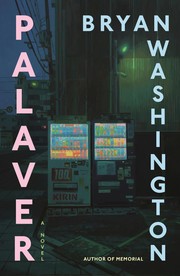
Palaver
2,465-word summary 11 min read 336 pages in the book
- First published
- 2025
- Publisher
- Farrar, Straus and Giroux
- Pages
- 336
- ISBN
- 9780374609078
Reading options
What's inside (9 sections)
The pitch for Palaver sounds almost aggressively small. A man in Tokyo gets a surprise visit from the mother he has not spoken to in years, and the two of them spend the weeks before Christmas trying to share a room without killing each other. That is essentially the whole book. Bryan Washington published it in November 2025 through Farrar, Straus and Giroux at 336 pages, and it became his third novel and fourth book. It was a finalist for the National Book Award for Fiction, won the Los Angeles Times Book Prize for Fiction, and showed up on best-of-the-year lists from Time, Kirkus, The New Yorker, and The Washington Post. I went in expecting a tight family drama. What I found was a book that treats a one-room apartment in Tokyo as a place where the whole question of home can be argued, painfully and often very funny.
The mother who arrives uninvited
Neither of the central characters has a name. The son lives in Tokyo, works as an English tutor, and spends his nights drinking with friends at a gay bar. He is involved with a married man and has built a chosen family for himself in Japan, which is a polite way of saying that he has made a life out of people who chose him back. His mother lives in Houston, and they have not spoken in months. The reason is not mysterious. She always preferred his brother Chris, a troubled, homophobic young man, and that preference is what drove him out of the house in the first place.
Ten years after they last saw one another, she turns up at his door in the weeks before Christmas. She has not warned him. She gets lost almost immediately in the Shin-Okubo neighborhood, refuses to ask strangers for directions out of what looks like pride or fear, and eventually takes refuge in a small blue building with a striped awning and a yellow bistro sign. He finds her there. Their first conversations are comic and tense in equal measure, full of complaints about a broken heater, instructions she has left on the fridge, and the convenience store downstairs. This is how the book introduces its central relationship: not with a confession, but with domestic complaints that neither person is willing to stop making.
I liked the decision to leave them unnamed. It makes the fights feel like they could be happening in any family, and it also means the son's particular life, his queerness and his chosen family, never gets treated as the thing that explains the conflict. The conflict is older than that. It predates who he has become. His mother wanted a different son, and he knows it, and every small instruction she gives him carries the weight of that fact.
One room, a curtain, and a cat named Taro
The apartment is essentially one room. A curtain divides the sleeping spaces, which means there is no real privacy, and the only other resident is a cat named Taro who becomes the sole mediator between mother and son. Washington is very good on the physical facts of close quarters. You know where the refrigerator is. You know the shape of the room and the location of the bistro downstairs. What I am not inventing is the way the book uses the space: a curtain instead of a wall, a cat instead of a referee. When two people cannot get away from each other, the objects in the room start to matter enormously.
Taro is more than a prop. The cat gives them something to talk about that is not the past, and the cat's presence makes the apartment feel like a home that the mother has no claim on. She is a guest who cannot leave, in a space that belongs to a son she does not quite recognize. Washington lets all of that sit in the details rather than in dialogue. A lot of the emotional work in this book happens off the page, in the spaces between what the mother says and what she means.
The early chapters move back and forth between the present and memories of Jamaica, where the mother's life was photographed by a man named Stefan. There is also her own complicated brother, whose jangling gait the son has unconsciously reproduced despite never having visited Jamaica. That detail stopped me. It is the kind of observation that makes a book feel true in a way that plot alone cannot. He carries a mannerism from a relative he has never met, which means the family has shaped his body even where it has not shaped his memories. The past is not something he can simply reject, because it has already got into how he walks.
Houston, exile, and the brother named Chris
The mother is trying to reconcile her good intentions with her missteps. That is the most accurate way I can put what she is doing, because Washington refuses to make her a villain. She loved her children. She also failed one of them in a way that cannot be undone by showing up with gifts or instructions. The son, for his part, is trying to work out whether forgiveness is something he owes anyone. He has built a life that works in Tokyo, but building it required leaving, and leaving required a kind of rage he may not have fully examined until she arrives.
The Financial Times called the book delightfully funny and blunt, with an underlying warmth the two try and fail to keep buried, and described it as a story of compressed grace in which pain may be relieved through mutual recognition, through palaver. That word, palaver, is the key. It means talk, especially talk that goes on too long and covers too much, talk that is a little tedious and also the only way through. The novel is built out of such conversations. People complain about the heater, the fridge, the convenience store, and eventually about the things that actually matter, because they cannot get to the big things without passing through the small ones first.
Washington has written before about displacement and the tolls of emigration and exile, as The New Yorker noted in its coverage. Here those themes are present but kept close to the ground. The mother's arrival in Tokyo is not treated as a grand collision of cultures. It is treated as an old woman getting lost in a neighborhood and refusing to ask for directions. That refusal says more about pride and displacement than a page of explanation would. The book's gentlest joke is that she is as much a stranger in this city as he once was in theirs.
Bistro, bar, and a trip to Nara
As the weeks pass, both of them start to reach outward. She forms a tentative friendship with the owner of the local bistro, the blue building with the yellow sign where she first took shelter. He begins a cautious acquaintance with a new patron of the bar he frequents. These secondary relationships matter because they let each of them practice being a person outside the mother-son dynamic. Neither can cope with the other full time, and Washington understands that the relationship improves when they get a little air.
A trip to Nara gives them another testing ground. I will not describe what happens there in detail, because the novel's method is cumulative and the small incidents matter more than any single one of them. What I can say is that the trip is the point in the book where the pattern of the earlier chapters breaks open. They are away from the apartment, away from the cat and the curtain and the convenience store, and the change of scene forces them to deal with each other without the furniture to hide behind. Time described the book as an intimate look at a young gay man struggling to reconcile with his family, and this stretch is where that description feels most precise.
The book is illustrated with black-and-white photographs of Tokyo, and those images do something worth noting. They give the city a texture that the prose does not always supply, and they remind you that this is a place with a life outside the two characters. The photographs are not decoration. They are part of how the book thinks about memory and about what a city holds for a person who has made it home.
Why he left Houston
I kept coming back to the question of what the son actually walked away from. His mother preferred Chris, and Chris was troubled and homophobic, a boy whose anger at the world found an easy target in his own brother. That is the fact the book gives us, and it is enough to explain a departure. What Washington does not do is turn Chris into a monster or the mother into a villain who sees the error of her ways. Chris is her son, and she loves him, and her inability to see what he is doing to the other one is the wound. The son left because staying would have meant living inside a version of himself that she had already rejected.
He has made a different arrangement in Tokyo. He works as an English tutor, which is a job built around helping people say things they cannot quite say in another language, and he spends his nights at a gay bar with friends who chose him. There is a married man he is involved with, a relationship with a built-in limit that he seems to accept without much complaint. Put those facts together and you get a portrait of a man who has built a life out of partial belonging. His chosen family is real, but it is also a structure he had to assemble himself, piece by piece, because the family he was born into would not hold him.
I think that is why the visit is so destabilizing. His mother's arrival does more than reopen an old argument. It puts a claim on the apartment, on the cat, on the small routines he has built to keep himself steady. The apartment is one room with a curtain, and yet it is his, and her presence makes him look at it as though he were seeing it from outside for the first time. The book is very good on that particular kind of dread: the fear that someone who never wanted you will arrive and decide whether the life you made counts.
The people around the room
Washington populates the edges of the story with people who show different ways of belonging. The owner of the bistro in the blue building becomes a tentative friend to the mother. This is the woman who got lost in Shin-Okubo and took refuge in that building because she would not ask a stranger for help. That she returns there, and that the owner returns her interest, says something about how badly she needs a place to stand that is not her son's apartment. Their friendship is small and cautious, and it matters because it lets her be a person other than a mother who failed.
At the bar, the son begins a cautious acquaintance with a new patron. The book does not make a grand event of it. It lets the connection happen in the gaps between the mother-son scenes, which is exactly right, because the relationship with his mother has crowded out most other relationships in his life. The married man he is seeing belongs to this same part of the story, a private arrangement that stays mostly out of sight. I wanted more of that thread, honestly. The book tells us enough to understand the shape of it but keeps the details in the background.
The memories of Jamaica bring in another figure, a man named Stefan who photographed the mother's life there. Those photographs within the story sit alongside the actual black-and-white photographs of Tokyo that illustrate the book, and the pairing is deliberate. Both are attempts to hold a life still, to decide which moments count as a life. The mother's own brother, with his jangling gait, is part of the same inheritance. The son reproduces that gait without ever having visited Jamaica, which is the most precise image in the novel for what it means to inherit something you cannot remember. Food runs through these scenes too, from the bistro to the convenience store downstairs, and it gives the book a way to show care that does not require a speech.
What stayed with me, and what did not
The Washington Post called the book heart-wrenchingly honest, often luminescent, and an unshakable triumph. Kirkus praised the patient, powerful analysis of the dual devotion required to heal a fractured relationship. Both readings make sense. What impressed me most was the patience. Washington lets the mother and son be difficult for a long time. He does not hurry them toward a breakthrough, and when recognition comes it arrives through ordinary speech rather than through a speech. That restraint is rare, and it is why the ending lands as softly as it does.
My criticism is that the book can feel almost too slight for the weight it is carrying. There are long stretches where very little happens beyond conversation, and while I found those conversations absorbing, I can see a reader deciding that 336 pages is a lot of time to spend in one room with two people who keep circling the same wound. The son's life outside the apartment, including the married man he is involved with, stays mostly in the background, and I wanted more of it. The recovered memories of Jamaica are handled beautifully but briefly, and the book never quite explains Stefan's role to my satisfaction. These are complaints about emphasis rather than execution.
The recurring themes are forgiveness, chosen family, queer love, migration, food, and the elusive nature of home, and the book is best when it lets those themes collide over a meal or a complaint. It is not a novel about a mother and son resolving everything. It is a novel about two people who keep talking because talking is the only thing they still share, and about the possibility that shared talk might become something more. Palaver is a funny word for that, with its hints of chatter and fuss, and Washington clearly enjoys the joke. The laughter in the book is not there to make the pain easier. It is there because the pain and the laughter are the same material, and pretending otherwise would be the real dishonesty.
FAQ
Where is Palaver set?
Most of the novel takes place in Tokyo, in and around the son's one-room apartment, his local gay bar, and a nearby bistro, with a trip to Nara later on.
Why don't the mother and son have names?
Washington gives neither a name, which keeps the focus on their specific argument rather than on identity labels and lets the family history carry the conflict.
What awards did Palaver receive?
It was a finalist for the 2025 National Book Award for Fiction and won the 2025 Los Angeles Times Book Prize for Fiction.
Similar books

All Adults Here
A widow in upstate New York reconsiders the parent she was after a neighbor's death, then gathers her three grown children for a season of uneasy truths.
2,171-word summary · 10 min read

We Are Okay
Marin fled San Francisco after her grandfather vanished and stopped answering anyone. When Mabel visits her college dorm, she has to say what happened.
2,253-word summary · 10 min read

The Wilderness
Four Black women move through twenty years of friendship in Angela Flournoy's discontinuous, widely praised second novel.
2,141-word summary · 10 min read
The True True Story of Raja the Gullible (and His Mother)
A gay philosophy teacher in Beirut revisits six decades of Lebanese history, family trauma, and his thorny bond with his mother.
2,274-word summary · 10 min read

The South
A seventeen-year-old moves to his family's failing fruit orchard in 1990s Malaysia, where a summer love affair unfolds as the household and the land around him…
2,903-word summary · 13 min read
The Vacationers
A New York family's two-week stay in Mallorca turns into a comedy of exposed secrets when a magazine editor's affair and a son's debts come to light.
2,324-word summary · 10 min read
The Rachel Incident
A funny, sharp novel about two twenty-somethings in recession-era Cork whose bookshop friendship, tangled romance and a married professor's lie leave a secret…
2,346-word summary · 10 min read

The Kitchen God's Wife
Amy Tan's second novel pairs a San Jose speech therapist with her Chinese mother, whose account of war, an abusive husband, and a narrow escape comes out in a…
2,896-word summary · 13 min read
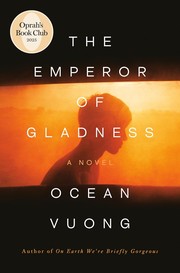
The Emperor of Gladness
Ocean Vuong's second novel follows a young addict pulled back from a bridge in a dying Connecticut mill town and into the home of an elderly immigrant woman…
2,693-word summary · 12 min read
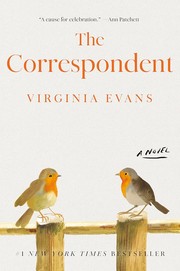
The Correspondent
A retired lawyer in Annapolis writes letters across a decade to family, literary heroes, and one recipient she never mails. Evans's debut turns correspondence…
2,296-word summary · 10 min read
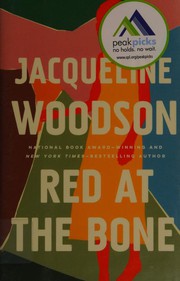
Red at the Bone
A girl's coming-of-age ceremony in a Brooklyn brownstone opens a family story shaped by Tulsa, teenage pregnancy, class and a second tragedy on September 11.
2,108-word summary · 9 min read
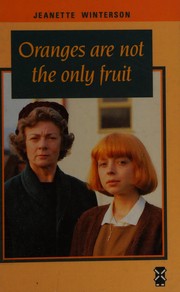
Oranges Are Not the Only Fruit
An adopted girl in a strict Pentecostal household learns to read the Bible, preach sermons and love women, then faces her church and mother for it.
2,384-word summary · 11 min read

Hollow Bones
On 11 September 2001, two-month-old Molly Fitzgerald loses her mother at the World Trade Center. She grows up planning for disasters, until a crisis in her new…
2,703-word summary · 12 min read

Good Girl
A nineteen-year-old artist in Berlin, grieving her mother, falls into an unequal romance with an American author who offers escape from the ideal of the good…
2,579-word summary · 11 min read
Dream Count
Four women narrate the 2020 lockdown in their own voices: a travel writer, a friend in early labor, a banker cousin and a housekeeper assaulted in a hotel room.
2,286-word summary · 10 min read

Detransition, Baby
Torrey Peters's debut follows three Brooklyn adults as an unexpected pregnancy pushes them to imagine an unconventional family. Funny, sharp, and unwilling to…
2,925-word summary · 13 min read

Big Swiss
A transcriptionist for a sex coach falls for one of his clients, the tall Swiss gynecologist she calls Big Swiss, in a funny novel about work and secrets.
2,523-word summary · 11 min read

Aristotle and Dante Dive into the Waters of the World
Ari and Dante return for senior year in El Paso, navigating first love, AIDS, family grief, and the cost of being openly gay in 1987 Texas.
2,188-word summary · 10 min read
Kitchen
Orphan Mikage finds home in a kitchen with Yuichi and Eriko after loss.
2,597-word summary · 12 min read
Summer Sisters
Vix and Caitlin share Martha's Vineyard summers from age twelve into adulthood, through first love, grief, marriage, and a disappearance that still haunts Vix.
3,633-word summary · 16 min read

The Bonesetter's Daughter
A ghostwriter translates her mother's hidden Chinese memoir and learns the truth about Immortal Heart, Precious Auntie, and a family curse.
2,720-word summary · 12 min read
A Tale for the Time Being
A diary by bullied Tokyo teen Nao washes up in Canada, pulling novelist Ruth into her family past.
2,148-word summary · 10 min read
The Story of the Lost Child
Elena and Lila age through motherhood, quakes, and a vanishing.
2,500-word summary · 11 min read
Those Who Leave and Those Who Stay
Elena publishes into Florence salons while Lila labors through Naples factories across the 1970s.
2,034-word summary · 9 min read

The Bean Trees
Taylor Greer flees Kentucky, inherits Cherokee toddler Turtle, and roots with Tucson strays.
2,082-word summary · 9 min read

The Elegance of the Hedgehog
A Paris concierge hides her brilliant mind while a gifted girl plans her death, until a new tenant sees through them both.
2,248-word summary · 10 min read
Colorless Tsukuru Tazaki and His Years of Pilgrimage
At thirty six, Tsukuru revisits four old friends to learn why they cut him off at twenty.
2,765-word summary · 12 min read
On Earth We're Briefly Gorgeous
A son writes to the mother who cannot read him: war, migration, first love, and loss in one Vietnamese American family in Hartford.
3,113-word summary · 14 min read

Convenience Store Woman
At 36, Keiko has worked at a Tokyo convenience store for 18 years and loves it. Family pressure to marry pushes her toward a strange fake partnership.
2,989-word summary · 13 min read

Aristotle and Dante Discover the Secrets of the Universe
Two Mexican American boys in 1987 El Paso become inseparable and learn what love asks of family.
2,093-word summary · 9 min read