
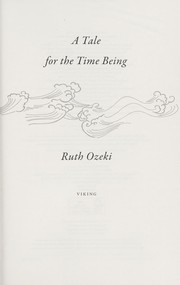
A Tale for the Time Being
2,148-word summary 10 min read 432 pages in the book
- First published
- 2013
- Publisher
- Viking
- Pages
- 432
- ISBN
- 9780670026630
Reading options
What's inside (8 sections)
I found A Tale for the Time Being in a free library on a rainy island trip, which felt staged by the universe because the book starts with something washing ashore. Ruth Ozeki published it March 12, 2013 with Viking, a 432 page hardcover with ISBN 9780670026630. It is a standalone novel, though Ozeki returns to Zen and time themes later. It was shortlisted for the 2013 Booker Prize and won the Los Angeles Times Book Prize. I went in for the puzzle. I stayed for Jiko, a 104 year old nun who might be the calmest character I ever met.
The structure is two voices. In Tokyo, sixteen year old Nao Yasutani writes a diary. She is lonely, bullied at school, living with parents who moved back from California after her father lost a Silicon Valley job. Her father is depressed and jobless. Her mother works long hours. Nao decides she will end her life, but first she will write the life of her great grandmother Jiko, a Buddhist nun who lived over a century. Writing Jiko story will be Nao farewell gift before she leaves.
Across the Pacific, on a remote island in British Columbia, a novelist named Ruth finds a Hello Kitty lunchbox washed up after the 2011 tsunami. Inside are Nao diary, letters, a watch, and a copy of Proust. Ruth, who shares Ozeki name and life details, becomes obsessed. Who is Nao. Is she alive. Did the tsunami take her. Ruth reads slowly, researches, translates, dreams. Her husband Oliver, an artist, helps and worries. Ruth neglects her own writing and marriage to chase a girl who may be fiction, memory, or ghost.
Nao in Tokyo
Nao voice is the reason to read. She writes in purple ink, direct, funny, sad, teenage without caricature. A time being is someone who lives in time, she explains, which means you and me. She was happy in California until money ran out. Back in Japan, she does not fit. Classmates mock her accent, her clothes, her father unemployment. A popular girl leads bullying that turns physical and filmed. Teachers look away. Nao skips school to wander arcades and temples.
Her father Haruki is heartbreaking. He was a bright engineer, now unemployed, ashamed, attempting suicide while Nao listens through walls. He loves Nao but cannot shield her. He plays games with her, teaches her about physics, then withdraws. Nao loves him and resents him. She writes about his attempts plainly, without sensationalism. It is hard to read and necessary. Ozeki, who has spoken about her own family, treats depression as illness plus economic shame, not moral failure.
Jiko saves the book from despair. Nao visits her great grandmother at a temple in the countryside. Jiko is 104, tiny, bald, funny, wise without preaching. She teaches Nao to sit, to breathe, to notice. She tells stories about her son Haruki the First, Nao great uncle, a kamikaze pilot in World War Two who refused to hate. Jiko lost almost everyone and kept kindness. She gives Nao tasks, cleaning, chanting, listening to wind. Nao, who expected boring religion, finds relief. For a few chapters, bullying fades and the book breathes pine and soup.
Nao also learns about her father namesake. Haruki the First was a philosophy student forced into war. His letters, which Nao reads, question duty, time, and what it means to die well. He chose a different path than ordered, which history hid. This thread connects past war to present bullying. Both involve groups demanding obedience. Both ask what one quiet person can refuse. Ozeki does not equate school cruelty with war, but she shows the same pressure to conform and disappear.
Ruth on the island
Ruth chapters are slower and more essay like. She lives with Oliver in a cabin, surrounded by forest, crows, and unfinished drafts. She is blocked, aging, anxious about time. Finding Nao diary gives her purpose that becomes fixation. She Googles names, hires a translator, visits a temple, emails scholars about quantum mechanics. She wonders if reading changes outcome. If she finds Nao, will Nao live. If she stops, will Nao vanish.
Oliver is patient and a little jealous of a diary. He gardens, builds, jokes. He loves Ruth but tells her she is using Nao to avoid her own work and grief about her mother. Their marriage feels lived in, small kindnesses and small cuts. They argue about whether to publish, about money, about having children late. These scenes will resonate with writers and caregivers. They also slow momentum. Readers here for Nao may skim Ruth research on barnacles and quantum many worlds. I skimmed a little, then went back, because Ozeki plants clues in the digressions.
The island setting is vivid. Rain, slugs, beach plastic, crows that watch. The tsunami debris is real. After 2011, shoes, buoys, and houses crossed the Pacific to Canada. Ozeki uses that fact to ask about connection. What washes up owns whom. Ruth feels responsible for things the ocean gives her. That responsibility grows until she dreams as Nao, or Nao dreams as her. Boundaries blur in ways that are moving if you accept them, frustrating if you want straight mystery.
A central question drives Ruth plot. Did Nao survive. The diary ends mid story. Letters suggest different fates. Internet searches give false leads. Ruth must decide how much to force an answer. Oliver suggests letting the story be. Ruth cannot. She stays up, translates faster, misses meals. Her health dips. The book asks if readers harm writers by demanding endings. It implicates me, turning pages fast for relief. I felt called out in a useful way.
Time, Zen, and physics
Ozeki is a Zen Buddhist priest, and the book teaches without lecturing. Jiko lessons are simple. Sit. Notice breath. Notice thought without chasing. Everything changes, including pain. Nao practices badly, which is the point. She counts breaths, loses count, starts again. She applies it once during bullying by watching fear rise and fall instead of fighting it. It does not save her. It gives her seconds of space. That honesty about practice matters more than miracles.
Quantum ideas run alongside. Oliver explains Schrödinger cat, many worlds, entanglement in kitchen table language. Nao father loved physics too, which links him to Oliver across distance. The book plays with the thought that reading collapses possibility, that Ruth attention might choose which Nao lives. Ozeki does not claim magic. She uses physics as metaphor for care. Paying attention changes the attender, if not the past.
History threads add weight. Haruki the First letters describe training to die for empire while reading philosophy that says life is precious. His choice to disobey in a small, hidden way costs him and saves his honor as Jiko tells it. Nao, facing her own pressure to vanish, learns she can choose differently. Her father, facing shame, learns through her writing that his life matters to someone. These echoes are clear but not heavy handed. War past and school present rhyme without equating.
The prose shifts well. Nao chapters are short, slangy, with lists and jokes. Ruth chapters are longer, reflective, with research and dreams. Jiko stories are spare, like parables. Ozeki balances humor and grief. A scene where Jiko teaches Nao to chant while a cat steals food made me laugh out loud. A scene where Nao sits with her father after an attempt made me put the book down and stare at rain.
What resolves and what does not
I will not spoil the ending fully, but it is not a thriller reveal. Nao fate stays partly open, though Ozeki gives enough to hope. Ruth finishes her search by writing, not by finding. The diary changes Ruth more than Ruth changes the diary. That may frustrate readers who want a found girl hug. The book argues some people we love through pages stay pages, and care still counts.
Jiko dies, as 104 year olds do. Her death is peaceful and prepared, which contrasts with the suicides the book circles. Ozeki treats death as part of time being, not failure. Nao father lives, at least in the version Ruth chooses to trust. He seeks help. Nao returns to Jiko temple. Bullying does not vanish. It pauses. That restraint feels honest. Systems do not fix in one diary.
Fair criticism is needed. At 432 pages, the Ruth research slows middle. Quantum summaries repeat. Oliver lectures can feel like author notes. Some readers will find the metafiction, an author named Ruth writing about a writer named Ruth finding a diary, cute rather than deep. The book also includes sexual assault and bullying scenes that are stark. They are not graphic for shock, but they hurt. Content notes help sensitive readers.
Letters, watches, and what we keep
The lunchbox contents deserve close attention because Ozeki chose each object with care. Nao diary is the voice, written in purple ink with jokes in margins. Letters from Haruki the First are the past, folded thin, with censor marks. A watch, stopped and broken, is time itself, held but not moving. A copy of Proust, hollowed to hide the diary, is reading as shelter. Ruth lays them on a table and photographs them, as if order will yield answers. It does not, at least not directly. Instead each object opens a practice.
The watch stopped at a moment Ruth tries to match to quake time. Was it when Nao dropped it. When water took it. When someone set it down. Oliver, practical, says watches stop when wet. Ruth wants meaning. Their debate about the watch mirrors larger debates about signs. Do we find meaning or make it. Ozeki lets both stand. Ruth research into tsunami debris drift, currents, barnacle growth, gives probable paths. Probable is not certain. That gap is where care lives. You act as if it matters without proof it does.
Letters from the great uncle need translation help, which brings in a kind professor and a difficult choice. Some lines are missing. Some kanji are old. Ruth must guess with help. One guess changes whether Haruki the First sounds defiant or resigned. Ruth chooses the kinder reading, then worries she chose to comfort herself. That worry is the book in small. Reading is always partly self portrait. Ozeki does not hide that. She shows Ruth draft, cross out, redraft. I found those passages brave. Few novelists show their own wishful editing on the page.
Proust as a hiding place is a joke and a clue. In Search of Lost Time is about memory and return. Nao hides her time inside his time. Ruth, blocked on her own memoir, hides from her time inside Nao time. When Ruth finally writes again, she writes about finding, not about Nao alone. The lunchbox taught her to look at her own mother death, which she had been circling for years. That turn, from solving a girl to facing grief, is what lifts the book from clever to moving.
I spent an evening after finishing just handling my own kept objects. A train ticket, a grandmother button, a child drawing. None prove anything. All hold someone. Ozeki made me kinder to my own small archive. That is not plot. It is use, which lasts longer.
The translation and appendix sections, with Japanese terms and footnotes, delight some and tire others. I liked learning words like uji, being, time, and zazen, sitting. Others may feel lectured. The Booker shortlist tag raises expectations for plot that this meditative book does not chase. Go in for voice and thought, not twists.
Still, the book earned its prizes for me. It holds bullying, depression, war memory, tsunami grief, marriage strain, and Zen practice in one lunchbox without breaking. Nao voice alone would carry it. Jiko lifts it higher. Ruth self doubt keeps it honest about reading itself.
Who should read it
Adults and older teens ready for hard topics fit best. There is bullying, suicide attempts, sexual violence, parental depression, war death. No explicit how to detail, but emotional weight is heavy. Ages sixteen and up is safer than young teen. Fans of literary fiction, memoir with research, and books about books will feel at home. Fans of fast mystery should adjust pace or skip.
Pair it with Ozeki memoir The Face for more on time and self, or with When Breath Becomes Air for another view of meaning under limit. Read with tea, near water if you can. Let Jiko chapters slow you. Sit a little after. Notice breath. Start again when you lose count.
I returned my copy to the free library with a note inside. For whoever finds this next, read Nao parts out loud once. Her voice deserves air. Tell Jiko story to someone you love. That is what time beings do. We keep each other in time by saying names.
FAQ
When was A Tale for the Time Being published and how long is it?
Viking published it March 12, 2013. The hardcover runs 432 pages with ISBN 9780670026630.
Is A Tale for the Time Being part of a series?
No. It is a standalone novel, though Ozeki returns to similar Zen and time themes in later books.
Did A Tale for the Time Being win awards?
It was shortlisted for the 2013 Booker Prize and won the Los Angeles Times Book Prize.
Similar books
Kitchen
Orphan Mikage finds home in a kitchen with Yuichi and Eriko after loss.
2,597-word summary · 12 min read

Fathers and Sons
Arkady brings the nihilist Bazarov home to his father's estate, and a generational argument turns into love, a duel, and an early death.
2,192-word summary · 10 min read

We Are Okay
Marin fled San Francisco after her grandfather vanished and stopped answering anyone. When Mabel visits her college dorm, she has to say what happened.
2,253-word summary · 10 min read

A Spool of Blue Thread
Four generations of the Whitshank family in Baltimore, and the silences, resentments and quiet love they hand down without ever saying so.
2,408-word summary · 11 min read
And Every Morning the Way Home Gets Longer and Longer
An elderly grandfather, his son, and his grandson share memories and fears as the old man's mind begins to fade, in a short novel about grief and love.
2,078-word summary · 9 min read
The Tiger's Wife
A young doctor in a war-scarred Balkan country chases the stories her grandfather left behind, including a deathless man and a deaf girl who loved an escaped…
2,232-word summary · 10 min read
The Accidental Tourist
Grieving Macon writes travel guides for haters of travel, then Muriel intrudes.
2,252-word summary · 10 min read

The Berry Pickers
A four year old vanishes from a Maine blueberry camp in 1962, and two families carry the loss for decades until Joe and Norma face the truth.
2,606-word summary · 12 min read
We Are All Completely Beside Ourselves
Rosemary tells of twin sister Fern, a chimp raised as family, and research fallout.
2,058-word summary · 9 min read
The Mothers
Nadia hides abortion from church Mothers while Luke and Aubrey circle for years.
2,078-word summary · 9 min read
The Shipping News
At thirty-six, failed newsman Quoyle loses his cruel wife and flees to ancestral Newfoundland with his daughters, where a small-paper job slowly rebuilds him.
2,833-word summary · 13 min read
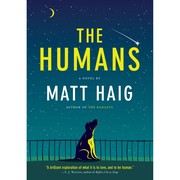
The Humans
An alien borrows Andrew Martin's life to erase a proof, then a dog, peanut butter, and a tired family win him over.
2,959-word summary · 13 min read
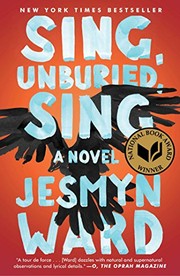
Sing, Unburied, Sing
A Mississippi family drives to Parchman prison while ghosts press close, and a dying grandmother holds the house together.
2,871-word summary · 13 min read

The Elegance of the Hedgehog
A Paris concierge hides her brilliant mind while a gifted girl plans her death, until a new tenant sees through them both.
2,248-word summary · 10 min read
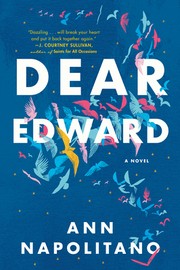
Dear Edward
Twelve-year-old Edward Adler survives a plane crash that kills his family, then learns how to live with grief, letters, and love.
2,903-word summary · 13 min read

I Know This Much Is True
A housepainter fights to free his schizophrenic twin from a locked ward while a grandfather's memoir and a lost marriage resurface. Long, heavy, hard to forget.
2,533-word summary · 11 min read

Hamnet
Agnes Hathaway holds her Stratford family together while her husband works in London, until plague takes eleven-year-old Hamnet in 1596.
3,164-word summary · 14 min read
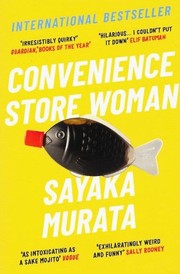
Convenience Store Woman
At 36, Keiko has worked at a Tokyo convenience store for 18 years and loves it. Family pressure to marry pushes her toward a strange fake partnership.
2,989-word summary · 13 min read
The Karamazov Brothers
Dmitri, Ivan, and Alyosha Karamazov face their father, murder, faith, and doubt in Dostoevsky's final novel.
2,512-word summary · 11 min read
Extremely Loud and Incredibly Close
Nine year old Oskar searches New York for a lock matching his father's key after 9/11.
2,999-word summary · 13 min read
Norwegian Wood
Toru recalls 1969 Tokyo, torn between fragile Naoko and lively Midori after a friend's suicide.
2,051-word summary · 9 min read
Lisey's Story
Two years after her novelist husband dies, Lisey Landon follows a trail of clues into his childhood and the other world that made him a writer.
1,998-word summary · 9 min read

Howards End
Forster's 1910 novel follows two families, a house in Hertfordshire, and a burned note, asking whether money and feeling can ever be connected.
2,187-word summary · 10 min read
Dance Dance Dance
A divorced Tokyo writer returns to a Sapporo hotel that has been rebuilt, then follows a woman who may be a ghost and a teenage girl through a mystery about…
2,407-word summary · 11 min read
Unaccustomed Earth
Lahiri’s second story collection follows Bengali families in America and abroad, tracing the quiet distances between parents and children, spouses, and the…
2,333-word summary · 10 min read
The Age of Miracles
A California girl grows up while the Earth's rotation slows, and ordinary adolescence continues alongside slow catastrophe.
2,417-word summary · 11 min read
Tales from the Café
Four more visitors to a Tokyo café travel through time under strict rules, each hoping to say the thing they could not say before.
2,242-word summary · 10 min read

Sam's Letters to Jennifer
A grieving journalist reads her grandmother's letters and finds a decades-long love affair that changes how she sees her family.
2,310-word summary · 10 min read
Peace Like a River
An asthmatic boy in the early 1960s narrates his family's search for his older brother, who is accused of two killings and has escaped custody.
1,969-word summary · 9 min read

Two by Two
Sparks's twentieth novel turns from first love to a marriage breaking up: Russell Green loses his wife and his job, then rebuilds his life around his…
2,192-word summary · 10 min read