
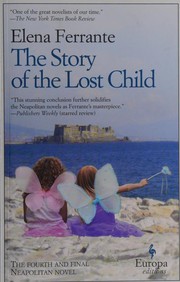
The Story of the Lost Child
2,500-word summary 11 min read 480 pages in the book
- First published
- 2014
- Publisher
- Europa Editions
- Pages
- 480
- ISBN
- 9781609452865
- Original title
- Storia della bambina perduta
- Series
- Neapolitan Novels (#4)
Reading options
What's inside (8 sections)
I came to The Story of the Lost Child carrying three books of attachment. Elena Ferrante published it in Italian in 2014 as Storia della bambina perduta, with Ann Goldstein English translation from Europa Editions in 2015. The edition cited here is the 480 page Europa paperback. It is book four of the Neapolitan Novels, after My Brilliant Friend, The Story of a New Name, and Those Who Leave and Those Who Stay. I read it slowly because I did not want the friendship to end, and then I read the last hundred pages fast because I had to know about Tina.
The setup is simple to state and hard to live through. Elena Greco, the narrator we call Lenù, is now a published writer with two daughters and a failed marriage behind her. Lila Cerullo, her brilliant friend from the Naples rione, has built a steady working life with Enzo Scanno around computers while refusing to leave the neighborhood. Both women are around forty when this volume opens. Their children are growing. Their parents are aging. Naples itself is shifting under violence, drugs, money, and concrete.
Elena writes the whole quartet as a long answer to a disappearance. At the start of book one, Lila vanishes and Elena decides to write everything down. Book four closes that frame.
Coming home to Naples as a different woman
Elena begins this book split between two cities. Florence gave her marriage to Pietro Airota, university polish, publishing contacts, and a home where she always felt slightly on trial. Naples pulls her back through her mother, her sisters, the dialect she can speak but tries to keep clean, and through Nino Sarratore, the clever and faithless man she has loved since girlhood.
Her marriage to Pietro ends in the honest, ugly way many literary marriages end here. Not one big betrayal. A slow mismatch. Pietro treats Elena writing as a phase and her Naples family as noise. When Nino reappears, older and still magnetic, she makes the choice she has circled for years. She leaves Pietro, takes her daughters Dede and Elsa, and moves back to Naples to be with Nino.
Ferrante writes this return without romance haze. Naples apartments are loud. Neighbors watch. Her daughters hate the move at first. They miss Florence order and resent sharing their mother with a man who keeps odd hours. Elena tries to write through it. She tells herself love will organize the rest. It does not.
Nino is the clearest test of Elena self knowledge. He is bright, charming in public, careless in private. He promises Elena a shared life of mind and body. He sleeps with other women while promising. Elena knows his pattern because she watched him do it to others. She chooses him anyway. That choice annoyed me on first read and convinced me on second. It shows how desire can override memory.
Lila watches all this with dry eyes. She loves Elena but does not flatter her. She says Nino will hurt her. Elena hears the warning and files it under jealousy. Only later does she admit Lila saw clearer. Elena has the degrees and the book contracts. Lila has the sharper read on people.
Lila, Enzo, and work with computers
While Elena chases love and pages, Lila builds something concrete. After leaving Stefano Carracci years earlier, she settled into a plain, loyal bond with Enzo Scanno. They live together, raise her son Gennaro, who many call Rino, and work side by side. In this final volume their work turns toward computers at a moment when few people in the rione know what that means.
Lila grasps systems fast. She always did, from shoe design to factory numbers to IBM training. With Enzo steady beside her, she learns programming basics and later runs a small computing venture they call Basic Sight. Two rione kids without degrees are handling machines that banks and firms need. Enzo provides patience and order. Lila provides leaps. Men with titles resent her and then hire her.
I liked these work chapters more than I expected. Ferrante could have kept Lila as pure force and symbol. Instead she shows her tired at a terminal, arguing about contracts, dealing with Solaras money that touches everything in Naples. Michele and Marcello Solara still hover over shops, loans, and favors. Lila refuses their courtship and takes their business when it suits her, which is dangerous. The book never lets you forget that success in the rione means closeness to violence. A new office does not erase old debts.
Enzo deserves a longer note because he is the quiet hero of the quartet. He loves Lila without trying to own her. He fathers Gennaro with calm. He cooks, carries, waits. When Lila spirals, he stays. Some readers find him dull next to Nino fire. I found him the only adult man in Elena orbit who keeps his word.
Motherhood sits inside the work story too. Lila has Gennaro from her marriage years, a boy she loves with worry. Later she has Tina with Enzo, a longed for daughter who arrives late and changes her. Tina is bright, watched over, photographed, adored. Elena watches Lila soften around Tina and feels both warmth and envy. Her own daughters are older, pricklier, pulling away. The contrast stings. One friend gets a second chance at early childhood. The other is already losing hers to teens.
Nino again and the price Elena pays
The middle of the book is painful on purpose. Elena gets Nino, and Nino is exactly who he always was. He writes, speaks, networks, charms editors and politicians. He tells Elena she is his true partner. He keeps other beds warm. Elena finds signs and explains them away. A late meeting. A borrowed flat. A name she should not ask about. Ferrante writes self deceit from the inside with scary skill. Elena narrates her own excuses even as she labels them excuses.
The cost spreads to the children. Dede and Elsa act out in Naples schools. They miss their father Pietro and sense their mother distracted. Elena tries to be both lover and mother and writer and daughter, and fails in rotation. There are strong pages where she describes making dinner while listening for Nino key. No villains here. Only limits.
Lila refuses to comfort Elena with lies. Their phone calls crackle. Lila asks where Nino slept last night. Elena changes the subject. Lila asks if the girls ate. Elena snaps. Then Elena calls back because Lila is the only person who knows the full history. That rhythm, fight and return, is the friendship in miniature. They hurt each other with plain speech and come back because no one else shares the language.
A public humiliation finally breaks the spell. I will not spoil the exact venue, to keep some surprise, but Nino is exposed in a way Elena cannot reinterpret. Friends knew. Colleagues knew. Lila knew. Elena has to walk through shame in front of people whose respect she worked years to earn. She leaves him. The leaving is not triumphant. It is tired. She packs, cries, arranges care for the girls, and learns again that freedom after Nino feels like grief plus relief.
Writing saves her, partly. Elena publishes short pieces, gives talks, and starts shaping a novel about a friendship between two women. That novel inside the novel, called A Friendship, mirrors the quartet itself. Readers argue about how much of Elena published work equals Ferrante books. The text invites the game. Elena writes about Lila while Lila tells her to stop writing about her. Who owns a shared life. That question hums under every chapter now.
The 1980 earthquake and the rione cracking open
History breaks into the story with the Irpinia earthquake of November 1980. Ferrante stages it as terror and as exposure. Buildings sway in Naples. Families sleep in cars. Plaster falls. The rich and poor share streets for a few nights, then split again when aid money flows. The rione shows its structure in the cracks. Who gets repairs. Who gets contracts. Who disappears from lists.
Lila reacts with a mix of panic and clarity. She has always sensed thin borders around ordinary life, what she calls dissolving margins. Noise, quakes, violence can tear the frame and show chaos under it. The earthquake confirms her fear and steadies her work self. She organizes, checks on neighbors, tracks who needs what. Enzo matches her hour for hour. Elena, visiting with her girls, feels useless and shaken. She is a writer with no practical skill in a crisis. Lila hands her blankets and tasks, which helps more than talk.
After the quake, Naples money moves fast. Reconstruction brings contracts, concrete, and Camorra pressure. The Solaras thrive in that blur. Shops change hands. Old murders resurface in talk. Readers who skimmed family trees will struggle here. Ferrante does not pause to reintroduce third cousins and shop clerks. That density is both the achievement and the flaw.
Elena parents age through these chapters. Her mother, sharp tongued and frail, needs care she rejects. Her father fades. Funerals pile up. Ferrante writes mourning without soft filter. Grief makes people petty and tender within the same hour. Middle age in this book means carrying parents while still raising children.
Politics also curdle. The idealism of the seventies hardens into cynicism and fear. Nino circles power. Lila distrusts slogans. Elena watches former comrades take jobs they once mocked. None of this is lectured. It arrives through rent, jobs, school places, and who walks girls home at night. Naples seduces and threatens in the same street, and Ferrante keeps both truths in frame.
Tina, the Blue Fairy, and the vanishing
The heart of the ending is Tina, Lila and Enzo late daughter. Tina is loved so fiercely she seems protected by it. She is clever, sunny, attached to her mother in a way Gennaro never quite was. Lila, who once feared she passed damage to her son, pours hope into Tina. Elena adores her too, and her own daughters dote on the small cousin. Then, on an ordinary day, Tina vanishes without a trace.
Ferrante gives no clear solution. No body. No confirmed kidnapper. No neat villain. Theories spread through the rione. Solaras revenge. A random snatch. A family enemy settling scores. A child wandering too far. Each theory says more about the speaker than about facts. Lila rejects comfort and procedure alike. She searches, accuses, waits by windows, stops sleeping. Enzo holds the house together through will. Elena tries to help and learns the edge of helping. Some pain does not admit witnesses.
The loss mirrors the quartet opening. As girls, Elena and Lila lost dolls in a cellar game. Lila treasured childhood notebook held a story called The Blue Fairy, which Elena once threw into the Arno in a fit of envy. Those objects return as echoes. A lost doll prefigures a lost child down to small details readers will catch with a chill. The Blue Fairy pages resurface near the end in a way I will not fully describe. Call it a message about authorship and erasure. Lila wrote as a child. Elena became the writer. Who made whom. The final pages ask that question without answering it cleanly.
Lila response to Tina loss is to erase herself. She stops calling. She gives away things. She cuts ties with neighbors, then with friends, then with Elena. One morning she is simply gone. Clothes missing or not, accounts closed or left open, stories differ. Enzo stays and grieves in place. Gennaro drifts. Elena calls, travels, asks, hires no one and does everything. Nothing works. Lila, who once could not leave the rione, leaves it by vanishing inside it.
Elena answer to vanishing is to write. She sits down and composes the history we have been reading, determined that Lila will not succeed at self erasure. That decision gives the quartet its title logic and its moral knot. Elena breaks Lila explicit order not to write about her. She also saves Lila from silence. Is that loyalty or theft. Ferrante lets both readings stand. Elena claims she seeks balance on the page that life denied them. Readers can decide if she finds it. I felt moved and uneasy together, which seems intended.
The last image lands hard. Elena, old now, receives or finds a trace tied to the dolls and understands Lila may be gone for good. She keeps writing anyway. Friendship becomes text when bodies fail. That close will divide people. Some will call it love. Some will call it use. I called it both.
Why the ending still divides readers
This finale earns its praise through scope and nerve. It follows two women from forty into old age without skipping the middle work of jobs, school runs, sick parents, and rent. It shows female friendship as care, envy, rescue, and competition at once. When Lila asks where it is written that lives should have meaning, the line lands because the book spent hundreds of pages testing it.
The motherhood writing stands out across the volume. Elena describes pregnancy, nursing, fatigue, and ambition in plain terms. She admits she sometimes resents her daughters for needing her when work calls. She admits she sometimes uses work to dodge home. Lila shows another path, fierce early struggle with Gennaro, then late joy with Tina, then unbearable loss. Neither woman is held up as model. Both are shown thinking through children while trying to remain persons. That honesty still feels rare.
The main criticism is fair and practical. The cast is huge. Solaras, Sarratores, Carraccis, Grecos, Scannos, plus teachers, editors, neighbors, and children who share names across generations. Without a list, the middle chapters blur. I kept a scrap of paper with family groups while reading. New readers should do the same or use the index that some editions include. The book does not slow to help. It trusts you to keep up or to accept partial confusion as rione texture. That trust will lose some readers around page three hundred.
Pacing also sags in the Florence to Naples shuffle. Elena moves, doubts, moves again. A few salon scenes repeat the same point about condescension toward women writers. Lila work chapters carry those stretches. Patience pays off once the quake hits and the plot tightens toward Tina.
Who should finish the quartet. Anyone who stayed with Elena and Lila through school, marriage, factory, and Pisa should read this. It completes arcs for Enzo loyalty, Nino charm and rot, Solara power, and the dolls with care. New readers should not start here. Begin with My Brilliant Friend and read in order. The reward is a final portrait of aging that few long series attempt. Two brilliant women grow old, lose and keep each other, and leave behind a story neither fully controls. I closed the book missing Lila like a neighbor, which is exactly what Elena wanted.
FAQ
Do I need to read the earlier Neapolitan Novels first?
Yes. It is book four of the Neapolitan Novels, after My Brilliant Friend, The Story of a New Name, and Those Who Leave and Those Who Stay. The plot assumes you know Elena, Lila, Enzo, Nino, and the rione families.
What is the original title and when did it appear?
Storia della bambina perduta, published in Italian in 2014. Ann Goldstein translated it into English for Europa Editions in 2015, which is the 480 page edition cited here.
Why do readers say the cast is hard to follow?
Keep a short list of the rione families. The Solaras, Carraccis, Sarratores, and Grecos share first names across generations, and the middle chapters move fast between them.
Similar books
More from Neapolitan Novels first, then related titles.
My Brilliant Friend
Elena and Lila grow up in 1950s Naples bound by rivalry and love.
2,584-word summary · 11 min read

The Story of a New Name
Married Lila and student Elena grow apart and collide again across shops, Ischia, and Pisa.
2,523-word summary · 11 min read

Those Who Leave and Those Who Stay
Elena publishes into Florence salons while Lila labors through Naples factories across the 1970s.
2,034-word summary · 9 min read

Little Earthquakes
Four Philadelphia women meet during pregnancy and discover that new motherhood is nothing like the plan, while friendship becomes the thing that holds them…
1,997-word summary · 9 min read

We Are Okay
Marin fled San Francisco after her grandfather vanished and stopped answering anyone. When Mabel visits her college dorm, she has to say what happened.
2,253-word summary · 10 min read
Summer Sisters
Vix and Caitlin share Martha's Vineyard summers from age twelve into adulthood, through first love, grief, marriage, and a disappearance that still haunts Vix.
3,633-word summary · 16 min read

The Bean Trees
Taylor Greer flees Kentucky, inherits Cherokee toddler Turtle, and roots with Tucson strays.
2,082-word summary · 9 min read

The Elegance of the Hedgehog
A Paris concierge hides her brilliant mind while a gifted girl plans her death, until a new tenant sees through them both.
2,248-word summary · 10 min read
Snow Flower and the Secret Fan
Footbound Lily and Snow Flower share laotong bond through 19th century Hunan hardship.
2,557-word summary · 11 min read

Violeta
A woman born in 1920 writes her life story to her grandson, from one pandemic to another, through wealth, ruin, passion, and dictatorship in South America.
2,555-word summary · 11 min read

Mrs. Everything
Two Jewish sisters in Detroit grow up, apart and together, across seven decades of American life, from the 1950s to the 2016 election.
2,362-word summary · 10 min read

Howards End
Forster's 1910 novel follows two families, a house in Hertfordshire, and a burned note, asking whether money and feeling can ever be connected.
2,187-word summary · 10 min read

Hard Luck
Rowley has a girlfriend, so Greg turns to a Magic 8 Ball, a family Easter hunt and the school yearbook for answers.
2,586-word summary · 11 min read

Fathers and Sons
Arkady brings the nihilist Bazarov home to his father's estate, and a generational argument turns into love, a duel, and an early death.
2,192-word summary · 10 min read

Unaccustomed Earth
Lahiri’s second story collection follows Bengali families in America and abroad, tracing the quiet distances between parents and children, spouses, and the…
2,333-word summary · 10 min read

The Age of Miracles
A California girl grows up while the Earth's rotation slows, and ordinary adolescence continues alongside slow catastrophe.
2,417-word summary · 11 min read

Peace Like a River
An asthmatic boy in the early 1960s narrates his family's search for his older brother, who is accused of two killings and has escaped custody.
1,969-word summary · 9 min read

The Chosen
A shattered pair of glasses in a 1944 Brooklyn softball game starts a friendship between a Hasidic boy and his Orthodox neighbor, and their fathers pull them…
2,443-word summary · 11 min read
Between Sisters
Estranged sisters Meghann and Claire reunite in Washington when Claire announces a rushed wedding, then face their mother's desertion and a medical crisis.
2,467-word summary · 11 min read
Euphoria
Three anthropologists in 1930s New Guinea turn fieldwork into a love triangle, and a real history breathes behind them.
2,048-word summary · 9 min read

Big Swiss
A transcriptionist for a sex coach falls for one of his clients, the tall Swiss gynecologist she calls Big Swiss, in a funny novel about work and secrets.
2,523-word summary · 11 min read

A Spool of Blue Thread
Four generations of the Whitshank family in Baltimore, and the silences, resentments and quiet love they hand down without ever saying so.
2,408-word summary · 11 min read

Where We Belong
Marian's orderly New York life cracks when the daughter she gave up for adoption arrives, and the search for the father forces her to tell the truth.
2,056-word summary · 9 min read

This Is How You Lose Her
Yunior cycles through love affairs and betrayals in nine linked stories, tracing the damage he does and the family history behind it.
2,195-word summary · 10 min read

The Second Summer of the Sisterhood
Four friends share the traveling pants through a summer of grandmothers, first loves, and mothers who are learning to let go.
2,209-word summary · 10 min read

Flight Behavior
Dellarobia Turnbow is stuck in a Tennessee farm marriage until a valley full of monarch butterflies, and the scientist who comes to study them, force her to…
2,051-word summary · 9 min read

Aristotle and Dante Dive into the Waters of the World
Ari and Dante return for senior year in El Paso, navigating first love, AIDS, family grief, and the cost of being openly gay in 1987 Texas.
2,188-word summary · 10 min read
And Every Morning the Way Home Gets Longer and Longer
An elderly grandfather, his son, and his grandson share memories and fears as the old man's mind begins to fade, in a short novel about grief and love.
2,078-word summary · 9 min read

The Tiger's Wife
A young doctor in a war-scarred Balkan country chases the stories her grandfather left behind, including a deathless man and a deaf girl who loved an escaped…
2,232-word summary · 10 min read

The Story of Edgar Sawtelle
A mute boy on a Wisconsin dog-breeding farm relives Hamlet as his uncle returns, his father dies in the barn, and the dogs inherit what is left.
2,392-word summary · 11 min read