
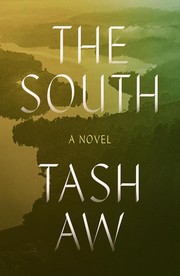
The South
2,903-word summary 13 min read 304 pages in the book
- First published
- 2025
- Publisher
- Farrar, Straus & Giroux
- Pages
- 304
- ISBN
- 9780374616281
Reading options
What's inside (9 sections)
I picked up The South assuming it was a single, self-contained novel, and only later learned that it is meant to be the first of four books. That changed how I read the ending, though it never felt like a cheat while I was in the middle of it. Tash Aw published this one in 2025 through Farrar, Straus and Giroux in the United States, after it had appeared in Britain under 4th Estate, and it arrived with a quiet kind of notice: a Booker longlisting, a handful of admiring reviews, and the sense of a writer working at a scale he had not quite attempted before. The whole novel is set on one fruit orchard in rural Johor, in the far south of Malaysia, across a single dry summer in the 1990s. Almost everything happens on that farm or in the small world immediately around it. I keep thinking about how much Aw manages to fit inside that small space.
A summer that begins in the middle of a moment
The novel opens with two young men making love for the first time in the orchard. There is no long approach, no chapter of setup to earn the scene. Aw drops you straight into it, which is a bold way to begin and also the right one, because the scene is doing two jobs at once. It is the physical beginning of a relationship between Jay, who is seventeen, and Chuan, who is nineteen. It is also the beginning of Jay's attempt to hold on to the memory of it. He is narrating years later, looking back, and even as the moment happens he is trying to work out how he will remember it afterward. That double vision is the book's central trick, and it is everywhere once you know to look for it.
I want to be honest that this takes some getting used to. Jay slips between first person and third person, sometimes within the same stretch of pages. At one moment he is "I," the boy living the summer, and at another he is "Jay," the man looking back at that boy from a distance. On paper that sounds like a gimmick, and there are passages where it feels a little self-conscious to me. But it also matches the subject. A person remembering his first love and his first sexual experience does not remember it as one clean thing. He remembers being inside it and also watching himself from outside, wondering what sort of person he was turning into. Aw builds that split into the sentences rather than pausing to explain his theme in a paragraph.
What surprised me was how physical the remembering is. Jay does not recall the summer as a set of ideas. He recalls heat, skin, the particular quality of light on the trees, the feeling of being somewhere he is not entirely supposed to be. The orchard is never just a backdrop. It is the place where the family's money is being lost, where Chuan's father works without owning a square metre of it, and where Jay first understands that his own desire has a shape and a name. All of that is present in the opening scene, even though the scene itself is only about two boys alone together.
An inheritance that upends a household
Jay's arrival on the orchard follows a death. His grandfather, the man who owned the place, dies, and the property goes not to either of Jay's uncles, the grandfather's own adult sons, but to Jay's mother, Sui Ching. It is the kind of decision that rearranges a family's whole emotional weather. Nobody in the book needs to say it plainly. You can feel the resentment and the confusion settling in around the edges of ordinary conversation, in the way certain names are mentioned and others avoided. Jay is pulled out of Kuala Lumpur and deposited on the farm with his parents, a teenager suddenly living among adults whose lives have stalled.
His father Jack is a mathematician and a professor, and he has just lost his job. That detail matters more than it first appears. Jack is a man whose sense of himself was built around a kind of abstract order, numbers and proofs and a life spent in the mind, and now he is adrift on a fruit farm in the south with no work to go to. Sui Ching, meanwhile, was once ambitious and adventurous. Marriage has worn that down. Aw writes both of them as people who had expectations and have quietly traded them in, and the orchard becomes the place where those disappointments are forced into the open simply because they are all living on top of one another.
Jay watches all this from the position of a seventeen-year-old who is himself on the edge of a major change. He is about to come out, to understand and name his own desire, and so he is unusually alert to the ways adults fail to say what they mean. The household is a study in lives that have gone quiet. I found this the most convincing part of the book. Aw is very good at the small economics of a family under pressure, the way a job lost in one city echoes through a kitchen in another, the way an inheritance can wound the people who expected it as much as the ones who were passed over.
There is a particular patience in the way the first half of the novel moves. Aw is in no hurry to get Jay to Chuan. He spends time on the arrangements of the household, on the fact that Jack is home all day with nothing to do, on the unspoken argument about why the farm went to Sui Ching. It can feel slow if you are waiting for the romance to start. I did not mind it, because that slowness is what gives the later scenes their weight. By the time Jay and Chuan are together, you understand exactly what is sitting underneath them.
Chuan, Fong, and the people who never leave
The person who draws Jay into the life of the orchard is Chuan. Chuan is the son of Fong, who was the grandfather's illegitimate son. Fong has spent his entire life managing the farm, and he does not own any of it. That one fact explains a great deal about the tension here. The people who inherited the land are not the people who worked it, and the people who worked it are still, in the eyes of the family, something close to outsiders. Fong resents the relatives who came into the property without ever having to care for it, and that resentment hangs over the summer as steadily as the heat.
Chuan is nineteen, barely schooled, and far more at ease with his own sexuality than Jay is. Their relationship grows over the weeks out of that first encounter in the orchard into something with its own habits and rhythms. Aw does not write it as a sweeping romance. He writes it as a run of ordinary physical hours, two young men finding a private space in a place that is not really theirs to claim. What gives the relationship its tension is the imbalance between them. Chuan belongs to the farm in a way Jay never can, while Jay belongs to the family that Chuan's father has every reason to resent. Their attraction quietly crosses a line that the older generation cannot seem to cross at all.
This is where the Chekhov comparisons come in, and they are not difficult to understand. Heller McAlpin, writing in The New York Times, compared the generational tensions to Uncle Vanya and The Cherry Orchard. The parallel is about people who inherit a place, or manage one, or lose one, while their inner lives go entirely unspoken. Lara Feigel, in The Guardian, called the book an intimate epic and praised the way Aw compresses sociological insight into physical, intimate scenes. Both readings seem fair to me. The orchard works like a stage on which class and family and desire all play out, and Aw keeps the camera close to bodies and faces rather than pulling back to hand the reader an explanation.
I should add that Chuan is more than the object of Jay's awakening. He has his own position in the hierarchy of the farm, and his own reasons for being wary of the family that suddenly has power over his father's life. Aw gives him a solidity that the other young characters often lack. When the two boys are together, the difference in their ease with the world is one of the quietly affecting things in the book. Jay is still learning how to say who he is. Chuan already knows, and that knowledge makes him both enviable and slightly unreachable.
The orchard is failing
Running alongside the love story is a larger story about a place in decline. The orchard is not doing well. The Asian financial crisis is eroding the currency, the climate is shifting, and the economics of growing fruit in this part of Malaysia are turning against the people who depend on the land. Land is sold off. Trees are destroyed to make way for a building project. Families that were once comfortable go bankrupt and drift back to the provinces, and the evidence of that collapse turns up in Jay's school, where classroom chairs are left upturned on vacated desks because the pupils who sat in them are simply gone.
That image of the chairs stayed with me longer than almost anything else in the book. It is a remarkably economical way to show an economic event. Instead of handing over statistics or a newspaper report, Aw gives you a room full of furniture that no longer has a purpose. The decline here is never an abstract force. It is the heat, the dry soil, the missing students, the arguments about what to sell and what to keep. The title, The South, begins to feel less like a geographic label and more like a way of naming a whole set of conditions: the heat, the slowing money, the sense that a way of life is ending and nobody quite knows what comes after it.
I want to be fair about the limits of this strand. The economic and environmental material is not always woven as tightly into the story as the intimate material is. There are stretches where the larger argument feels pressed onto the summer, as if Aw were keeping a tally of national decline in the margin beside the romance. At a few points the tone shifts toward the essayistic in a way that briefly pulls you out of Jay's viewpoint. For the most part, though, the two strands hold each other up. The failing orchard is the reason everyone in the household is on edge, and that tension is what pushes Jay and Chuan together and then makes it hard for them to stay there.
The school detail is doing quiet work too. Jay is old enough to notice that the world around him is contracting, and the empty desks are his generation's version of the family's problems. The adults talk about money and land in the language of grievance. Jay sees it in the spaces where his classmates used to sit. Aw trusts the reader to connect the two without spelling it out, which is one of the reasons the novel can feel slight on a first reading and heavier afterward.
The quartet, and the book's sense of time
One thing I did not know going in is that this is the first volume of a planned quartet. Knowing that now makes the loose ends feel deliberate rather than accidental. This is a novel that is comfortable not resolving everything, because it assumes there is more to come. Jay's story is one summer in a longer life, and the narration from a later age keeps reminding you that the boy on the farm is not the whole person. There is a future somewhere past the last page, even if this book only gestures toward it.
The preoccupation with memory is structural rather than decorative. Because Jay is both the boy in the scene and the man remembering it, every important moment is doubled. In the opening, while he is still in the middle of making love with Chuan, he is already rehearsing how he will recall it later. That habit of mind is what the novel is really about, I think. It is about the instant a life becomes a story you tell yourself afterward, and about how much gets lost or quietly altered in the telling. Aw is interested in the gap between what happened and what can be remembered, and the shifting pronouns are his way of keeping that gap open on the page.
Some readers will find the movement between first and third person frustrating, and I understand the complaint. There are points where I wanted the narration to settle down so that I could simply stay with Jay and stop thinking about the machinery. But the instability is the point, and it is tied directly to the coming-out story. To come out is to revise the account you have been giving of yourself, to become a different narrator of your own life. The form of the book enacts that change instead of just describing it, and that is a real achievement even when it is mildly irritating in practice.
The decision to open with the love scene makes more sense in this light as well. If the novel were only about what happens over the summer, it could begin with the move from Kuala Lumpur. It begins where it does because the memory of the summer is the true subject. Aw wants you to meet the moment at the point where Jay is already turning it into something he will carry, so that the rest of the book reads as an explanation of how that memory was made.
The reception, and where the book wobbles
The South was longlisted for the 2025 Booker Prize, and the reviews were largely admiring without being unanimous. Aaron Hamburger, writing in The Rumpus, gave it a mixed notice. He found the beats of the love story predictable, and he welcomed the book anyway as a distinctive contribution to queer coming-of-age fiction. I think that is a fair and useful criticism. The romance does follow a fairly familiar arc, and if you have read many novels about a young man discovering desire during a summer away from home, you will recognise the shape of it before Aw has finished filling it in.
What keeps it from feeling routine is the setting and the scale of the material around it. A coming-out story placed on a failing Malaysian fruit orchard, with the Asian financial crisis bearing down on the family, is not a familiar combination. The predictability Hamburger noticed is real, but it sits inside something much less formulaic. The novel is at its best when it refuses to treat the romance as the only thing that matters, when it lets the orchard and the money and Fong's quiet grievance have as much presence on the page as the two boys have.
There is also the matter of the quartet again, because it shapes the whole reading experience. A first volume is a particular thing. This one does not try to be a complete statement, and it leaves certain threads loose in a way that can feel unsatisfying if you come to it expecting a single rounded novel. If a planned four-book structure is part of the design, then the open ending is a promise rather than an oversight. My advice is to take it on those terms, as the opening of a longer argument about family, land, and memory, and to read it as one summer in a life rather than the whole life.
That is not an excuse for everything. A few of the thematic connections are a little too neat, and there are moments when the parallel between Jay's private awakening and the country's public troubles feels arranged rather than discovered. The Booker longlisting placed it alongside books far louder than this one, and in that company its quietness could be mistaken for modesty. It is more deliberate than that.
What I carried away
I closed the book thinking less about the romance than about those upturned chairs in the empty classroom. That image, and the dry heat that runs through nearly every page, is what the novel leaves behind. Aw has written a book about a very particular place and period, a fruit orchard in Johor in the 1990s, but the feelings under it travel easily. There is the disappointment of parents who once had other plans, the resentment of people who do the work and never own the thing, and the confusion of a young man trying to say out loud what he wants. The South is a quiet novel, and its power is quiet too. If you enjoy books that trust you to notice things without naming every one of them, this one rewards the patience it asks for, and I would read the next volume when it arrives.
FAQ
Is The South a standalone novel?
No. It is the first volume of a planned quartet, and it ends with several threads open rather than fully resolved.
Where and when is The South set?
It is set on a single fruit orchard in rural Johor, in southern Malaysia, over one hot, dry summer in the 1990s.
Did The South receive any major award recognition?
Yes, it was longlisted for the 2025 Booker Prize. Reviews were mostly positive, though The Rumpus found the love story predictable.
Similar books
The True True Story of Raja the Gullible (and His Mother)
A gay philosophy teacher in Beirut revisits six decades of Lebanese history, family trauma, and his thorny bond with his mother.
2,274-word summary · 10 min read
Red at the Bone
A girl's coming-of-age ceremony in a Brooklyn brownstone opens a family story shaped by Tulsa, teenage pregnancy, class and a second tragedy on September 11.
2,108-word summary · 9 min read
Oranges Are Not the Only Fruit
An adopted girl in a strict Pentecostal household learns to read the Bible, preach sermons and love women, then faces her church and mother for it.
2,384-word summary · 11 min read
Good Girl
A nineteen-year-old artist in Berlin, grieving her mother, falls into an unequal romance with an American author who offers escape from the ideal of the good…
2,579-word summary · 11 min read

All Adults Here
A widow in upstate New York reconsiders the parent she was after a neighbor's death, then gathers her three grown children for a season of uneasy truths.
2,171-word summary · 10 min read
On Earth We're Briefly Gorgeous
A son writes to the mother who cannot read him: war, migration, first love, and loss in one Vietnamese American family in Hartford.
3,113-word summary · 14 min read
The Sisters
Three sisters watch one another take the lives they imagined, across thirty years in Stockholm and Tunisia, in a novel that bends time like an accordion.
2,199-word summary · 10 min read

Seascraper
In a rain-swept English coastal town, a young shrimp scraper is drawn in by a stranger claiming to be a film director scouting locations.
2,544-word summary · 11 min read
Palaver
A mother shows up uninvited at her estranged son's Tokyo apartment, and the two spend the weeks before Christmas talking their way toward something like…
2,465-word summary · 11 min read
Only Son
A brief, funny, melancholy debut about a boy whose father dies in 1982 Florida, and the man he becomes, still trying to read the mystery of that loss.
2,170-word summary · 10 min read

Love Forms
A Trinidadian mother sent away at sixteen returns to the loss of her daughter forty years later, in Claire Adam's quiet, longlisted novel.
2,153-word summary · 10 min read
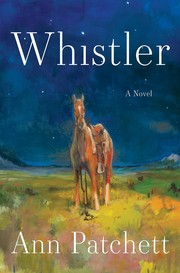
Whistler
Ann Patchett's eleventh novel follows a New York teacher who reconnects with a former stepfather at the Met and hears the strange story of a chestnut mare.
2,697-word summary · 12 min read
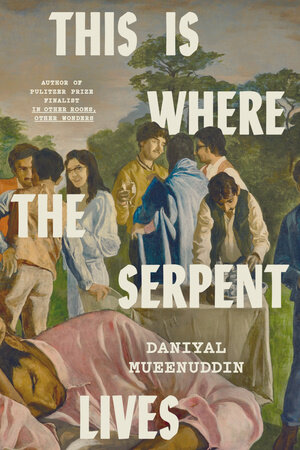
This Is Where the Serpent Lives
Daniyal Mueenuddin's second novel follows an orphan who rises through Lahore and a gardener's son who becomes an outlaw, across a Pakistan of caste and capital.
2,257-word summary · 10 min read
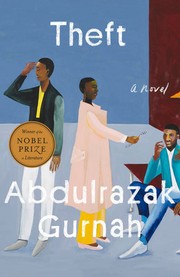
Theft
Gurnah traces three linked lives in Tanzania, where a servant's accusation of theft opens a family history of love, duty and quiet betrayal.
2,454-word summary · 11 min read
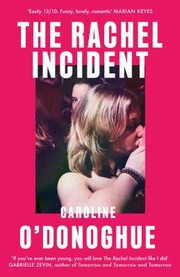
The Rachel Incident
A funny, sharp novel about two twenty-somethings in recession-era Cork whose bookshop friendship, tangled romance and a married professor's lie leave a secret…
2,346-word summary · 10 min read

The Kitchen God's Wife
Amy Tan's second novel pairs a San Jose speech therapist with her Chinese mother, whose account of war, an abusive husband, and a narrow escape comes out in a…
2,896-word summary · 13 min read
Good Dirt
A stoneware jar made by an enslaved potter links a prominent Black New England family across a hundred and fifty years of prosperity, grief and buried history.
2,069-word summary · 9 min read
Flashlight
Susan Choi's Booker-shortlisted novel opens with a father and daughter on a breakwater in 1978, then follows the loss outward through four generations and…
2,849-word summary · 13 min read

Detransition, Baby
Torrey Peters's debut follows three Brooklyn adults as an unexpected pregnancy pushes them to imagine an unconventional family. Funny, sharp, and unwilling to…
2,925-word summary · 13 min read
Manhattan Beach
A Brooklyn girl works the Navy Yard and dives for warships while chasing the gangster who may know why her father vanished.
2,251-word summary · 10 min read
Boy Swallows Universe
In 1983 Brisbane, a boy with a mute brother, a jailed mother and a heroin-dealing stepfather tries to become a good man.
2,397-word summary · 11 min read
The Age of Miracles
A California girl grows up while the Earth's rotation slows, and ordinary adolescence continues alongside slow catastrophe.
2,417-word summary · 11 min read
Peace Like a River
An asthmatic boy in the early 1960s narrates his family's search for his older brother, who is accused of two killings and has escaped custody.
1,969-word summary · 9 min read

We Are Okay
Marin fled San Francisco after her grandfather vanished and stopped answering anyone. When Mabel visits her college dorm, she has to say what happened.
2,253-word summary · 10 min read

The Chosen
A shattered pair of glasses in a 1944 Brooklyn softball game starts a friendship between a Hasidic boy and his Orthodox neighbor, and their fathers pull them…
2,443-word summary · 11 min read
Flight Behavior
Dellarobia Turnbow is stuck in a Tennessee farm marriage until a valley full of monarch butterflies, and the scientist who comes to study them, force her to…
2,051-word summary · 9 min read

Aristotle and Dante Dive into the Waters of the World
Ari and Dante return for senior year in El Paso, navigating first love, AIDS, family grief, and the cost of being openly gay in 1987 Texas.
2,188-word summary · 10 min read
And Every Morning the Way Home Gets Longer and Longer
An elderly grandfather, his son, and his grandson share memories and fears as the old man's mind begins to fade, in a short novel about grief and love.
2,078-word summary · 9 min read
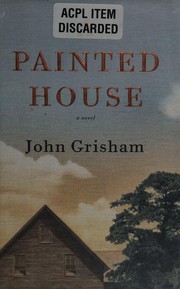
A Painted House
In 1952 Arkansas, seven-year-old Luke Chandler picks cotton with his family and learns how quickly poverty, violence, and adult secrets can end a childhood.
2,060-word summary · 9 min read
The Story of Edgar Sawtelle
A mute boy on a Wisconsin dog-breeding farm relives Hamlet as his uncle returns, his father dies in the barn, and the dogs inherit what is left.
2,392-word summary · 11 min read