
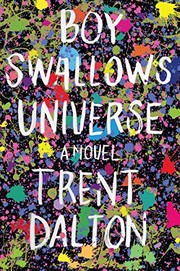
Boy Swallows Universe
2,397-word summary 11 min read 488 pages in the book
- First published
- 2018
- Publisher
- Fourth Estate
- Pages
- 488
- ISBN
- 9781460753897
Reading options
What's inside (8 sections)
I picked up Boy Swallows Universe expecting a familiar shape: the precarious kid, the criminal stepfather, the escape through books and a lucky break. What surprised me was how often the novel stops to look at the sky. Trent Dalton published this debut in 2018 with Fourth Estate, and the Australian first edition runs 488 pages. It is set in Brisbane in 1983 and draws heavily on Dalton's own childhood. Twelve-year-old Eli Bell tells the story, and the first thing he mentions is his brother August, who has not spoken in nine years. That opening sets the tone for a book that treats silence and wonder as seriously as it treats violence.
A house in Darra
Eli and August, called Gus, live in the Brisbane suburb of Darra with their mother Frankie and her boyfriend Lyle Orlik. Their father Robert drifts in and out, mostly drunk, living in a caravan and reading books he never finishes. Frankie has a history of addiction. Lyle sells heroin, first in small amounts and then, once the boys find a secret room behind a built-in wardrobe, in quantities that require a red telephone. When the phone rings, a man's voice speaks as if he knows Eli. The boys never learn his name.
Gus fills the street with water from a hose to study the moon's reflection in the puddles. Eli calls them moon pools. Gus also writes phrases in the air with his finger, a habit that reads as spooky until you realize it is how he talks. One afternoon, while their babysitter is teaching Eli to drive, Gus writes a phrase that will haunt him for the rest of the book: your end is a dead blue wren. Eli cannot explain it. He writes it down anyway.
That babysitter is Arthur "Slim" Halliday, and he is the best thing in the boys' lives. Slim is a convicted killer and a record-holder for prison escapes, an old man with a stack of stories about his crimes, his years inside and the two times he walked out. He drives Eli around the neighborhood, lets him turn the wheel, and tells him to notice things. He never lectures the boy about the drug money in the walls. He just keeps coming back, which in this household is its own kind of heroism. Dalton based Slim on a real man who briefly babysat him and his older brothers, and the truth of that shows in the warmth of the scenes.
The book is built from short chapters with names like Boy Writes Words, Boy Makes Rainbow and Boy Receives Letter, and that structure matters. Each title is a small claim that the boy is learning to do something. Dalton grew up in the Brisbane suburb of Bracken Ridge, and he has said his mother moved in with a man who had more than one foot in the criminal underworld, a man who was nevertheless a father figure to him and his three older brothers. That contradiction is the foundation of the novel. The people who embarrass a family are often the ones who love it best, and Eli knows this long before he has words for it.
The domestic details carry more weight than the plot at this stage. Frankie moving through the kitchen with a cigarette, Lyle and his friend Teddy counting cash, Gus drawing pictures in the dirt, Eli ironing a shirt so he can look like a reporter someday. He wants to work for The Courier-Mail. He wants to be a good man. These ambitions are absurdly specific for a twelve-year-old and completely convincing because Dalton gives them to us in Eli's breathless, star-struck voice.
Lyle's bosses and the night of the finger
The drug trade arrives at the dinner table. Lyle works for "Back Off" Bich Dang, a restaurant owner whose son Darren sits in Eli's class. Darren catches Eli lurking in his yard one night and, because Eli once kept him out of trouble at school, takes him inside to meet his mother. Bich tells him plainly that Lyle moves product for her. Eli begs to join the runs. Lyle refuses until Frankie joins a school committee that meets on Saturdays, and then Eli and Gus are loaded into the car.
The higher power is Tytus Broz, a philanthropist who manufactures prosthetic limbs and throws an eightieth birthday dinner that the whole family attends. Eli is frightened of Tytus before he understands why. He is more frightened of Tytus's henchman, Iwan Krol, who by day runs a llama farm and by night, Darren tells him, cuts up anyone who crosses his employer. This is the novel's first large tonal turn. What began as a story about a boy with a strange brother and a criminal in the front room becomes something from a different shelf.
Then Tytus and Iwan come to the house in the middle of dinner. They drag Lyle away. Before he goes, Lyle writes something in the air to Gus. Iwan knocks Frankie unconscious and puts a knife to Eli's pointer finger, his lucky finger. Gus refuses to say what Lyle wrote. He says instead, your end is a dead blue wren. Iwan cuts the finger off.
From here the story moves very fast. In the hospital, Slim tells Eli that Frankie has been jailed and that he and Gus will live with their father. Lyle has vanished. Eli slips out, goes back to the house and answers the red phone. The voice says Frankie will not live past Christmas. Eli then walks into the offices of The Courier-Mail, looking for a reporter named Caitlyn Spies, whose name Gus has been writing in the air for weeks. He sees her, falls in love on the spot and runs away before he can tell her about Tytus. It is a ridiculous scene on paper and it works, because Eli is exactly the age at which a person can fall in love with a byline.
The dam under the moon pool
Life with Robert is a different kind of hard. He drinks at night and is sick, reads during the day and barely speaks to his sons. Eli starts seeing Mrs. Birkbeck, the school guidance counselor, who tries to get him to talk about trauma. She asks him about a painting Gus made in art class: a car on the bottom of a dam, with Eli and Gus in the back seat and their father driving. Eli calls it a nightmare. Mrs. Birkbeck calls up Robert and finds the truth. Just before Frankie left, he took the boys camping, had a panic attack at the wheel and drove into a farmer's dam. The boys survived by a miracle.
This is the book's quietest and best revelation. The moon pools were never a game. They were a way for Gus to keep replaying the water he could not escape, and the red phone voice is a story Eli invented to give his fear a speaker. Gus insists the voice is Eli grown older, and Gus insists he and Eli died in that dam and came back. Eli slowly stops believing him. The choice to let the boy reject the magical explanation is what keeps the novel from tipping fully into fantasy, at least for a while.
Gus does hand over something real before long. Lyle's last words in the air gave the location of a heroin stash, and it is buried in Robert's backyard. The boys dig it up. Christmas approaches and Eli asks Slim for help getting into Boggo Road women's prison. Slim gives him a contact, and a man named George smuggles him in inside a watermelon crate. Eli gets a few minutes with Frankie and nearly repeats one of Slim's old escapes before the guards catch him. They drive him home without charging him. Slim dies six months later, and Eli loses the only adult who never asked him to be anything other than a boy.
Fifty thousand dollars and a dog food bowl
Frankie is released early and announces that she is moving in with Teddy. Eli is furious. He and Gus have a plan to find her a decent place with the money from Lyle's stash, and Darren pays fifty thousand dollars for the heroin. Darren also mentions that Teddy was the one who told Tytus about Lyle's side dealing. The boys go to see Frankie, eager to tell her the news, and she says she is going to live with Teddy instead.
They agree to spend a week there. On the fourth night, Eli asks Teddy why he sold Lyle out. The answer is not dramatic. Teddy is high and drunk the next night, drags Frankie outside by the hair and pushes her face into his dogs' food bowl. Eli, Gus and Frankie spend the night at a halfway house. In the morning Eli offers to buy her a place with the drug money. She says she is going back to Teddy. He goes out and drinks, and when he comes back Gus has given forty-nine thousand five hundred dollars to the family of a classmate with muscular dystrophy. It is the most morally tangled act in the novel, and Dalton does not tidy it up. The money is filthy and the gift is good and both things stay true.
Frankie eventually leaves Teddy and returns to Robert's house. Teddy and his friends show up, along with a man in a suit who turns out to be Alex Bermudez, Eli's childhood pen pal and the leader of a motorcycle gang. Alex punches Teddy, tells him to leave Frankie alone and then sits for a four-hour interview with a Dictaphone so Eli can break into journalism. Eli writes the piece. Brian Robertson, the editor he has been chasing, calls the writing ridiculous because Eli keeps describing small details instead of getting to the point, and then gives him a job anyway. Gus starts a charity with Alex's help and is notified he will receive an award at a Queensland Day ceremony. The Penn family, rumored dealers, go missing, and the police find llama hair at their house.
The laboratory behind the bunker
Eli is assigned to interview Tytus Broz at the awards ceremony. Caitlyn Spies drives him there and poses as his photographer, and on the way he tells her about his finger and about the Penn family. At Tytus's house a bird strikes a window and dies. It is a blue wren. Eli picks it up and it comes back to life, flies off and lands on a concrete bunker in the yard. He and Caitlyn wait until Tytus leaves, then break in with an axe.
Inside is a laboratory of preserved body parts. Eli finds his own finger in a specimen jar and Lyle's severed head, wraps both up and takes them. They also find Bevan Penn, the missing family's son, alive and holding out a red telephone. The voice warns that Iwan is coming. Caitlyn blinds him with a camera flash while Eli cuts his own foot off with the axe so they can get away. They drive to the ceremony with Bevan, and once Gus has accepted his award, Eli and Gus swap the model prosthetic hand Tytus plans to display with Lyle's head. Tytus takes the stage and presents it to the room. The police arrest him.
Iwan is not finished. He stabs Eli in the belly in the lobby, and nobody at the ceremony seems to notice. Eli climbs the clock tower, Iwan follows, and at nine o'clock Eli smashes the jar containing his finger over the man's head and passes out. He dreams he is in prison with Slim, who walks him over the wall to a beach where Caitlyn is waiting, and past the beach is the whole universe.
Where the book strains
I loved most of this and I can see why some readers bounce off the last hundred pages. The New York Times review by Amelia Lester made the point I kept circling: the violence occasionally feels too much, and the plot point about severed limbs tips into the fanciful. Eli chopping off his own foot, Lyle's head produced onstage like a stage prop and a killer who is also a philanthropist with a llama farm all arrive in quick succession. The book also sometimes feels built with an eye to its screen adaptation, which it got, in a Netflix series that premiered in 2024. A reviewer in The Age praised exactly the same stretch as propulsive and commercially confident, so your tolerance for the circus will decide a lot.
The awards piled up, and it is easy to see why. The novel became the fastest-selling debut in Australian history and won the Dymocks Book of the Year, the Australian Book Industry Award for Book of the Year and the Indie Book Award, while also reaching the Miles Franklin longlist. In a 2025 poll run by ABC Radio National it was voted the best book of the twenty-first century. That kind of reception helps explain the appetite for the big, any-question-answered moments. It does not make the foot scene any easier to believe.
What holds it together is Eli's voice and the small, patient scenes around the explosions. The moon pools, the words he copies down from Gus's finger, his slow education in how to be tough without becoming cruel, and the way Slim keeps teaching him to look up. Dalton writes Brisbane in 1983 with a sharp ear for suburb, school and the particulars of a household running on borrowed money. It is a coming-of-age novel with a crime thriller stapled to it, and the two genres do not always agree. They do share a heart.
Six weeks after the ceremony, Eli and Caitlyn revisit Lyle's old house to work on a five-part feature about Tytus's downfall. They go down to the secret room. The red phone rings. Caitlyn tells Eli not to answer, and she kisses him instead. When he kisses her back, the phone stops. It is a neat ending, maybe too neat for everything that came before, but after all the noise it is the kind of quiet the boy had been asking for all along.
FAQ
Is Boy Swallows Universe based on Trent Dalton's own life?
Yes. Dalton grew up in a Brisbane suburb with a mother whose partner lived on the edges of the criminal world, and he was briefly babysat by the real Arthur Slim Halliday, a famous prison escape artist.
What year and city is the novel set in?
It is set in Brisbane in 1983, mostly in the working-class suburb of Darra. Dalton published the novel in 2018 with Fourth Estate.
Why is it described as both a coming-of-age novel and a crime thriller?
Because Eli's coming-of-age runs through his mother's drug world, a philanthropist with a secret laboratory and a violent fight over a severed finger. The crime plot and the family story share the same pages.
Similar books

The South
A seventeen-year-old moves to his family's failing fruit orchard in 1990s Malaysia, where a summer love affair unfolds as the household and the land around him…
2,903-word summary · 13 min read
Only Son
A brief, funny, melancholy debut about a boy whose father dies in 1982 Florida, and the man he becomes, still trying to read the mystery of that loss.
2,170-word summary · 10 min read
This Is Where the Serpent Lives
Daniyal Mueenuddin's second novel follows an orphan who rises through Lahore and a gardener's son who becomes an outlaw, across a Pakistan of caste and capital.
2,257-word summary · 10 min read
Theft
Gurnah traces three linked lives in Tanzania, where a servant's accusation of theft opens a family history of love, duty and quiet betrayal.
2,454-word summary · 11 min read

Red at the Bone
A girl's coming-of-age ceremony in a Brooklyn brownstone opens a family story shaped by Tulsa, teenage pregnancy, class and a second tragedy on September 11.
2,108-word summary · 9 min read
Oranges Are Not the Only Fruit
An adopted girl in a strict Pentecostal household learns to read the Bible, preach sermons and love women, then faces her church and mother for it.
2,384-word summary · 11 min read
King of Ashes
A Virginia crematorium, a debt owed to the Black Baron Boys and a family secret pull Roman Carruthers back into a war where everything burns.
2,229-word summary · 10 min read

Good Girl
A nineteen-year-old artist in Berlin, grieving her mother, falls into an unequal romance with an American author who offers escape from the ideal of the good…
2,579-word summary · 11 min read

Less Than Zero
Clay returns to Los Angeles for Christmas and drifts through parties, drugs, and old friends, including one who is selling himself to survive.
1,926-word summary · 9 min read

The Age of Miracles
A California girl grows up while the Earth's rotation slows, and ordinary adolescence continues alongside slow catastrophe.
2,417-word summary · 11 min read
Peace Like a River
An asthmatic boy in the early 1960s narrates his family's search for his older brother, who is accused of two killings and has escaped custody.
1,969-word summary · 9 min read

The Chosen
A shattered pair of glasses in a 1944 Brooklyn softball game starts a friendship between a Hasidic boy and his Orthodox neighbor, and their fathers pull them…
2,443-word summary · 11 min read
A Painted House
In 1952 Arkansas, seven-year-old Luke Chandler picks cotton with his family and learns how quickly poverty, violence, and adult secrets can end a childhood.
2,060-word summary · 9 min read

The Story of Edgar Sawtelle
A mute boy on a Wisconsin dog-breeding farm relives Hamlet as his uncle returns, his father dies in the barn, and the dogs inherit what is left.
2,392-word summary · 11 min read
Foster
A girl spends a summer with relatives on a Wexford farm and is cared for properly for the first time. A spare novella about family and what children notice…
2,043-word summary · 9 min read
Case Histories
A Cambridge PI takes three cold cases that tangle with his own loss.
2,465-word summary · 11 min read

The Round House
At thirteen, Joe Coutts hunts for his mother's attacker when the law stalls, in Louise Erdrich's National Book Award novel of family, jurisdiction, and revenge…
2,391-word summary · 11 min read
Summer Sisters
Vix and Caitlin share Martha's Vineyard summers from age twelve into adulthood, through first love, grief, marriage, and a disappearance that still haunts Vix.
3,633-word summary · 16 min read
Purple Hibiscus
Kambili, fifteen, watches her devout factory-owner father rule the Enugu house through fear until a Nsukka visit teaches her speech and freedom.
2,595-word summary · 12 min read
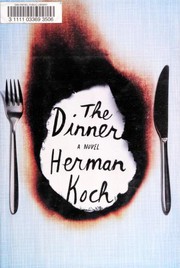
The Dinner
Two couples meet for dinner in Amsterdam to decide what to do about a violent crime their teenage sons committed.
2,958-word summary · 13 min read

The Elegance of the Hedgehog
A Paris concierge hides her brilliant mind while a gifted girl plans her death, until a new tenant sees through them both.
2,248-word summary · 10 min read
The Cider House Rules
Homer Wells grows up in a Maine orphanage under Dr. Larch, who delivers babies and performs illegal abortions.
2,985-word summary · 13 min read
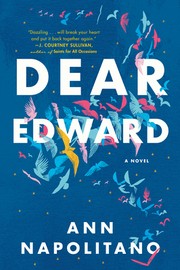
Dear Edward
Twelve-year-old Edward Adler survives a plane crash that kills his family, then learns how to live with grief, letters, and love.
2,903-word summary · 13 min read
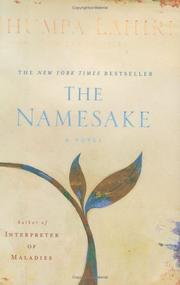
The Namesake
Jhumpa Lahiri follows Gogol Ganguli from a hated namesake to adult loss, marriage, and family reckoning between Calcutta and Boston.
2,878-word summary · 13 min read
The God of Small Things
Twins Rahel and Estha grow up in Kerala in 1969, where family rules and caste lines shape a loss that follows them into adulthood.
2,646-word summary · 12 min read
On Earth We're Briefly Gorgeous
A son writes to the mother who cannot read him: war, migration, first love, and loss in one Vietnamese American family in Hartford.
3,113-word summary · 14 min read
Go Set a Watchman
Jean Louise Finch returns to Maycomb and finds her father changed: Lee's contested 2015 draft about family loyalty and race in Alabama.
3,478-word summary · 15 min read
She's Come Undone
Abused as a girl, divorced and struggling with weight, Dolores Price slowly finds healing after years of trauma.
2,550-word summary · 11 min read
Extremely Loud and Incredibly Close
Nine year old Oskar searches New York for a lock matching his father's key after 9/11.
2,999-word summary · 13 min read
The Curious Incident of the Dog in the Night-Time
Curious Incident retold: Christopher finds Wellington dead, maps primes, seeks truth in Swindon.
2,146-word summary · 10 min read