
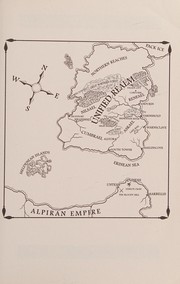
Blood Song
2,479-word summary 11 min read 592 pages in the book
- First published
- 2012
- Publisher
- Ace
- Pages
- 592
- ISBN
- 9780425267691
- Series
- Raven's Shadow (#1)
Reading options
What's inside (8 sections)
I came to Blood Song because it kept turning up in lists of self-published books that got picked up by a major house, and I was curious whether the attention had a book behind it. Anthony Ryan first published it himself in 2012, and Ace brought out the edition I read, a 592-page hardcover, in 2013. It stands as the first volume of Raven's Shadow, and it announces its ambitions immediately: this is a story about war, faith, and a young man who has no idea what he is being trained to become.
The structure is the first thing worth mentioning. The novel begins with an older Vaelin Al Sorna in a cage, a prisoner of the Alpiran Empire, being moved toward a duel to the death that everyone expects him to lose. A historian named Verniers Alishe Someren travels with him and asks for the story of his life. What follows is Vaelin's account, told in his own voice, of how a ten year old left at an abbey gate became the man they call the Hope-Killer. The frame gives the whole book a mournful quality. We know he survives, because he is telling the tale, so the tension comes from how he got there rather than whether he will die.
Verniers is more than a device for asking questions. He is a professional recorder of other people's lives, and his presence turns Vaelin's memories into testimony rather than simple recollection. The historian wants causes and dates; the soldier remembers weather, pain, and the faces of men who did not come back. The gap between those two ways of telling a life is one of the quieter pleasures of the book. Ryan also lets the frame intrude at intervals, so that a run of hard fighting is interrupted by the older voice picking up the thread.
Left at the iron gate
Vaelin's father, Kralyk Al Sorna, was Battle Lord to King Janus, ruler of the Unified kingdom. When Vaelin's mother, Ildera Vardrian, dies of an illness, Kralyk takes the boy to the iron gate of the Sixth Order and leaves him there. The Sixth Order is a caste of warrior monks devoted to battle in the service of the Faith. Vaelin is ten. He is angry, he has no family left, and he understands enough to know that his father did not bring him there out of kindness.
The training is brutal and the book does not look away from it. Novices must survive seven years and seven deadly tests before they become full Brothers. The tests are designed to weed out the weak and the morally unfit, and Ryan spends real time on the drills, the beatings, the cold, and the small humiliations that break boys down. Vaelin excels at the sword and at the odd, unsettling skill he discovers he has, but he is never allowed to forget that he is a foundling among boys who chose this life. His rage at being deprived of his birthright is one of the engines of the early chapters.
Ryan gives the training a rhythm that makes the years pass convincingly. There are lessons in the sword, in riding, in the histories the Brothers recite, and in the songs that give the book its title. The boys are assessed constantly, and failure is never just a bad grade. The blood song named in the title is tied to a test of temperament, a way of deciding what a child is suited to before he is old enough to choose. Vaelin's result points him toward violence, and the knowledge sits on him like a sentence. It is a strong opening idea because it raises the question the whole novel will worry at: is a man dangerous because of what he did, or because of what someone decided he was?
The boys who become brothers
Vaelin is not alone. His group of novices includes Nortah Al Sendahl, Barkus Jeshua, Dentos, Caenis Al Nysa, and Frentis, and the book's best sections are the ones where Ryan lets them rib each other and then bleed together. Nortah is the superb swordsman with a private grievance, Barkus is the big presence whose later scenes turn strange, and Frentis is the youngest, small enough to be underestimated and sharp enough to notice things the others miss. They become a unit, and when the novel puts them in danger, the danger lands because Ryan has made you care about the group rather than just the hero.
Master Sollis teaches them, and Sister Sherin, a healer in the Fifth Order, becomes the object of Vaelin's first love. The Fifth Order is its own branch of the Faith, and Elera Al Mendah leads it. Vaelin's time as a novice also brings him into contact with Sella, a heretic with magical powers, and with a crime lord called One Eye who uses similar gifts for worse ends. Ryan uses these encounters to widen the book beyond the abbey walls. There are assassinations to survive, a murder plot against Elera to foil, and a growing sense that the Faith is not nearly as united as its public promises claim.
Sister Sherin matters because she is the first person in Vaelin's new life who treats him as a person rather than a recruit. Their scenes are quiet, and they give the novel its few moments of warmth before the wars start. Sella is a different kind of counterweight. She is a heretic, which in this country means someone who uses the gifts the Faith forbids, and she has no patience for the Order's certainties. Her arguments with Vaelin are among the best written exchanges in the book, because Ryan lets both of them have a point. One Eye, the crime lord, is the sour version of the same idea: magic without restraint, turned into a business.
The gift that cannot be named
The title refers to something Vaelin carries inside him. He has a gift, an ability to sense the flow of a fight and the intentions of the person facing him, and it makes him terrifying in a duel. The Faith forbids such things. Magic, or the Dark Gifts as they are called, is grounds for suspicion, and Vaelin learns to hide what he can do. Ryan writes these scenes with a quiet physicality. Vaelin does not shout about his power. He notices a shoulder twitch, a shift of weight, and then he moves before the other person has decided to move.
The gift is only one of two long mysteries. The other concerns the malevolent spirits that have tried to kill him throughout his life, spirits that can possess the bodies of the living, including people he trusts. When one of them takes hold of Barkus, the book turns from a war story into something colder and stranger. Vaelin also hears rumours of a Seventh Order, a hidden branch of the Faith that may be good or may be something else entirely. Ryan withholds the answers for most of the novel, and the waiting works because Vaelin's world is one where institutions lie to their own members.
That possession scene is hard to forget because the threat comes from someone who has been beside Vaelin for years. Ryan does not explain the spirits quickly. They appear in flashes, in the moments when a fight goes wrong or a friend says something slightly out of character, and the doubt they create is more useful than any reveal would be. The Seventh Order rumours work in the same way. Vaelin hears references to a hidden branch of the Faith from people who are frightened of it, and the book lets the reader wonder whether it is a myth, a police force, or something worse.
King Janus and the heretics
Once he is a full Brother, Vaelin is drawn into the service of King Janus, a brilliant and ruthless ruler who wants to leave his son Malcius a stable, economically secure country. Malcius is well meaning and seems unable to command anyone, which makes Janus's calculations more worrying. Princess Lyrna, the king's daughter, is sharper than her brother and appears at key points in the political plot. Ryan is interested in how a kingdom actually runs, and the court scenes are as pointed as the battle scenes.
Janus is the most interesting adult in the novel because he is neither a villain nor a mentor. He is a ruler doing what rulers do, which in his case means weighing the value of a Battle Lord's bastard son against the stability of a succession. He recognises Vaelin's usefulness before Vaelin understands it himself. Malcius, the heir, is a gentle man in a job that requires hardness, and the scenes between father and son are full of a love that neither can express well. Lyrna watches all of it and says less than she thinks, which makes her the most politically sharp member of the family.
Vaelin's first campaigns are against rebellious heretics known as the Black Arrow and against a usurping lord named Hentes Mustor. These sections are where the book earns its reputation for bloody action. Vaelin leads men, takes losses, and discovers that winning a fight and winning a political result are different skills. He is good at the first and bad at the second, and the gap gets him into trouble later. Janus recognises the usefulness of a man who can kill without hesitation, and he uses Vaelin in ways that the younger man only partly understands at the time.
The heretics of the Black Arrow are not cardboard enemies. Ryan gives them a grievance and a history, and the campaign against them is dirty in the way that suppressing a rebellion is always dirty. The usurper Hentes Mustor is a simpler figure, a lord who wants what the crown has, but the fighting around him still costs lives that matter to the narrator. Vaelin's habit of measuring a victory by the number of friends he has lost is established here, long before the bigger war makes the same calculation brutal.
The Hope-Killer
The war that changes Vaelin's life comes when Janus turns his attention to the rich southern nations of the Alpiran Empire. In the heat of a battle, Vaelin kills the heir to that nation, a man known as The Hope. The name sticks. From that point on, strangers call Vaelin the Hope-Killer, and the title follows him into the framing story, where his captors have their own reasons to want him dead.
He goes on to take the city of Linesh and hold it even while the rest of Janus's forces are driven back. This is the longest and most demanding stretch of the novel. Vaelin has to govern a captured city, keep his soldiers fed, and contain an outbreak of a lethal plague called the Red Hand. He also keeps trying to understand and control his gift, which grows more dangerous the more he uses it. Ryan keeps the focus on the practical work of survival: supplies, quarantines, rumours, and the slow erosion of a garrison that knows no relief is coming. When the war ends, Vaelin surrenders the city and himself on one condition, that his people, including the woman he loves, are allowed to leave. It is the most decent thing he does in the book, and it costs him everything.
The Linesh section is where Ryan's research shows. The plague called the Red Hand is handled like a real crisis rather than a plot device: fear spreads faster than the illness, the soldiers want a scapegoat, and the rules Vaelin sets have to hold when he is exhausted. The city itself becomes a character, a place of narrow streets and stubborn people who do not particularly want to be governed by an occupier. Vaelin's gift helps him in a fight and helps him very little in a council chamber, which is the point. He can win a duel in seconds and he cannot persuade a hungry crowd to wait one more day.
The last duel
The novel returns to the cage for its ending. The duel is to be fought against the champion of the Meldenean Islands, the country Vaelin's father once attacked, and the stakes involve the return of a southern noble named Emeren. Years of solitary confinement have left Vaelin thin and awkward, and everyone watching expects a quick death. What they get instead is a fight decided so fast that the seconds are hard to count. Vaelin wins, walks away, and the frame closes.
I keep coming back to how the duel is written. Ryan gives it almost no build-up in the present tense. All the weight sits in the years Vaelin spent in solitary confinement and in the historian's questions, so the fight itself reads like a release of something coil-sprung. The champion of the Meldenean Islands is a worthy opponent on paper, but the outcome is decided by Vaelin's gift and by a lifetime of being the angriest man in any room. Emeren, the noble whose return is at stake, feels like an afterthought by comparison, which is a small weakness in an otherwise tight ending.
I found that ending satisfying but slightly too clean. A book this willing to dwell on the cost of violence gives its hero a release that feels almost easy after the grim middle chapters. The magic, too, stays deliberately vague. Vaelin's gift is never explained in a way that would satisfy a reader who wants a system, and the spirits and the possible Seventh Order are left as threads for later books. If you need every mystery tied off, this volume will annoy you. If you are willing to wait, the loose ends are part of the design of a trilogy.
What stays with me is the voice. Vaelin tells his own story with a dryness that keeps the sentiment in check, even when he is describing his mother or the friends he loses. The abbey chapters are the strongest, and the middle war sections sag a little under the weight of sieges and marching. Ryan also has a gift for the scene that turns on a single line of dialogue. A brother will say something ordinary in the middle of a march and the reader suddenly understands years of shared history. The novel is long, and there are passages where the march seems to go on as long as the one on the page, but the character work keeps pulling it back. Vaelin is not a likeable hero in the usual sense. He is suspicious, cold, and slow to trust. He is also capable of a loyalty that the people who trained him never asked for, and that contradiction is what makes the book worth the time it asks.
FAQ
Is Blood Song part of a series?
Yes. It is the first book of Anthony Ryan's Raven's Shadow trilogy, followed by Tower Lord and Queen of Fire. It was first published in 2012 before Ace reissued it in 2013.
Who is the Hope-Killer?
It is Vaelin Al Sorna's unwanted title, earned when he kills the Alpiran heir called The Hope during the southern war. The name follows him into the framing story as a prisoner awaiting a duel.
Does the novel explain Vaelin's magical gift?
Not fully. The blood song shows up as heightened awareness in combat, but the book leaves the spirits, the Dark Gifts, and the possible Seventh Order as open threads for later volumes.
Similar books
More from Raven's Shadow first, then related titles.
The Lady of the Lake
Ciri is trapped by the Aen Elle while Geralt winters in Toussaint, and the Witcher saga closes with the siege of Stygga and a fog-bound farewell.
2,445-word summary · 11 min read

The Blinding Knife
Kip trains to join the Blackguard while the Prism hides his true identity, loses his colors, and fights a war against a rogue drafter who wants to birth a god.
2,049-word summary · 9 min read
Magician: Apprentice
An orphan kitchen boy and a smith's son grow up in a frontier castle just as invaders from another world open a rift and begin a war that will change both of…
2,114-word summary · 9 min read
The Tower of the Swallow
Ciri flees as a bandit while Geralt gathers allies to find her.
2,580-word summary · 11 min read
The Black Prism
Dying Prism Gavin Guile hides a secret son while war brews over color magic in the Seven Satrapies.
2,169-word summary · 10 min read
Gardens of the Moon
Empire, gods, and mages collide over Darujhistan as Bridgeburners bleed for Empress Laseen.
2,188-word summary · 10 min read
Jade City
On an island where jade grants power, two clans fight over the mineral, the family name, and the right to decide what loyalty costs.
2,403-word summary · 11 min read
This Kingdom Will Not Kill Me
A grocery delivery driver wakes in a fantasy capital she knows from an unfinished trilogy, only to discover she cannot die.
2,339-word summary · 10 min read
The Woman Who Rides Like a Man
Newly knighted, Alanna heads south into Tortall's desert, where a broken sword and a dead shaman leave her responsible for a rebel tribe and three Gifted…
2,894-word summary · 13 min read
The Book of Lost Things
A twelve-year-old boy grieving his mother's death slips through a crack in the garden wall into Elsewhere, where fairy tales and a fading king guard the secret…
2,441-word summary · 11 min read
Temple of the Winds
In Sword of Truth book four, a magical plague sweeps the Midlands and prophecy demands that Richard enter the Temple of the Winds, but only through an…
2,962-word summary · 13 min read
Golden Fool
FitzChivalry Farseer returns to Buckkeep as a servant and a grieving Skillmaster, teaching Prince Dutiful while court intrigue, the Piebalds and a…
2,583-word summary · 11 min read
Fool's Fate
Prince Dutiful must kill a dragon to secure his betrothal, and FitzChivalry Farseer is caught between the Fool and Chade over Icefyre's fate.
2,247-word summary · 10 min read
Blood of the Fold
In Sword of Truth book three, Richard Rahl takes command of Aydindril while a zealot army and an emperor who walks in dreams threaten everything he loves.
2,321-word summary · 10 min read

Magician's Gambit
Garion and his companions cross haunted Maragor and the caves beneath Rak Cthol to recover the Orb of Aldur.
2,391-word summary · 11 min read

Homeland
Drizzt Do'Urden is born into the cruel drow city of Menzoberranzan, where his father teaches him to fight and to doubt everything his family believes.
2,303-word summary · 10 min read
Enchanters' End Game
Garion marches toward Torak while Ce'Nedra leads the West's army in the final Belgariad volume, where prophecy and war meet.
2,557-word summary · 11 min read

The Queen of the Tearling
Nineteen-year-old Kelsea leaves the woods to take her throne, ends a shipment of human captives, and draws the Red Queen's revenge.
2,357-word summary · 10 min read
Fool's Errand
FitzChivalry Farseer has lived in exile for fifteen years. When Prince Dutiful vanishes before his betrothal, Fitz returns to Buckkeep to find him, with a wolf…
2,606-word summary · 12 min read
The Sword of Shannara
A young half-Elf and a company of companions set out to recover a magic sword before the Warlock Lord destroys the Four Lands.
2,474-word summary · 11 min read

In the Hand of the Goddess
Alanna, still disguised as a boy, survives war, court plots, and a death duel as the Goddess's chosen warrior in the second Song of the Lioness book.
2,018-word summary · 9 min read
The Emperor's Soul
Forger Shai must stamp a new soul for the dying emperor in 100 days.
2,313-word summary · 10 min read
Shadow's Edge
Kylar fakes death as a king killer while Vi hunts him for the Godking.
2,245-word summary · 10 min read
Pawn of Prophecy
Farm boy Garion learns sorcerers watch him as an old Orb wakes.
2,331-word summary · 10 min read
New Spring
Moiraine and Lan hunt the newborn Dragon before the Black Ajah finds him.
2,475-word summary · 11 min read
Furies of Calderon
Furyless Tavi defends Calderon Valley when the Marat return and lords scheme.
2,587-word summary · 11 min read
Stone of Tears
After the veil tears, Richard seeks training from the Sisters while Kahlan holds a fracturing Midlands and Zedd hunts the missing Stone.
2,483-word summary · 11 min read
The Farthest Shore
Archmage Ged and Prince Arren sail to the far west to stop Cob, whose bid for endless life drains magic across Earthsea in Le Guin's sad 1972 third volume.
2,800-word summary · 12 min read
Edgedancer
Hungry street thief Lift and her vine-like friend Wyndle cross the Herald Nale in Tashikk when a child emperor shows Radiant signs and she refuses to step…
2,328-word summary · 10 min read
Dragons of Autumn Twilight
Old friends reunite at the Inn of the Last Home, guard a glowing Blue Crystal Staff, face black dragon Khisanth, and free slaves at Pax Tharkas in this 1984…
2,803-word summary · 12 min read