
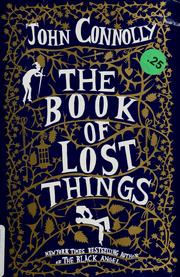
The Book of Lost Things
2,441-word summary 11 min read 339 pages in the book
- First published
- 2006
- Publisher
- Atria Books
- Pages
- 339
- ISBN
- 9780743298858
Reading options
What's inside (8 sections)
I picked this up on a rainy Sunday expecting a quick fantasy adventure, because that is how it is usually shelved and how the cover tends to sell it. What I got instead was a book about a twelve-year-old boy learning to survive his mother's death, told through the strangest set of fairy tale retellings I have come across. John Connolly is better known for his Charlie Parker crime novels, and this 2006 stand-alone was his first real step outside that series. It came out through Hodder & Stoughton in Britain in September of that year and through Atria Books in the United States a couple of months later, and it was nominated for the Hughes & Hughes Irish Novel of the Year in 2007. The version I read is the American hardcover, around 339 pages. By the end I had stopped thinking of it as a children's book altogether.
The opening sets the tone before anything fantastic happens. It tells us plainly that there was once a boy who had lost his mother, and that he had in fact been losing her for a long time. That double statement is the whole book in miniature: the slow loss before the death, and the sudden loss after it, and the fact that a child can live inside both at once.
A boy, a dying mother, and a house full of whispers
David is twelve when his mother dies after a long, wasting illness. Connolly spends real time on the months before her death, and this is where the book first surprised me. David does not simply wait for the worst. He builds elaborate little routines that he believes might hold her in the world. For a whole year he carries the same two objects between his bedroom and the kitchen every morning and night, a small copy of Grimm's fairy tales and a dog-eared Magnet comic, one laid exactly on top of the other with the edges squared to the corner of the rug or the chair. If he keeps the pattern, maybe she stays. It is the kind of logic only a child can fully believe in, and Connolly reports it without a trace of mockery.
His mother likes him to read to her, not the romances and mysteries on her own shelf but the older stories: myths, legends, tales of castles and quests and dangerous talking animals. David is past the age where such stories are expected to charm him, yet he loves them anyway, and the fact that they please her makes him love them more. This is how the book earns its later fantasy turn. The other world is not dropped into David's life from nowhere. It is built out of the stories he has read aloud at her bedside, stories that his mother loved and that now carry her memory.
After she dies, the rest of his life comes apart in ordinary ways. His father, a code-breaker working during the Second World War, remarries a woman named Rose who had been a nurse at the hospital where David's mother died. David casts her as a wicked stepmother almost immediately, though the book is careful enough to show that Rose is trying. With the war on, the family leaves London for a large old house in the country that belonged to Rose's people. Then Rose has a baby, a boy named Georgie, and David's resentment sharpens into something he can barely think around. The baby takes his father's attention, the house is not his house, and the grandmother-shaped space his mother used to fill is empty.
In that attic room David finds a collection of old fairy tale books that once belonged to a boy named Jonathan Tulvey, a relative of Rose's who disappeared as a child along with his adopted sister, Anna. Nobody will say much about it, which of course means David thinks of nothing else. Around the same time the books on his shelf begin to whisper at him in the dark. He has blackouts and what he calls waking dreams, in which he hears his mother's voice and sees a dark forest, a castle, and a hunched figure he names the Crooked Man. That figure turns up in the flesh too, smiling and offering words David does not understand: "Welcome, your majesty. All hail the new king." I remember feeling a small chill at that line, because the book gives no explanation until very late.
Through the crack in the garden wall
The crossing happens after a family argument and during an air raid. David hears his mother's voice calling from the sunken garden below his room, and he follows it through a crack in the garden wall. He comes out not into the neighbouring field but through the trunk of a hollow tree, into a land he decides to call Elsewhere. The details are deliberately dreamlike. It looks like a reflection of his own world made out of old stories, and it is both a construction of his imagination and, the book insists, frighteningly real.
The first person he meets is the Woodsman, a quiet guardian of the forest who becomes the closest thing the book has to a companion. The Woodsman tells David that the king of this land keeps a legendary book, the Book of Lost Things, and that the answers David wants may be written in it. Since David believes his mother might be trapped here, that is enough to send him off toward the king's castle. The Woodsman travels with him for a while, and the two of them form the sort of bond that makes the later separation hurt.
What I liked here is that the quest never feels grand. David is not trying to save the world. He is a boy who wants his mother back and who cannot say out loud that she is gone, so he follows a voice into a tree. The grander language of kings and books is always attached to that small, stubborn hope. Connolly keeps the emotional stakes closer to the ground than the setting suggests.
Wolves, trolls, and a very unpleasant Snow White
The road to the castle is a chain of encounters, and this is where the book's structure shows both its strengths and its limits. David is hunted by Loups, creatures that are half man and half wolf. The Woodsman kills a raven that is scouting for them, and at one point a large pack closes in as the two travellers reach a chasm with two bridges guarded by trolls. Harpies circle the canyon below, ready to take anything that falls. David works out the trolls' riddle, picks the safe bridge, and gets across, but the wolves drag the Woodsman away into the trees. David cuts the bridge ropes to stop the pack following and has to go on alone, believing his friend dead.
Soon after, he meets seven dwarves who talk constantly about rights and liberties and resisting oppression, and who take him back to their cottage. Their version of Snow White is a revelation. The dwarves poisoned her with an apple and blamed a wicked stepmother, but the stepmother had an alibi, so the dwarves stood trial and were ordered to care for Snow White for the rest of her life. She is demanding, overweight, heavily made up, and almost impossible to feed. The dwarves secretly mine diamonds while she sleeps and quietly ask David to send them any eligible suitors they can pay off to marry her. It is funny for a few pages and then slightly sad, which is the tone of most of these rewrites.
The huntress episode is the grimmest stretch. David wanders off the road to eat apples and sees a hunter kill a deer that has the head of a young girl. The hunter turns out to be a woman who captures children and animals and fuses their heads and bodies together with a special salve, because a human head on an animal body makes better sport. While he waits his turn, David talks her into making herself into a centaur, walks her through the cuts, and then takes off her hand and runs. Her failed experiments come shambling back and turn on her as he escapes. This is not a soft book, and I would not hand it to a sensitive younger reader without knowing that.
There are other traces of the fairy tales scattered through these chapters. Red Riding Hood is given a history in which she seduces the wolf and gives birth to the first Loup, and the book offers more than one ugly account of what she did afterward. Connolly clearly enjoys pulling the polished Disney versions apart and putting back something closer to the old, violent stories, with a sharp comic streak running through the horror.
Roland, the Beast, and a lie wearing his mother's face
Farther along the road David meets Roland, a soldier who is searching for his friend Raphael. David agrees to travel with him, and Roland teaches him how to defend himself. Together they help a village deal with a monstrous Beast, an episode that gives David his one real fight and shows him that courage is mostly a matter of staying upright when you are frightened. Roland is the warmest figure in this stretch of the book, a practical adult who does not ask David to explain his grief.
The pair reach the Fortress of Thorns, an enchanted tower, and Roland goes in alone to look for Raphael. He does not come back. That night David hears his mother's voice again and follows it into the fortress, still hoping she is alive somewhere in this place. What he finds is an enchantress who has been imitating her voice to draw him in. He defeats her, and in doing so has to stop pretending. This is the moment the book has been moving toward since the first page: David finally accepts that his mother is dead. It lands harder than I expected, largely because the earlier scenes of him reading to her were so patient and specific.
The Crooked Man has been appearing throughout the journey, sometimes helping, always watching, offering to get David home if he will only speak his little brother's name. At the Fortress of Thorns that offer hangs over everything. The reason is not revealed until later, which makes the repeated requests feel like a threat rather than a puzzle.
The faded king and the Crooked Man's bargain
When David finally reaches the king, he finds a dying man who is Jonathan, the boy who vanished from Rose's family all those years ago. The story Connolly tells here is sadder than the adventure leading up to it. The Crooked Man feeds on the anger of children who are jealous of a younger sibling or a new arrival. Jonathan gave Anna over to him and was too ashamed of what he had done to ever go home, so he stayed and became the faded king of this place. The Book of Lost Things he keeps is the record of everything that has gone missing, and the novel even plays with the idea that the book in the reader's hands was written by the grown-up David.
The Loups attack the castle, and the Crooked Man makes his final offer. David and Georgie could rule this kingdom together, he says, if David will just say Georgie's name and hand him the power he wants. David refuses. The Crooked Man is destroyed in a way that deliberately recalls Rumpelstiltskin, which is the fairy tale Connolly draws on for him, and the Woodsman returns alive after all. He helps David find the tree and go back through it.
I have mixed feelings about this section. The revelation about Jonathan ties the old house and the missing children together neatly, and the Rumpelstiltskin echo is clever. But the Crooked Man's whole method, feeding on jealousy of a baby brother, is stated so plainly at the end that some of the earlier mystery drains away. The bargain also resolves in a hurry after several hundred pages of slow travelling.
What happens after the boy comes home
David wakes in a hospital bed with Rose sitting beside him. He sees his stepmother differently now, understands how hard she was trying, and feels real affection for Georgie. He has accepted that his mother is not coming back, and the book treats that acceptance as the thing that lets him go on living rather than as a lesson delivered from above. The ending then does something I found brave: it refuses to stop at the happy return.
Connolly follows David through the rest of his life. There is more pain. Georgie dies in another war, his father dies of a heart attack, David marries and then loses his wife and his child, and in the end he looks after Rose in her old age. He becomes an old man and a well-known writer. Just before he dies, he goes back to the garden wall and slips through to Elsewhere, where the Woodsman is waiting. That last movement turned the whole book around for me. The title stops being the name of a magical object and becomes a way of describing a life: everything we lose, and the possibility that lost things are gathering somewhere.
For all that I admired it, this is not a flawless read. The middle is built as a string of encounters, and a few of them, especially the visit with the dwarves and Snow White, feel like clever sketches that end before they have fully developed. The fairy tale rewrites are consistently dark, and readers looking for a gentle magical adventure will not find one. Connolly also returns to the grief lesson often enough that it loses a little force through repetition. Still, the patient scenes between David and his mother early on are worth the price of admission, and the decision to follow him into old age gives the story a weight that a simple quest would never have carried.
I would hand this to a reader who likes their fantasy with teeth and who does not mind a book that keeps circling back to death. I would think twice before giving it to a very young reader, or to someone who wants their fairy tales tidy. It is a book about a boy who loses his mother, and the magic is there because loss is the one thing he cannot be talked out of.
FAQ
Is The Book of Lost Things part of a series?
It was published in 2006 as a stand-alone novel and needs no other book to make sense. Connolly returned to the same world much later with The Land of Lost Things in 2023, but the original story stands on its own.
How dark is it, and is it really a children's book?
It is often shelved as young adult or children's fiction, yet the fairy tales are rewritten in grim ways, with wolf creatures, a huntress who grafts children onto animals and a villain who feeds on jealousy. A sensitive younger reader may find parts of it frightening.
What does the title actually refer to?
It names the book kept by the faded king in Elsewhere, a record of everything that has gone missing. It also fits David's own losses, from his mother to his place in the family, and the many people he will lose across a full life.
Similar books
The Woman Who Rides Like a Man
Newly knighted, Alanna heads south into Tortall's desert, where a broken sword and a dead shaman leave her responsible for a rebel tribe and three Gifted…
2,894-word summary · 13 min read
Pinocchio
A wooden puppet with a talent for trouble gets chance after chance to become a real boy. Collodi's 1883 original is stranger, darker and funnier than the…
2,600-word summary · 12 min read
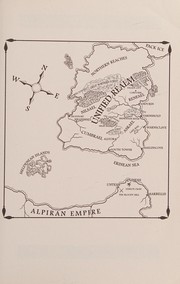
Blood Song
Anthony Ryan's Blood Song follows Vaelin Al Sorna from the Sixth Order's brutal training to the war that earns him the name Hope-Killer, in the first Raven's…
2,479-word summary · 11 min read

Inkdeath
The final Inkworld novel sends Mo into the land of the dead, leaves Meggie choosing between two boys, and ends the Adderhead's immortality with three written…
2,062-word summary · 9 min read
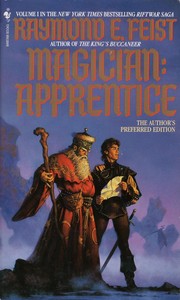
Magician: Apprentice
An orphan kitchen boy and a smith's son grow up in a frontier castle just as invaders from another world open a rift and begin a war that will change both of…
2,114-word summary · 9 min read
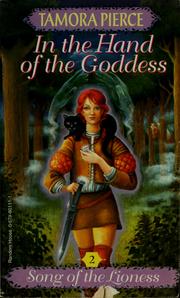
In the Hand of the Goddess
Alanna, still disguised as a boy, survives war, court plots, and a death duel as the Goddess's chosen warrior in the second Song of the Lioness book.
2,018-word summary · 9 min read
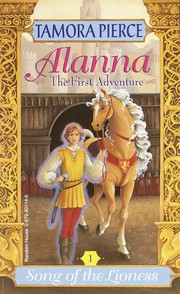
Alanna: The First Adventure
Twins swap roles so Alanna trains as boy page Alan for knighthood while Thom studies sorcery.
2,107-word summary · 9 min read
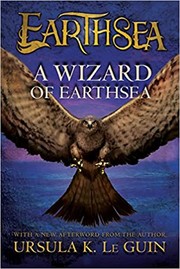
A Wizard of Earthsea
A proud goatherd becomes the wizard Ged, looses a shadow at Roke, and must hunt it across Earthsea to name it. Le Guin's lean 1968 series opener.
2,972-word summary · 13 min read
The Magician's Land
Exiled from Fillory, Quentin takes a teaching job at Brakebills, joins a crew of magical thieves, and must help rebuild a dying world to finish the trilogy.
2,204-word summary · 10 min read
The Demon King
A thief steals an amulet once owned by a legendary sorcerer, while a princess flees a forced marriage in the first volume of Cinda Williams Chima's high…
2,371-word summary · 11 min read
The Arabian Nights: Alf Laylah Wa-Laylah
A frame story about a woman talking for her life holds jinn, sailors, caliphs, and tricksters.
2,338-word summary · 10 min read
Jade City
On an island where jade grants power, two clans fight over the mineral, the family name, and the right to decide what loyalty costs.
2,403-word summary · 11 min read
Wild Magic
A thirteen-year-old orphan in the kingdom of Tortall learns to live with the gift of speaking to animals, and discovers that the creatures she loves are not…
2,056-word summary · 9 min read
This Kingdom Will Not Kill Me
A grocery delivery driver wakes in a fantasy capital she knows from an unfinished trilogy, only to discover she cannot die.
2,339-word summary · 10 min read
The Winter of the Witch
Vasya returns to a burning Moscow, bargains with the Bear and the spirit of Midnight, and leads the old spirits into the battle that will decide Russia.
2,000-word summary · 9 min read
The Sorceress
Flamel takes the twins to London to find Gilgamesh, while Perenelle fights for her life on Alcatraz and an older threat wakes.
2,684-word summary · 12 min read
The Lost Metal
Wax Ladrian returns to stop his sister's plot to smuggle a magical bomb into Elendel, in the conclusion of Mistborn's second era.
2,038-word summary · 9 min read
The Girl of Fire and Thorns
Rae Carson's debut follows Elisa, an insecure princess born with a godstone in her navel, who is married to a foreign king and must grow into the leader a…
2,331-word summary · 10 min read
The Devils
A monk inherits a church agency full of dangerous prisoners while a street thief is claimed as Troy's heir. Abercrombie's grimdark fantasy begins with monsters…
2,314-word summary · 10 min read
The Book of Three
A restless assistant pig-keeper in mythical Wales chases his escaped oracle pig and finds himself beside Prince Gwydion in a war against the Lord of Annuvin.
2,019-word summary · 9 min read
Temple of the Winds
In Sword of Truth book four, a magical plague sweeps the Midlands and prophecy demands that Richard enter the Temple of the Winds, but only through an…
2,962-word summary · 13 min read
Spark of the Everflame
A village healer stops taking the powder that keeps her strange powers quiet. After a dying king names her his heir, Diem Bellator faces a choice between a…
2,293-word summary · 10 min read
Magic Study
Sentenced to die in Ixia, Yelena returns to the land she was stolen from to learn the magic that made her an outlaw.
2,542-word summary · 11 min read
Keys to the Demon Prison
The fifth and final Fablehaven book sends Kendra and Seth Sorenson across secret preserves to keep the last keys to the demon prison out of rival hands.
2,251-word summary · 10 min read
Golden Fool
FitzChivalry Farseer returns to Buckkeep as a servant and a grieving Skillmaster, teaching Prince Dutiful while court intrigue, the Piebalds and a…
2,583-word summary · 11 min read
Fool's Fate
Prince Dutiful must kill a dragon to secure his betrothal, and FitzChivalry Farseer is caught between the Fool and Chade over Icefyre's fate.
2,247-word summary · 10 min read
Dragon Rider
A silver dragon, a sharp-tongued brownie and a lonely orphan boy cross deserts and seas to find the dragons' lost homeland, pursued by a golden killer made by…
3,188-word summary · 14 min read
Blood of the Fold
In Sword of Truth book three, Richard Rahl takes command of Aydindril while a zealot army and an emperor who walks in dreams threaten everything he loves.
2,321-word summary · 10 min read
The Wind Through the Keyhole
Sheltering from a killing storm, Roland tells his ka-tet a tale of his youth, then a boy's fairy tale that mirrors his own loss.
2,504-word summary · 11 min read
The Lady of the Lake
Ciri is trapped by the Aen Elle while Geralt winters in Toussaint, and the Witcher saga closes with the siege of Stygga and a fog-bound farewell.
2,445-word summary · 11 min read