
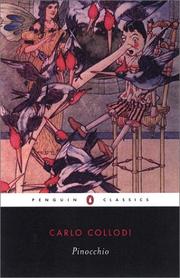
Reading options
What's inside (7 sections)
I came to this one assuming I already knew it. Like most people I had absorbed the story through the Disney film: the long nose, the little cricket, the wooden boy who wanted to be real. Reading Collodi's original was a genuine shock. This is a stranger, rougher book, full of beatings and hangings and creatures that get eaten, and it was written for children. It is also very funny, and its hero is a selfish, lying, lovable disaster for most of its length. I finished it with more respect for the original and a fair bit of sympathy for anyone who has tried to retell it.
The facts behind the book explain its odd shape. Carlo Collodi was the pen name of Carlo Lorenzini, a Tuscan writer who spent years in journalism and in the campaign for Italian unification before turning to children's books. In 1881 he sent a short episode about a wooden puppet to a friend who edited a children's weekly in Rome, calling it a bit of foolishness. The children loved it. It ran in the Giornale per i bambini from July 1881, first under the title La storia di un burattino, or The Story of a Puppet. Collodi stopped at chapter fifteen, where the puppet is hanged and left for dead. Readers demanded more, and he resumed in 1882 under the title Le avventure di Pinocchio, adding the rescues and the reform that led to the book edition of February 1883. It was published in Florence by Felice Paggi with illustrations by Enrico Mazzanti, ran to 36 chapters and roughly 228 pages, and became one of the most translated books in the world. The two halves never quite lose the seam between them.
A log that cries out, and a very bad first morning
The story opens in Tuscany with a carpenter named Master Antonio, whom the neighbours call Mastro Ciliegia because of his red nose. He finds a log and plans to carve a table leg from it, but the log cries out "Please be careful!" when he strikes it, and he is frightened enough to give it away. His neighbour Geppetto wants to carve a puppet and earn a living as a travelling puppeteer. Geppetto wears a yellow wig that the children mock, calling him Polendina after a kind of cornmeal mush, and the name annoys him greatly. He carves a boy, teaches him to walk, and promptly loses him, because Pinocchio runs straight out into the town.
A carabiniere catches the puppet and assumes the child has been mistreated, so Geppetto is thrown into prison while Pinocchio heads home alone. There he meets a talking cricket who warns him about the perils of disobedience and laziness. The puppet calls the creature a wooden head and hurls a hammer at it, which kills it on the spot. This is the first of many moments where the book is harsher than its reputation suggests. The cricket will come back as a ghost to keep offering advice, but the point lands: the hero has begun his story by killing the one voice trying to help him.
Hunger follows. He tries to fry an egg and a chick hatches out of it and walks off to find food. He knocks on a neighbour's door and gets drenched with water because they think he is playing a prank. Cold and wet, he lies down on the stove and falls asleep, and when he wakes his feet have burned away. Geppetto is released from prison in time to find him, gives him three pears, and makes him a new pair of feet. In return Pinocchio promises to go to school. Geppetto sells his only coat to buy a spelling book, and makes his new son a suit of flowered paper, shoes of tree bark, and a cap of dough. The father's generosity is established early, and it is the one thing in the book that never turns sour.
The theatre, the gold coins, and two charming thieves
On his way to school Pinocchio hears music, sells his spelling book for a ticket to the Great Marionette Theatre, and walks into the first of his many temptations. During the show the puppets Harlequin, Pulcinella, and Signora Rosaura call out to him as a brother. The puppet master Mangiafuoco, or Fire-Eater, is angry at the interruption and decides to use Pinocchio as firewood for his dinner. He is described with red eyes and a black beard reaching the floor, a mouth as wide as an oven, and teeth like yellow fangs. Yet when the puppet pleads for his own life and for Harlequin's, and Mangiafuoco learns how poor Geppetto is, the big man softens. He lets Pinocchio go and gives him five gold pieces. It is one of the book's repeated surprises: the frightening figure turns out to be kinder than the respectable ones.
On the road home Pinocchio meets a fox and a cat. The cat pretends to be blind, the fox pretends to be lame, and a white blackbird tries to warn the puppet that they are lying, only for the cat to eat it. The pair tell him that if he plants his coins in the Field of Miracles outside the city of Catchfools, they will grow into a tree hung with gold. They stop at the Red Lobster Inn, run up a bill on his money, and slip away, leaving word that they will meet him at the field in the morning. The ghost of the cricket appears and tells him to go home and hand the coins to his father. He ignores the ghost, walks into a forest, and is ambushed by the fox and cat disguised as bandits. He bites off the cat's paw and escapes to a white house, where a young fairy with turquoise hair greets him and explains that she is dead and waiting for a hearse. The fox and cat catch up, hang him from a tree, and wait until he stops moving.
This is the point where the original serial originally ended. Collodi's first readers got a puppet left to die for his sins, and only a wave of protest brought him back. You can feel the change of gears in the pages that follow, because the book spends the rest of its length rescuing the boy it hanged.
The fairy who keeps forgiving him
The fairy has Pinocchio cut down and calls in three doctors. The Owl says he is alive, the Crow says he is dead, and the ghost of the cricket says he is fine but has been disobedient and has hurt his father. She gives him medicine, which he refuses until a team of undertaker rabbits turns up to collect his body. Once he is better she asks about the gold coins, and when he lies his nose begins to grow. She explains the rule, and a flock of woodpeckers chisels the nose back to size. She then sends for Geppetto to come and live with them in the forest cottage. It is a odd household arrangement, a dead fairy, a ghost cricket, and a wooden puppet, but it is the closest thing the story has to a home.
Pinocchio sets off to find his father and meets the fox and the cat again, who remind him about the Field of Miracles. He agrees to go with them, buries his coins, waits twenty minutes for a tree to grow, and finds that the two thieves have dug the money up and fled. A parrot mocks him for his stupidity. He reports the theft to a gorilla judge in the courthouse at Catchfools, who is moved by his story and then sentences him to four months in prison for the crime of foolishness. He gets out early because the Emperor of Catchfools declares a holiday after a military victory, which is Collodi's dry way of saying that luck, rather than justice, runs this world.
Walking back through the forest, Pinocchio meets an enormous snake with a smoking tail. He thinks it is dead and starts to step over it, and it rears up and hisses, knocking him onto his head. The snake laughs so hard at the sight that it bursts an artery and dies, which tells you something about the book's sense of humour. Later he sneaks into a farmer's yard to steal grapes, gets caught in a weasel trap, and is tied up in the doghouse. He earns his freedom by foiling the weasels that have been raiding the farmer's chickens. When he finally gets back to the cottage he finds a gravestone and believes the fairy has died. The scene is played straight, and it is genuinely bleak for a children's book.
The sea, the giant fish, and the island where everyone works
A pigeon finds him grieving and offers him a ride to the seashore, where Geppetto has been building a boat to go looking for his son. Pinocchio tries to swim to him, is washed ashore, and watches his father being swallowed by the Terrible Dogfish, a creature said to be a mile long and five storeys high. A dolphin carries him to the Island of Busy Bees, where everyone works every day. He offers to carry a lady's jug home in exchange for food and water, and at her house recognises the woman as the fairy, now old enough to be his mother. She promises to be a mother to him and tells him to go to school, hinting that a year of good behaviour will make him a real boy.
For a while it works. He studies hard and rises to the top of his class, which makes the other boys jealous. They lure him away from school by claiming they have seen the same sea monster that swallowed Geppetto, and when they lie about it a fight breaks out and he is accused of injuring another boy. He runs off and saves a drowning mastiff named Alidoro, who later repays the favour by rescuing him from the Green Fisherman, a green-skinned ogre who wants to eat him as a puppet fish. The fairy gives him another chance through her servant, the snail. Collodi keeps stacking these second chances, and the repetition is deliberate: this is a story about a boy who gets sent back to school again and again.
The fairy eventually promises that he will become real the next day and tells him to invite his friends to a party. On the way he runs into Candlewick, known in Italian as Lucignolo, a tall thin friend who is heading for a place called Toyland, where children play all day and never work or study. Pinocchio goes along. They spend five glorious months there, and then one morning they wake up with donkeys' ears. A marmot explains that this is donkey fever, the fate of boys who play and never work. Both boys turn fully into donkeys. Pinocchio is sold to a circus and trained to do tricks, until he sees the fairy in a box seat, is distracted, falls, and sprains his leg. The ringmaster sells him to a man who wants to skin him and make a drum, and the man throws him into the sea to drown him. Fish eat away the donkey hide, and Pinocchio finds he is a puppet again. He dives back in and is swallowed by the Terrible Dogfish, inside which he discovers, to his joy, that Geppetto is still alive. With help from a large tuna they escape and set off to find somewhere to live.
What the book is really doing, and where it drags
The remaining chapters bring the puppet and his father home. They meet the fox and the cat, now ruined, the fox lame and the cat blind, and Pinocchio refuses to help them because they brought it on themselves. They reach a small house belonging to the talking cricket, who says he got it from a little goat with turquoise hair, and settles in. Pinocchio takes a job with a farmer named Giangio and recognises his dying donkey as Candlewick. After long months of work, during which he supports the ailing Geppetto, he takes the forty pennies he has saved to buy a new suit. He learns that the fairy is ill and needs money, and gives every coin to the snail. That night he dreams that the fairy kisses him, and when he wakes he is a real boy, his wooden body lying lifeless in a chair. The fairy has left a new suit, boots, and a bag of forty gold coins, and Geppetto is well again.
It is a happy ending that the book earns in its own way, because by this point Pinocchio has done something genuinely unselfish. Yet a modern reader will notice how uneven the journey is. The first half is a picaresque scramble of hunger, cruelty, and narrow escapes, with a hero who lies and steals and suffers vividly for it. The second half turns into a much steadier moral lesson, with the fairy, the cricket, and Geppetto all working to make him good, and the punishments grow more schematic as the lessons stack up. The emotional temperature changes when Collodi resumed the serial, and no amount of editing can hide it. Chapters also repeat themselves, since the puppet must be forgiven, fail, and be rescued several times before the lesson sticks.
There is also the matter of the moral itself. The book insists that disobedience and laziness lead to ruin and that diligence and kindness make a boy real. That is a narrow creed, and the later chapters push it hard. What saves it is the vitality of the writing. Collodi had worked in political satire, and he keeps a sharp eye on corrupt judges, hypocritical adults, and the pompous language of officialdom. The gorilla judge with one lens missing his spectacles is funny because he is a joke about the courts, not because he is a monster. Even the cruel moments have a physical comedy that makes them bearable, right up to the snake that dies of laughter.
The book's afterlife is part of its story. It was first translated into English by Mary Alice Murray in 1892 as The Story of a Puppet, or The Adventures of Pinocchio, and reached the United States a few years later. Walt Disney's animated film of 1940 softened the tale enormously for a family audience, cutting most of the darkness and building a sweeter, simpler moral around it. That film is the version most people carry in their heads, which is why the original can feel like a different book. The philosopher Benedetto Croce rated it among the great works of Italian literature, and generations of children have read it anyway, drawn in by the mischief rather than the lesson.
I would hand this to an adult who wants to see what a classic children's book looked like before anyone sanitised it, and to a parent willing to read the strange bits aloud. I would be careful with anyone expecting the gentle fable of the cartoon. This is a book about a wooden boy who kills a cricket, gets hanged, is jailed for foolishness, spends months as a donkey, and is eaten by a fish before he earns his reward. It is also, against all odds, a story about a father who never stops looking for his son. That stubborn love, more than the moralising, is what made me glad I read it.
FAQ
Is Pinocchio the same story as the Disney movie?
No. Walt Disney's 1940 film softened the tale for a family audience. In Collodi's book the puppet kills the cricket, is nearly hanged, gets jailed for foolishness, and spends months as a donkey before a Fairy finally grants his wish.
Why does Pinocchio's nose grow?
It grows whenever he tells a lie. The Fairy with Turquoise Hair explains the rule and sends in a flock of woodpeckers to chisel the nose back to size after he denies losing his gold coins.
When was Pinocchio first published?
It ran as a serial in the children's weekly Giornale per i bambini from July 1881 to January 1883, then appeared as a book in Florence in February 1883, published by Felice Paggi.
Similar books
The Book of Three
A restless assistant pig-keeper in mythical Wales chases his escaped oracle pig and finds himself beside Prince Gwydion in a war against the Lord of Annuvin.
2,019-word summary · 9 min read
The Book of Lost Things
A twelve-year-old boy grieving his mother's death slips through a crack in the garden wall into Elsewhere, where fairy tales and a fading king guard the secret…
2,441-word summary · 11 min read
Momo
A girl with a gift for listening takes on grey-clad thieves who persuade a city to save its time, in Michael Ende's 1973 fable about efficiency and attention.
2,275-word summary · 10 min read
The Borrowers
A family of tiny people live under the floorboards of an English house, borrowing what they need until a lonely boy and a suspicious housekeeper change…
2,164-word summary · 10 min read
The Complete Fairy Tales
Mermaids, snow queens and tin soldiers in the full Andersen collection.
2,414-word summary · 11 min read
Charlie and the Great Glass Elevator
Charlie and Wonka overshoot Earth in the glass elevator, meet alien Knids, then risk age pills and Minusland.
2,514-word summary · 11 min read
The Neverending Story
Bastian steals a book about Fantastica dying and learns he must name and wish to save it.
1,941-word summary · 9 min read
The Silver Chair
Eustace and Jill retold: four signs, a lost prince, Puddleglum the Marsh-wiggle, giants at Harfang, and the Lady below.
2,940-word summary · 13 min read
The Phantom Tollbooth
A bored boy drives a toy car through a magic tollbooth into the Kingdom of Wisdom and learns to care about words, numbers and time.
2,765-word summary · 12 min read
The Last Battle
Lewis ends Narnia: Shift ape false Aslan, King Tirian last stand, Jill and Eustace at Stable Hill, and a morning beyond the world.
3,037-word summary · 13 min read
The Horse and His Boy
Shasta and Bree flee Calormen to Narnia with Aravis and Hwin.
2,594-word summary · 12 min read
Peter Pan
Wendy, John and Michael fly to Neverland with Peter, face Hook, and learn what growing up costs.
2,502-word summary · 11 min read
The Witches
A boy and his grandmother face the Grand High Witch's plan to turn England's children into mice.
2,738-word summary · 12 min read
The Wonderful Wizard of Oz
Dorothy is carried to Oz by a cyclone and walks the yellow brick road with Scarecrow, Tin Woodman, and Lion.
3,297-word summary · 15 min read
The Voyage of the Dawn Treader
Lewis sends Lucy, Edmund and Eustace aboard Caspian's Dawn Treader to find seven lost lords, past dragon gold, dark dreams and the world's edge.
2,330-word summary · 10 min read
Prince Caspian
The Pevensies return to ruins at Cair Paravel and help Caspian take back Narnia from Miraz.
2,304-word summary · 10 min read
James and the Giant Peach
Lonely James escapes two cruel aunts inside a giant peach with huge insect friends, rolling to the sea and floating on gulls to New York City.
2,384-word summary · 11 min read
The Magician's Nephew
C. S. Lewis's Narnia origin story retold: Digory and Polly, the Wood between the Worlds, the waking of Jadis in Charn, Aslan's singing creation, and the apple…
2,528-word summary · 11 min read
The Lion, the Witch and the Wardrobe
C. S. Lewis's Narnia opener retold: four Pevensies, the White Witch's winter, Aslan's sacrifice, and the crowning at Cair Paravel.
2,502-word summary · 11 min read

The Arabian Nights: Alf Laylah Wa-Laylah
A frame story about a woman talking for her life holds jinn, sailors, caliphs, and tricksters.
2,338-word summary · 10 min read
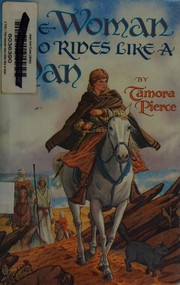
The Woman Who Rides Like a Man
Newly knighted, Alanna heads south into Tortall's desert, where a broken sword and a dead shaman leave her responsible for a rebel tribe and three Gifted…
2,894-word summary · 13 min read
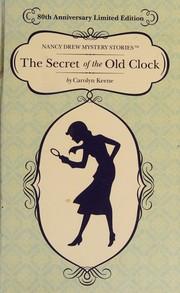
The Secret of the Old Clock
The first Nancy Drew novel: a sixteen-year-old detective follows a clue hidden in a clock to overturn a will and restore a family's inheritance.
2,011-word summary · 9 min read
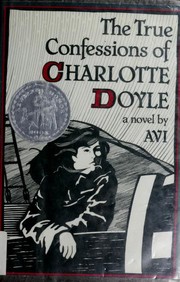
The True Confessions of Charlotte Doyle
A sheltered thirteen-year-old sails from Liverpool in 1832 and finds herself the only woman aboard a ship with a charming, dangerous captain.
2,330-word summary · 10 min read
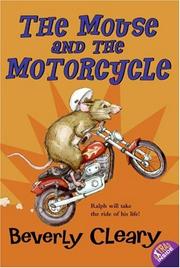
The Mouse and the Motorcycle
A bored mouse named Ralph finds a boy's toy motorcycle in a hotel room and starts a secret life of night rides, mishaps, and unlikely friendship.
2,254-word summary · 10 min read
Pollyanna
An eleven year old orphan arrives in a stern Vermont town and teaches it the Glad Game, until an accident tests her own optimism.
2,262-word summary · 10 min read
Blood Song
Anthony Ryan's Blood Song follows Vaelin Al Sorna from the Sixth Order's brutal training to the war that earns him the name Hope-Killer, in the first Raven's…
2,479-word summary · 11 min read

Inkdeath
The final Inkworld novel sends Mo into the land of the dead, leaves Meggie choosing between two boys, and ends the Adderhead's immortality with three written…
2,062-word summary · 9 min read
The Field Guide
Three siblings move into a creepy Maine estate, anger a brownie, and find a forbidden guide to the fairy world in the first Spiderwick book.
2,033-word summary · 9 min read

Little Town on the Prairie
In the spring after the Long Winter, fifteen-year-old Laura sews shirts, studies for a teaching certificate, and helps send her blind sister Mary to college.
2,071-word summary · 9 min read
The Mitten
Jan Brett retells a Ukrainian folktale about a boy, a lost white mitten, and the woodland animals that crowd inside until a bear sneezes.
2,609-word summary · 12 min read