
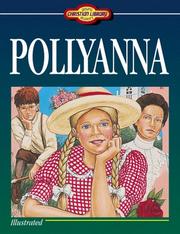
Pollyanna
2,262-word summary 10 min read 285 pages in the book
- First published
- 1913
- Publisher
- L.C. Page
- Pages
- 285
- ISBN
- 9781557486608
- Series
- Pollyanna (#1)
Reading options
What's inside (9 sections)
I expected a sticky little book about a girl who smiles through everything, and I put it off for years for that reason. When I finally read it, the thing that surprised me was how much of it is about a child learning a technique for surviving a joyless house. Eleanor H. Porter published Pollyanna in 1913, and the first edition from L.C. Page ran 285 pages. The edition I cite for the cover is ISBN 9781557486608. It is a children's book that takes the difficulties of adults seriously, which is more than I can say for most of the books that imitated it.
A girl arrives in Beldingsville
Pollyanna Whittier is eleven when she travels east from her home in the West to live in Beldingsville, Vermont. Her mother, Jennie, has died, and her aunt, Polly Harrington, has taken her in out of duty to her late sister. The duty is the problem. Aunt Polly is wealthy, stern, and entirely unenthusiastic about raising a child she did not ask for. Porter does not soften this. The aunt plans her niece's arrival the way one might plan an unwelcome repair to the roof.
The first days are a study in small humiliations. Pollyanna is given a stuffy attic room with no carpet and no pictures, and she looks out the high window at the view instead. When she is late to dinner, Aunt Polly sends her to the kitchen to eat bread and milk with the maid, Nancy, as a punishment. Pollyanna thanks her rapturously, because she likes bread and milk and she likes Nancy. The aunt has no idea what to do with a child who receives a rebuke as a gift. That mismatch is the engine of the first third of the book.
The girl's method has an origin story, and Porter places it early. One Christmas, Pollyanna hoped for a doll in the missionary barrel and found a pair of crutches instead. She was disappointed until her father taught her to look on the bright side: she could be glad for the crutches because she did not need to use them. That becomes the Glad Game. It is a game about finding something to be glad about in every situation, no matter how bleak. The rules are simple enough for a child to carry around and strict enough to become a habit.
The Glad Game as a practice
What interested me is that the game is not presented as a personality trait. Pollyanna has to work at it. When Aunt Polly puts her in that bare attic room, the view from the window is not simply there for her. She goes looking for it. The book is full of this kind of deliberate attention, and it is the reason the novel has lasted longer than the joke about her cheerfulness. "Pollyanna" eventually became a byword for foolish optimism, and the pejorative is real enough that dictionaries record it. The novel itself is doing something more disciplined than that.
The game also protects her. It gives her a way to be in a house where every ordinary interaction has been arranged to make her feel she is a burden. She can thank her aunt for the bread and milk without lying, because she genuinely likes both parts of the punishment. Porter keeps the logic clean. The girl is not pretending that the attic is pleasant. She is refusing to let the attic have the last word about her day.
I read some of this with mixed feelings, and I think Porter expected me to. A system that tells a child to find the good in being shut away can look like training in compliance. The book does not entirely escape that problem. Aunt Polly's household does not become warmer because the game is fair. It becomes warmer because Pollyanna keeps being kind at people who have not earned it. That distinction matters, and the later chapters push on it harder than the early ones do.
The kitchen and the people in it
The house has a second center besides Aunt Polly, and it is the kitchen. Nancy starts out wary of the strange child her employer has imported and ends up her accomplice and champion. Old Tom Durgan, the elderly gardener, and his son Timothy round out the staff. Porter gives these people more life than servants usually get in novels of this period. They have opinions about Aunt Polly, they have their own sorrows, and they are not placed in the story solely to be improved by Pollyanna.
Nancy is the one who changes most visibly. At first she answers the girl's questions with the clipped patience of someone protecting a household. Then she begins to play the game herself, quietly and without announcement. There is a pleasure in watching a skeptical adult get won over in small increments rather than in one conversion scene. Porter understands that a child's influence travels sideways, through the people who are already closest to the daily routines.
Aunt Polly, for her part, resists longer than anyone. She is not a villain. She is a woman who has built her life around control and duty, and a cheerful orphan is a direct threat to both. Porter lets her soften in stages that are easy to believe. She catches herself enjoying a conversation and then stiffens. She wants to keep the rules and also wants to keep the child's company. The thaw is slow because the author does not mistake a change of mood for a change of character.
The town she works on
Pollyanna's real work happens outside the house. Beldingsville is full of people who have settled into unhappiness as if it were a routine they owe their neighbors. Mrs. Snow is a querulous invalid who greets every visitor with a list of her sufferings. Pollyanna meets her with the game and slowly gives her something besides her own symptoms to think about. John Pendleton is a miserly bachelor living alone in a cluttered mansion, and he turns out to have been a suitor of Pollyanna's mother. The connection gives their friendship a quiet weight that the plot never exploits fully.
Jimmy Bean is an orphan boy who wants a home, and Pendleton eventually adopts him. That arc is one of the cleaner examples of the book's method. Pollyanna does not solve Jimmy's problem by being nice at him. She places him in the path of a lonely man who needs someone to care for, and lets the two of them work it out. The Rev. Paul Ford and Dr. Thomas Chilton fill out the adult world. Chilton is a lonely physician and a former suitor of Aunt Polly, which gives Pollyanna an obvious project. She is hopeless at reading romance between adults and relentless at pushing them together.
I enjoyed these chapters more than I expected to, but they do have a rhythm. A troubled person appears, Pollyanna plays the game, the person resists, and then improves in a small way. Porter varies the settings and the temperaments, and Mrs. Snow and Pendleton are distinct enough to keep the pattern from feeling mechanical. Still, by the fourth or fifth conversion I was aware of the template. The book works best when it breaks its own pattern, which it does in the accident chapters.
One more thing about the town. The Glad Game spread well beyond the novel. Parker Brothers sold a board game called The Glad Game from 1915 for decades, and a Broadway adaptation followed in 1916. Porter wrote a sequel, Pollyanna Grows Up, in 1915, and other writers carried on with the Glad Books for years afterward. Littleton, New Hampshire, where Porter lived, unveiled a statue of the smiling girl with her arms open in 2002. All of that machinery of cheerfulness grew out of a fairly short novel about an orphan in a Vermont attic, which is a strange and interesting fate for a book.
When the game stops working
The accident is the part I remembered incorrectly before rereading. Pollyanna is struck by a car and loses the use of her legs. At first she does not take in how serious this is. When she understands that she may never walk again, her spirits collapse. She lies in bed and cannot find a single thing to be glad about. Porter does not rush past this. The girl who taught a town to reframe its misery sits at the center of her own crisis with no frame available.
This is the strongest stretch of the book, and it is the reason I would argue with people who call it simpleminded. A philosophy that has only ever been tested on other people's troubles has not really been tested. Porter puts her own method under pressure and lets it fail for a while. The town then starts calling at Aunt Polly's house, one person at a time, to tell the girl how much her encouragement changed their lives. Mrs. Snow, Pendleton, Jimmy, and the rest arrive as evidence that the game was not a trick.
Pollyanna eventually decides she can still be glad that she had her legs at all. That is a different move from the crutches lesson. The first was a clever trick of perspective, a child noticing she had been given a problem she did not have to use. The second is gratitude for something lost. It costs more, and the book knows it. I found this shift more moving than anything in the early chapters, because the girl is no longer performing cheerfulness for an audience. She is finding a way to live inside a limitation she cannot reframe away.
The novel's treatment of disability has aged unevenly, and it is fair to say so. The cure at the end can read as a refusal to accept a disabled life as a whole life. Readers looking for a clear-eyed account of that subject will not find one here. What they will find is an honest depiction of a child's panic when her own method abandons her, and that is worth taking seriously on its own terms.
The ending and its price
Aunt Polly marries Dr. Chilton, and Pollyanna is sent to a specialist in spinal injuries. She learns to walk again and ends the book with a much deeper appreciation of her legs. On a first reading this felt tidy to the point of being suspicious. On a second, I noticed how little the novel asks us to believe about the mechanics of the cure. The specialist is a door the story opens and closes quickly. The emotional work happens before that, in the bed, during the visits, when the girl has to reconstruct a reason to go on.
The critic Jerry Griswold read Pollyanna as a far more complicated book than its reputation suggests, arguing that the relationships among the child, her aunt, and the male figures carry disguised tensions that resolve only when Aunt Polly marries Chilton. I do not need to accept the whole reading to see the shape he is pointing at. The ending tidies up the adults in a way that lets the child stop being the emotional center of the house. Once Aunt Polly has a husband, Pollyanna can be a niece again instead of a substitute for a life her aunt was not living.
That is the quiet logic underneath the wedding and the walks. The glad game changes the town, but it is the adults who finally rearrange their own lives. Whether that counts as a happy ending depends on how much you trust a story that gives a wounded child back her legs so that everyone else can have a peaceful last page. I think the book is better than its ending. It is certainly stranger than its reputation.
What the book leaves behind
Two images have stayed with me from this rereading. One is the missionary barrel and the crutches, the moment a disappointed child was taught to turn a useless gift into a reason for gratitude. The other is the attic room with no carpet, and the view out the high window that no one had thought to mention. Those two images are the whole argument of the novel in small form. The world gives you something you did not ask for. You look for what in it can still be used.
Pollyanna has been read as a lesson in optimism for more than a century, and it has also been used as an insult for people who refuse to see trouble. Both readings flatten it. The girl in the book is neither a saint nor a fool. She is a child who has lost her mother, landed with a woman who does not want her, and invented a game to keep from being crushed by it. When the game finally fails her, the novel does not punish her for it. It lets her sit in bed until she finds a different reason to be glad.
That is why I would hand this to a skeptical reader, and why I would keep it away from anyone looking for a simple moral. It is a book about the usefulness of a habit and the limits of one. The habit carries an eleven year old through a strange house and a reluctant town. The limits show up when she is the one who needs saving, and the book is honest enough to let her wait for help before she walks again.
FAQ
When was Pollyanna first published?
Eleanor H. Porter's novel first appeared in 1913 in the United States, published by L.C. Page. That first edition ran 285 pages.
What is the Glad Game?
It is a habit Pollyanna learned from her father: find something to be glad about in every situation, even a disappointing one like receiving crutches instead of a doll.
Is Pollyanna part of a series?
Yes. It is the first Pollyanna book, followed by Porter's Pollyanna Grows Up in 1915 and later Glad Books written by other authors.
Similar books
More from Pollyanna first, then related titles.
Anne of Green Gables
L. M. Montgomery brings talkative Anne Shirley to Green Gables on Prince Edward Island, where mistakes, school rivalries, and fierce friendship slowly turn…
2,182-word summary · 10 min read
Pinocchio
A wooden puppet with a talent for trouble gets chance after chance to become a real boy. Collodi's 1883 original is stranger, darker and funnier than the…
2,600-word summary · 12 min read
By the Shores of Silver Lake
Twelve-year-old Laura leaves Plum Creek for Dakota Territory, rides a pony, mourns old Jack, and learns to be eyes for her blind sister Mary.
2,540-word summary · 11 min read
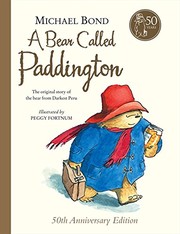
A Bear Called Paddington
In Michael Bond's 1958 first book, a small bear arrives at Paddington Station with a label and a suitcase, and the Browns take him home to Windsor Gardens.
2,492-word summary · 11 min read
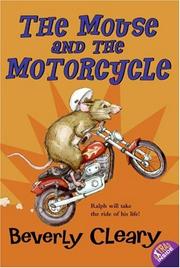
The Mouse and the Motorcycle
A bored mouse named Ralph finds a boy's toy motorcycle in a hotel room and starts a secret life of night rides, mishaps, and unlikely friendship.
2,254-word summary · 10 min read

Little Town on the Prairie
In the spring after the Long Winter, fifteen-year-old Laura sews shirts, studies for a teaching certificate, and helps send her blind sister Mary to college.
2,071-word summary · 9 min read
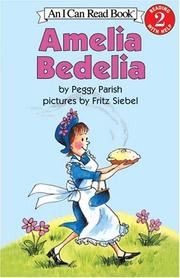
Amelia Bedelia
A literal-minded housekeeper follows her employer's list to disastrous and funny effect in the 1963 picture book that made wordplay a children's staple.
2,038-word summary · 9 min read
The Borrowers
A family of tiny people live under the floorboards of an English house, borrowing what they need until a lonely boy and a suspicious housekeeper change…
2,164-word summary · 10 min read
Sideways Stories from Wayside School
Thirty stories, one class per floor, and a teacher who turns students into apples: Louis Sachar's absurd school classic.
2,045-word summary · 9 min read
Harriet the Spy
Eleven year old Harriet Welsch fills notebooks with honest, often cruel observations about her neighbors, until her classmates read one and turn her spy route…
2,510-word summary · 11 min read
Maniac Magee
Orphaned Jeffrey Magee runs to Two Mills, becomes a playground legend, and tests a town split by race while hunting for a real home.
2,219-word summary · 10 min read
Anne of the Island
Anne leaves Avonlea for Redmond College, shares Patty's Place with friends, and learns to tell admiration apart from love.
2,766-word summary · 12 min read
Anne of Avonlea
Anne teaches at sixteen, adopts twins, and learns that fixing Avonlea takes patience.
1,909-word summary · 8 min read
David Copperfield
Orphan Davy from Blunderstone through Murdstone, Micawber, Heep, Dora and Agnes to novelist.
2,199-word summary · 10 min read
The Secret of the Old Clock
The first Nancy Drew novel: a sixteen-year-old detective follows a clue hidden in a clock to overturn a will and restore a family's inheritance.
2,011-word summary · 9 min read
The Runaway Bunny
A little bunny says he will run away, and his mother promises to follow. This 1942 picture book turns a child's first wish for independence into a gentle,…
2,765-word summary · 12 min read
The Poky Little Puppy
One slow puppy misses the trouble and gets the desserts in this 1942 Golden Book that became the best-selling hardcover children's book in the United States.
2,322-word summary · 10 min read
The Book of Three
A restless assistant pig-keeper in mythical Wales chases his escaped oracle pig and finds himself beside Prince Gwydion in a war against the Lord of Annuvin.
2,019-word summary · 9 min read
Oranges Are Not the Only Fruit
An adopted girl in a strict Pentecostal household learns to read the Bible, preach sermons and love women, then faces her church and mother for it.
2,384-word summary · 11 min read
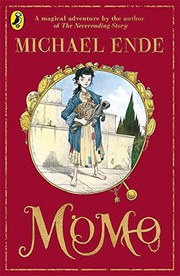
Momo
A girl with a gift for listening takes on grey-clad thieves who persuade a city to save its time, in Michael Ende's 1973 fable about efficiency and attention.
2,275-word summary · 10 min read
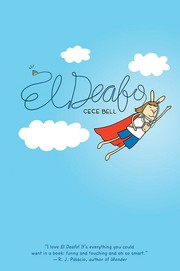
El Deafo
A deaf girl in a world of rabbits turns her bulky Phonic Ear hearing aid into a superhero identity while searching for a true friend.
2,515-word summary · 11 min read
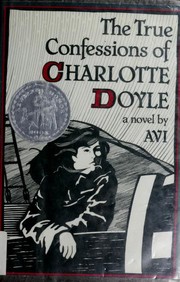
The True Confessions of Charlotte Doyle
A sheltered thirteen-year-old sails from Liverpool in 1832 and finds herself the only woman aboard a ship with a charming, dangerous captain.
2,330-word summary · 10 min read
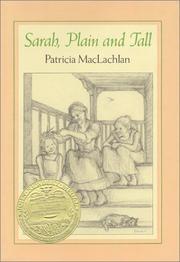
Sarah, Plain and Tall
A widowed prairie farmer advertises for a wife, and a woman from Maine answers for a one-month trial. This Newbery winner, told by his daughter, is about a…
2,331-word summary · 10 min read

The Long Winter
Dakota Territory, 1880: seven months of blizzards cut a town off from the railroad, and a family survives on twisted hay, ground wheat, and a dangerous wheat…
2,210-word summary · 10 min read
Make Way for Ducklings
A pair of mallards raise eight ducklings on the Charles River and lead them across Boston to the Public Garden, with a little help from a friendly policeman.
2,044-word summary · 9 min read
The Mitten
Jan Brett retells a Ukrainian folktale about a boy, a lost white mitten, and the woodland animals that crowd inside until a bear sneezes.
2,609-word summary · 12 min read
Clifford the Big Red Dog
Emily Elizabeth picks the smallest puppy in the litter, loves him as hard as she can, and wakes up to a dog the size of a house.
2,092-word summary · 9 min read
The Story of Ferdinand
A gentle Spanish bull would rather smell flowers than fight, and when he is taken to the bullring he simply sits down among the flowers in the ladies' hats.
2,135-word summary · 9 min read
Go, Dog. Go!
Dogs drive, work, play, and climb a tree for a party in this Beginner Book built on repetition, opposites, and one very unpopular hat.
2,196-word summary · 10 min read