
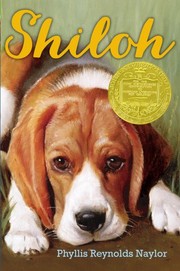
Shiloh
2,427-word summary 11 min read 144 pages in the book
- First published
- 1991
- Publisher
- Atheneum Books
- Pages
- 144
- ISBN
- 9780689316142
- Series
- Shiloh (#1)
Reading options
What's inside (8 sections)
I picked up Shiloh expecting a straightforward dog story, the kind where a boy wants a puppy and the adults eventually say yes. What I found was a book that spends most of its short length watching an eleven-year-old lie to his parents, steal food, and blackmail a neighbor, then asks the reader whether any of it was wrong. That is a strange thing to put in a children's novel, and it is a large part of why the book has lasted.
Naylor was born in Anderson, Indiana, in 1933 and grew up there and in Illinois during the Great Depression. Her parents read to her every night, everything from Bible stories to The Wind in the Willows to Mark Twain, and she has called those evenings the happiest part of her childhood. She sold a short story to a church magazine at sixteen, published her first book in her early thirties, and kept notebooks of ideas beside her desk for decades. She wrote the first two drafts of every book by hand in a favorite chair. All of that is a long way from a boy and a beagle in the hills, but the habit of listening to how people actually talk clearly came from somewhere, and it shows up on almost every page here.
The story began with a real dog. In 1989 Phyllis Reynolds Naylor was walking along a river in West Virginia with her husband Rex and their friends Frank and Trudy Madden when a skinny, trembling beagle started following them. Naylor wrote later that it was the saddest-looking dog she had ever seen, hungry and ill-kept, flinching whenever she reached out, crawling forward on its belly. The dog trailed them back to the Maddens' house and stayed under a tree in the drizzle, its paws tucked under its head. Naylor cried on the drive home. Her husband asked whether she was going to have a nervous breakdown or do something about it. The something was this book, written in eight weeks, the sixty-fifth of her career, published by Atheneum on September 30, 1991. She named the dog after the nearby community of Shiloh and set the story in Friendly, West Virginia, the Maddens' post office address. Trudy and Frank eventually adopted the dog she had seen.
The dog that followed Marty home
Marty Preston lives in the hills around Friendly with his parents and his younger sister Dara Lynn. He is eleven years old. One day a beagle wanders out of the woods near the house and follows him home. Marty feeds it and starts calling it Shiloh. The arrangement lasts about as long as it takes his father to ask the obvious question: whose dog is it?
The answer is Judd Travers, a neighbor who keeps a pack of hunting dogs, drinks too much, and is not gentle with the animals he owns. Marty has seen enough to be afraid for the beagle. His father, though, is a man of rules. A dog belongs to the person who paid for it, and that is where the matter ends. Marty and his father walk the animal back to Judd's place, and Marty has to watch Shiloh disappear into the yard with the other hounds.
Anyone who has loved a dog knows what happens next. Shiloh comes back. He turns up at the Preston house, still wary, and this time Marty decides he is not taking him anywhere. Much of the first half of the book is one long act of concealment, and Naylor tells it in Marty's present-tense, first-person voice, complete with the grammar of an eleven-year-old in the West Virginia hills. He builds a wire pen in the woods. He carries scraps of food out to the dog every day, slipping from the house with a bowl or a crust when no one is watching. He tells himself this is not really stealing because the food would have been thrown away. He tells himself a great many things, and the telling is the point.
It is worth saying what the dog becomes to him. Critics have noted the parallels with Lassie Come-Home, another story of a boy and a dog owned by someone else, with the animal repeatedly finding its way back. Here Shiloh grows into something like the brother Marty never had, a creature who is glad to see him and whose loyalty asks nothing in return. In a household where his father lays down the law and his sister is still small, the beagle is the first being Marty can care for on his own terms. That is why letting Judd take him back feels like a betrayal as much as a disappointment. The attachment is innocent, but the lengths Marty will go to defend it are not, and the gap between the two is the engine of the story.
A wire pen and a German shepherd
The secret unravels in stages, and each stage tightens the screw on Marty. His mother notices food going missing and figures out what he is doing. He begs her to say nothing, just for one night. That night a German shepherd gets into the makeshift cage and attacks Shiloh, leaving the beagle wounded and lame. The family's response is practical: they take the dog to the town doctor, and then they tell Marty he must return Shiloh to his rightful owner by Sunday.
The attack matters because it is the first honest consequence of Marty's plan. He hid the dog to keep him safe, and the hiding got him hurt. Naylor does not soften this. Marty thinks about how the shepherd probably did more damage than Judd ever would have, short of shooting the animal, and the thought sits with him. It is the kind of detail that separates this book from the simpler pet novels it resembles. The boy's good intention produces a bad result, and nobody swoops in to absolve him.
Marty does the only thing an eleven-year-old in his position can think of. He walks up to Travers' house to ask for Shiloh outright. Judd does not see him coming, and while Marty is nearby the older man shoots a doe out of season, which would mean a fine he cannot afford. Marty lets him know he saw. What follows is less a negotiation than blackmail: Judd will sell Shiloh to Marty for forty dollars, and Marty will pay in labor, twenty hours of work around the place.
Forty dollars and twenty hours
The arrangement is where the novel finds its real subject. Marty starts showing up at Judd's, sweeping, hauling, doing the chores the bitter man hands him. Judd criticizes everything. At the end of the first week he says he will not honor the deal after all. The evidence of the dead deer has disappeared with time, and the written contract Marty made him sign is worthless in West Virginia without a witness's signature. It is a cruel, legalistic reversal, and it is also the moment when the book stops being about a dog and starts being about the difference between what you can prove and what is right.
Marty keeps working anyway. He decides he has no choice but to hold up his side of the bargain and see what happens, a line of thinking that is both very childish and very stern. Slowly, grudgingly, the two talk. They discuss dogs. Judd tells Marty about his own father, who began beating him when he was four years old, and the piece slots into place. The neighbor is not a cartoon villain. He is a man who never learned what it means for someone to care about an animal, or about him. Naylor is careful not to excuse him, but she makes him legible, and the warmth that eventually lets him hand Shiloh over feels earned rather than sudden.
When Judd finally asks what Marty will do with the dog once he is mine, the answer is one short word: love him. The whole argument of the book is packed into that exchange. Marty has no money, no bargaining power left, and no legal claim. What he has is the stubborn, unprovable fact of his affection, and in the end that is what the man recognizes.
The moral knot
Underneath the plot, Shiloh is a book about a child discovering that grown-up rules do not always line up with decency. Marty's mother is a woman of strong religious conviction. Earlier in the story Marty took a bite from his sister Dara Lynn's chocolate Easter rabbit and refused to admit it. His mother told him that Dara Lynn did not know who ate the ear off her candy, and she did not know either, but Jesus knew, and he was looking down with the saddest eyes on the person who had done it. That lesson about sin and separation from God sits in Marty's head while he lies to his parents about a dog.
He prays about it, directly and without ceremony. He asks Jesus which he wants: be completely honest and carry Shiloh back to Judd so the creature can be kicked and starved all over again, or keep him and fatten him up. He reasons that a lie does not seem like a lie when it is meant to save a dog. At one point he thinks that if liars go to hell, he is probably headed there, but if only people are allowed into heaven and animals are not, he would run away from heaven to be with Shiloh. It is a remarkable passage in a book for children, funny and serious at once, and it is closer to Mark Twain than to most writing for eight-year-olds.
The deer shooting complicates it further. Marty's blackmail saves the beagle but leaves Judd free to poach again, so the boy recognizes that he has made life harder for other deer. He has traded a general principle for a particular love, and he knows it. Scholar Claudia Mills has described the conflict as consequentialism set against a respect for moral duty, which is a formal way of naming what Marty feels in his gut. He keeps asking whether the outcome justifies the lie, and the book keeps refusing to let the question settle. His prayer about heaven and hell has been compared to Huckleberry Finn's famous decision to go to hell rather than betray Jim. The echo is not accidental. Both are children who decide that the law of the world has failed a creature that deserves better, and both accept the cost of acting on that judgment.
Naylor never hands Marty a clean answer. The Newbery committee that awarded the book its medal in 1992, its sixty-first year, clearly admired that refusal to simplify. One committee member called the book a sleeper that rose late in the deliberations, and the award was followed by a stack of state prizes voted on by children, including the Sequoyah, Mark Twain, and William Allen White awards. Reviewers praised the voice and the suspense, and Entertainment Weekly called it a story of moral growth told without moralizing. That seems about right. The book's great trick is that it treats an eleven-year-old as a person capable of genuine ethical confusion, then lets him act anyway.
Where the book stumbles
For all its strengths, Shiloh is not beyond criticism, and some of the complaints have stuck. Jane Langton, writing in the New York Times Book Review after the Newbery announcement, asked whether the book really deserved the prize and called it an agreeable but slight story, a good book rather than a great one. There is something to that. At barely 144 pages, the novel is narrowly focused, and the compact time frame means the world outside Marty's ethical crisis barely exists. Readers looking for a broad family saga or a richly built community will not find one here.
The dialect has also divided people. Several West Virginia reviewers objected that the characters do not speak as West Virginians actually do, and at least one parent complained about Judd's swearing, specifically a dammit that Naylor defended by saying some people in the world speak crudely and you cannot keep a child in a glass bubble. A school librarian named Kenneth Kowen pointed out an odd inconsistency in the setup: Marty's father is a postman, one of the better-paid jobs around, yet the family is described as poverty-stricken. The 1996 film adaptation smoothed this away by making the Prestons wealthy, which in turn turned an economic conflict into a purely emotional one and lost some of the book's grit.
These are real limitations. The moral dilemma is presented so cleanly, and Marty's insight arrives so neatly, that the book can feel engineered. But the voice carries it. Naylor writes the way Marty thinks rather than the way an adult remembers thinking, and the present-tense monologue keeps the reader inside the squeeze of his divided loyalty. Even the criticism about slightness misses the point of a story this small. It is built like a trap, one boy and one dog and one mean man, and it closes tight.
What the sequels understood
The three sequels tell you something about how strongly readers responded to Judd Travers. Shiloh Season appeared in 1996, Saving Shiloh in 1997, and A Shiloh Christmas in 2015. Naylor said she wrote them because children wrote to her in a rage, wanting Judd shot or stabbed or pushed off a cliff, and she did not want to leave them with all that hatred. In the later books she kept returning to the idea that Judd, beaten as a child, is a person making hard choices too, not a monster who can be dismissed.
That instinct is already present in the first book, and it is the thing I remember most. Shiloh is not really about whether a boy gets to keep a dog. It is about a child learning that the adult world contains people who are cruel for reasons you can understand, and rules that you can follow while still failing to be kind. Marty ends the story saying he saved Shiloh and opened his eyes some, and that eleven is not bad. He is right, though the book has taken care to show exactly how much trouble those opened eyes cost him. That is a worthwhile lesson, and it arrives without a single lecture.
FAQ
Is Shiloh based on a true story?
Partly. Naylor saw a mistreated beagle during a 1989 walk in West Virginia and wrote the book in eight weeks, naming the dog after the nearby community and setting the story in Friendly.
Why did Shiloh win the Newbery Medal?
The 1992 award honored its treatment of a child's moral dilemma and its distinctive first-person voice. It also won several state awards voted on by children, including the Sequoyah and Mark Twain awards.
Is Shiloh part of a series?
Yes. It is the first of four books, followed by Shiloh Season, Saving Shiloh, and A Shiloh Christmas, published between 1996 and 2015.
Similar books
More from Shiloh first, then related titles.
The Mouse and the Motorcycle
A bored mouse named Ralph finds a boy's toy motorcycle in a hotel room and starts a secret life of night rides, mishaps, and unlikely friendship.
2,254-word summary · 10 min read
Clifford the Big Red Dog
Emily Elizabeth picks the smallest puppy in the litter, loves him as hard as she can, and wakes up to a dog the size of a house.
2,092-word summary · 9 min read
The Trumpet of the Swan
A mute trumpeter swan learns to read, write, and play a stolen trumpet to win a mate, in E.B. White's quiet 1970 tale of a boy who watches.
2,309-word summary · 10 min read
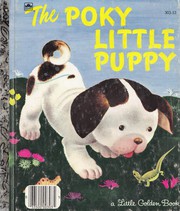
The Poky Little Puppy
One slow puppy misses the trouble and gets the desserts in this 1942 Golden Book that became the best-selling hardcover children's book in the United States.
2,322-word summary · 10 min read
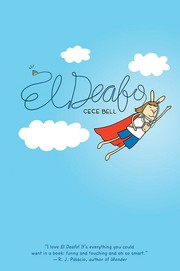
El Deafo
A deaf girl in a world of rabbits turns her bulky Phonic Ear hearing aid into a superhero identity while searching for a true friend.
2,515-word summary · 11 min read
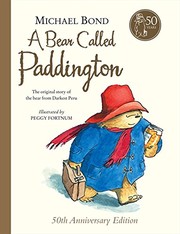
A Bear Called Paddington
In Michael Bond's 1958 first book, a small bear arrives at Paddington Station with a label and a suitcase, and the Browns take him home to Windsor Gardens.
2,492-word summary · 11 min read
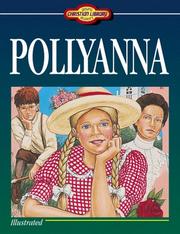
Pollyanna
An eleven year old orphan arrives in a stern Vermont town and teaches it the Glad Game, until an accident tests her own optimism.
2,262-word summary · 10 min read
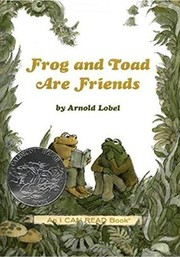
Frog and Toad Are Friends
Five short stories about a cheerful frog and a grumpy toad who need each other for waking up, swimming, and waiting for the mail.
1,969-word summary · 9 min read
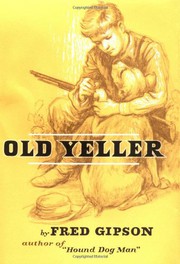
Old Yeller
Travis Coates takes in a stray yellow dog that protects his family on the Texas frontier, and learns about loyalty and loss.
2,165-word summary · 10 min read
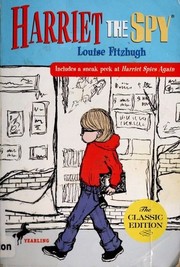
Harriet the Spy
Eleven year old Harriet Welsch fills notebooks with honest, often cruel observations about her neighbors, until her classmates read one and turn her spy route…
2,510-word summary · 11 min read
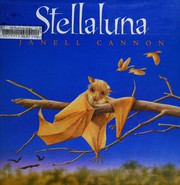
Stellaluna
A baby fruit bat falls into a bird nest, learns to perch and eat bugs, then reunites with her mother in Cannon's acclaimed 1993 picture book about difference…
2,486-word summary · 11 min read
Redwall
A novice mouse hunts for Martin the Warrior's lost sword while Cluny the Scourge besieges Redwall Abbey.
2,727-word summary · 12 min read
Stuart Little
A two-inch boy in a New York family befriends a canary, loses her, and drives off alone to find her.
2,591-word summary · 12 min read
Maniac Magee
Orphaned Jeffrey Magee runs to Two Mills, becomes a playground legend, and tests a town split by race while hunting for a real home.
2,219-word summary · 10 min read
A Dog's Purpose
A reincarnated dog lives four lives as Toby, Bailey, Ellie and Buddy while searching for his purpose with Ethan.
2,962-word summary · 13 min read
Anne of the Island
Anne leaves Avonlea for Redmond College, shares Patty's Place with friends, and learns to tell admiration apart from love.
2,766-word summary · 12 min read
The Tale of Despereaux
A bookish mouse, a light loving rat, and a servant girl meet in a castle where soup is banned to save Princess Pea.
2,680-word summary · 12 min read
The One and Only Ivan
A mall gorilla who paints promises a dying elephant friend to get baby Ruby to a better home.
2,178-word summary · 10 min read
The Wind in the Willows
Mole, Rat, Badger, and Toad mess about in boats, lose themselves in the Wild Wood, and retake Toad Hall.
2,033-word summary · 9 min read
Winnie-the-Pooh
Edward Bear comes downstairs bump-bump-bump and into the Hundred Acre Wood for honey, hunneys, and heffalumps.
2,068-word summary · 9 min read
The House at Pooh Corner
Tigger bounces into the Hundred Acre Wood while Pooh builds Eeyore a house and Piglet does a grand thing.
2,022-word summary · 9 min read
Charlotte's Web
E. B. White's Charlotte's Web retold: Wilbur the pig, Charlotte the spider, and the words that save him.
2,059-word summary · 9 min read
The Teacher of Nomad Land
In 1941 Iran, an orphaned boy straps a chalkboard to his back and sets off to teach nomads, hoping to keep his little sister with him.
2,534-word summary · 11 min read
The Long Haul
Greg Heffley's summer road trip goes sideways with a towed boat, a live pig, and a family in a purple van.
2,311-word summary · 10 min read
Wild Magic
A thirteen-year-old orphan in the kingdom of Tortall learns to live with the gift of speaking to animals, and discovers that the creatures she loves are not…
2,056-word summary · 9 min read
The Travelling Cat Chronicles
A stray cat with a crooked tail and the man who rescued him drive across Japan to visit old friends, each stop hiding part of a secret neither can say aloud.
2,865-word summary · 13 min read
The Rachel Incident
A funny, sharp novel about two twenty-somethings in recession-era Cork whose bookshop friendship, tangled romance and a married professor's lie leave a secret…
2,346-word summary · 10 min read
The Book of Three
A restless assistant pig-keeper in mythical Wales chases his escaped oracle pig and finds himself beside Prince Gwydion in a war against the Lord of Annuvin.
2,019-word summary · 9 min read
Saving CeeCee Honeycutt
A twelve-year-old girl loses her mother and is packed off to Savannah, where a great-aunt, a housekeeper and a street of eccentric women teach her how to…
2,627-word summary · 12 min read
Pumpkinheads
Deja and Josiah have worked the Succotash Hut together every autumn. On their last Halloween shift, she pushes him to chase a crush and they discover something…
2,409-word summary · 11 min read