
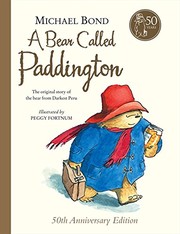
A Bear Called Paddington
2,492-word summary 11 min read 128 pages in the book
- First published
- 1958
- Publisher
- Collins
- Pages
- 128
- ISBN
- 9780007282418
- Series
- Paddington (#1)
Reading options
What's inside (12 sections)
- A bear on a station platform
- Baths, bacon and the Underground
- The shop window at Barkridges
- Mr Gruber and the Old Master
- A play, a beach and a birthday trick
- The bear's voice and the book's shape
- The joke about Darkest Peru
- How the stories are told
- What does not quite work
- Why the little bear endures
- Key takeaways
- FAQ
I came to this book through the films, like a lot of people, and I expected something sweeter and softer than what is actually on the page. The first Paddington book is a small, brisk collection of eight stories, published in October 1958 by Collins in London with drawings by Peggy Fortnum. The first edition ran to 128 pages. It is funny in a very physical way, full of flooding bathrooms, escalators, sticky buns and a bear who is forever apologising while chaos spreads around him. Reading it now, I was struck by how little it tries to charm the adult reader. It is a children's book that assumes children can handle a good deal of mess.
The bear arrives in London with almost nothing. That is the starting point, and the whole book keeps returning to it.
A bear on a station platform
Mr and Mrs Brown are at Paddington Station waiting for their daughter Judy when they notice a small bear sitting on an old leather suitcase near the lost property office. He wears an unusual hat and a label around his neck that reads "Please Look After This Bear. Thank You." He tells them he has come from Darkest Peru, sent by his Aunt Lucy, who has gone into the Home for Retired Bears in Lima. He has no words for most of the things he sees.
Mrs Brown takes pity on him. Before they can leave the station, the bear disappears into the buffet and returns covered in cream from some buns, and when they finally pile into a taxi he gets his paw stuck in the meter. Mr Brown pays up rather than argue. They take him home to Number 32 Windsor Gardens and name him after the station where they found him. That first chapter ends with the family already half won over, which is the pattern for everything that follows.
What surprised me on rereading is how practical the Browns are about taking in a talking bear from South America. There is no long debate, no inspection by the authorities. Mrs Bird, the housekeeper, is the one who immediately decides the bear needs a bath, and from then on he is simply part of the household. The book never pauses to explain why this is acceptable. It just proceeds.
Baths, bacon and the Underground
Mrs Bird's bath is the bear's first real encounter with plumbing, and Bond draws the comedy carefully. Paddington has never seen a tap or a plug before. He fills the tub to the top, scrubs with more enthusiasm than sense, and soon water is dripping through the sitting room ceiling. Jonathan and Judy have to rescue him. The mess is not treated as a disaster. The family laughs, mops up, and carries on.
The next story takes him shopping for clothes, and it begins with a small detail that made me smile: trying to save time, he puts the remains of his breakfast bacon into his suitcase. By the time the family reaches the Underground, a pack of dogs is following them. Then there are escalators, which he treats with deep suspicion, and a ticket seller he tries to help by handing out tickets of his own. The misunderstanding grows in the way that only a very sure-handed children's writer can manage. Each step is logical from the bear's point of view and increasingly absurd from everyone else's.
I found this the funniest stretch of the book. The jokes are about machinery and bodies and smell, not about clever wordplay, and they work because Paddington is always trying to do the right thing. He is not a trickster. He is a polite guest who keeps misreading the instructions.
The shop window at Barkridges
Mrs Brown takes Paddington to Barkridges, a department store, and buys him a duffel coat with a very large hood. When the hood falls over his eyes, he cannot see where he is going. He wanders through the wrong door and finds himself standing in the shop window, surrounded by mannequins and watched by a crowd on the pavement.
The manager is not angry. He is delighted, because the crowd draws more customers, and the number of people who come to see the show keeps climbing. This is one of the book's quiet repeating ideas: the adults in charge usually benefit from the confusion. Mr Brown pays the taxi fare and still takes the bear home. The store manager turns a mistake into a display. Even the theatre manager, later on, ends up pleased with the scene Paddington causes. Nobody in this world is truly punished for being kind to a bear who breaks things.
That might be the book's most comforting quality, and also its most obviously unreal one. I noticed it without minding much. These stories were written for very young children, and the world they describe is arranged so that good intentions are recognised even when the results are a wreck.
Mr Gruber and the Old Master
The fifth story introduces Mr Gruber, who runs an antiques shop on the Portobello Road and becomes the bear's friend. Gruber tells Paddington that an old painting can sometimes hide an Old Master underneath a later picture. Paddington takes this literally and sets about uncovering a masterpiece in a painting he finds at home. Unfortunately it is a picture Mr Brown has painted for an art competition.
Realising what he has done, Paddington tries to repair the damage by painting over it again. The result is entered in the competition and wins first prize. A critic commends the painting, which pleases Paddington enormously and leaves Mr Brown rather stunned. I like this chapter because it lets the bear be accidentally gifted rather than merely clumsy. It is the one story where his interference produces something the adults genuinely value, and it keeps the praise faintly comic.
The Portobello Road scenes also give the book a sense of place beyond the Browns' front room. London here is a city of markets, stations, shops and theatres, all close enough for a small bear to wander through. There is no attempt at a grand tour. The city is simply the setting for the errands.
A play, a beach and a birthday trick
At the theatre, Paddington goes with the Browns and takes the play far too seriously. When the leading actor, Sir Sealy Bloom, appears to mistreat the heroine, the bear marches off to complain to him. Before anyone can stop him, he has wandered into the action and become part of the performance. The audience thinks it is all staged and enjoys it hugely. The actor is less sure, but the evening is a success.
The seaside story is quieter and, to me, a little odder. Paddington enters a sandcastle competition for Mr Brown, builds away with great determination, then lies down for a rest in a bucket. The tide comes in and carries him out to sea. Fishermen at the end of the pier pull him out and are astonished when he explains that he has come all the way from Darkest Peru. The image of a bear floating out to sea in a bucket is memorable, and Bond does not over-explain it. He just lets it happen.
Both stories turn on the same mistake: Paddington cannot tell the difference between a performance and a real emergency, or between a safe resting place and a rising tide. The comedy comes from his perfect confidence in his own judgement. He never seems frightened, which is why the adults can laugh.
The last story is set on Paddington's first birthday with the Browns. He has been given a conjuring outfit and puts on a magic show for the household. The Browns' next door neighbour, Mr Curry, is not invited, which does not stop him from objecting to the noise. The show goes well until Paddington borrows Curry's watch for a trick and turns over two pages of the instruction manual at once. The watch vanishes.
Mr Curry is the nearest thing the book has to a villain, and even he is a grumpy neighbour rather than a threatening figure. His complaint is about a watch and a bit of peace and quiet. The trick with the watch is the sharpest bit of mischief in the book, but it is still gentle. Nobody is hurt, and the worst that happens is a cross old man stomping around.
I finished these eight chapters with the sense that Bond had found a shape and was happy to repeat it: a normal task, a misunderstanding, a mess, and a forgiving ending. Marmalade sandwiches turn up throughout, and the label from the station keeps hovering in the background. The bear never loses his manners, even when he is covered in paste or jam. That combination of politeness and havoc is the whole idea.
The bear's voice and the book's shape
The joke about Darkest Peru
One small running gag deserves a mention of its own, because it says a lot about the book's humour. Paddington tells anyone who will listen that he has come from Darkest Peru. He says it to the Browns when they first find him, and he says it again to the fishermen who pull him out of the sea. By the end of the book the phrase has become his standard explanation for everything unusual about him. It is a child's idea of a faraway place, grand and slightly vague, and Bond never punctures it.
That matters because the book is not interested in Paddington's life before London. Aunt Lucy and the Home for Retired Bears in Lima are mentioned, and the lifeboat that brought him to England is part of the story, but there is no attempt to write a past for him. He arrives as a mystery with a label, and the mystery stays just large enough to feel exciting without demanding an answer. A child reader can accept that a bear crossed an ocean in a boat. The adults in the story accept it too, which is the more important concession.
I thought about this while reading the railway scenes. Paddington Station is a real place, with a lost property office and a buffet, and the Browns' house has a specific address in Windsor Gardens. The London is concrete and ordinary. Into that ordinary world steps a bear whose origin is described in one phrase and never examined. The contrast is the source of much of the book's comic energy. Nothing about the setting is fantastic, so the bear himself carries all of the wonder.
How the stories are told
The prose is plain on purpose. Sentences are short, clauses are few, and the vocabulary stays within reach of a young reader. Bond does not decorate the scenes with long descriptions of smells or scenery. He gives the essential facts: the suitcase, the label, the cream bun, the rising water. Then he moves on. This is partly why the book reads so quickly, and why it works so well when read aloud.
The repetition is part of the design. Paddington is forever saying that something is "very kind" or asking whether a thing is the done thing. He apologises constantly. The Browns respond with small, steady remarks rather than elaborate speeches. Mrs Bird in particular is written with a clipped briskness that made me smile; she decides what needs doing and gets on with it. These verbal habits give the book a predictable rhythm, which is exactly what a small child wants from a bedtime story.
There are limits to what that style can do. Because Bond keeps the language so level, the emotional notes are rarely deep. When the Browns grow fond of Paddington, the book shows it through actions rather than feelings: they pay the taxi fare, they rescue him from the ceiling, they keep his place at the table. That restraint is elegant, but it also means the last chapter cannot build to anything larger than a good show and a grumpy neighbour. The book knows its size and stays inside it.
What does not quite work
I should be honest about the limits. Because the stories are self-contained, the book has no real arc. Paddington arrives in the first chapter and is essentially settled by the last, and very little changes in between. A reader looking for a developing story will find eight similar outlines instead. The pattern is comfortable, but after a few chapters I could predict where each one was going.
Some of the resolutions also feel too easy. The store manager is pleased, the theatre audience applauds, the art competition gives a first prize, and the fishermen are charmed. Nobody ever has to deal with a genuine consequence. That is a deliberate choice for very young readers, and it works on those terms, but it flattens the emotional range. There is no real fear or sadness here, only bustle and apology.
The drawings matter more than I expected. Fortnum's pictures give the bear his skinny legs, his hat and his worried expression, and much of the humour depends on seeing him in these scrapes. A modern edition may use other artists, but the original partnership between Bond's plain prose and Fortnum's line drawings is worth noticing. Her bears were studied at London Zoo, and that care shows in the way Paddington looks less like a toy than a real small animal in clothes.
Why the little bear endures
What stayed with me after closing the book was the tone of the place the Browns live in. A stranger turns up at a station with a label around his neck, and a family takes him in. He wrecks the bathroom, frightens the neighbours, ruins a painting and gets lost in a shop window, and they keep him. The book asks very little of its readers beyond enjoying the next mess.
I would hand this to a parent looking for short chapters to read aloud, since each story stands on its own and takes only a few minutes. It is also a good book for a young reader who is nervous about longer novels. The sentences are plain, the chapters are short, and the jokes land quickly. An adult coming to it cold may find the repetition mild, but there is a real skill in making the same kind of accident funny eight times in a row.
The first edition is a slim object, 128 pages of Collins hardback with Fortnum's drawings scattered through it. Later editions run longer and change the look, but the eight stories are the same. If you only know Paddington from the screen, the book is a useful corrective. It is drier, more physical and much less sentimental than the films, and it trusts its audience to laugh at a bear in a bucket going out with the tide.
FAQ
Is A Bear Called Paddington a novel or a collection of stories?
It is a collection of eight self-contained stories about Paddington's first year with the Browns. Each chapter stands alone, and very little changes from the first to the last.
How does the book begin?
Mr and Mrs Brown find a small bear on Paddington Station sitting on a suitcase, with a label reading 'Please Look After This Bear. Thank You.' He says his Aunt Lucy sent him from Darkest Peru.
Is the book very different from the Paddington films?
Yes. The 1958 book is drier, more physical and less sentimental than the films, told in eight short chapters with Peggy Fortnum's line drawings rather than animation.
Similar books
More from Paddington first, then related titles.
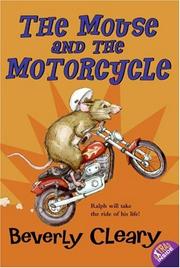
The Mouse and the Motorcycle
A bored mouse named Ralph finds a boy's toy motorcycle in a hotel room and starts a secret life of night rides, mishaps, and unlikely friendship.
2,254-word summary · 10 min read
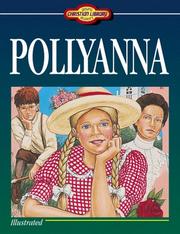
Pollyanna
An eleven year old orphan arrives in a stern Vermont town and teaches it the Glad Game, until an accident tests her own optimism.
2,262-word summary · 10 min read

Make Way for Ducklings
A pair of mallards raise eight ducklings on the Charles River and lead them across Boston to the Public Garden, with a little help from a friendly policeman.
2,044-word summary · 9 min read
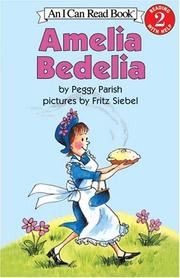
Amelia Bedelia
A literal-minded housekeeper follows her employer's list to disastrous and funny effect in the 1963 picture book that made wordplay a children's staple.
2,038-word summary · 9 min read
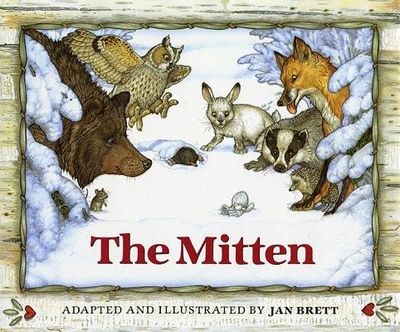
The Mitten
Jan Brett retells a Ukrainian folktale about a boy, a lost white mitten, and the woodland animals that crowd inside until a bear sneezes.
2,609-word summary · 12 min read

Clifford the Big Red Dog
Emily Elizabeth picks the smallest puppy in the litter, loves him as hard as she can, and wakes up to a dog the size of a house.
2,092-word summary · 9 min read
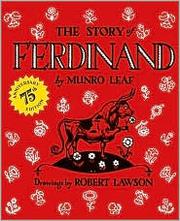
The Story of Ferdinand
A gentle Spanish bull would rather smell flowers than fight, and when he is taken to the bullring he simply sits down among the flowers in the ladies' hats.
2,135-word summary · 9 min read
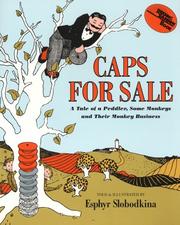
Caps for Sale
A peddler balances his caps on his head, naps under a tree, and wakes to find monkeys wearing his stock in this 1940 picture book.
2,787-word summary · 12 min read
The Borrowers
A family of tiny people live under the floorboards of an English house, borrowing what they need until a lonely boy and a suspicious housekeeper change…
2,164-word summary · 10 min read
Sideways Stories from Wayside School
Thirty stories, one class per floor, and a teacher who turns students into apples: Louis Sachar's absurd school classic.
2,045-word summary · 9 min read
The Jungle Book
Mowgli, raised by wolves in the Seeonee Hills, learns the Law from Baloo and Bagheera while Shere Khan circles. Kipling's 1894 story collection.
2,799-word summary · 12 min read
Stuart Little
A two-inch boy in a New York family befriends a canary, loses her, and drives off alone to find her.
2,591-word summary · 12 min read
The Twits
Mr. and Mrs. Twit trade vile pranks and torment caged monkeys until the birds and monkeys flip the house on them.
2,864-word summary · 13 min read
Mary Poppins
A stern, vain nanny blows in on the East Wind to 17 Cherry Tree Lane and leads Jane and Michael through a year of small, strange magic.
2,729-word summary · 12 min read
Fantastic Mr. Fox
Mr. Fox raids three cruel farmers to feed his family, then outdigs tractors and a siege to host a feast underground.
2,910-word summary · 13 min read
Curious George
Curious George retold: a monkey sails from Africa to the city, phones the fire station, floats off on balloons, and finds home.
2,979-word summary · 13 min read
Mrs. Frisby and the Rats of NIMH
A widowed mouse races the spring plow to save her sick son Timothy, and finds help from the intelligent rats of NIMH hiding under the rosebush.
3,159-word summary · 14 min read
Brown Bear, Brown Bear, What Do You See?
A rhythmic animal parade teaches colors and names, from brown bear to schoolchildren.
3,226-word summary · 14 min read
The Tale of Peter Rabbit
Peter Rabbit disobeys his mother, squeezes under the gate into Mr. McGregor garden, and ends in a chase back home to chamomile tea.
2,157-word summary · 10 min read
Are You My Mother?
A newborn bird falls from the nest and asks a kitten, a hen, a dog, a cow, a plane and a giant Snort if any will be his mother.
2,351-word summary · 10 min read
A Little Princess
Rich Sara Crewe loses her father and fortune at boarding school, survives the attic on stories and kindness, and is rescued from next door.
2,867-word summary · 13 min read
Winnie-the-Pooh
Edward Bear comes downstairs bump-bump-bump and into the Hundred Acre Wood for honey, hunneys, and heffalumps.
2,068-word summary · 9 min read
The House at Pooh Corner
Tigger bounces into the Hundred Acre Wood while Pooh builds Eeyore a house and Piglet does a grand thing.
2,022-word summary · 9 min read
Charlotte's Web
E. B. White's Charlotte's Web retold: Wilbur the pig, Charlotte the spider, and the words that save him.
2,059-word summary · 9 min read
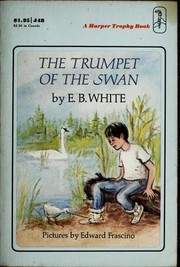
The Trumpet of the Swan
A mute trumpeter swan learns to read, write, and play a stolen trumpet to win a mate, in E.B. White's quiet 1970 tale of a boy who watches.
2,309-word summary · 10 min read
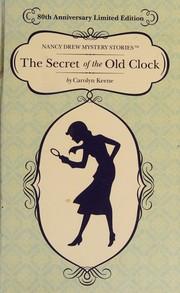
The Secret of the Old Clock
The first Nancy Drew novel: a sixteen-year-old detective follows a clue hidden in a clock to overturn a will and restore a family's inheritance.
2,011-word summary · 9 min read
The Runaway Bunny
A little bunny says he will run away, and his mother promises to follow. This 1942 picture book turns a child's first wish for independence into a gentle,…
2,765-word summary · 12 min read
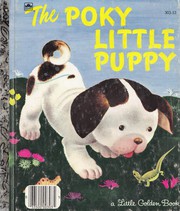
The Poky Little Puppy
One slow puppy misses the trouble and gets the desserts in this 1942 Golden Book that became the best-selling hardcover children's book in the United States.
2,322-word summary · 10 min read
The Book of Three
A restless assistant pig-keeper in mythical Wales chases his escaped oracle pig and finds himself beside Prince Gwydion in a war against the Lord of Annuvin.
2,019-word summary · 9 min read