
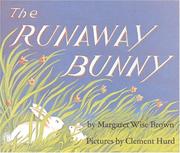
The Runaway Bunny
2,765-word summary 12 min read 48 pages in the book
- First published
- 1942
- Publisher
- Harper
- Pages
- 48
- ISBN
- 9780060775827
Reading options
What's inside (10 sections)
I came to this book through my niece, who was three and going through a phase of announcing that she was going to run away every time someone asked her to put her shoes on. Her mother, my sister, had a battered board book copy with one corner chewed flat, and she read it at bedtime in a voice that got softer with each page. I had assumed it was a simple comfort book, the kind adults use to smooth over a difficult moment. Reading it properly, as an adult with nothing at stake, I found something stranger and more interesting. This is a book about a small child who wants to disappear and a parent who will not allow it, told with a warmth that never quite hides the steel underneath. It was first published in 1942 and has stayed in print ever since, which says something about how well it understands the feeling it describes.
A small book with a long memory
The Runaway Bunny is a picture book written by Margaret Wise Brown and illustrated by Clement Hurd, first published by Harper & Brothers in 1942. The modern editions run to about 48 pages, though the original 1942 hardback was 40 pages, and the words on those pages are few. Brown wrote in short, singsong sentences aimed at children too young to read, and Hurd drew pictures that carry as much of the story as the text does. This pairing of a spare, rhythmic script with bold, simple images became the signature of a group of books Brown and Hurd made together, including Goodnight Moon and My World, which are sometimes collected under the title Over the Moon.
Brown worked with an editor named Ursula Nordstrom, who ran Harper's Department of Books for Boys and Girls and who had a gift for finding the exact line a book needed. Nordstrom appears in the story of this book in a very practical way. When Brown read her the ending, Nordstrom said it needed work. Brown was on holiday in Maine at the time, and she cabled the new final line back to Harper. That line, "Have a carrot," said the mother bunny, is now one of the most quoted endings in children's literature. There are also two different final illustrations for the book, a small detail that tells you how much care, and how much argument, went into even the last picture.
The bunny decides to go
The plot can be told in a few sentences, and I will tell it that way first because the shape of it matters more than any single image. A little bunny tells his mother that he is going to run away. She answers, "If you run away, I will run after you." The bunny then spends the rest of the book trying on different ways of vanishing, and each time his mother calmly becomes the thing that will find him.
The first three attempts set the pattern. The bunny says he will become a fish in a trout stream. His mother says she will become a fisherman and fish for him. He says he will become a rock on a mountain, and she says she will become a mountain climber and climb to him. He says he will become a crocus in a hidden garden, and she says she will become a gardener and find him. The words change a little each time, but the argument underneath them stays the same. He wants to be somewhere she is not. She wants him to know that there is nowhere she will not be.
Read aloud, these exchanges have a drumbeat quality. The bunny proposes, the mother answers, and the answer follows the same shape every time. A small child can predict the second line before it comes, and that predictability is part of the pleasure of hearing it. It is also part of the unease, once you stop reading it as a lullaby. The mother never once asks why the bunny wants to leave. She never negotiates, and she never offers a reason to stay. She simply states, over and over, that she will come after him.
Birds, boats and acrobats
After the fish, the rock and the flower, the bunny's imaginations get more elaborate, and the pictures get more playful. He says he will become a bird and fly away from her. She says she will become a tree that he can come home to. He says he will become a sailboat and sail away across the sea. She says she will become the wind and blow him where she wants him to go. He says he will become a circus acrobat and fly away on a trapeze, and she says she will become a trapeze walker and walk the wire to him.
I want to say what Hurd's pictures do here, because the words alone are almost flat. The book alternates between two-page spreads in black-and-white line drawing and two-page spreads in full color. The black-and-white pages carry the text of the imagined escape, and the color pages show the mother arriving in whatever form she has chosen. So a page of scratchy lines showing a fish in a stream is followed by a painted spread of a patient fisherman with a rod, and the rhythm repeats. A child turning the pages learns to expect the color, and the color always means the mother has found him.
This alternation appears in Goodnight Moon and My World as well, so it is clearly something Brown and Hurd worked out together rather than a device used once. In the color spreads, Hurd gives the mother a solid, round, watchful presence. She is not frightening in the drawings. She is patient, almost placid, and she is consistently larger than the bunny. That size difference does quiet work. The bunny can imagine himself as a rock or an acrobat, but the mother remains the biggest thing on the page no matter what shape she takes.
The sailboat and the acrobat are the most fanciful of the transformations, and for me they are the most revealing. In the earlier rounds the mother becomes something that can catch, or dig, or climb. By the time the bunny is a sailboat, she becomes the wind, which is everywhere at once and impossible to slip past. The logic of the game has shifted from finding to surrounding. Whether you read that as comfort or as a threat depends, I think, on what you bring to the book.
The boy in the house and the carrot
The last transformation is the one that lands hardest. The bunny says he will become a little boy and run into a house. The mother says that if he becomes a little boy and runs into a house, she will become his mother and catch him in her arms and hug him. This is the moment the game stops pretending. Up to now the bunny has been turning into animals and objects and circus performers, and the mother has met each one with a matching role. Here she stops matching him and simply becomes his mother, which is what she was from the beginning.
The bunny gives in. "Shucks," he says, "I might just as well stay and be your little bunny." And the mother says, "Have a carrot." That is the whole ending. Brown reportedly worried over those last words, and Nordstrom's push produced the carrot line that closes the book. It is a small, domestic, slightly comic note after all that grand talk of running away. A carrot is not a speech about love. It is a snack, offered by a mother to a child who has come back to the nest.
I have heard adults say the ending disappoints them, that after all that build-up a carrot feels like an anticlimax. I understand where the feeling comes from, though I do not share it. The bunny is not asking to be talked into staying. He is a small creature who has run through every fantasy of escape he can think of and has found each one already occupied by his mother. The carrot is the book admitting that this is not a story with a moral attached. It is a story about a mother and a child, and the mother feeds the child. There is a whole theory of child development hiding in that gesture, but Brown delivers it as a joke rather than a lesson.
What the pictures are doing on their own
It is easy to talk about this book as if Brown wrote it and Hurd merely drew the pictures. The two-page alternation, and the fact that the cow jumping over the moon, which shows up so memorably in Goodnight Moon, first appears here, suggest a much closer partnership. A copy of The Runaway Bunny even appears inside Goodnight Moon, along with the illustration of the mother fishing for the bunny child, so the two books quote each other. If you read them back to back, you can watch Hurd refine the same visual vocabulary, the same round furniture and the same patient adult figures, until the room in Goodnight Moon feels like a cousin of the meadow in this book.
Hurd redrew some of his pictures for a later reissue, so the edition you have may not match the one your parents owned. That is worth mentioning because the book is old enough to have accumulated several visual lives. The 1942 first edition was a 40-page hardback from Harper & Brothers, and the modern HarperCollins editions are usually 48 pages. The ISBN on the edition I looked at is 9780060775827, a HarperCollins version that matches the 48-page count. If you are buying a copy for a child, the pictures are the thing to compare, not the number of pages.
The black-and-white spreads are the ones I remember most. There is a roughness to the line work that a child can almost hear in the scratch of a pencil, and those pages are where the bunny does most of his imagining. The color spreads arrive like a relief. All that imaginary danger is answered by a calm, painted figure with a rod, or a trowel, or a ladder. The book uses color as a kind of reassurance, and it does it so regularly that a very young listener starts to feel the answer coming before the words arrive.
The comfort, and the something underneath
The standard reading of The Runaway Bunny is that it is a picture of unconditional love. A child wants to strike out on his own, and a parent promises to follow him wherever he goes. Read that way, it is a warm book, and it is easy to see why parents reach for it at bedtime. It tells a small person that the world is full of a parent's attention, that the bond will survive any amount of pretend running away. The call and response structure gives that promise a musical quality, and children who know the book can join in on the mother's lines.
There is another reading, and it has been written about at length. Claudia Pearson's book Have a Carrot reads the trilogy through a Freudian lens, and you do not need to accept that whole argument to notice the tension. The mother in this story never lets the bunny be alone for a single page. Every identity he tries on is followed, tracked and eventually collected. To an adult reader in a certain mood, the book can feel less like a promise of love than like a promise of surveillance. The bunny's "Shucks" can sound less like relief and more like surrender.
I do not think the book is secretly sinister, and I would not read it to a three-year-old as a warning. But I think the unease is real, and it is probably part of why the book has lasted as long as it has. A story that only comforts would not have much to say to the adult reading it for the hundredth time. The Runaway Bunny holds both feelings at once. It says come home, you are safe, and it also says you are not going anywhere. Whether that is a comfort or a warning depends on the day and on the reader.
Who it is for, and where it falls short
This is a book for very young children, roughly ages two to five, and it does not pretend to be anything else. The text is short, the sentences are repetitive, and the ideas are carried by the pictures. If you are an adult looking for a story with a plot that develops, you will not find one here. The bunny tries seven escapes, the mother answers each one, and the bunny gives up. That is the entire structure. There is no subplot, no growth beyond the single decision to stay, and no twist waiting in the last pages.
That simplicity is a strength for the audience it was written for, and a limitation for everyone else. A child of four can follow the pattern and enjoy the arrival of each new animal, and a parent can read it in five minutes at the end of a long day. But the same repetition that makes it a good bedtime book makes it a thin read for an older child. The joke of the carrot lands once. After that, you are reading a book about a bunny who cannot get away with anything, and the novelty wears off fairly quickly.
The other criticism I would make is about the mother's role. In 1942, a story in which a mother follows her child everywhere and finally catches him in her arms read as tenderness. To modern ears there is a whiff of overprotection in it, and the book gives the bunny no real reason to stay beyond the fact that his mother is unstoppable. He does not outgrow the wish to run away. He simply stops asking. A reader who wants a story about a child gaining confidence might find that flat.
Still, I would not change it. The book is honest about what it is, a small, sung assurance for a child at the moment he first discovers that his parents are not the whole world. It does not try to solve that problem. It sits with it, and offers a carrot.
The bunny after the book
The Runaway Bunny has had a life well beyond the nursery. It has been in print continuously since 1942, which is rare for any book, and it has been adapted more times than I expected. There is an animated special released on HBO Max in March 2021, narrated by Tracee Ellis Ross. There is a concerto for violin, reader and orchestra by the American composer Glen Roven, using the book's own text. A musical adaptation, with music and lyrics by Paul Lewis and a book by Lewis and Gabriel Carbajal, had its world premiere at Boston Children's Theatre in February 2019.
The book also keeps turning up in adult culture, which surprised me. It is referenced in the television show Cheers, where Carla Tortelli says she has read it to her eight children over a thousand times and cried each time. It appears in the Pulitzer Prize-winning plays Wit and Rabbit Hole, and in the film version of Wit. It shows up in a Korean drama called Mother, and in an episode of Virgin River. None of that is a measure of the book's literary quality, but it is a measure of how deeply the image of a mother coming after her child has settled into the culture.
I closed the book thinking about my niece, who has moved on from running away to other threats, and about my sister's chewed board book, which is still on the shelf. The Runaway Bunny is not a big book. It is short, repetitive and aimed at people who cannot yet read the words on the page. But it has lasted for more than eighty years, and it has a way of saying something different to whoever opens it. To a child it is a game of hide and seek with a happy ending. To the adult reading it at bedtime, it is a quiet reminder of how badly a small person wants to be let go, and how hard it is to let them.
FAQ
Who wrote and illustrated The Runaway Bunny?
Margaret Wise Brown wrote it and Clement Hurd illustrated it. It was first published in 1942 by Harper & Brothers, and modern HarperCollins editions run about 48 pages.
What happens at the end of The Runaway Bunny?
After trying to become a fish, rock, crocus, bird, sailboat, acrobat and little boy, the bunny gives up and decides to stay his mother's little bunny. She replies, 'Have a carrot.'
Is The Runaway Bunny only a comfort book for toddlers?
It is written for children roughly two to five, and its repetition suits bedtime well. Adults often notice a darker edge, though, since the mother follows the bunny through every escape, and the book has drawn both comfort and clinical readings.
Similar books
Goodnight Moon
A small bunny says goodnight to each object in the green room in this 1947 bedtime classic.
2,600-word summary · 12 min read
Make Way for Ducklings
A pair of mallards raise eight ducklings on the Charles River and lead them across Boston to the Public Garden, with a little help from a friendly policeman.
2,044-word summary · 9 min read
Guess How Much I Love You
Two nutbrown hares try to outshow their love at bedtime in this gentle picture book classic.
2,282-word summary · 10 min read
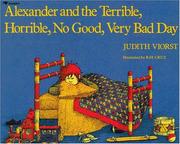
Alexander and the Terrible, Horrible, No Good, Very Bad Day
Alexander has one bad day from gum in his hair to bedtime, while his family copes and his mother stays honest.
2,548-word summary · 11 min read
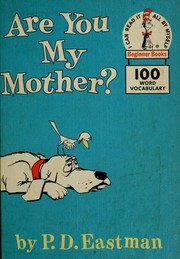
Are You My Mother?
A newborn bird falls from the nest and asks a kitten, a hen, a dog, a cow, a plane and a giant Snort if any will be his mother.
2,351-word summary · 10 min read

Little Town on the Prairie
In the spring after the Long Winter, fifteen-year-old Laura sews shirts, studies for a teaching certificate, and helps send her blind sister Mary to college.
2,071-word summary · 9 min read
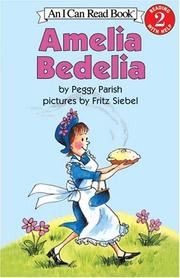
Amelia Bedelia
A literal-minded housekeeper follows her employer's list to disastrous and funny effect in the 1963 picture book that made wordplay a children's staple.
2,038-word summary · 9 min read
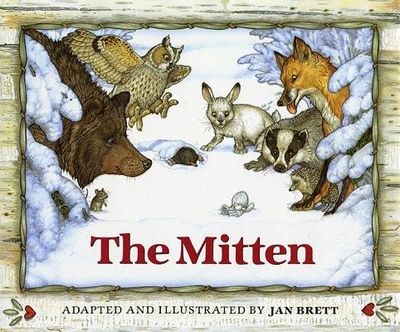
The Mitten
Jan Brett retells a Ukrainian folktale about a boy, a lost white mitten, and the woodland animals that crowd inside until a bear sneezes.
2,609-word summary · 12 min read
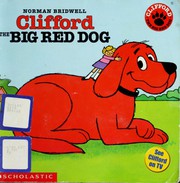
Clifford the Big Red Dog
Emily Elizabeth picks the smallest puppy in the litter, loves him as hard as she can, and wakes up to a dog the size of a house.
2,092-word summary · 9 min read
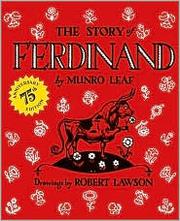
The Story of Ferdinand
A gentle Spanish bull would rather smell flowers than fight, and when he is taken to the bullring he simply sits down among the flowers in the ladies' hats.
2,135-word summary · 9 min read
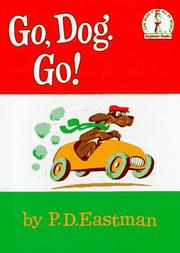
Go, Dog. Go!
Dogs drive, work, play, and climb a tree for a party in this Beginner Book built on repetition, opposites, and one very unpopular hat.
2,196-word summary · 10 min read
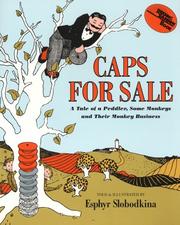
Caps for Sale
A peddler balances his caps on his head, naps under a tree, and wakes to find monkeys wearing his stock in this 1940 picture book.
2,787-word summary · 12 min read
The Borrowers
A family of tiny people live under the floorboards of an English house, borrowing what they need until a lonely boy and a suspicious housekeeper change…
2,164-word summary · 10 min read
Don't Let the Pigeon Drive the Bus!
A bus driver leaves the reader in charge with one rule, and a very persuasive pigeon spends the rest of the book trying to break it.
2,084-word summary · 9 min read
The Snowy Day
Peter in his red snowsuit explores fresh snow, from footprints and angels to a melted pocket snowball, in Keats classic winter day.
2,375-word summary · 11 min read
The Little Engine That Could
Watty Piper follows a stranded toy train past proud engines that refuse, to a small blue switcher who agrees to try the mountain and pulls her chanting load…
2,311-word summary · 10 min read
Stellaluna
A baby fruit bat falls into a bird nest, learns to perch and eat bugs, then reunites with her mother in Cannon's acclaimed 1993 picture book about difference…
2,486-word summary · 11 min read
Roll of Thunder, Hear My Cry
In Depression-era Mississippi, nine-year-old Cassie Logan learns what her Black family's land costs and why they keep it.
2,273-word summary · 10 min read
Harold and the Purple Crayon
Harold draws a moon and a path with one purple crayon and walks into the night, through woods and water until he finds his way home.
2,941-word summary · 13 min read
Fantastic Mr. Fox
Mr. Fox raids three cruel farmers to feed his family, then outdigs tractors and a siege to host a feast underground.
2,910-word summary · 13 min read
Curious George
Curious George retold: a monkey sails from Africa to the city, phones the fire station, floats off on balloons, and finds home.
2,979-word summary · 13 min read
Cloudy with a Chance of Meatballs
A grandfather tells of Chewandswallow, where soup rains and meatballs fall, until giant food storms force everyone to flee.
2,873-word summary · 13 min read
Chicka Chicka Boom Boom
Letters race up a coconut tree, tumble down with a boom, then climb again with help in this chant classic.
2,120-word summary · 9 min read
Brown Bear, Brown Bear, What Do You See?
A rhythmic animal parade teaches colors and names, from brown bear to schoolchildren.
3,226-word summary · 14 min read
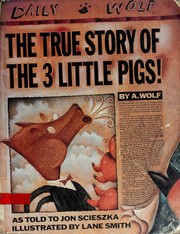
True Story of the Three Little Pigs
A. Wolf tells his side from the Pig Pen: he only wanted sugar for a cake, had a bad cold, and sneezed. You decide.
2,975-word summary · 13 min read
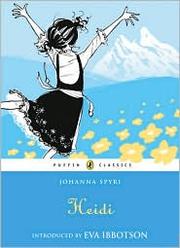
Heidi
Orphan Heidi blooms with her grandfather in the Swiss Alps, wilts in Frankfurt as a companion, then helps Klara walk.
2,952-word summary · 13 min read
One Fish, Two Fish, Red Fish, Blue Fish
Counting fish and silly creatures from here to there, with rhymes for beginning readers.
1,900-word summary · 8 min read
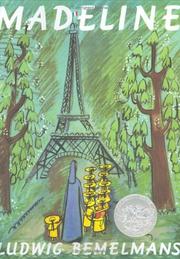
Madeline
Ludwig Bemelmans's 1939 Madeline: the twelve girls in Paris, Miss Clavel, the midnight appendix scare, and why the smallest girl became a classic.
2,944-word summary · 13 min read
From the Mixed-Up Files of Mrs. Basil E. Frankweiler
Claudia and Jamie run away to the Met, chase whether a 225 dollar Angel is a Michelangelo, and trade secrets with Mrs. Frankweiler.
2,774-word summary · 12 min read
The Tale of Peter Rabbit
Peter Rabbit disobeys his mother, squeezes under the gate into Mr. McGregor garden, and ends in a chase back home to chamomile tea.
2,157-word summary · 10 min read