
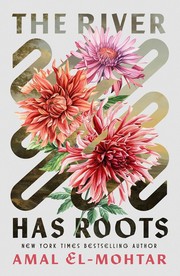
Reading options
What's inside (8 sections)
The village on the river
Thistleford is a village on the River Liss, which flows out of Arcadia, or Faerie. The Hawthorn family tends the magical willow trees along its banks. Every morning, two sisters named Esther and Ysabel sing to the willows. That is the whole opening of this novella, and it is enough. In a hundred and forty pages, Amal El-Mohtar builds a world where the river is a border, the trees are relatives, and a song is a kind of contract.
This is El-Mohtar's first solo book after co-writing This Is How You Lose the Time War with Max Gladstone. It was published in March 2025 as a fantasy novella, and it retells the folk ballad known as The Bonny Swans. It also draws on her Lebanese childhood, and one scene has the sisters singing the Palestinian resistance song Tarweedeh Shmaali. The book is about folklore, but it is not an antiquarian exercise. These songs are living things in the story, and they do work.
I picked it up because the premise is so compact and so confident. A village where the willows are magical, a family that sings to them, a river that leads to Faerie. There is no introductory chapter explaining any of it. The book begins as though you already know the rules, and you learn them the way you learn the rules of a song, by hearing it again.
The willows are not scenery. The Hawthorns tend them, which means pruning and singing and knowing which branch belongs to which year. El-Mohtar gives the work the specificity of a craft. Ysabel and Esther know the trees individually, and their morning song is a task as much as a pleasure. That detail matters because the book's magic is domestic. Extraordinary things happen in a village where people have chores, and the ordinary work is what makes the extraordinary believable.
The River Liss itself is the source of the village's prosperity and the reason outsiders leave it alone. It flows out of Arcadia, which means that anything thrown into it may come back changed. The family has lived beside it for so long that they have learned its habits. Esther's error is to believe that she understands what the river wants. In a story like this, that is exactly the kind of mistake that gets a person turned into a bird.
Rin
Esther is courted by a local man named Samuel Pollard. She feels nothing for him, and the book wastes no time making him into the wrong choice. She is drawn instead to Rin, a fairy from Arcadia who hears her singing in the forest. Their courtship proceeds through gifts and exchanges of words, which is the novel's way of showing rather than telling what a bargain with the Folk looks like. Rin agrees to marry her.
Pollard is written as a small man with a large sense of entitlement. He assumes that Esther's refusal is a form of coyness, and when he realizes she means it, he looks for another way into the family. The book is direct about the violence underneath his courtship. He does not see Ysabel as a person with a life of her own. He sees her as the next available sister, which is why Esther's protection of her has to become a form of warfare.
Rin is the opposite. He listens to Esther sing before she knows he is there. Their courtship through gifts and words is the book's argument about what love should look like: attention, patience and a willingness to learn the other person's language. El-Mohtar does not make Rin human or safe. He makes him attentive, which in this world is a much greater gift.
That relationship is the quiet center of the book. Esther does not choose Rin because he is safe or because he is human. She chooses him because he hears her. The theme runs through every version of the story the novella tells: someone listens to a woman's song, and that listening is both love and a kind of danger. The fairies in this book are not whimsical. They are bound by rules that the humans can learn but never quite control.
Ysabel, meanwhile, is the sister Esther loves most. The relationship between the two women is as important as the romance, and the book treats sisterhood as a form of devotion that the world does not take seriously enough. Pollard's interest in Esther is a way of getting close to Ysabel, and when Esther rejects him, he turns his attention to the younger sister.
That is when the story turns violent. Pollard pushes Esther into the Liss, hoping to court Ysabel. The river's magic changes Esther into a swan. It is a familiar folkloric punishment, and El-Mohtar makes it immediate and physical. Esther becomes an animal who can still understand what is happening to her, and the horror is in the clarity of her perception.
Agnes Crow and the harp
The transformation is described with a physical precision that keeps it from becoming pretty. Esther becomes a swan, and the book stays inside her experience of being one. She can still understand, and she cannot make herself understood. That is the particular horror of the folkloric curse: the mind remains while the body changes, and language becomes a song that humans will interpret as noise.
Agnes Crow, a local witch, rescues the swan. With Agnes's songs and Rin's power, Esther regains human form, but the restoration comes with a cost that the book refuses to soften. She has actually drowned. Her spirit is bound to Arcadia, and she can never return to Thistleford as a woman.
That is the point at which a lesser retelling would have stopped. El-Mohtar goes further. To protect Ysabel, Esther asks Rin to turn her into a harp. The request is both a sacrifice and a strategy. As a harp, she can be carried into the human world without being recognized. Rin disguises himself as a harpist and takes the instrument to the feast celebrating Ysabel's engagement to Pollard.
The harp sings a murder ballad accusing Pollard. It is one of the most striking images I have read in a recent fantasy: a woman turned into an instrument so that she can accuse her attacker in public, with her own sister's voice completing the proof. When Esther and Ysabel sing their secret childhood song together, the accusation can no longer be dismissed. Pollard is forced to drink from the Liss and becomes a willow.
That ending is a piece of folk logic rather than legal justice. A man who tried to take two sisters is turned into a tree on the riverbank, where the women who sing to the willows will see him every morning. It is a cruel and satisfying transformation, and the book's treatment of it is matter-of-fact. The river has rules. Pollard broke one.
The resolution is gentle. Rin returns with the harp to Arcadia, Esther is restored, and years later Ysabel visits with her child. The circle closes, but nothing is undone. Esther has been a swan and a harp and a spirit bound to another world. The book understands that these experiences do not simply vanish when the spell is lifted.
The songs
The book retells The Bonny Swans, which El-Mohtar's version makes vivid without turning it into a lecture. She knows the ballad's history and its variations, and she uses that knowledge to give the story a sense of having been told many times before. The traditional songs, including I Gave My Love a Cherry and The Light Dragoon, appear alongside songs El-Mohtar wrote herself. Gary K. Wolfe praised the seamless blending of the two in the Locus review, and that is the novella's technical achievement. You cannot always tell where the inherited material ends and the new material begins, which is exactly what a living tradition feels like.
The Palestinian resistance song in the sisters' scene is the most striking use of this idea. It is not there to make a point about politics in the abstract. It is there because a song that people sing to resist occupation is a song about not surrendering a place, which is exactly what Esther and Ysabel are doing. El-Mohtar's Lebanese childhood gives the book its emotional authority. She knows what it means for a place to be contested and for a language to carry memory.
The magic system is called grammar, and this is where the book is least clear. Publishers Weekly found it abstract and hard to grasp, and I agree. The rules of what the river can do and what a song can bind are felt rather than explained, and there are moments when a reader needs a firmer hand. But the opacity is also part of the design. A book about a world where language is power is more convincing when it does not hand you a manual.
The reception
Critics were rapturous. Kirkus starred the book. Liz Bourke, writing in Locus, called it a fairy tale set on the borders of Faerie, drenched in folksongs. Lisa Tuttle in The Guardian called it pitch-perfect. It won the Nebula, Hugo, Locus, Aurora, British Fantasy and Ignyte awards, which is an extraordinary run for a book of its length.
The reservations were mild. Kirkus thought the ending was perhaps too neat, and there is something to that. Once the sisters sing together, the resolution arrives quickly, and Pollard's transformation feels more like a moral than a consequence. But a folk ballad is not a modern novel. It does not owe the reader a slow collapse of the villain. It owes the reader a song that settles the account.
I want to say a word about the length. A hundred and forty-four pages is a novella, and the book never pads itself. There is one village, one family, one villain and one problem with several magical solutions. The economy of the thing is part of its pleasure. El-Mohtar gives you a complete world and a complete story in the space another writer would use for the first chapter of a trilogy.
The awards it collected say something about the year it appeared. The Nebula, Hugo, Locus, Aurora, British Fantasy and Ignyte are given by different communities with different tastes, and a single book sweeping them is rare. It happened because the novella is both a proper fantasy and a proper fairy tale, which are not the same thing. Fantasy can build a world; a fairy tale knows which parts of it to leave in the dark.
What I finished with
The book is short, and it knows it. There is no room for a subplot that does not carry the main story, and every scene exists to advance the bargain or the relationship between the sisters. That compression is its greatest strength. I finished it wanting more of Thistleford and more of Agnes Crow, but I also understood that adding either would have diluted what the book is: a ballad told at the length of a ballad.
The title is worth a last look. The river has roots because it runs out of Faerie into the human world, carrying the old stories with it. It also has roots in the sense that the Hawthorn family belongs to it, and the willows are tended like relatives. El-Mohtar is writing about inheritance, and about the way a place remembers what happened there. A man becomes a tree on the bank and the women keep singing to him. That is not forgiveness. It is memory with an audience.
I keep thinking about the harp. The image of a woman asking to be made into an instrument so she can be carried into a room and tell the truth is strange and beautiful, and it is the book's clearest statement of what songs are for. They let the voiceless be heard, and they last longer than the person who sang them.
FAQ
Which folk ballad does the novella retell?
It retells The Bonny Swans, a story of sibling betrayal and transformation. El-Mohtar draws on her Lebanese childhood and includes the Palestinian resistance song Tarweedeh Shmaali.
Why is the magic called grammar?
The book's system of magical rules is given that name. Publishers Weekly found it abstract and hard to grasp, and Kirkus thought the ending was perhaps too neat.
What awards did the book win?
It won the Nebula, Hugo, Locus, Aurora, British Fantasy and Ignyte awards after Kirkus starred it and reviewers in Locus and The Guardian praised its use of folk song.
Similar books
Cinderella Is Dead
Two centuries after Cinderella, a Black teenager in love with another girl flees her kingdom's forced marriage ball.
2,250-word summary · 10 min read
Beauty: A Retelling of the Story of Beauty and the Beast
Robin McKinley's debut retells Beauty and the Beast through a plain, book-loving girl whose nightly refusals of the Beast's proposals slowly become something…
2,100-word summary · 9 min read
The Salt King
Sent back to the salt-mining town he fled, a Jesuit priest investigates miracles that turn pilgrims into pillars of salt. Pulley adds a slow-burning queer…
2,214-word summary · 10 min read
Six Crimson Cranes
A princess who loses her voice when a curse turns her six brothers into cranes must work in secret, trust a dragon, and speak a name she does not know.
2,214-word summary · 10 min read
Cruel Beauty
A girl raised to kill the demon prince who rules her cursed land instead falls in love with him, in a retelling that mixes Beauty and the Beast with Bluebeard…
2,669-word summary · 12 min read
Lady Tremaine
A widowed stepmother fights for her daughters when a royal ball hides a dark secret.
2,023-word summary · 9 min read
Heartless
Cath Pinkerton wants a bakery with Mary Ann, not a crown, until secret love for Jest and Jabberwock attacks pull her toward becoming the Queen of Hearts.
2,968-word summary · 13 min read
She Who Became the Sun
A peasant girl takes her dead brother's name and becomes Zhu Chongba, climbing from a Buddhist monastery toward a fractured China's throne.
2,170-word summary · 10 min read
A Game of Fate
The Fates choose a queen for Hades, but the god of the dead resists, and the journalism student sent to expose him defies him at every turn.
2,373-word summary · 11 min read
Wolfsong
Ox Matheson grows up believing he is worth nothing. Then the Bennett family moves in next door, werewolves with a secret, and a boy named Joe begins to howl…
2,823-word summary · 13 min read
Twisted
A dark contemporary reimagining of Aladdin in which a ruthless COO removes his rival, marries the woman he wants and turns their marriage into a struggle for…
2,051-word summary · 9 min read
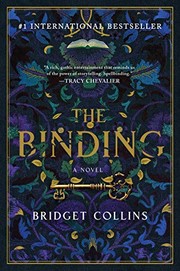
The Binding
In an alternate Victorian England, binders remove unbearable memories into books, and a young apprentice discovers his own past was erased from him.
2,036-word summary · 9 min read
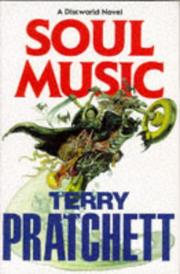
Soul Music
A harpist from Llamedos brings rock music to Ankh-Morpork, and a primordial force takes hold of the city, pulling Susan Sto Helit and Death into a fight over…
2,406-word summary · 11 min read
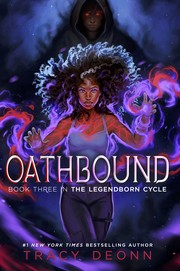
Oathbound
Bree Matthews has exiled herself from the Legendborn Order to protect the people she loves, but an unbreakable bargain with a shapeshifting demon has bound her…
2,751-word summary · 12 min read
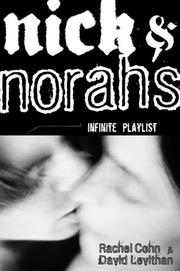
Nick and Norah's Infinite Playlist
Rachel Cohn and David Levithan trade chapters as two music-obsessed teenagers spend one long New York night together, from a five-minute fake date to something…
2,355-word summary · 10 min read
Glow
In the fourth Plated Prisoner book, Auren escapes Midas's death only to stand trial for it, while Slade fights to keep her and their world from tearing apart.
2,667-word summary · 12 min read
Bury Our Bones in the Midnight Soil
Across five centuries, three women are turned into vampires by the same restless figure, and each must decide what her endless hunger will cost.
2,727-word summary · 12 min read
Brida
A young Irishwoman convinced she has a spiritual Gift seeks out a forest Magus and a Dublin witch, and learns that her gift is to bridge the visible and…
2,012-word summary · 9 min read
Seraphina
A half-dragon court musician in Goredd helps investigate a royal murder while hiding the secret behind her gift.
2,246-word summary · 10 min read
Percy Jackson's Greek Gods
Rick Riordan's illustrated 2014 companion: Percy Jackson retells the Greek myths, from Chaos and the Titans to the Twelve Olympians, with sarcastic asides and…
2,709-word summary · 12 min read
Dealing with Dragons
A princess who hates embroidery runs away to become the cook and librarian for a dragon, then has to outthink wizards, knights, and a plot against the dragon…
2,563-word summary · 11 min read
Nettle & Bone
Marra, a princess in a convent, leaves to save her abused sister, but first she must finish three impossible tasks: a bone dog, a nettle cloak, moonlight in a…
2,061-word summary · 9 min read

The Rose & the Dagger
Shahrzad is pulled from her Caliph husband and left in a desert camp of rebels, needing to break his curse and end a war before it ends her.
2,520-word summary · 11 min read
Sing You Home
A music therapist, her new wife and an evangelical ex-husband end up in court over three frozen IVF embryos.
2,952-word summary · 13 min read
Stars Above: A Lunar Chronicles Collection
Nine Lunar Chronicles stories fill in the histories of Cinder, Wolf, Thorne, Cress, Winter, and Jacin, and end with a wedding after the war.
2,230-word summary · 10 min read
Orlando
A young Elizabethan nobleman becomes a woman and lives for centuries, moving through English history while writing a single poem about an oak tree.
2,030-word summary · 9 min read
Daughter of the Moon Goddess
The daughter of Chang'e hides in the Celestial Court, trains as an archer, and risks everything to free her mother from the Emperor's punishment.
2,146-word summary · 10 min read
Cemetery Boys
A trans brujo in East Los Angeles summons the ghost of a boy who refuses to move on, and together they uncover a murder hidden beneath Día de los Muertos.
1,997-word summary · 9 min read
Captive Prince
Betrayed by his half-brother and sold to the enemy kingdom as a pleasure slave, Prince Damianos must survive in the court of Vere without revealing who he…
2,063-word summary · 9 min read
Wayward Son
Simon and Baz road trip America after the war to decide what normal means.
2,505-word summary · 11 min read