
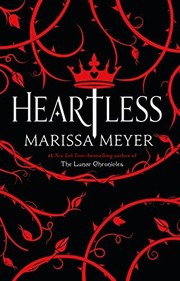
Heartless
2,968-word summary 13 min read 464 pages in the book
- First published
- 2016
- Publisher
- Feiwel & Friends
- Pages
- 464
- ISBN
- 9781250044655
Reading options
What's inside (8 sections)
I came to this book sideways. I had read Cinder years ago and liked how Marissa Meyer took a familiar tale and rebuilt it with grease and wiring and palace politics. When a friend told me she had also written the Queen of Hearts as a teenage baker who only wanted to open a shop, I laughed. Then I borrowed it. The edition I am talking about here is the first American hardcover from Feiwel and Friends, published in 2016, 464 pages, ISBN 9781250044655. It is a standalone prequel to Alice's Adventures in Wonderland, not a part of The Lunar Chronicles, even though Meyer wrote both. I finished it in three sittings, mostly late at night, with flour still on my own counter from weekend baking.
The hook is simple. Long before she shouts for beheadings, Catherine Pinkerton is eighteen, liked, and tired of being looked at. She is Lady Catherine, daughter of the Marquess of Rock Turtle Cove and heir to that estate. Her mother, the Marchioness, has one plan for her. Marry the unmarried King of Hearts. Cath has a different plan. She wants to bake.
That gap between what her parents want and what she wants drives everything that follows. Jest arrives. The King persists. A monster returns. By the end Cath makes a choice that shuts the door on the girl she was.
The girl who wanted a bakery
Cath opens the book in a kitchen, not a throne room. Three lemon tarts glow in the oven. She pulls them out with towel wrapped hands while heat presses on her cheeks. She fusses over the glaze. She thinks about how judges at court praised her last sweets and how she and her maid Mary Ann could use that praise to start something real.
Mary Ann matters a lot here. She is hired help in the Pinkerton house, but she is also Cath's best friend and the only person who takes the bakery seriously as a business. Mary Ann is good with numbers and ledgers. Cath is good with butter and sugar and lemon and currants. They have talked for years about renting a shop and selling pastries to the Kingdom of Hearts. They even scout locations later, including the cobbler's shop when it closes, and they talk to the Duke's people about rent. For a while the dream feels close enough to touch.
Her mother treats the idea as nonsense. In her view, baking is work for servants. A daughter who could be queen does not go into trade, and certainly not in partnership with a maid. Cath knows this. She tells herself she will push ahead once the shop earns enough to prove itself. Mary Ann smiles in a tight way when she hears that. She understands the Marchioness better than Cath wants to admit.
Cath is also heir to Rock Turtle Cove. That detail keeps coming up. It means she has land and standing and duties. It means her parents can press her in ways she cannot easily refuse. When her mother forces her into a red dress for the King's black and white ball, just so the King will notice her in a sea of monochrome, Cath hates how it feels and wears it anyway. She brings lemon tarts for the banquet table because baking calms her. She almost misses her own entrance because she stays too long by the ovens.
I liked these early kitchen scenes more than I expected. Meyer writes food in a way that made me hungry. Currant scones. Chocolate tortes. Caramels she sends to the Knave because he loves sweets. Pumpkin cake later, which becomes important in a dark way. You believe Cath is skilled because the book shows her process. Timing. Tasting. Adjusting sugar. Wiping counters. It is not vague talent. It is work.
The King and the Joker who fell from the ceiling
The King of Hearts is not frightening here. He is small, giggly, eager, and out of his depth. He has a curled mustache and clammy hands. He laughs at the wrong moments. He sends Cath gifts with clumsy poems that she dreads opening. He loves her lemon tarts with real appetite and loves the idea of marrying her even more.
Everyone at court expects him to propose. Cheshire tells Cath as much at the ball, half teasing and half warning. Cath slips away because she does not want to hear it in front of a crowd. That is when she meets Jest in the garden with his companion Raven.
Jest is the King's new court joker. He is handsome in a loose limbed way, with dark curls and gold eyes that catch light. He moves like an acrobat. His entrance at the ball is the kind of scene that sticks. He hangs from a spinning hoop fixed to a chandelier, joking with the crowd while the hoop turns, then drops down without missing a beat. He poses a famous riddle about a raven and a writing desk, playing with the wording while people groan and laugh. Cath laughs too, before she knows she is in trouble.
After the ball is attacked, Jest wakes Cath when she faints and calls a carriage to get her home. She tells herself they cannot meet again. He tells her he hopes to see her at the Turtle Days Festival. Mary Ann catches her climbing in the bedroom window and gets the full story out of her. From there Cath and Jest start a hidden courtship.
It is sweet at first. Stolen walks. Small gifts. A piece of chocolate he says he saved for her. Jokes that feel private. Jest helps the King write his courtship poems, which puts him in an odd spot. He coaches his rival because it is his job, while falling for the same girl. Cath feels guilty about deceiving the King and thrilled to be seen by someone who asks about her baking as if it matters.
The problem is clear. The King has rank and her parents' support. Jest has no standing, a past he will not explain, and a mission tied to Time itself that keeps pulling him away. Cath keeps choosing secret meetings over open refusal. She thinks she can delay the proposal, win the baking contest, save enough for the shop, and then decide. Wonderland does not wait.
I found Jest easy to like and hard to fully trust, which feels intentional. He is kind to Cath. He is loyal to his friends. He also withholds a lot. When pressed, he deflects with humor. That charm works until the point where charm stops being enough.
Hatta and Cheshire
One pleasure of this book is how Meyer slots familiar figures into jobs and habits. Cheshire is a half invisible cat who drifts in and out, grinning, offering warnings that sound like jokes. He likes Cath. He also likes the idea of a tuna tart, which he mentions more than once. He tells her about the expected proposal. He tells her about the baking contest at the festival. He is not a guide so much as a weather vane. When he shows up, something is about to shift.
Hatta is a traveling hat maker with a shop called Hatta's Marvelous Millinery. Cath meets him properly in chapter eighteen when Jest brings her to his tea party. Hatta is odd, quick, defensive about his work. He wears strange hats and sells stranger ones. He gives Cath a hat shaped like a macaron at the beach later, a small kindness that lands because he is rarely soft. He talks about his father, who died by his own hand after madness took him, using a hat tool to do it. That story explains some of Hatta's edge without excusing his rudeness.
Haigha is around Hatta's orbit. Raven stays near Jest, dry and watchful, speaking at times in ways that recall old poems about nevermore and loss. Readers who know Poe will catch the echo. The Caterpillar works as the town cobbler, smoking and slow, closing his store at one point which gives Cath and Mary Ann an idea about a bakery site. Sir Peter Peter is new gentry, knighted after his wife won a pumpkin eating contest. His wife is pale and sickly and desperate. She asks Cath for pumpkin pastries with an intensity that feels wrong. Margaret Mearle gossips. Elsie and Lacie and Tillie, the three sisters tied to the well, drift through scenes with a creepiness that made my skin prickle.
The Turtle belongs in this group too. He is a large, slow, good natured figure at court events. At one garden party hosted by Cath's parents for the Turtle Days Festival, he freezes in fear in a meadow when panic spreads. Cath has to jab him with a stick to get him moving toward the Crossroads where a huge attacker cannot follow. Smaller birds scatter overhead when he bellows, doves among them, white wings flashing against dark trees. It is a brief image, but it shows how Meyer stages Wonderland. Big magic next to small manners. Fear next to etiquette.
Meyer keeps asking what these figures were before Alice met them. Cheshire as a friend rather than a puzzle. Hatta before his madness hardened. The Caterpillar as a tradesman. Peter Peter before he became a nursery rhyme warning. The approach works best when it stays light. When it strains, it feels like name checking. For long stretches, though, I enjoyed spotting who was who without the book pausing to explain.
Pumpkins and the Turtle who changed
The middle of the book runs on two tracks. A baking contest. A monster.
Cheshire's tip about a contest at the Turtle Days Festival gives Cath a clear goal. If she wins, she thinks, she can prove the bakery is viable. She and Mary Ann go to Peter Peter's pumpkin patch to pick a pumpkin for her entry. The patch is big and lumpy and faintly off. Peter brags. His wife hovers. Cath picks what she needs and plans a spiced pumpkin cake with careful layers.
What she does not know is that the patch is tainted. Hatta had brought bad seeds over from Chess, a strange mirror land tied to Jest's past. He tried to give them to Sir Peter and failed, then tossed them into the pumpkin patch instead of carrying them home. Those seeds grew into fruit that changes whoever eats enough of it. Peter's wife ate them and began to turn into something else. The Turtle eats Cath's cake at the contest and changes in front of judges into a Mock Turtle, with a calf like head and a heavy shell and confused eyes. Hatta helps him up and speaks to him gently, which surprised me and made Hatta more interesting at once.
Cath visits Hatta after to ask if his hats are dangerous and if he makes headwear that alters people. She wonders if the Turtle's change came from wearing one of Hatta's hats during judging. Hatta gets angry. He says he builds hats from rare materials gathered in Chess. He refuses her proposal to help. She leaves with more questions than answers.
This is where fair criticism belongs. The pumpkin mystery takes a long time to come into focus. Cath spends many pages debating shop rent and contest rules while the monster plot waits offstage. I skimmed some King gift scenes and some parent arguments because they repeat the same point. Her mother disapproves. Her father folds. Mary Ann worries about money. Cath promises to manage. Then it happens again.
The payoff is strong once it arrives. Cath realizes Lady Peter was altered by the same kind of pumpkin she used. Peter knocks Cath down when confronted. Jest steps in to protect her. The links click. Bad seeds. Tainted patch. Cake that transforms. A wife lost to hunger and pain. A Turtle remade. The horror lands because Meyer kept it domestic. It is not a distant beast. It is dessert.
A masquerade meant to hide fear
The Jabberwock is the shadow over all of this. In Carroll it lives mostly in a poem. Here it is flesh, huge, scaled, shrieking, drawn to noise and light. It crashes the King's ball. Guests run from Hatta's shop toward the Crossroads because the creature is too large to follow through the narrow crossing. The Lion is taken in one attack while the Turtle freezes. People stop sleeping well. Shops close early.
The King's answer is a masquerade ball. Masks and music to calm the town. Dancers. Wine. A show of normal life. Cath goes with a plan that feels both brave and self defeating. She intends to accept the King's proposal in public so she can stay close to court and help Jest with his hidden task tied to Time. She thinks sacrifice will buy them freedom later. Mary Ann begs her not to trade herself that way. Jest hates the plan but cannot offer a safer one.
The masquerade scenes are some of the best in the book. Masks let people speak plainly. Cath watches Peter drink too much. She watches the King try to be grand and fail. She dances with Jest while pretending not to know him, which hurts more than any fight. Hatta hosts and deflects, pouring tea with shaking hands. Cheshire appears on a balcony, tail curling, to warn that delay has a price.
Meyer uses the ball to tighten the love against duty knot. If Cath refuses the King openly, her parents face shame and ruin, and Mary Ann loses her place. If she accepts, she loses the bakery and Jest. Jest's own choice is no easier. He owes service to the King as Joker. He owes loyalty to Hatta and Raven and to Chess, where his past waits. Running away sounds simple until they try to plan it. Money. Papers. A route through the Looking Glass lands. Time, who controls passages and debts, does not forgive easily.
I liked that neither lover is allowed a clean excuse. Cath is not only a victim of her mother. She lies when honesty would cost her comfort. Jest is not only a romantic rebel. He keeps secrets that put Cath in danger. Their love feels real because it is selfish as well as tender.
The action breaks in fast. The Jabberwock finds the lights. Screams cut through music. Cath runs toward danger while others run away, not from courage alone but from guilt. She has fed the thing without knowing. She helped grow it. That responsibility pushes her forward when a wiser person would hide.
Becoming the Queen of Hearts
The last stretch moves quickly and hurts. Cath finally faces the Jabberwock with the Vorpal sword, which Jest produces from his hat through the strange folding magic he carries. She fights badly and bravely, slipping in pumpkin pulp and blood, thinking of Mary Ann and of ovens and of a shop bell that will never ring. She kills the creature. In the same chaos, Peter, wild with grief and rage over his wife, turns on Jest and kills him to settle the score for Hatta's seeds and Cath's cake and everything lost.
Meyer does not soften Jest's death. Cath holds him. Raven cries out. Hatta arrives too late and understands at once. The plan to flee to Chess with Jest and Hatta and Raven collapses. Cath returns to Rock Turtle Cove empty.
What happens next is the turn the whole book promised. Peter is tried for murder and found not guilty by a court that wants the monster story to end. Cath rejects the verdict. Something in her breaks open and hardens at the same time. Raven, who can shift shape, becomes the executioner. Cath, now with authority she never wanted, calls for Peter's beheading. She uses the order readers know from Carroll. The court obeys because fear is easier than justice.
That is how Catherine Pinkerton becomes Heartless in both senses Meyer plays with. Her heart is gone with Jest. She chooses to act without one. The girl who jabbed the Turtle to save him now sends a man to die to satisfy her grief. Hatta tells her Jest would not have wanted to see her like this. She hears him and does not turn back.
I found the ending powerful and rushed. Powerful because the logic holds. A girl taught that love must be traded for status finally trades grief for power. Rushed because so much happens in so few pages. Trial. Verdict. Execution order. Transformation. Readers who wanted a slow fall may feel pushed. I did, a little. I wanted one more quiet scene between Cath and Mary Ann before the break, to feel what the bakery meant at the end. Instead Mary Ann steps back, hurt by choices Cath made without her, and their friendship frays without full repair.
Still, the final image works. Cath in a crown she never wanted, calm, cold, asking for heads. The baker's hands are still hers. The use they are put to is new.
As a reading experience, this is a romantic fantasy with horror edges, best for readers who like retellings and do not mind a sad end. It is not part of The Lunar Chronicles. Those are science fiction fairy tales with quests and crews. This is slower, focused on court life and kitchens and dances. The food writing kept me going through the soft middle.
If you pick it up, know what it is. A standalone from 2016 about a girl who wanted a shop and a boy who fell from a chandelier, set in a Wonderland that is charming until it bleeds. Go in for the pastries. Stay for Hatta and Raven. Expect to argue with Cath's choices.
FAQ
Is Heartless part of The Lunar Chronicles?
No. It is a standalone prequel to Alice's Adventures in Wonderland, published in 2016 by Feiwel and Friends. It shares an author with The Lunar Chronicles but has no series link to Cinder.
Is this the same Heartless as Elsie Silver's book?
No. Elsie Silver's Heartless is a 2022 Chestnut Springs romance about Cade Eaton and Willa Grant. Marissa Meyer's Heartless is a 2016 fantasy about Catherine Pinkerton, with a different author, plot, and ISBN 9781250044655.
What does Catherine want in Heartless?
She wants to open a bakery with her maid and best friend Mary Ann. Her mother, the Marchioness, forbids trade and presses her to marry the King of Hearts instead.
Similar books
Cruel Beauty
A girl raised to kill the demon prince who rules her cursed land instead falls in love with him, in a retelling that mixes Beauty and the Beast with Bluebeard…
2,669-word summary · 12 min read
Stars Above: A Lunar Chronicles Collection
Nine Lunar Chronicles stories fill in the histories of Cinder, Wolf, Thorne, Cress, Winter, and Jacin, and end with a wedding after the war.
2,230-word summary · 10 min read

The Rose & the Dagger
Shahrzad is pulled from her Caliph husband and left in a desert camp of rebels, needing to break his curse and end a war before it ends her.
2,520-word summary · 11 min read
The Wrath and the Dawn
Shahrzad marries a king who executes each bride at dawn, hoping to stay alive through stories. A lush Arabian Nights retelling about grief, trust, and palace…
3,568-word summary · 16 min read
A Curse So Dark and Lonely
Pulled from Washington DC to Emberfall, Harper meets cursed Prince Rhen, who relives his eighteenth autumn until someone falls for him.
2,677-word summary · 12 min read

Archenemies
Nova steals for the Anarchists while Adrian hides his Sentinel identity, and a serum that erases prodigy powers puts them both at risk.
2,485-word summary · 11 min read
Fairest
Queen Levana's rise from scarred princess to Lunar ruler fills the gap between Cress and Winter.
2,983-word summary · 13 min read
Winter
Scarred Princess Winter joins Cinder and her crew to stop Queen Levana's forced wedding and war between Luna and Earth.
3,179-word summary · 14 min read
Cress
Imprisoned hacker Cress joins Cinder Scarlet Wolf Thorne to stop Levana's wedding to Kai.
2,534-word summary · 11 min read
Scarlet
Scarlet searches for her grandmother with Wolf while escaped Cinder fights Levana in the Lunar Chronicles sequel.
2,756-word summary · 12 min read
Cinder
Cyborg mechanic Cinder discovers she is Lunar royalty while plague and Queen Levana threaten New Beijing.
3,553-word summary · 16 min read

Vow of Thieves
Kazi and Jase return to Tor's Watch to find it occupied, and their marriage is tested by captivity, betrayal, and a war for the town of Hell's Mouth.
2,059-word summary · 9 min read
The Lost Sisters
Taryn Duarte writes a letter to her twin, Jude, explaining how she fell for Locke and why she stayed silent while he used them both.
1,914-word summary · 9 min read

The Siren
Saved from a shipwreck in 1930, Kahlen becomes a siren who sings men to their deaths for the Ocean, until a boy in a college library makes her want a life she…
2,369-word summary · 11 min read
Dealing with Dragons
A princess who hates embroidery runs away to become the cook and librarian for a dragon, then has to outthink wizards, knights, and a plot against the dragon…
2,563-word summary · 11 min read
Demonglass
Sophie Mercer spends the summer at the Council's English estate, where two new demons, a suspicious host, and Archer's return complicate her plan to remove her…
2,771-word summary · 12 min read
Born at Midnight
Kylie Galen is sent to a camp for troubled teens and discovers it is a haven for vampires, werewolves, and witches, and that she may be something stranger…
2,310-word summary · 10 min read

We Hunt the Flame
In a fractured Arabia-inspired world, a disguised huntress and a prince-assassin race to find a magic-restoring book and confront an ancient evil.
2,195-word summary · 10 min read

Lore
Lore Perseous, the last of a hunted bloodline, is pulled back into the Agon when a wounded Athena offers her revenge against the god who killed her family.
2,188-word summary · 10 min read
House of Salt and Sorrows
Annaleigh Thaumas investigates her sister's death in a cursed island manor where the balls are illusions and the sea god is always listening.
2,025-word summary · 9 min read
Daughter of the Moon Goddess
The daughter of Chang'e hides in the Celestial Court, trains as an archer, and risks everything to free her mother from the Emperor's punishment.
2,146-word summary · 10 min read
Cemetery Boys
A trans brujo in East Los Angeles summons the ghost of a boy who refuses to move on, and together they uncover a murder hidden beneath Día de los Muertos.
1,997-word summary · 9 min read

Blue Moon
Ever Bloom tries to save her immortal boyfriend, Damen, from a mysterious illness while a new student named Roman quietly takes control of her school and her…
1,998-word summary · 9 min read
An Enchantment of Ravens
Isobel, a mortal artist in the fairy town of Whimsy, paints a portrait of the autumn prince and falls in love with him, breaking the laws of her craft.
2,087-word summary · 9 min read
Switched
A Minnesota teenager who can make people obey her discovers she is a changeling troll princess, and the hidden kingdom she came from wants her back.
2,131-word summary · 9 min read
A Reaper at the Gates
The Martial capital falls to an army of ghosts, Elias becomes the Soul Catcher, and Laia and Helene pay brutal prices as the Nightbringer moves to free the…
1,991-word summary · 9 min read
Fable
Abandoned on a lawless island at fourteen, Fable spends four years diving for gems to buy passage off it, straight into the cutthroat trade of the Narrows.
2,320-word summary · 10 min read
World After
Penryn wakes from near-death to find her altered sister Paige hunted as a monster, and follows her into the angels' scorpion factory and Uriel's coup.
2,213-word summary · 10 min read
The Prison Healer
Kiva, a teenage healer in a death prison, volunteers to face four elemental trials for a dying rebel queen, and the truths she uncovers change everything.
2,062-word summary · 9 min read