
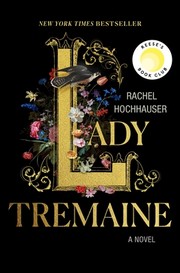
Lady Tremaine
2,023-word summary 9 min read 352 pages in the book
- First published
- 2026
- Publisher
- St. Martin's Press
- Pages
- 352
- ISBN
- 9781250396341
Reading options
What's inside (14 sections)
- A widow with a manor falling down
- The ball and the wrong girl
- What the royals hide
- Mothers and daughters
- Small reservations
- The retelling shelf
- Ethel among stepmothers
- Why the Reese's pick fits
- The stepdaughter's side
- Money, marriage, and markets
- The falcon and other truths
- For whom the ball tolls
- Key takeaways
- FAQ
Fairy tale retellings live or die on their villains, and Hochhauser bets everything on hers. Ethel Tremaine gets to tell her own story here, and she is magnificent company: funny, furious, practical, wrong about important things. I finished the book liking her without quite trusting her, which seems exactly right.
The premise sounds familiar. Stepmother's side of Cinderella. But the execution has real historical texture and a genuinely surprising plot. This is no sketch. It is a full novel with money trouble, falcons, and a royal family hiding something vile.
A widow with a manor falling down
Ethel is twice widowed when we meet her, running a crumbling manor on pride and arithmetic. Two daughters of her own. One stepdaughter who despises her. A peregrine falcon with opinions. Debts like ivy. Hochhauser makes the household economics concrete: which rooms are shut, what gets sold, who gets paid late.
Ethel's voice carries the early chapters. She is blunt about her calculations. Marry the girls well or lose everything. Keep up appearances or lose the little credit remains. Love her daughters fiercely, manage the stepdaughter coldly. The narration admits all this without apology, which makes her later growth legible.
The stepdaughter relationship is the book's sharpest thread. Ethel is unfair to the girl and knows it in flashes she quickly buries. The girl returns contempt with interest. Neither is a monster. Both are guarding wounds. Watching two proud females misread each other for a hundred pages is painful in the best way.
The ball and the wrong girl
The royal ball arrives as salvation in dance form. Three invitations would solve every problem. Ethel schemes, sews, borrows, and bullies her way toward getting all three daughters through the palace doors. The ball sequence itself is glorious: crowded, glittering, mercenary. Every mother in the room is doing Ethel's math.
Then the wrong daughter wins the prince. I will not say which one, because the fallout drives the rest. Ethel's plans collapse in public, and her reaction, humiliated fury curdling into protectiveness, sets her best chapters in motion. Hochhauser stages the engagement that follows as slow dread rather than celebration.
The prince seems ideal at first glance and worse on every closer look. Courtiers smile too fixedly. Servants flinch. Ethel, who knows how powerful households hide rot, starts asking questions nobody wants asked. Her investigation gives the middle of the book its spine.
What the royals hide
The sordid secret at the palace center is genuinely dark, and the book earns its thriller pacing uncovering it. It involves the royal family's control of heirs and bodies, and Ethel's own past gives her reasons to recognize the pattern. I guessed part of it early and still felt sick when the details landed.
Ethel's dilemma sharpens beautifully. Expose the secret and lose the security her daughters need. Stay silent and feed them to it. Her earlier selfishness becomes relevant expertise: nobody understands dynastic marriage markets better than a woman who has worked them all her life. The stepmother skills turn out to be detective skills.
A subplot about the falcon and the manor's last assets pays off in a scene I will not spoil. Animals in this book are never decoration. They notice things humans miss, and Hochhauser uses that without cuteness.
Mothers and daughters
Under the plot, this is a book about maternal love as a fierce and flawed force. Ethel loves her daughters with an intensity that warps her judgment. She learns, slowly, that the stepdaughter counts too, and that love without respect curdles into control. The late scenes between the women in the house moved me more than any ballroom moment.
Glennon Doyle's blurb about rooting for Ethel proves accurate. You do root for her, even while seeing her clearly. The book's feminism is baked into the story rather than speechified. Power, money, marriage, reputation: the cages are material, and Ethel rattles them with whatever tools she has.
The prose deserves its praise. Lush without purple, quick in dialogue, precise in interiors. A few similes strain, but the voice stays consistent across 350 pages, which is harder than it looks.
Small reservations
The middle sags slightly under ball preparations. Dresses, fittings, seating charts: necessary for the trap being set, but a trim would help. One late villain explains a beat too much. And readers wanting a tidy moral may balk at how much Ethel gets away with.
None of that dented my enjoyment. Lady Tremaine takes one of fiction's flattest villains and gives her a mind, a body, debts, appetites, and a falcon. The Reese's pick makes sense. This is book-club catnip with real sentences. I hope Hochhauser writes more in this world, though Ethel's story feels complete.
The retelling shelf
Stepmother stories have crowded shelves lately, and the comparison the publisher invites, Bridgerton meets Circe, actually holds. Like Miller's book, this one takes a maligned woman and grants her interiority without excusing her. Unlike some retellings that simply flip villain and hero, Hochhauser keeps everyone morally textured. Cinderella herself is neither saint nor schemer here, just a girl navigating the same market with fewer tools.
What distinguishes Ethel from the pack is economics. Many retellings focus on magic or romance. This one focuses on money: dowries, debts, entailments, the price of coal. Ethel's villainy, such as it is, grows from ledger books rather than curses. That material grounding makes her more sympathetic and more interesting than a merely misunderstood witch.
The book also avoids the common trap of making the original tale's heroine insipid to elevate the villain. The stepdaughter gets her own logic, grief, and spine. Their conflict reads as tragedy of incompatible needs rather than good versus evil. Both women want security in a world that rations it. Only the methods differ.
Ethel among stepmothers
Fairy tale stepmothers usually fall into two types: monsters or martyrs. Ethel is neither, which feels quietly radical. She parents badly at times out of fear rather than cruelty, then recognizes it in flashes she cannot sustain. That flickering self-awareness makes her human in ways the archetype rarely allows.
Her devotion to her own daughters complicates easy judgment further. She would burn cities for them while freezing out a girl under the same roof. Readers who are parents may find this uncomfortable in productive ways. Love is not fair, the book suggests, and pretending otherwise helps nobody. Ethel's favoritism is wrong and completely understandable.
The late turn, where Ethel extends real protection to the stepdaughter at cost to herself, lands because it was never guaranteed. Hochhauser does not redeem her with a single gesture. The gesture matters precisely because Ethel remains Ethel: calculating, proud, fierce. Changed, but not replaced.
Why the Reese's pick fits
Book club readers will find endless discussion material. Is Ethel a good mother? A bad one? Can both be true? Does the ending forgive too much or exactly enough? The ballot questions write themselves, and the historical detail gives non-fantasy readers a foothold.
The pacing suits group reading too. Short chapters, steady reveals, a ball at the center for glamour and a trial-like confrontation for substance. Nobody will stall halfway. The 352 pages move quickly for a book with this much interiority.
Hochhauser's debut status barely shows. The confidence of the voice, the control of the household books, the nerve of the royal plot: all suggest a writer arriving fully formed. Whatever she writes next, I will read it. Retellings come and go. This one stays.
The stepdaughter's side
It is worth sitting with the stepdaughter's perspective, because the book gives her more than victimhood. She grieves her own dead parent while navigating a house run by a woman who barely tolerates her. Her coldness toward Ethel reads as self-protection, not cruelty. Every rebuff has a history behind it that Hochhauser lets us glimpse without excusing either party.
Her path to the prince looks like luck from outside and strategy from inside. She understands the marriage market as clearly as Ethel does, having watched it operate all her life. Where Ethel schemes openly, the girl works quietly: kindnesses remembered, alliances banked, timing watched. The engagement shocks Ethel partly because she underestimated someone she should have respected.
Their late scenes together carry the book's emotional climax, more than any royal revelation. Two proud, grieving females negotiating whether family means blood, law, or choice. The dialogue crackles with years of unsaid things. Hochhauser writes these confrontations with a playwright's ear for what people cannot say directly.
The falcon, oddly, mediates between them. Both females respect the bird's wildness in ways they cannot yet extend to each other. Shared care for something untamable becomes their first common ground. It is a lovely structural touch: love for a third thing teaching two people to tolerate each other first, then more.
Money, marriage, and markets
The book's most original contribution may be its economics of marriage. Every courtship here involves explicit calculation: dowries weighed, debts tallied, prospects scored. Ethel does the math openly while others pretend romance floats free of finance. Her honesty about the market makes her more trustworthy, not less, than characters who moralize while scheming identically.
The manor's decline gets rendered with painful specificity. Roof patches, servant cuts, silver sold piece by piece. Each retrenchment narrows the daughters' futures visibly. Readers who have watched family money thin will recognize the particular grief of genteel decline. Status evaporates first. Then comfort. Then choices.
Ethel's management of all this shows real skill. She prioritizes ruthlessly, spends where visible, saves where hidden, keeps creditors calm with confidence performances. Hochhauser clearly understands household finance as narrative engine. The numbers never bore because people live or marry on every figure.
The royal marriage market scales these dynamics to palace size. There the calculation involves thrones, heirs, and international incident. Ethel, fluent in the small version, reads the large one faster than born aristocrats who never had to think about cost. Poverty's education has its uses, and the book lets its heroine deploy every lesson.
The falcon and other truths
Animals in this novel do thematic work without ever feeling symbolic in a heavy way. The peregrine falcon embodies Ethel's own position: proud, predatory, dependent on patronage, beautiful and slightly terrifying. Training scenes double as character study. Control and wildness negotiate constantly, in bird and keeper alike.
Other creatures dot the manor: horses past their prime, dogs owed better food, mice that mock every economy measure. Each gets a line or two of sharp observation. Hochhauser writes animals as fellow residents rather than props. The estate feels populated in ways many historical novels miss, where livestock exists only at dinner.
The falcon's late scene, which I will not detail, earns its emotional peak honestly. A bird cannot fix a plot, and the book does not ask it to. What it does is witness, in the way animals in good fiction witness human folly without comment. Sometimes a stare from something wild clarifies what speeches cannot.
For whom the ball tolls
Readers who dislike slow household build should know the first hundred pages dwell in domestic management before the palace plot ignites. The payoff justifies the patience, but patience is required. This is a book that trusts routine to become riveting through accumulation.
Historical fantasy fans get texture without homework. No prior knowledge needed, no glossary required. The world resembles a slightly altered past closely enough that every invention reads clearly. Magic, such as it is, stays at the edges where it belongs in this kind of story.
Romance readers should calibrate expectations. This is not a love story in the genre sense. Ethel's dead husbands matter as memory and money, not as ongoing passion. A late tenderness surprises precisely because the book never promised it. What burns throughout is maternal and survival love, fiercer than anything bridal.
The rare missteps barely register against the whole. A thin lady-in-waiting here, a convenient coincidence there. Hochhauser's control of voice and household carries everything. Debut of the year conversations should include this book. Ethel Tremaine Bramley deserves her moment beyond the villain edit.
FAQ
When was Lady Tremaine published?
St. Martin's Press published it on March 3, 2026. The hardcover runs 352 pages with ISBN 9781250396341.
Is it part of a series?
No. It is a standalone debut and a Reese's Book Club pick, complete in one volume.
Who is in it?
Twice-widowed Ethel Tremaine Bramley, her two daughters, her stepdaughter, a falcon, and a prince with an engagement to offer.
Similar books
Cruel Beauty
A girl raised to kill the demon prince who rules her cursed land instead falls in love with him, in a retelling that mixes Beauty and the Beast with Bluebeard…
2,669-word summary · 12 min read

Heartless
Cath Pinkerton wants a bakery with Mary Ann, not a crown, until secret love for Jest and Jabberwock attacks pull her toward becoming the Queen of Hearts.
2,968-word summary · 13 min read
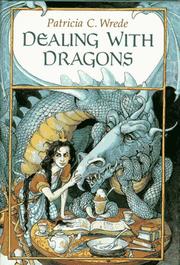
Dealing with Dragons
A princess who hates embroidery runs away to become the cook and librarian for a dragon, then has to outthink wizards, knights, and a plot against the dragon…
2,563-word summary · 11 min read
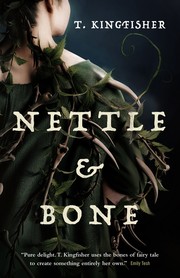
Nettle & Bone
Marra, a princess in a convent, leaves to save her abused sister, but first she must finish three impossible tasks: a bone dog, a nettle cloak, moonlight in a…
2,061-word summary · 9 min read

The Rose & the Dagger
Shahrzad is pulled from her Caliph husband and left in a desert camp of rebels, needing to break his curse and end a war before it ends her.
2,520-word summary · 11 min read
Stars Above: A Lunar Chronicles Collection
Nine Lunar Chronicles stories fill in the histories of Cinder, Wolf, Thorne, Cress, Winter, and Jacin, and end with a wedding after the war.
2,230-word summary · 10 min read
Daughter of the Moon Goddess
The daughter of Chang'e hides in the Celestial Court, trains as an archer, and risks everything to free her mother from the Emperor's punishment.
2,146-word summary · 10 min read

The Dark One
Winnie trades with Hook while Peter Pan turns cruel in Neverland.
2,596-word summary · 12 min read

A Touch of Malice
Engaged Hades and Persephone face gods who vote on their marriage.
2,562-word summary · 11 min read
Gleam
Captive Auren finds power in gold touch while Slade hunts her across kingdoms in Plated Prisoner book three.
2,073-word summary · 9 min read

Ariadne
A Cretan princess helps Theseus kill the Minotaur, is abandoned on Naxos, and rebuilds her life while her sister faces tragedy in Athens.
2,350-word summary · 10 min read
The Red Winter
In 1785 France, aging monster-slayer Sebastian Grave and his heart-eating demon return to hunt the Beast of Gevaudan as revolution brews.
2,578-word summary · 11 min read
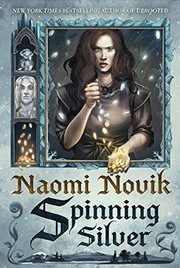
Spinning Silver
A moneylender's daughter says she can turn silver to gold, drawing a winter king, a plain duke's daughter, and a poor servant into one hard bargain.
2,813-word summary · 13 min read

Nonesuch
A London secretary finds real angels and a fascist plot to erase Churchill in the Blitz.
2,197-word summary · 10 min read
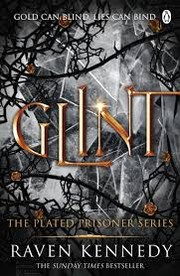
Glint
A gold-skinned captive of Midas falls to Fourth Kingdom troops and learns to fight with the ribbons she hid.
2,969-word summary · 13 min read
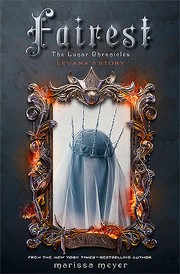
Fairest
Queen Levana's rise from scarred princess to Lunar ruler fills the gap between Cress and Winter.
2,983-word summary · 13 min read

Fables, Vol. 1: Legends in Exile
Exiled fairy tales hide in New York, and sheriff Bigby Wolf must solve Rose Red's bloody disappearance.
2,984-word summary · 13 min read

These Violent Delights
Ex lover gang heirs hunt a madness monster in 1927 Shanghai together.
2,122-word summary · 9 min read
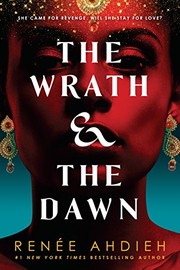
The Wrath and the Dawn
Shahrzad marries a king who executes each bride at dawn, hoping to stay alive through stories. A lush Arabian Nights retelling about grief, trust, and palace…
3,568-word summary · 16 min read

Beastly
Cursed by witch Kendra, cruel rich teen Kyle must find true love within two years while exiled in Brooklyn with Lindy and tutor Will.
2,967-word summary · 13 min read
A Curse So Dark and Lonely
Pulled from Washington DC to Emberfall, Harper meets cursed Prince Rhen, who relives his eighteenth autumn until someone falls for him.
2,677-word summary · 12 min read
Gild
A gold-skinned woman kept as Midas favored learns her cage is a bargain, then war drags her onto the road.
2,755-word summary · 12 min read

The Mists of Avalon
Morgaine tells Arthur story from Avalon side, where goddess worship fades before priests.
1,944-word summary · 9 min read
The Bear and the Nightingale
Wild girl Vasya sees household spirits in medieval Russia while a priest calls them demons.
1,907-word summary · 8 min read
Uprooted
The Dragon takes messy Agnieszka instead of perfect Kasia to his tower, and she must learn wild magic to face the corrupt Wood.
2,338-word summary · 10 min read

Neon Gods
Promised to Zeus, Persephone flees to Hades and trades fake dating for real choice in Olympus.
2,002-word summary · 9 min read
Winter
Scarred Princess Winter joins Cinder and her crew to stop Queen Levana's forced wedding and war between Luna and Earth.
3,179-word summary · 14 min read
Norse Mythology
Gaiman retells the Norse myths in order, from the creation of the world to Ragnarok, with Odin, Thor and Loki at the center.
4,647-word summary · 21 min read
Cress
Imprisoned hacker Cress joins Cinder Scarlet Wolf Thorne to stop Levana's wedding to Kai.
2,534-word summary · 11 min read
A Touch of Darkness
Persephone bargains with Hades in New Athens nightclub deal.
2,545-word summary · 11 min read