
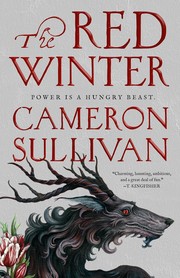
The Red Winter
2,578-word summary 11 min read 544 pages in the book
- First published
- 2026
- Publisher
- Tor Books
- Pages
- 544
- ISBN
- 9781250362766
Reading options
What's inside (8 sections)
I came to The Red Winter sideways, through the Beast of Gevaudan. Years ago I fell into the historical rabbit hole of the real creature that killed scores of people in south central France in the 1760s, and I have read every fictional version I could find since. Most of them treat the Beast as a puzzle to be solved. A big wolf, a hyena, a serial killer with teeth. Cameron Sullivan's debut novel, published by Tor Books in 2026 at 544 pages, does something richer. It accepts the Beast as real, or real enough, and asks what kind of person would spend centuries hunting such things, and what that hunting would cost him. Set in 1785, as the historical Beast's successor returns and France slides toward revolution, it follows Professor Sebastian Grave, a monster slayer with centuries of experience, and Sarmodel, the demon who lives inside him and takes payment in living hearts. It is historical fantasy with horror blood in its veins and a love story knotted through the middle. I had a loud, messy, excellent time with it.
The premise, as Tor presents it, runs like this. Twenty years ago Sebastian joined the hunt for the Beast and watched it slaughter its way through a long and bloody winter. It nearly killed him even with Sarmodel's help. Now word comes that the Beast has returned and the French countryside runs red again. Sebastian is recalled to the hunt by Antoine Avenel d'Ocerne, an estranged lover who shares a dark history with the Beast and a terrible secret with Sebastian. Drawn by the chance to finish the creature for good and by the promise of a reconciliation, Sebastian cannot refuse. But Gevaudan is not as he remembers, misery has driven the people to desperation, the French clergy has taken an inquisitorial interest in his activities, and the Beast seems poised to close its jaws around everything and drag the continent toward war. Behind all of it Sullivan lifts the veil on a hidden world running beneath known history, from Imperial Rome to Joan of Arc to Gilles de Rais to the first flickers of revolution.
A professor who digs up the dead
Sebastian Grave is a wonderful creation, and the book's first pages show why. The novel opens in eastern Piedmont in 1785 with Sebastian doing contract grave work at night. A dead girl named Cristina sits up as a ghost on her own tombstone and watches him cut open her corpse to find how she died. Her shade is beautiful, dark curly hair, deep eyes, wearing the same white smock he just sliced away. She wants to know who killed her. She blames a local hedge witch called White Marta and the evil eye. Sebastian examines the bruises on her neck, holds her corpse's hands against her throat, and shows her the truth. The marks match her own hands. There are scraps of skin under her own fingernails. She strangled herself without knowing it, after fetching a tooth from a plague era mass grave full of witch hunt victims for a fertility charm and bringing something angry home with her.
This sequence does a lot of efficient work. It establishes Sebastian's method. Contracts of Truth, freely given, paid for on completion in coin or in anima, the spiritual energy of the client. It shows his ethics. Cristina has only herself to pay with, and Sebastian accepts her funeral dress instead, over the furious objections of Sarmodel, who wants to eat her. And it establishes the central relationship of the book, because Sarmodel is not a voice in Sebastian's head. He projects himself in human form, here as a black haired boy of about ten with an exquisite aquiline nose, and bickers, schemes, and hungers right beside his host. Sebastian Grave of Larnaca, as the excerpt styles him, has need of good cloth in his line of work, and Cristina's dress will not be wasted. That dry practicality, set against a demon child licking his lips over a ghost, sets the book's tone in full. Gruesome, funny, oddly tender.
Sebastian himself rewards slow attention. He is centuries old, a veteran of monster work across Europe, and Sullivan writes his age as exhaustion rather than glamour. He has seen cures fail, villages empty, clients lie, colleagues burn. He keeps going because stopping would mean admitting the cost was for nothing. Professors in fantasy are often exposition machines. Sebastian exposits plenty, the book is dense with lore, but his knowledge always arrives flavored by regret. He knows which bones are dangerous because he has buried the people who touched them. That weariness makes him believable as someone who once survived the Beast's winter and fears going back.
The demon who eats hearts
Sarmodel deserves his own section because he steals every scene he enters. An indwelling demon who takes payment in living hearts sounds like pure horror furniture, and at times he is exactly that frightening. He regards humans the way a gourmand regards a menu. He sulks when denied Cristina. He keeps count of what he is owed. But Sullivan writes him as a genuine counterpart rather than a pet monster. He has opinions about Sebastian's sentimentality. He remembers things Sebastian has tried to forget. He is, in the ways that count, the most honest person in the book, since his appetites are declared upfront while everyone else hides theirs behind vestments or uniforms or love.
The mechanics of their bond unfold gradually, and I will keep the deepest specifics veiled, but the shape is worth describing. This is not possession as horror films stage it, with spinning heads and lost control. It is a long cohabitation, contractual and intimate, closer to a bad marriage neither party can leave. Sebastian draws on Sarmodel's strength and perception. Sarmodel draws on Sebastian's body and, more dangerously, his attachments. Each believes he is using the other. Both are right enough to keep the arrangement alive and wrong enough to keep it painful. Their dialogue crackles with the familiarity of people who have had the same argument for decades. Only last week, Sarmodel protests at one point, as if a demon's bookkeeping ran on household time. It is very funny until you remember what the ledger entries are.
What elevates Sarmodel above comic relief is that Sullivan ties his hunger to the book's larger questions. Hearts are not interchangeable fuel here. Taking one means something, costs something, marks both eater and eaten. As the hunt intensifies and Sebastian needs more of Sarmodel's power, the question of whose hearts will pay becomes a genuine moral engine. Sebastian's rule about consuming the client only as a last resort gets tested hard. I found these passages the most disturbing in the book, more than any Beast attack, because the violence is chosen rather than inflicted. A monster mauling a traveler is nature. A man deciding which heart his demon gets is a decision, and decisions stain.
Antoine and the unfinished past
If Sebastian and Sarmodel are the book's engine, Antoine Avenel d'Ocerne is its wound. The summons that pulls Sebastian back to Gevaudan comes from Antoine, an estranged lover with a shared dark history with the Beast and a terrible secret held in common with Sebastian. Sullivan parcels out that history carefully. Twenty years earlier something happened between these two during the first hunt, something involving the Beast, a choice, a cost. Neither man has recovered. Both have rehearsed the other's guilt in private for two decades. Now they must work together while pretending professionalism, and the pretense fails constantly.
I liked how adult this romance feels. These are not young men discovering desire. They are old antagonists discovering that desire survived everything they did to kill it. Their scenes together carry the awkwardness of former intimates who know each other's tells. A hand lifted, a subject changed too fast, a kindness offered in the exact register that used to mean forgiveness. Sullivan writes attraction between men who have seen each other at their worst, which is a harder and rarer thing than first love. The queer thread here is load bearing, not decorative. The secret they share and the history they survived are inseparable from who they were allowed to be together and what it cost.
Without spoiling the specifics, the secret concerns the first hunt's ending and what each man did to survive it. Sullivan structures reveals so that each answer reframes earlier scenes. A conversation you read as reconciliation plays differently once you know what is being forgiven. A tactical disagreement about the Beast reads differently once you know whose fault the last failure was. This is well managed mystery craft inside a big fantasy frame. Readers who track who knew what when will be rewarded. Readers who simply ride the emotional current will still feel the jolts, because the performances on the page carry the weight even before the facts land.
The love story also sharpens the book's stakes beyond survival. Sebastian can imagine dying in the hunt. He has nearly done it before. What he cannot face is losing Antoine again, or learning that the reconciliation he crossed France for was bait. That vulnerability gives the Beast plot its ache. Every tactical scene doubles as a relationship scene. Every plan to kill the creature is also a test of whether these two can trust each other with loaded weapons, literally and otherwise.
The Beast, the clergy, and a country about to burn
The Beast itself is handled with restraint that horror readers will appreciate. Sullivan understands that a monster explained is a monster diminished, so he rations full sightings. Victims found in red fields. Livestock gone. A winter that seems to arrive with teeth. Survivors who describe contradictory things, too big for a wolf, too clever for a beast, too deliberate for hunger alone. By the time Sebastian faces it directly, dread has compounded through absence. The confrontation lands because the book made you wait, and because waiting in Gevaudan in 1785 means watching ordinary life fray first.
That fraying is where the historical layer does its best work. France teeters on the edge of revolution, and Sullivan shows the pressure from ground level. Years of misery have driven the people to desperation. Bad harvests, taxes, seigneurs, rumors. A countryside that has bled for the Beast is also bleeding from every other wound of the old order. Sebastian arrives as one more armed outsider with strange methods, and the locals receive him accordingly. Some beg for help. Some see a sorcerer to blame. The clergy, scenting arcane activity and demonic presence, opens an inquisitorial eye, and churchmen in this book are not caricatures. They have reasons, texts, genuine fear of damnation for their flocks. Their attention complicates the hunt exactly when it can least afford complication.
Sullivan's boldest move is the hidden history running beneath all this. The book lifts the veil on a concealed world behind our own, reimagining European history from Imperial Rome through Joan of Arc and the madness of Gilles de Rais to the coming Revolution. This is the material that will divide readers. If you love lore dense fantasy where every legend has a secret chapter, these passages will thrill you. Joan's story retold through Sebastian's long memory carries real force. Gilles de Rais, history's notorious monster adjacent to Joan's myth, gets treatment that is queasy and thoughtful rather than exploitative. If you prefer your historical fantasy lean, you may find these digressions heavy. At 544 pages the book has room for them, but room is not the same as momentum, and a few middle chapters sag under the weight of centuries.
Blood, humor, and the question of bloat
Tone is where The Red Winter wins most decisively. Sullivan moves between registers with unusual confidence for a debut. Genuine horror, bodies opened, hearts counted, the Beast's red work, sits beside dry comedy, mostly Sebastian and Sarmodel sniping like an old couple, which sits beside sincere romantic ache. The transitions work because Sebastian's voice holds them. His narration treats horror practically, comedy wearily, love reluctantly, and the consistency of that worn sensibility lets the book swing wide without whiplash. passages of the Cristina episode, where a grieving ghost haggles over a dress while a demon child pouts, show the blend in miniature. I laughed, then felt bad for laughing, then realized the book wanted exactly that sequence.
The gore deserves a frank note. This is a bloody book. Hearts are currency, autopsies are procedure, battlefields are described without flinching. Readers with strong stomachs will take it as the cost of the premise. Readers who flinch should know the violence is rarely gratuitous. Sullivan almost always ties a wound to a choice or a revelation. The Cristina autopsy teaches method and mercy at once. Beast kills map the creature's intelligence. Even Sarmodel's feedings, the hardest scenes, function as moral accounting. Still, quantity is quantity, and 544 pages hold a lot of red. Know your tolerance.
My criticisms are the familiar ones for big debuts. The middle third carries simplification resistant subplots, clerical intrigue, village politics, lore excursions, that occasionally stall the hunt. A few reveals depend on characters withholding information for reasons that feel more structural than human. Antoine's secret in particular stays buried a beat or two past the point where a real person would have blurted it. And Sebastian's competence sometimes bends to plot need. A man this experienced missing a clue the reader caught can itch. None of this sank the book for me. The final hundred pages pay off most threads with genuine force, and the climactic hunt intercuts action, revelation, and choice in ways that justify the sprawl.
Who should brave this winter
This is a book for readers who like their fantasy bloody, funny, and romantic in the same chapter. Fans of historical horror will find the Gevaudan material respectful of the real legend's horror while pushing past it into myth. Readers who loved the demon companion dynamics of books like The Locked Tomb's cavaliers or the Bartimaeus books' bickering spirits will recognize the pleasure of Sebastian and Sarmodel, though Sullivan's version is crueler and sadder. Queer romance readers should know the relationship is central and maturely drawn, braided into horror and history rather than set beside them. History buffs get Rome, Joan, Gilles de Rais, and a Revolution glimpsed through monster smoke.
Newcomers should know this is the start of something, not a closed loop. Threads remain open, powers remain unexplained, and the ending, while delivering a real climax and real costs, clearly points onward. Readers who need every question answered may chafe. I found the openness earned. A book about centuries of unfinished business can hardly tie every knot in one winter.
I finished The Red Winter hungry in the exact way the cover copy promises, satisfied by this hunt and eager for the next. Sullivan writes action you can follow, lore you can chew, jokes that land in charnel houses, and two damaged men circling a love neither buried as deep as claimed. The Beast closes its jaws around Gevaudan, the clergy closes its books around Sebastian, and revolution gathers off page like weather. Through it all walks a professor with dirty hands and a demon with table manners, trying to finish what they started twenty years ago before the continent catches fire. Winter here is red, long, and worth entering.
FAQ
When was The Red Winter published?
Tor Books published it on February 24, 2026. The hardcover runs 544 pages and the ISBN is 9781250362766.
Who are the main characters?
Professor Sebastian Grave, his indwelling demon Sarmodel who takes payment in living hearts, and estranged lover Antoine Avenel d'Ocerne.
Is it part of a series?
It is a debut that points onward. The climax pays off this hunt but leaves powers unexplained and threads open for more.
Similar books
The Tale of the Body Thief
Lestat trades bodies with a psychic thief for one day of mortality and ends up trapped, sick, and hunting his own vampire body.
2,069-word summary · 9 min read
Chainsaw Man, Vol. 1: Dog and Chainsaw
A broke teenage devil hunter and his chainsaw dog get a second life, a government leash, and a fight that stops mid-swing in Fujimoto's horror comedy.
2,584-word summary · 11 min read
Locke & Key, Vol. 1: Welcome to Lovecraft
After their father is murdered, the Locke children move into a haunted family estate where keys unlock doors to ghosts, other places, and dangerous secrets.
2,019-word summary · 9 min read
House of Salt and Sorrows
Annaleigh Thaumas investigates her sister's death in a cursed island manor where the balls are illusions and the sea god is always listening.
2,025-word summary · 9 min read

Bitten
Elena Michaels is the world's only female werewolf, and keeping that world away from her human life in Toronto works fine until the Pack calls in a favor.
2,039-word summary · 9 min read
The Sandman, Vol. 2: The Doll's House
Rose Walker dreams open as Dream hunts his missing creations and the Corinthian.
2,338-word summary · 10 min read
Silver Borne
Mercy hides a Fae book while Samuel slips and the fae close in.
2,571-word summary · 11 min read
Cry Wolf
Omega Anna joins Charles to hunt a rogue werewolf in Montana.
2,463-word summary · 11 min read

Bone Crossed
Mercy faces vampire queen Marsilia after killing a vampire to save friends.
2,261-word summary · 10 min read

Anna Dressed in Blood
Ghost hunter Cas meets Anna, the ghost who kills back.
2,622-word summary · 12 min read

Rose Madder
After fourteen years of abuse, Rosie Daniels flees her cop husband and finds a painting that opens into a dangerous mythic world.
2,349-word summary · 10 min read
Horns
Accused of killing Merrin Williams, Ig Perrish wakes with horns that force strangers to confess their darkest sins.
2,264-word summary · 10 min read
The Witching Hour
A San Francisco surgeon inherits a haunted New Orleans house where a spirit has courted her witches for centuries, until a Christmas Eve birth gives it living…
2,953-word summary · 13 min read

The Talisman
Twelve-year-old Jack Sawyer flips between America and the Territories to find a Talisman that can save his dying mother.
2,050-word summary · 9 min read
NOS4A2
Vic McQueen's bike finds lost things through a bridge, pitting her against Manx's Rolls-Royce ride to Christmasland.
2,060-word summary · 9 min read
Iron Kissed
Mercy repays Zee by hunting a fae killer, clears his name, and finally chooses between Adam and Samuel.
2,944-word summary · 13 min read
Gallant
Mute Olivia Prior returns to Gallant manor where ghouls walk and a shadow Recommends.
2,081-word summary · 9 min read
Forever
Grace turns wolf, Sam scrambles for a cure, and Mercy Falls votes to hunt the pack in trilogy end.
2,217-word summary · 10 min read

Dream Country
Four Sandman shorts on muses, cats, Shakespeare, and a veiled heroine.
2,001-word summary · 9 min read
Blood Bound
Coyote mechanic Mercy Thompson stands with vampire friend Stefan against a demon driven rival while pack ties strain.
2,636-word summary · 12 min read
Something Wicked This Way Comes
Two boyhood friends meet a late October carnival that feeds on secret wishes, while Will's father learns how to fight it.
2,869-word summary · 13 min read
Nonesuch
A London secretary finds real angels and a fascist plot to erase Churchill in the Blitz.
2,197-word summary · 10 min read
Lady Tremaine
A widowed stepmother fights for her daughters when a royal ball hides a dark secret.
2,023-word summary · 9 min read
Guilty Pleasures
Animator Anita hunts a vampire killer while Jean-Claude pulls her close.
2,136-word summary · 9 min read

These Violent Delights
Ex lover gang heirs hunt a madness monster in 1927 Shanghai together.
2,122-word summary · 9 min read
Song of Susannah
Mia takes Susannah to 1999 New York to bear a chap while Roland meets his author in Maine.
2,051-word summary · 9 min read
Library of Souls
Jacob must use hollows to free ymbrynes from a soul jar fortress.
1,989-word summary · 9 min read
Insomnia
Widowed Ralph stops sleeping in Derry and sees small doctors with scissors deciding who lives and dies.
3,605-word summary · 16 min read
The Dark Tower
Roland and his ka-tet storm the Breakers prison and cross harsh lands toward the Tower, where Roland must face what waits at the top and learn the price of his…
2,897-word summary · 13 min read

Wolves of the Calla
Roland and his ka tet defend a farming town from robotic Wolves while Father Callahan offers a deadly magic ball.
2,331-word summary · 10 min read