
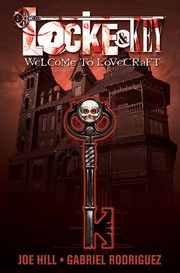
Locke & Key, Vol. 1: Welcome to Lovecraft
2,019-word summary 9 min read 158 pages in the book
- First published
- 2008
- Publisher
- IDW Publishing
- Pages
- 158
- ISBN
- 9781600102370
- Series
- Locke & Key (#1)
Reading options
What's inside (2 sections)
Locke & Key is a comic book series written by Joe Hill and drawn by Gabriel Rodríguez. The first volume, Welcome to Lovecraft, collects the opening six issues. It was published by IDW in 2008, and it is 158 pages of grief, magic, and very bad decisions. I came to it through the Netflix adaptation, which is a different animal. The comic is darker, stranger, and more willing to hurt its characters. It is also one of the best horror comics of the last twenty years, and this first volume is a strong introduction to the world.
The story begins in 1775, in a sea cave beneath a house in Massachusetts. A group of rebels discovers a door to another dimension, a place filled with demons. The demons can possess people through touch. One of the rebels, a young smith named Benjamin Locke, forges a set of keys from the demonic metal left behind when the creatures are forced back through the door. The most important key is the Omega Key, which seals the door. The house above the cave becomes Keyhouse, and the keys become the Locke family's inheritance.
Then the book jumps to the present. The Locke family is on vacation in California. Tyler, the oldest son, is angry at his father, Rendell. Kinsey, the middle child, is trying to disappear. Bode, the youngest, is curious about everything. Their mother, Nina, is trying to hold the family together. Rendell is a guidance counselor at a school in San Francisco. One of his students is Sam Lesser, a quiet, troubled boy who has been abused by his parents. Sam and another man, Al Grubb, arrive at the vacation house with guns. They want the Anywhere Key and the Omega Key. Rendell refuses. Sam shoots him.
The murder is sudden and brutal. Tyler witnesses it. Nina attacks Grubb with an axe. Sam is arrested, and the family is left to pick up the pieces. They move across the country to Keyhouse, the ancestral home in Lovecraft, Massachusetts. Rendell's younger brother, Duncan, lives there. The house is enormous, drafty, and full of locked doors. It is also full of secrets. Bode is the first to find one.
He discovers a key that opens a door in the wellhouse. When he walks through it, his spirit leaves his body. He becomes a ghost, able to roam the grounds while his body lies still. At first, it is a game. Bode thinks he has found a cool trick. Then he meets the thing in the well.
The thing calls itself Dodge. She appears to Bode as a woman with dark hair, trapped at the bottom of the well. She tells him that she is his echo, a reflection of himself. She asks him for a mirror and scissors. She asks him about the keys. Bode is lonely and curious, and he keeps coming back. He does not know that Dodge is the spirit of Lucas Caravaggio, a boy who was possessed by a demon in 1988. He does not know that Dodge was trapped in the well after Rendell killed him. He does not know that Dodge has been whispering to Sam Lesser through reflective surfaces, promising to free him if he brings her the keys.
That is the engine of the plot. Sam escapes from the juvenile detention facility. He makes his way across the country, leaving a trail of bodies behind him. The Locke family is warned that he is coming, but they do not know what he wants. Nina starts drinking. Tyler blames himself for his father's death, because he had told Sam, in a moment of anger, that he wished his father were dead. Kinsey tries to fit in at school. Bode keeps visiting the well.
The volume builds to a home invasion. Sam arrives at Keyhouse. He attacks Kinsey in the garden. He locks Nina and Duncan in the wine cellar. He corners Tyler and pushes him through the ghost door, which makes Tyler's body go limp. Sam thinks he has killed him. Bode, desperate to save his family, gives the Anywhere Key to Dodge. Dodge climbs out of the well and uses the Gender Key to transform into a man. He takes the name Zack Wells.
Tyler comes back to his body and fights Sam. Kinsey wakes up and shoots Sam in the neck. Sam runs, and Dodge finds him in the hallway. Dodge snaps his neck and shoves his body through the ghost door. Then Dodge uses the Anywhere Key to escape. He shows up at the house of Coach Ellie Whedon, a woman who went to school with Rendell and Lucas. He demands to be let in. He reminds her that he killed her mother for her, as a favor. The volume ends with the Locke family alive, but not safe. Dodge is free, and he is living in Lovecraft under a new face.
The epilogue takes place a few weeks later. Kinsey is back at school. A new student arrives. His name is Zack Wells, and he is charming, good-looking, and interested in Kinsey. Bode is suspicious. He does not know why, but he does not trust the new boy. The last page shows Bode finding another key in the pond. It is a quiet, ominous ending. The horror is not over. It has just changed shape.
The 1988 backstory is the key to everything, even though the volume only gives us fragments of it. Rendell Locke and his friends opened the black door when they were teenagers. Lucas Caravaggio was possessed by a demon. Rendell killed him to stop him, but the demon survived in the wellhouse. Ellie Whedon was one of the friends who was there that night, which is why Dodge goes to her house at the end. She is not a random adult. She is part of the original sin that the Locke family has been paying for ever since. The volume does not explain all of this directly. It lets the reader piece it together from photographs, conversations, and the things Dodge says. That is good horror storytelling. The threat is scarier when you do not fully understand it.
Sam Lesser is another example of the book's interest in damage. He is not a monster in the ordinary sense. He is a teenager who was abused by his parents and ignored by everyone except Rendell. Dodge found him when he was vulnerable, and she used him. The comic does not excuse Sam's violence, but it shows how a person like Sam can be made. The scene where Rendell tries to help him, and Sam kills him anyway, is tragic because it is also a failure of the system. Rendell was a guidance counselor. He was supposed to be able to help. He could not. That is the horror underneath the supernatural horror.
The volume also does a good job of showing how grief makes people unreliable. Nina drinks because she cannot cope. Tyler blames himself because he said something cruel to Sam. Kinsey tries to become invisible because she does not want to be seen as the girl whose father was murdered. Bode retreats into a fantasy world because the real world is too scary. Each of them is vulnerable in a different way, and Dodge exploits that. The keys are tempting because they offer an escape from grief. That is why the children keep using them, even when they know they should not. The book understands that magic is not just a tool. It is a way of avoiding pain.
The Netflix adaptation changes a lot of this. It softens some of the violence, ages up the characters, and changes the rules of the keys. It also makes the family more functional and the villains more sympathetic. The comic is bleaker. The Locke family is more damaged. The violence is more visceral. The ending is less hopeful. I think the comic is the stronger version, but the show is a good entry point for people who do not read comics. If you start with the show, the book will still surprise you. If you start with the book, the show will feel like a gentler retelling.
The pacing is relentless. The volume has six issues to work with, and it uses every page. The murder happens early. The move happens quickly. The keys are introduced one by one, each with a small demonstration and a larger consequence. The home invasion is stretched across the final issues, and it is genuinely tense. By the time Sam arrives at Keyhouse, the reader knows enough about the house to be afraid of what he might find. The ending is a cliffhanger, but it is a good one. It does not cheat. It opens a door and lets the reader see just enough of what is on the other side.
What makes Welcome to Lovecraft work is the way it combines family drama with supernatural horror. The Locke family is not just a group of people being chased by a monster. They are a family trying to survive a tragedy. Tyler is carrying guilt. Kinsey is carrying fear. Bode is carrying loneliness. Nina is carrying grief. The keys give them power, but they also give them ways to hurt each other. The book understands that the most dangerous thing in a haunted house is not the ghost. It is the secrets the family keeps from itself.
The keys are a great invention. Each one does something specific, and each one reveals something about the person who uses it. The Ghost Key lets Bode escape his body, which is exactly what a lonely kid would want. The Anywhere Key lets the user travel anywhere they can picture, which is a fantasy about escape. The Gender Key lets Dodge become someone else, which is a fantasy about hiding. The keys are not just plot devices. They are metaphors, and Hill uses them with care.
The art by Gabriel Rodríguez is excellent. He draws the ordinary world with the same precision as the supernatural world. Keyhouse feels like a real place, with dust and shadows and rooms that go on too long. The demons are frightening without being overdesigned. The violence is graphic, but it is not gratuitous. Rodríguez knows how to make a page turn feel like a punch. The color work by Jay Fotos is muted and cold, which fits the mood. The book looks like a horror story, and it reads like one.
The weaknesses are mostly structural. The volume is short, and it ends on a cliffhanger. Some of the characters are sketched rather than developed, especially Nina and Duncan. Sam Lesser's backstory is tragic, but the book does not give him enough time to become more than a symbol of the damage that adults do to children. The 1775 prologue is necessary for the mythology, but it is also a lot of exposition before the story starts. And the violence is intense. This is not a comic for younger readers, and it earns its mature rating.
Still, Welcome to Lovecraft is a strong opening. It is scary, sad, and smart. It takes a familiar premise, a family moves into a haunted house, and makes it feel new. It is also a story about inheritance. The Locke children inherit a house, a set of keys, and a history of violence. They do not get to choose what they inherit. They only get to choose what they do with it. That is the question the rest of the series will answer, and this volume sets it up beautifully.
If you are new to Locke & Key, start here. If you have seen the show, read the comic. The show softens some of the darkness. The comic does not. It is a better story for it. It is also a reminder that Joe Hill is not just Stephen King's son. He is a writer with his own voice, and that voice is very good at making the ordinary feel unsafe.
FAQ
Do I need to read Locke & Key in order?
Yes. Welcome to Lovecraft is the first volume and introduces the Locke family, Keyhouse, and the rules of the keys.
Is Locke & Key appropriate for younger readers?
No. The series contains graphic violence, murder, and disturbing imagery, and it is intended for mature readers.
Who is Dodge?
Dodge is the spirit of Lucas Caravaggio, a boy who was possessed by a demon in 1988 and trapped in the wellhouse after Rendell killed him.
Similar books
More from Locke & Key first, then related titles.
Horns
Accused of killing Merrin Williams, Ig Perrish wakes with horns that force strangers to confess their darkest sins.
2,264-word summary · 10 min read
NOS4A2
Vic McQueen's bike finds lost things through a bridge, pitting her against Manx's Rolls-Royce ride to Christmasland.
2,060-word summary · 9 min read
The Tale of the Body Thief
Lestat trades bodies with a psychic thief for one day of mortality and ends up trapped, sick, and hunting his own vampire body.
2,069-word summary · 9 min read
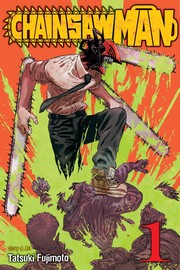
Chainsaw Man, Vol. 1: Dog and Chainsaw
A broke teenage devil hunter and his chainsaw dog get a second life, a government leash, and a fight that stops mid-swing in Fujimoto's horror comedy.
2,584-word summary · 11 min read
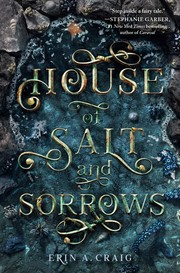
House of Salt and Sorrows
Annaleigh Thaumas investigates her sister's death in a cursed island manor where the balls are illusions and the sea god is always listening.
2,025-word summary · 9 min read
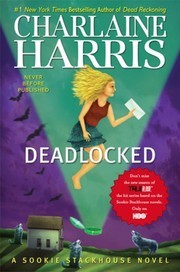
Deadlocked
A dead woman on Eric's lawn starts a murder investigation, a vampire queen wants Eric as her consort, and the fairies in Sookie's life close in.
2,885-word summary · 13 min read
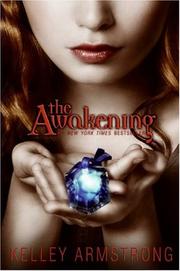
The Awakening
Chloe Saunders flees Lyle House with Derek, Simon and friends while her necromancy wakes fully and the Edison Group hunts them.
2,428-word summary · 11 min read
The Reckoning
Necromancer Chloe Saunders and her gifted friends raid Edison labs in the Darkest Powers finale, chasing rescue and freedom together as hidden powers break…
2,955-word summary · 13 min read
The Talisman
Twelve-year-old Jack Sawyer flips between America and the Territories to find a Talisman that can save his dying mother.
2,050-word summary · 9 min read
Later
Boy Jamie Conklin sees dead people who must answer truthfully, pulling him into NYPD cases and a drug crew's greed.
2,009-word summary · 9 min read
Dream Country
Four Sandman shorts on muses, cats, Shakespeare, and a veiled heroine.
2,001-word summary · 9 min read
Dead Reckoning
Sookie confronts the firebombing of Merlotte's, Sandra Pelt's revenge, and a vampire power struggle while questioning her future with Eric.
2,391-word summary · 11 min read
Guilty Pleasures
Animator Anita hunts a vampire killer while Jean-Claude pulls her close.
2,136-word summary · 9 min read
Fables, Vol. 1: Legends in Exile
Exiled fairy tales hide in New York, and sheriff Bigby Wolf must solve Rose Red's bloody disappearance.
2,984-word summary · 13 min read
Black Butler, Vol. 1
A twelve year old earl and his demon butler keep a Victorian manor running by day and handle dark work for the Queen.
2,877-word summary · 13 min read
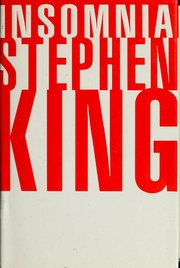
Insomnia
Widowed Ralph stops sleeping in Derry and sees small doctors with scissors deciding who lives and dies.
3,605-word summary · 16 min read
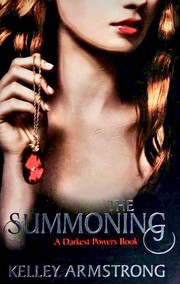
The Summoning
Chloe Saunders sees ghosts and lands in Lyle House, a group home for troubled teens with hidden powers and a secret tied to the Edison Group.
2,579-word summary · 11 min read
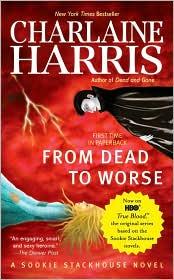
From Dead to Worse
Sookie mediates a Were war and vampire takeover while learning about her fairy blood.
2,533-word summary · 11 min read
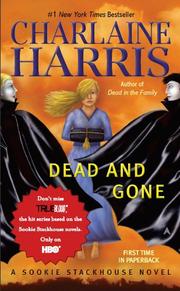
Dead and Gone
Weres reveal themselves as Sookie faces a murder, a Fellowship trap, and a brutal fairy war.
2,798-word summary · 12 min read
Definitely Dead
Sookie heads to New Orleans for her dead cousin estate and finds witches, vamps, and family curses.
2,027-word summary · 9 min read
Club Dead
Sookie hunts missing Bill in Jackson, posing with a werewolf at vampire Club Dead.
2,324-word summary · 10 min read
Preludes & Nocturnes
Dream escapes a 70 year prison, hunts his lost tools, faces Hell, and learns care from Death.
2,047-word summary · 9 min read
The Outsider
Coach Terry Maitland's DNA and witnesses point to an impossible murder, until Ralph Anderson and Holly Gibney trace it to El Cuco.
2,586-word summary · 11 min read
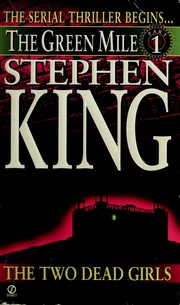
The Green Mile
Guard Paul Edgecombe watches John Coffey show healing miracles on death row in 1932 Louisiana.
2,549-word summary · 11 min read
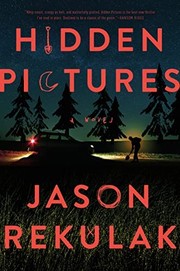
Hidden Pictures
Nanny Mallory sees Teddy drawings predict a murder in New Jersey.
2,332-word summary · 10 min read
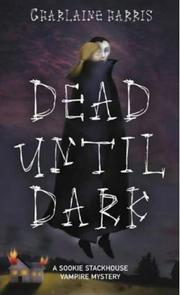
Dead Until Dark
Sookie Stackhouse, a telepathic waitress in Bon Temps, falls for vampire Bill Compton as local murders close in.
2,751-word summary · 12 min read
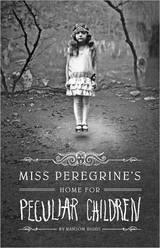
Miss Peregrine's Home for Peculiar Children
Jacob Portman finds his grandfather dead in the woods, follows a cryptic letter to a ruined orphanage in Wales, and meets children living inside a repeating…
2,331-word summary · 10 min read
Heart-Shaped Box
A washed-up rock star buys a haunted suit online and must face the vengeful ghost attached to it.
2,980-word summary · 13 min read
What Moves the Dead
Alex Easton arrives at the Usher house to find Madeline dying, the tarn full of fungus, and the local hares refusing to stay dead.
2,586-word summary · 11 min read
The Only Good Indians
Four Blackfeet men who killed a pregnant elk are hunted by her spirit a decade later, and the only person who can end the cycle is a teenage girl who was not…
2,010-word summary · 9 min read