
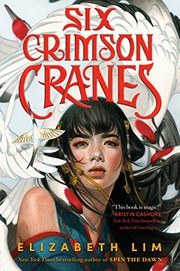
Six Crimson Cranes
2,214-word summary 10 min read 464 pages in the book
- First published
- 2021
- Publisher
- Knopf Books for Young Readers
- Pages
- 464
- ISBN
- 9780593300916
- Series
- Six Crimson Cranes (#1)
Reading options
What's inside (8 sections)
I picked this one up because a friend said it was the book for anyone who liked fairy tales with teeth. She was right, though not in the way I expected. I thought I was getting a gentle retelling with a clever heroine and a handsome almost-fiancé. What I got was a story about a girl who cannot speak without possibly killing someone she loves, and a stepmother whose cruelty turns out to have a long and sad history. Six Crimson Cranes was first published in 2021 by Knopf Books for Young Readers. At 464 pages it is a substantial first volume, and it opens a duology that Lim later continued with The Dragon's Promise. The book draws on The Wild Swans and on East Asian folklore, and it wears neither influence lightly.
A lake, a crane, and a dragon
Shiori'anma is the only princess of Kiata, and she has a secret she has kept since childhood. Forbidden magic runs through her veins. She hides it well enough most days, but she has one outlet. She has made a paper crane named Kiki and given it life, and the little bird follows her around like a guilty conscience with wings. Her brother Hasho finds Kiki, the bird bolts, and Shiori chases it into the Sacred Lake. She nearly drowns. A dragon pulls her out, and by the time she wakes the world has moved on without her.
She has missed her own betrothal ceremony. Her father, Emperor Hanriyu, is furious and orders her to embroider an apology cloth under the watchful eye of her stepmother, Raikama. That punishment sounds mild until you know Raikama. Shiori follows her into a wooded place and sees a broken orb glowing inside her chest, which is how she learns that her stepmother is a sorceress. Raikama tries to wipe the memory from Shiori's head. Shiori fights it, and that resistance sets everything else in motion.
The opening moves fast and it does not waste much time on court life. Lim gives us just enough of Kiata to understand what Shiori stands to lose. She is a princess who would rather not be one, facing a marriage she never chose, with a mother who is gone and a father who cares more about protocol than fear. The dragon who saves her is not a rescuer in the usual sense. He is curious, irritable, and interested in what she can do with the magic she keeps buried.
That dragon, Seryu, becomes one of the more unusual helpers in the book. He meets her again at a summer festival while wearing a mask, teaches her small pieces of forbidden magic, and makes a wager with her that neither of them treats lightly. He is a prince among dragons and a creature with his own agenda, and the push and pull between them gives the early pages a spark. When he leaves, he leaves something of himself behind, which matters more than I understood at the time. Shiori's power is not a gift she can simply switch on. It has to be coaxed, and every use of it seems to draw attention from someone larger and older.
The walnut bowl and six cranes
The cruellest idea in the book arrives early. After Shiori tells her brothers what she saw, Raikama turns all six of them into cranes with crimson crowns. Then she puts a walnut bowl on Shiori's head and gives it a command. Every word Shiori speaks will kill one of her brothers. She is banished to a remote island in the Far North, alone, voiceless, and responsible for six birds that can only be human after dark.
That is the engine of the novel, and it is a strong one. Speech becomes a resource she has to budget. She cannot call for help, cannot answer a question, cannot even scream without risking a life. She learns to communicate through Kiki, who flaps and taps and understands her without words. She writes at one point and finds the curse blocks that too. When she tests it by speaking on the island, a bird drops, and the horror of what she carries becomes real in a way that no explanation could manage.
The cranes are not props. They become human again at night, and they argue, tease, and plan with her. Hasho, the brother closest to her, is the one she trusts most. They tell her what they have learned from above the palace. Raikama has a dragon pearl, and the curse can be broken only if Shiori steals the pearl and speaks Raikama's true name. Kiata is also at war with A'landi, and an enchanter known as the Wolf is moving pieces behind the fighting. The personal curse and the political plot start to braid together here, which is where the book finds its stride.
Lina at the Sparrow Inn
On the island Shiori is found by villagers who fear the bowl on her head and the silence that comes with it. She goes hungry for days. When she tries to steal a boat, Mrs. Dainan catches her and puts her to work at the Sparrow Inn instead, giving her the name Lina. That name is her armor for a long stretch of the book. She cooks, using her mother's soup recipe, and she listens. A sentinel comes through with a letter about a plot against the royal family, and she finds her own lost slipper in his room. Then Takkan arrives.
I liked the inn section more on a second look than I did while reading it. The soup is the point. Shiori cannot say who she is, so she feeds people the way her mother taught her, and the recipe becomes a kind of signature that Takkan recognizes before he sees her face. It is a clever solution to the problem of a heroine who cannot introduce herself. The food scenes also give the book a domestic floor to stand on amid all the curses. She measures, stirs, and tastes, and for a few pages she is a cook rather than an exiled princess. That ordinary work is what keeps her steady enough to keep searching for her brothers.
Takkan is Lord Bushian's son, the boy she was meant to marry at the ceremony she missed. She recognizes him at once and decides not to reveal herself. That choice frustrated me a little, because she has good reasons and the book knows it. She is ruined, cursed, and wanted in connection with a missing princess. Telling the truth could put him in danger. So she stays Lina, serves him, and watches him from a distance while she builds a plan.
She eventually sails south, is thrown into a waterfall, and is rescued by her own brothers in crane form. The reunion at night is one of the warmer scenes in the book. They are birds by day and people by firelight, and they have to keep their meetings short. From there they travel to Mount Rayuna to gather starstroke, a plant that can be spun into a net strong enough to hold a dragon pearl. Harvesting it hurts her badly. Seryu, the dragon prince of the Easterly Seas, warns her to leave before his grandfather notices. The mountain erupts, the Dragon King attacks, and the brothers get her out. She spends the next stretch turning starstroke into thread with her hands.
A kitchen at Castle Bushian
Sentinels capture Shiori and take her to Castle Bushian, where Lady Bushian decides the silent girl belongs in the kitchen. She is given a cold cellar to sleep in and uses it as a workshop for the net. This is the part of the book that dragged for me. Lim spends a long time on disguised service, cold rooms, and the small politics of a kitchen. Some of it is good. Shiori stitches a wound on a boy and later learns it was Takkan. He tastes her soup and knows something about her before he knows her face. He invites her to breakfast, gives her a sketchbook, and treats her as a guest rather than a servant. His sister Megari is kind in a way that makes the castle feel less hostile.
The trouble is repetition. Shiori is Lina, people underestimate Lina, Lina proves herself with food or quiet competence, and then someone gets suspicious. It works two or three times. Past that I found myself checking how many pages were left. The romance is also extremely slow. Takkan and Shiori have a history neither of them can say out loud, and the book holds back even when both of them clearly know who the other is. Readers who want a swift payoff will be impatient here. Readers who like a slow burn may find the restraint honest, because a girl who cannot speak cannot flirt her way into a confession.
There is a real threat under the kitchen scenes. A sentinel is poisoned, and Shiori suspects a hostile young woman named Zairena. The truth is that Zairena is Guiya, a former maid using illusion magic to wear another woman's face. Guiya is working with the Wolf, who wants Shiori's blood magic to free demons trapped in the Holy Mountains. That reveal gives the middle chapters a sharper edge, and it makes the court intrigue feel like more than decoration.
Starstroke and a name she does not know
The winter festival is where the strands come together. Shiori is accused of being a demon and sentenced to burn. Her brothers and Kiki get her free, but Guiya uses a net to pull the pearl fragment from Shiori's heart, and the fire surges. Takkan fights a man named Hasege. An arrow is aimed at him, and Shiori screams a warning. The bowl shatters, and the fire takes her.
What follows changes the meaning of the bowl. It was not only a punishment. It was a shield, and with it gone she is exposed. Her voice comes back, which should be a victory, but the cost is immediate. She learns that Takkan knew she was Princess Shiori all along and said nothing, which is both a relief and a small betrayal. Guiya dies. Lord Yuji's soldiers take her brothers prisoner. The Wolf, who has been bound to Yuji, kills him and grabs Shiori's satchel with the starstroke net and the pearl fragment. He drags her into the Holy Mountains.
Inside, she uses a red thread to find her way through illusions. Raikama appears and seals the mountain, and she is dying. This is where the stepmother's story finally opens. The pearl belonged to Raikama's sister Vanna, and it twisted her wishes until they turned poisonous. Raikama's true name is Channari. Shiori speaks it over the pearl, and the brothers are freed. Raikama dies, and Shiori and her brothers hold a small ceremony for her. It is a surprising note of grace after so much harm, and the book earns part of it.
Shiori then decides to return the pearl to the Dragon King, as Raikama asked, and she leaves with Seryu. Behind them the Wolf uses her blood to crack the mountain and free the demons. That last move is plainly a setup for the sequel, and it works as a hook even though it leaves this volume unresolved.
What worked, what dragged
The best thing here is the cost of speech. Lim takes a fairy tale rule and treats it as a real constraint instead of a decoration. Shiori has to think before every sentence, and the people around her misread her silence in different ways. Some think she is mute. Some think she is dangerous. The theme of identity rebuilt from nothing runs through the disguise, the name Lina, and the sketches Takkan gives her. The paper cranes matter too. Kiki is a companion, a conscience, and a reminder that magic made in secret still has a life of its own.
Raikama is more interesting than the stepmother archetype she starts as, but the material arrives too late. For most of the book she is a source of cruel orders, and then in the final chapters we are asked to accept that she was a victim of her sister's pearl. I believed it, but I wanted more breadcrumbs along the way. The bowl reveal has a similar problem. It reframes the whole curse, and it is clever, but it lands like a twist the author kept in a drawer until the last act. The political plot with A'landi, Yuji, and the Wolf is also thin until the climax, when it suddenly becomes the reason for everything.
I would hand this to a reader who likes folklore mixed into fantasy and who is patient with a slow middle. I would warn them that it ends mid story. The Dragon's Promise exists for a reason, and stopping here will feel unfinished. I would also warn them that the violence is real even when the setting is enchanted. Shiori's restraint is not a quaint trait. It is how she keeps six people alive, and when she finally uses her voice the book makes you feel the weight of it. That is the moment I remembered after closing the page.
FAQ
Is Six Crimson Cranes a standalone novel?
No. It is the first book in the Six Crimson Cranes duology and ends with an unresolved threat that The Dragon's Promise continues.
Which fairy tale does the book draw on?
Lim blends The Wild Swans with East Asian folklore, especially in the crane curse and the magic tied to dragons.
When was Six Crimson Cranes published?
It was published in 2021 by Knopf Books for Young Readers. The hardcover runs 464 pages with ISBN 9780593300916.
Similar books
More from Six Crimson Cranes first, then related titles.

Beauty: A Retelling of the Story of Beauty and the Beast
Robin McKinley's debut retells Beauty and the Beast through a plain, book-loving girl whose nightly refusals of the Beast's proposals slowly become something…
2,100-word summary · 9 min read

The Rose & the Dagger
Shahrzad is pulled from her Caliph husband and left in a desert camp of rebels, needing to break his curse and end a war before it ends her.
2,520-word summary · 11 min read
Wild Magic
A thirteen-year-old orphan in the kingdom of Tortall learns to live with the gift of speaking to animals, and discovers that the creatures she loves are not…
2,056-word summary · 9 min read
The Girl of Fire and Thorns
Rae Carson's debut follows Elisa, an insecure princess born with a godstone in her navel, who is married to a foreign king and must grow into the leader a…
2,331-word summary · 10 min read
Oathbound
Bree Matthews has exiled herself from the Legendborn Order to protect the people she loves, but an unbreakable bargain with a shapeshifting demon has bound her…
2,751-word summary · 12 min read
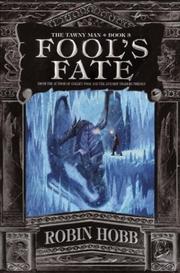
Fool's Fate
Prince Dutiful must kill a dragon to secure his betrothal, and FitzChivalry Farseer is caught between the Fool and Chade over Icefyre's fate.
2,247-word summary · 10 min read

Cinderella Is Dead
Two centuries after Cinderella, a Black teenager in love with another girl flees her kingdom's forced marriage ball.
2,250-word summary · 10 min read

Lioness Rampant
Alanna searches for the Dominion Jewel with the Shang Dragon, then returns to Tortall to face Duke Roger at Jonathan's coronation.
2,478-word summary · 11 min read
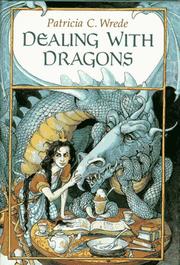
Dealing with Dragons
A princess who hates embroidery runs away to become the cook and librarian for a dragon, then has to outthink wizards, knights, and a plot against the dragon…
2,563-word summary · 11 min read
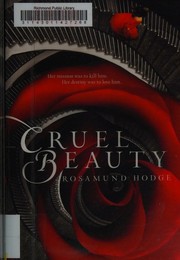
Cruel Beauty
A girl raised to kill the demon prince who rules her cursed land instead falls in love with him, in a retelling that mixes Beauty and the Beast with Bluebeard…
2,669-word summary · 12 min read
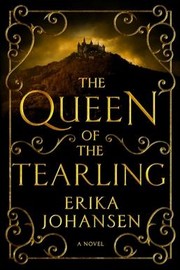
The Queen of the Tearling
Nineteen-year-old Kelsea leaves the woods to take her throne, ends a shipment of human captives, and draws the Red Queen's revenge.
2,357-word summary · 10 min read
Three Dark Crowns
Three triplet queens must kill each other for the crown, but love and gifts get in the way.
2,134-word summary · 9 min read
Bitterblue
Eighteen-year-old Queen Bitterblue sneaks out to learn why Monsea still suffers after Leck, facing court lies, ciphers, and trials in Cashore's rich third…
2,686-word summary · 12 min read
The Shadows Between Us
Alessandra plans to woo the Shadow King, marry him, and kill him for his throne, then finds someone else wants him dead first.
2,571-word summary · 11 min read

Heartless
Cath Pinkerton wants a bakery with Mary Ann, not a crown, until secret love for Jest and Jabberwock attacks pull her toward becoming the Queen of Hearts.
2,968-word summary · 13 min read
Inheritance
Eragon and Saphira march on Uru'baen to end Galbatorix, with hidden hearts and hard goodbyes.
3,160-word summary · 14 min read
Brisingr
Eragon rescues Katrina, backs a dwarf king, and earns a burning sword.
2,214-word summary · 10 min read
Eldest
Eragon trains with Oromis in Ellesmera while Roran defends Carvahall and Nasuada leads the Varden toward war.
2,652-word summary · 12 min read
Eragon
Paolini's Eragon retold: a farm boy, a blue stone, Saphira the dragon, and the road to the Varden.
1,996-word summary · 9 min read
The Demon King
A thief steals an amulet once owned by a legendary sorcerer, while a princess flees a forced marriage in the first volume of Cinda Williams Chima's high…
2,371-word summary · 11 min read
Wings
A homeschooled fifteen-year-old grows a blue flower from her back and learns she is a faerie sent to guard a hidden gate. Pike's debut makes plant lore feel…
2,506-word summary · 11 min read
The Woman Who Rides Like a Man
Newly knighted, Alanna heads south into Tortall's desert, where a broken sword and a dead shaman leave her responsible for a rebel tribe and three Gifted…
2,894-word summary · 13 min read
The Unicorn Hunters
Arden trades Russian folklore for fifteenth-century Brittany in a standalone about a duchess, a forced marriage, and a unicorn hunt that hides a secret wedding.
2,559-word summary · 11 min read
The Sorceress
Flamel takes the twins to London to find Gilgamesh, while Perenelle fights for her life on Alcatraz and an older threat wakes.
2,684-word summary · 12 min read

The River Has Roots
A fairy-tale novella in which a village on the edge of Faerie, a river that turns a girl into a swan and a harp that sings an accusation retell The Bonny Swans.
2,025-word summary · 9 min read
The Heart of Betrayal
Held captive in Venda, Lia must survive the Komizar's scrutiny while Rafe hides his identity and Kaden, the assassin who spared her, risks everything to keep…
2,702-word summary · 12 min read
The Golden Enclaves
The Scholomance trilogy closes as El Higgins hunts the monsters beneath every enclave, tries to reach the boy trapped inside one, and learns what her world's…
2,564-word summary · 11 min read
The Everlasting
A broken scholar is sent into the past to live the legend of Sir Una Everlasting, only to find that the story demands her death and that he is writing the lie.
2,464-word summary · 11 min read

The Darkest Part of the Forest
In a town built around a sleeping horned boy in a glass coffin, a girl discovers she has been spending her nights as a faerie king's knight and remembers none…
2,012-word summary · 9 min read
Spark of the Everflame
A village healer stops taking the powder that keeps her strange powers quiet. After a dying king names her his heir, Diem Bellator faces a choice between a…
2,293-word summary · 10 min read