
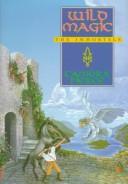
Wild Magic
2,056-word summary 9 min read 260 pages in the book
- First published
- 1992
- Publisher
- Simon & Schuster / Atheneum Books
- Pages
- 260
- ISBN
- 9780689317613
- Series
- The Immortals (#1)
Reading options
What's inside (8 sections)
A girl with a pony at a fair
The book opens at the great fair held every year at the end of March in Cria, the capital of Galla. It is a busy, muddy, joyful scene, and into it walks a thirteen-year-old girl named Veralidaine Sarrasri, called Daine, leading a stubborn pony named Cloud. Daine is an orphan. Her family was killed by raiders earlier that year, and since then she has been surviving on the edges of towns, moving from place to place with the pony who is her only family. The first chapter is called "Girl with a pony," and it is a perfect description of how little she has and how much that pony means.
What makes Daine extraordinary is something she would rather not have. She can speak with animals. She can hear them, heal them, calm them and, in some cases, change into them. Pierce calls it wild magic, and Daine is terrified of it. She has seen what happens when a person loses control of a gift like that. She has lived it. The book's first real movement is the story of how she lost her mind after the murders, joined a wolf pack, and hunted the raiders down. When the people of Snowsdale tried to kill her for what she had done, she fled with Cloud. That history sits behind everything she does in the present. She is not a confident heroine learning to use a power. She is a frightened child who has already seen the worst version of herself.
I picked this up because Pierce's Alanna books are on the site and I wanted to understand the world they share. Wild Magic is set in Tortall, the same kingdom, and it shares characters and history with the Song of the Lioness quartet, but it does not require you to have read those books first. It is the opening of a new four-book sequence called The Immortals, and it does the work an opening book should do: it introduces a heroine, a gift, a world and a threat that will take the rest of the series to answer.
The road to Corus
Daine is hired by Onua Chamtong of the K'miri Radae, the horse mistress of the Queen's Riders, to help bring a string of new ponies from Galla to the capital, Corus. It is a practical job, and Pierce takes real pleasure in the details of it: the feed, the tack, the temperaments of the animals, the way Daine can settle a frightened horse with a hand and a low voice. Onua recognizes something in the girl that the girl refuses to recognize in herself.
On the road they are attacked by Immortals. These are not gentle faeries. The spidrens are huge carnivorous creatures with the heads of women, and the Stormwings are metallic birds with human faces that feast on the dead. Both were supposed to have been locked away years before, which makes their appearance a warning that something has changed. Daine rescues a hawk being chased by the creatures, using her power to speak to it and calm it down. She has no idea who or what she has saved.
The hawk turns out to be Numair Salmalin, born Arram Draper in Tyra, one of the few black-robe mages in the world and the most powerful mage in Tortall. He changed his name to escape Emperor Ozorne of Carthak, and he has been living in the shape of a hawk. It is Alanna of Trebond, the legendary Lioness, who helps turn him back into a human. The moment is funny and a little absurd, a gigantic powerful mage restored from a bird Daine caught by the scruff, and it establishes the tone of the book. Pierce can move from terror to dry humor in a single page.
Numair's own history gives the book a second layer. He changed his name because he was fleeing Emperor Ozorne of Carthak, an antagonist whose reach will matter more in the later books. At this stage he is mostly a magnificent inconvenience to Daine: a man who was a hawk yesterday, who knows more about magic than anyone she has met, and who expects her to learn. His patience with her fear is one of the healthier relationships in the book. He never treats her gift as a curiosity to be studied, which is more than can be said for most of the adults she has encountered.
Numair becomes Daine's teacher. This matters because until now her magic has been instinctive and frightening, something that happens to her. Under his instruction it starts to become a discipline. He teaches her control, and he casts a protective spell so that she will not lose her mind again the way she did in Snowsdale. The gift does not become safe, exactly, but it becomes something she can live with.
Learning what she can do
In Corus, Daine serves as assistant horsemistress, training Rider recruits including her friends Miri and Evin. Pierce is very good on the everyday texture of the place. The horse courts, the training yards, the politics of the Riders, the noise and smell of a working stable. Daine's skill with animals makes her invaluable and also marks her as strange. Some of the recruits trust her instantly. Others do not.
During a journey to Alanna's home, Pirate's Swoop, Daine tells Onua and Numair the full story of her breakdown, the wolf pack and her flight. She expects to be rejected. Instead they accept her, which is one of the quiet emotional turning points of the book. She has spent so long seeing herself as someone dangerous that it takes a while to understand that her friends see her as someone who survived. This is the novel's central growing-up story, and Pierce tells it without a speech. Daine simply begins to act a little less like someone waiting to be found out.
Her abilities keep expanding in ways that surprise her. She learns to heal animals. She discovers she can speak with some of the Immortals and persuades several griffins to stop harassing the people of Pirate's Swoop. Her skill with the bow, learned in the wolf months, repeatedly surprises both friends and enemies. And then there is the badger god. A male figure appears to her and says he promised her father he would watch over her. He gives her a claw to wear around her neck so that he can contact her, and he angrily rebukes her when she accidentally stops her own heart while trying to hear dolphins. The scene is strange and funny and slightly alarming, which is Pierce at her best.
There is a continuity wrinkle here worth being careful about. The individual book says the badger god promised her father to watch over her, while the later series material identifies the badger god, Weiryn, as her father himself. Pierce was clearly building the larger mythology across the quartet, and the details shifted. It does not affect the story, but it is a reminder that this is the first book of a series that grew in the telling.
Siege at Pirate's Swoop
The quiet middle of the book gives way to a full-scale attack. Pirate's Swoop is assaulted by pirates and Immortals acting under orders from Carthak, the empire Numair fled. Daine saves the settlement by calling a kraken up from the distant ocean floor, an act of wild magic on a scale she has not attempted before. The creature is not a pet and not a friend. It is a force she reaches down and pulls into the world, and the cost of that kind of power is part of what the book is about.
In the battle, the dragon Flamewing is killed. She leaves a dragonet in Daine's care, and before dying passes on the name Skysong. Daine calls the little dragon Kitten and raises her as her own. This is the moment when Daine's relationship with animals stops being only about communication and becomes about responsibility. She can speak to every creature in the world, and that means every creature in the world can need something from her.
The climax brings the stormwing queen Zhaneh Bitterclaws into the fight. Cloud, the stubborn pony who has been with Daine from the first page, transfers energy to her so that she can kill the queen. It is a startling moment because the pony has been treated throughout as a character with a will of her own, not as equipment. When Cloud gives what she gives, it hurts. Daine wins the battle, but she wins it in the way that the book has been preparing her to win: by accepting that the bond she has with other living things is not a convenience, it is a obligation with a price.
What the childhood game becomes
One of the quiet pleasures of the book is the way the stories Daine told herself as a child turn out to have been true in a sense she did not understand. The wolf pack, the pony who understands every word, the god who watches over her because he made a promise, all of it began as the inventions of a lonely girl making a family out of whatever was nearby. Pierce is interested in the moment a child realizes that the stories she made up were a way of seeing what was actually there. When Daine tells Onua and Numair what happened in Snowsdale and they do not recoil, the invented family becomes a real one.
By the end, Daine has been acknowledged as a mage, a healer and a speaker for creatures that most people fear. She has a dragonet to raise, a teacher who respects her, friends who stayed when she told them the truth, and a pony who gave everything for her. The last chapters are quieter than the siege, and they are earned. The book does not end with Daine made fearless. It ends with her no longer running from what she is.
The book also launched a quartet. Wolf-Speaker followed in 1994, then Emperor Mage later that same year, and the fourth volume in 1996. Daine reappears in later Tortall books, eventually marrying Numair, and the threads planted here about her parentage and the Immortals are picked up across those stories. Reading it now, you can feel the larger shape pressing against the edges of the first volume. That is partly a weakness, since several threads are left dangling, but it is also the pleasure of an opening book that trusts its reader to come back.
How it reads now
The strengths are the ones that made Pierce's reputation: a strong heroine whose humble beginning makes her rewards feel earned, animals that are presented as genuine characters rather than props, and a world that feels lived in rather than designed. Horn Book praised exactly this combination when the book appeared, and Booklist pointed to the mix of horses, otherworldly enemies and pageantry. Kirkus called it a feel-good epic, which is fair, though it understates how dark the opening chapters are.
The weaknesses are the ones you would expect from a first book in a quartet written in 1992. Some of the supporting characters are types rather than people, particularly the officials and the recruits who initially doubt Daine. The Carthak plot is mostly a distant threat here, and the book ends with far more questions than answers about the Immortals and why they have escaped. The badger god's behavior can feel arbitrary, and the tone occasionally tips from dry into broad comedy. Readers who want a tightly plotted fantasy in a single volume may find the looseness frustrating.
What stays with me is Daine at the fair at the beginning, leading her pony through the mud and trying to keep her gift quiet. Pierce understands that the hardest part of having a power like hers is not learning to use it. It is learning to stop being ashamed of needing other living things, and to accept that needing them is not a weakness. That is a good thing for a thirteen-year-old to learn, and it is still a good thing for a reader to be reminded of.
FAQ
Is Wild Magic part of a series?
Yes. It is book one of The Immortals quartet, followed by Wolf-Speaker, Emperor Mage and The Realms of the Gods. It is set in Tortall, the same world as Tamora Pierce's Song of the Lioness books.
Do I need to have read the Alanna books first?
No. Alanna of Trebond appears, but Wild Magic introduces its own heroine and stands on its own. Knowing the earlier books adds context without being necessary.
What is Daine's power?
She has wild magic, which allows her to communicate with animals, heal them, influence them and shape shift into them. Much of the book is about learning to control it without losing herself.
Similar books
More from The Immortals first, then related titles.

Evermore
Ever Bloom survives the crash that kills her family and meets Damen, whose touch quiets the psychic noise in her head.
3,604-word summary · 16 min read

Blue Moon
Ever Bloom tries to save her immortal boyfriend, Damen, from a mysterious illness while a new student named Roman quietly takes control of her school and her…
1,998-word summary · 9 min read
Shadowland
Ever Bloom cannot touch Damen without risking his life. As she hunts for a cure, a mysterious surfer named Jude arrives and her loyalty to Damen is tested.
2,301-word summary · 10 min read
Harry Potter and the Order of the Phoenix
Harry Potter and the Order of the Phoenix explained: the D.A., Umbridge's regime, the Department of Mysteries, and the loss that changes the series.
2,249-word summary · 10 min read
Harry Potter and the Half-Blood Prince
Harry Potter and the Half-Blood Prince explained: the Pensieve, Tom Riddle's past, Slughorn's memory, and the ending that sets up the last book.
2,018-word summary · 9 min read
Harry Potter and the Goblet of Fire
Harry Potter and the Goblet of Fire explained: the Triwizard Tournament, the graveyard, Bertha Jorkins, and the point where the series stops being a school…
2,199-word summary · 10 min read
Harry Potter and the Deathly Hallows
Harry Potter and the Deathly Hallows explained: the hunt for Horcruxes, the Resurrection Stone, Snape's memories, and how the series ends in the forest.
2,218-word summary · 10 min read
Harry Potter and the Philosopher's Stone
How Harry Potter and the Philosopher's Stone introduces Hogwarts, the Dursleys, Quidditch, and Voldemort: the first book's plot, its quiet setup, and why the…
2,165-word summary · 10 min read
The Woman Who Rides Like a Man
Newly knighted, Alanna heads south into Tortall's desert, where a broken sword and a dead shaman leave her responsible for a rebel tribe and three Gifted…
2,894-word summary · 13 min read

In the Hand of the Goddess
Alanna, still disguised as a boy, survives war, court plots, and a death duel as the Goddess's chosen warrior in the second Song of the Lioness book.
2,018-word summary · 9 min read
Alanna: The First Adventure
Twins swap roles so Alanna trains as boy page Alan for knighthood while Thom studies sorcery.
2,107-word summary · 9 min read
Beauty: A Retelling of the Story of Beauty and the Beast
Robin McKinley's debut retells Beauty and the Beast through a plain, book-loving girl whose nightly refusals of the Beast's proposals slowly become something…
2,100-word summary · 9 min read
Six Crimson Cranes
A princess who loses her voice when a curse turns her six brothers into cranes must work in secret, trust a dragon, and speak a name she does not know.
2,214-word summary · 10 min read

Seraphina
A half-dragon court musician in Goredd helps investigate a royal murder while hiding the secret behind her gift.
2,246-word summary · 10 min read
Assassin's Quest
Fitz returns from death with Nighteyes, walks the Skill road to Verity, and wakes stone dragons at a hard price.
3,081-word summary · 14 min read
Inheritance
Eragon and Saphira march on Uru'baen to end Galbatorix, with hidden hearts and hard goodbyes.
3,160-word summary · 14 min read
A Wizard of Earthsea
A proud goatherd becomes the wizard Ged, looses a shadow at Roke, and must hunt it across Earthsea to name it. Le Guin's lean 1968 series opener.
2,972-word summary · 13 min read
Brisingr
Eragon rescues Katrina, backs a dwarf king, and earns a burning sword.
2,214-word summary · 10 min read
Eldest
Eragon trains with Oromis in Ellesmera while Roran defends Carvahall and Nasuada leads the Varden toward war.
2,652-word summary · 12 min read
Eragon
Paolini's Eragon retold: a farm boy, a blue stone, Saphira the dragon, and the road to the Varden.
1,996-word summary · 9 min read

Harry Potter and the Chamber of Secrets
Chamber of Secrets: Dobby's warning, the flying car, polyjuice potions, and the diary of Tom Riddle. What the second Harry Potter book does differently and how…
2,172-word summary · 10 min read
Harry Potter and the Prisoner of Azkaban
Prisoner of Azkaban, the mature third book: Sirius Black on the run, dementors at the gates, Remus Lupin's secrets, and the time-turner finale that rewrites…
2,053-word summary · 9 min read

Lioness Rampant
Alanna searches for the Dominion Jewel with the Shang Dragon, then returns to Tortall to face Duke Roger at Jonathan's coronation.
2,478-word summary · 11 min read
The Demon King
A thief steals an amulet once owned by a legendary sorcerer, while a princess flees a forced marriage in the first volume of Cinda Williams Chima's high…
2,371-word summary · 11 min read
Wings
A homeschooled fifteen-year-old grows a blue flower from her back and learns she is a faerie sent to guard a hidden gate. Pike's debut makes plant lore feel…
2,506-word summary · 11 min read
The Sorceress
Flamel takes the twins to London to find Gilgamesh, while Perenelle fights for her life on Alcatraz and an older threat wakes.
2,684-word summary · 12 min read
The Golden Enclaves
The Scholomance trilogy closes as El Higgins hunts the monsters beneath every enclave, tries to reach the boy trapped inside one, and learns what her world's…
2,564-word summary · 11 min read
The Girl of Fire and Thorns
Rae Carson's debut follows Elisa, an insecure princess born with a godstone in her navel, who is married to a foreign king and must grow into the leader a…
2,331-word summary · 10 min read
The Darkest Part of the Forest
In a town built around a sleeping horned boy in a glass coffin, a girl discovers she has been spending her nights as a faerie king's knight and remembers none…
2,012-word summary · 9 min read
The Book of Lost Things
A twelve-year-old boy grieving his mother's death slips through a crack in the garden wall into Elsewhere, where fairy tales and a fading king guard the secret…
2,441-word summary · 11 min read