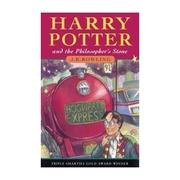
Harry Potter and the Philosopher's Stone
2,165-word summary 10 min read 223 pages in the book
- First published
- 1997
- Publisher
- Bloomsbury
- Pages
- 223
- ISBN
- 9780747532699
- Series
- Harry Potter (#1)
Reading options
What's inside (11 sections)
- Privet Drive and the cupboard under the stairs
- Hagrid, Diagon Alley, and the weight of a name
- The Hogwarts Express and first friendships
- Classes, rules, and the texture of school life
- The mystery under the school
- Dumbledore, the afterword, and what the book sets up
- The Mirror of Erised and the other quiet machines
- The ending and what it sets in motion
- What the first year teaches the reader
- Key takeaways
- FAQ
The first Harry Potter book is shorter and quieter than people remember. Bloomsbury printed five hundred hardback copies in June 1997, most of them for libraries, and the novel that followed is not a spectacle of special effects. It is a boarding-school story with magic in it, told in a close third person that sits firmly on Harry's shoulder. That restraint is part of why it works. The wonder arrives at the same pace Harry can absorb it, which for most of the book is slowly and through food, first friendships, and the slow realization that he has been lied to his entire life.
I reread it as an adult expecting to find it thin. What I found instead was careful construction. Rowling spends a long time in the ordinary world before anything magical happens, and every early detail, from a slashed terrace number to a newspaper clipping about a prison escape, gets paid off later. Children notice the jokes. Adults notice the plot skeleton underneath. Both are right.
Privet Drive and the cupboard under the stairs
The opening chapters are pure grotesque comedy. The Dursleys of Number Four, Privet Drive, are proud of being normal in the pejorative sense. Vernon sells drills. Petunia dusts. They give Harry a bedroom, eventually, though for the first eleven years his bedroom is a cupboard under the stairs. Dudley, their son, gets everything and behaves like it. The household runs on the principle that anything unusual must be suppressed, and Harry is the most unusual thing in it, though they refuse to say so.
Rowling's trick here is tone. She lets the abuse be real while keeping the narration comic, which is a tightrope. It works because Harry's own voice in the narration is resilient rather than self-pitying. He notices the unfairness, files it, and gets on with it. You learn his character before he learns magic.
The strangeness begins early. An owl taps the window. A cat reads a map. Vernon tears up letters, and the letters keep coming, stuffed in eggs and under the door and finally filling the house in a blizzard of paper. When a giant man on a motorcycle arrives to collect Harry, the Dursleys' panic tells us everything the narration has been holding back: Petunia has a sister, Lily, and the sister was a witch.
Hagrid, Diagon Alley, and the weight of a name
Rubeus Hagrid is the bridge between the two worlds, and Rowling uses him as an info-dump machine that never feels like one because he is so clearly delighted to be talking. In the leaky hut on the rock he explains what Harry is: a wizard, famous, the boy who lived. Lord Voldemort killed Harry's parents and then, when he turned his wand on the infant, something happened that broke him. Nobody is entirely sure what. The scar is the only proof.
The trip to Diagon Alley is pure wish fulfillment executed with specifics. Gringotts, the goblins, the vault with a small fortune left by his parents, the stack of school books, the owl named Hedwig. Hogwarts letters that list everything from cauldrons to spellbooks. It is the first taste of the second life, and Rowling gives it texture so that when the mundane world returns in later books, you can feel the difference.
One detail worth noting: Harry does not choose fame. He cannot explain what happened the night his parents died, and for most of the book he is only beginning to understand why people stare. That gap, between the story the world tells about him and the story he knows from the inside, is the engine of the whole series.
The Hogwarts Express and first friendships
Platform nine and three-quarters is the formal doorway, and the train is where the social world assembles. Ron Weasley, poor, family-proud, slightly overshadowed by brothers who are good at everything. Hermione Granger, bossy, oversupplied with facts, and already casting spells before the term starts. Draco Malfoy, introduced as a sneer with good clothes and bad instincts. Neville Longbottom, forgetful and anxious, carrying a toad he keeps losing.
Chocolate Frog cards become a clever device for world-building without lectures. Dumbledore on a card. Legends in bite-sized form. The sorting itself, with the talking hat, sets up the house system that will structure school life and, eventually, the culture war inside the school. Harry begs not to be put in Slytherin and gets Gryffindor, which tells you the hat listens to character as much as to talent.
Classes, rules, and the texture of school life
A large portion of the book is simply school. Potions with Snape, who looms over Harry with a personal hatred Harry cannot yet place. Charms and Transfiguration with Flitwick and McGonagall, both strict and both funny. History of Magic with a ghost who puts everyone to sleep. Thefat lady in the portrait hole. The common room by house. Halloween with a troll in the dungeons, which is the accident that cements the friendship between Harry, Ron, and Hermione: she lied about going after a clue, they went after her, and the three of them took the troll down together.
Quidditch is introduced as a full sport with positions and politics. Oliver Wood coaches like a man preparing for war. Harry becomes the youngest seeker in a century, gets a broomstick that arrives mysteriously and is confiscated and then un-confiscated by Dumbledore, and wins the match for Gryffindor. The games are not filler. They establish Harry's one natural talent, the one thing that is his rather than inherited or assigned.
The mystery under the school
The plot tightens around the Philosopher's Stone, an object created by Nicolas Flamel that can produce the elixir of life and turn metal to gold. Someone is trying to steal it. Harry, Ron, and Hermione form a detentions-and-dinner club that slowly pieces together clues: Snape in the forbidden corridor, Hagrid's mysterious purchase of a unicorn-related something, the three-headed dog Fluffy that Hagrid bought from a stranger in a pub and somehow failed to notice was a problem.
The security arranged by the teachers is charmingly specific. A plant that strangles, a logic puzzle that Hermione solves with riddles, a room of flying keys, a wizard's chess set that Ron plays himself into danger to clear. It is a children's adventure structure and it does not apologize for being one. The joy is in watching each friend contribute what they are good at: Hermione's mind, Ron's nerve, Harry's reflexes.
Snape is the red herring executed with a straight face. His name is attached to every sinister moment, and the misdirection is almost too clean, which is part of the joke for adult readers. The real culprit is Quirrell, the stuttering Defense Against the Dark Arts teacher, who has been hosting Voldemort under a turban all year. The reversal in the final chamber is quick: face on the back of the head, the touch that burns, Harry's own refusal to lie under the Mirror of Erised, which shows what you want most and will therefore only give the stone to someone who wants to find it but not use it.
Dumbledore, the afterword, and what the book sets up
Dumbledore is absent from most of the action and present in the last chapters as a gentle explainer. He tells Harry the stone is destroyed, that Voldemort is weakened but not dead, and that the power Harry has that Voldemort does not is love. It is the first time the series states its thesis out loud: Lily's sacrifice is a kind of magic older and less explicable than wands.
The final feast, the house cup snatched from Slythert's grasp by last-minute points awarded to the trio and to Neville for standing up to his friends, is pure crowd-pleasing. Then the train home, the Dursleys waiting with Dudley's new sweater, and Harry going back to Privet Drive for the summer with a secret in his trunk.
What the first book establishes for the six that follow: the house rivalries, Snape's grudge, the diary-and-locket-style objects, the idea that adults know more than they say, the Ministry's eventual incompetence, and Harry's habit of charging into danger with his friends rather than waiting for authority. It also establishes the emotional promise. The cupboard boy gets a home. The story keeps returning to that promise whenever the later books get dark.
Philosopher's Stone is not the deepest book in the series, and readers who come to it after the heavier volumes sometimes find it slight. I do not. It is the cleanest. It does exactly one job, introduces a world and a boy who needs it, and it does the job in a little over two hundred pages that a nine-year-old can finish and a forty-year-old can still enjoy on a plane. The US edition renamed the stone a Sorcerer's Stone, which tells you how much the marketing team understood the audience's appetite for a simpler word. The story did not need the help.
The Mirror of Erised and the other quiet machines
Before the finale, the book spends time on small magical objects that later volumes turn into plot engines. The Mirror of Erised shows the deepest desire of whoever looks into it. Harry sees himself with his parents. Ron sees himself alone and celebrated, out from under his brothers' shadows. Dumbledore catches Harry there and gives him the warning that becomes the series' spine: it does not do to dwell on dreams and forget to live.
There is also the sweets, the Bertie Bott's beans, the every-flavour gum that might taste of grass or dirt. There is Neville's Remembrall filling with red when he has forgotten something, and his slow, stubborn improvement under Gryffindor's points system. Fred and George, barely present, already behave like small businessmen of mischief. Nearly Headless Nick appears at the Halloween feast. The castle itself is a character with moods, shifting staircases, and a capacity to hide rooms from people who are not meant to find them.
None of this is throwaway. Rowling is laying inventory for six more books, but she does it through school life rather than through prophecy lectures. You absorb the rules of the world the way a student would, by living in it for a year.
The ending and what it sets in motion
The last chapters move quickly. Harry wakes in the hospital wing. Dumbledore explains the stone, the mirror, and Voldemort's surviving in a weakened form through Quirrell's body. The house cup is awarded with the late points that push Gryffindor past Slytherin, a piece of school politics that feels enormous to a twelve-year-old and modest to an adult, which is exactly right for the tone.
Harry goes home on the train with chocolate frogs and the knowledge that he belongs somewhere now. Hedwig is in her cage. Ron and Hermione have agreed to write all summer. The Dursleys are waiting at King's Cross with a face like a thundercloud, and Harry walks toward them carrying a secret that makes the walk shorter.
What the first book really establishes is trust. Trust that the world is coherent, that the adults are imperfect but not useless, that friendship is a practical tool and not just a sentiment, and that the boy at the center will keep choosing courage over comfort. Once a reader trusts those things, the series can afford to break them later, which is exactly what it does.
What the first year teaches the reader
Beyond plot, Philosopher's Stone teaches you how to read the series. Pay attention to objects. Pay attention to who is kind when no one is watching. Pay attention to the difference between what characters say about Harry and what Harry chooses to do. The Sorting Hat saw ambition in him and offered Slytherin. Dumbledore later tells him it is our choices that show what we are. That conversation is the thesis statement for seven books, delivered early and lightly so you can miss it.
The book also trains you to enjoy institutional detail: points, houses, terms, feasts, detentions. Those structures are comforting because they are legible. A child can understand the rules of a house cup even when the rules of the adult world are opaque. Rowling uses that legibility as ballast for everything stranger that comes later.
When Harry goes back to Privet Drive for the summer, the contrast is complete. He has been somebody for a year. He has a wand, an owl, friends, and a scar that aches when the lightning is wrong. The cupboard under the stairs is still there, physically, and it no longer fits him in any sense. That gap between the room he sleeps in and the person he has become is the engine the rest of the series runs on.
FAQ
What happens in Harry Potter and the Philosopher's Stone?
Harry leaves the Dursleys, enters Hogwarts, befriends Ron and Hermione, learns the truth about his parents, and helps stop Voldemort from stealing the Philosopher's Stone.
Why is the first book important to the series?
It establishes the rules of magic, the house system, the trio's dynamics, and the unresolved threat of Voldemort without which the later books have nothing to grow into.
Is the first book only for children?
It is written for children, but its setup is load-bearing for the adult-leaning later volumes. Rereading it after the series shows how much was already on the board.
Similar books
More like Harry Potter and the Philosopher's Stone →More from Harry Potter first, then related titles.

Harry Potter and the Chamber of Secrets
Chamber of Secrets: Dobby's warning, the flying car, polyjuice potions, and the diary of Tom Riddle. What the second Harry Potter book does differently and how…
2,172-word summary · 10 min read

Harry Potter and the Prisoner of Azkaban
Prisoner of Azkaban, the mature third book: Sirius Black on the run, dementors at the gates, Remus Lupin's secrets, and the time-turner finale that rewrites…
2,053-word summary · 9 min read

Harry Potter and the Goblet of Fire
Harry Potter and the Goblet of Fire explained: the Triwizard Tournament, the graveyard, Bertha Jorkins, and the point where the series stops being a school…
2,199-word summary · 10 min read

Harry Potter and the Order of the Phoenix
Harry Potter and the Order of the Phoenix explained: the D.A., Umbridge's regime, the Department of Mysteries, and the loss that changes the series.
2,249-word summary · 10 min read

Harry Potter and the Half-Blood Prince
Harry Potter and the Half-Blood Prince explained: the Pensieve, Tom Riddle's past, Slughorn's memory, and the ending that sets up the last book.
2,018-word summary · 9 min read

Harry Potter and the Deathly Hallows
Harry Potter and the Deathly Hallows explained: the hunt for Horcruxes, the Resurrection Stone, Snape's memories, and how the series ends in the forest.
2,218-word summary · 10 min read