
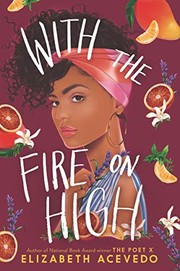
With the Fire on High
2,287-word summary 10 min read 400 pages in the book
- First published
- 2019
- Publisher
- Quill Tree Books
- Pages
- 400
- ISBN
- 9780062662859
Reading options
What's inside (8 sections)
A girl with a gift and a deadline
I picked this one up expecting a food book and found a book about time. With the Fire on High was published on May 7, 2019, by Quill Tree Books, an imprint of HarperCollins, and runs about 400 pages in its first edition. It is a novel in verse, but the form is not there to be decorative. Elizabeth Acevedo uses short, precise chapters, the kind that pull in readers who normally bounce off a full page of prose, and she lets the line breaks do the work of a heartbeat. Between the chapters she drops in recipes, one at the opening of each part of Emoni's journey, so the cooking is not only described. It is set out like an instruction you could follow.
Emoni Santiago is seventeen, Afro-Boricua, half Puerto Rican and half African American, and a senior at a high school in Philadelphia. She is also the mother of a toddler named Emma, whom she calls Babygirl. Emoni got pregnant during her freshman year, and the book picks up with the arithmetic of that decision still running: school, day care, money, her grandmother's health, the baby's needs, and the private conviction that she has to get this exactly right or something will break. Her grandmother, called 'Buela, is on disability and has helped raise three generations of the family. Emoni worries about money constantly. She has said she wants to be a chef, and the book never treats that as a cute dream. It is a plan with a deadline attached to it.
The gift matters too. 'Buela says Emoni has had a gift for cooking since she was small, and the people around her call the food she makes magic. Acevedo is careful about how she presents this. Emoni does not wave her hands and make people fall in love. She cooks with attention, and the food seems to reach people in a way that ordinary food does not, calling up memories or softening something in them. The magic is a way of describing attention, not a supernatural power. That choice keeps the book grounded even when the prose turns lyrical, and it is one of the reasons the cooking scenes feel earned rather than decorative.
Acevedo had already made her name with The Poet X, a verse novel about a Dominican American girl finding her voice through slam poetry, and the Washington Post introduced this book as the work of an author returning after a National Book Award win. That background helps explain the confidence of the form here. She trusts short lines and white space to carry feeling, and she trusts her reader to keep up. The comparison is useful in another way too. Where the earlier heroine had to claim that she had a voice at all, Emoni begins with a gift everyone around her already recognises. Her problem is not being seen. It is being seen and still having to decide what she owes the people who love her, and what she is allowed to want for herself.
First day, last year
The novel opens on a first day that is also a last. It is Emoni's first day of senior year, and it is Babygirl's first day of day care. Emoni is sad about missing pieces of her daughter's life, and the book lets that sadness sit there without immediately solving it. She is good at school in the way a lot of tired students are good at school: she does what has to be done, she stays on track, and she does not expect anyone to notice how much effort it costs. Kirkus described her as a classic example of a school system that never made room for students' creativity and interests, which is a polite way of saying that nobody had asked her what she was actually good at.
Then a new option appears: a class called Culinary Arts: Spain Immersion. It includes a week-long trip to Spain, and Emoni signs up because finally someone is offering her a chance to work with her hands in a kitchen and learn the craft she already has instincts for. Ms. Fuentes, a teacher, recognises her talent. So does the instructor, Chef Ayden, though he is strict enough that Emoni nearly drops the class. That near-drop is important. It would have been easy to write a story in which the gifted girl is simply discovered and validated. Instead, Emoni has to decide whether she can stand being corrected, whether she can be a beginner at something she has always been told she is naturally brilliant at, and whether the class is worth the time it takes away from her daughter and her pay.
Acevedo lets Emoni address the reader directly now and then, breaking out of first-person narration to say something blunt about her situation. Those moments give the book a conversational snap. They also keep the reader from getting too comfortable with the idea that Emoni has everything under control. She is improvising. The recipes at the front of each section act almost as chapter markers for a life being assembled one step at a time, the way you build a dish when you are reading from a card and checking what is actually in the fridge.
Learning to cook in company
Much of the book is about learning to be part of a team. A restaurant kitchen is not a place where one brilliant person does everything alone, and Chef Ayden's strictness is not there just to make Emoni's life harder. It is there because a kitchen has rules, and the rules exist so nobody gets hurt and nobody ruins the food. Readers pick up a surprising amount about food safety and how a professional kitchen runs, which is one of the quieter pleasures of the book. Emoni has to accept instruction from people who know things she does not. For a girl who has spent years being the responsible one at home, being the student is a genuine adjustment.
The cooking scenes are where Acevedo's writing is richest. She writes about flavours and textures with a specificity that makes the food feel real, and she ties those descriptions to Emoni's memories of her mother and her grandmother, to the Puerto Rican and African American cooking that formed her, to the Spanish dishes she encounters when she travels. There is a running interest in what gets handed down through food, who taught whom, and what a recipe carries besides instructions. The book is full of cultural references, from Celia Cruz and Marc Anthony to cooking shows like Chopped and Top Chef. Some of that pop-culture texture dates the book a little, and readers years from now may need a footnote for a few of the names. At the time it helped make Emoni feel like an actual seventeen-year-old rather than a vessel for themes.
The verse form deserves a word of its own. Short lines and quick chapters make the book move fast, and the spaces on the page give the emotional lines room to land. The risk is that the style can feel breezy, that a serious situation gets skimmed because the sentences are so spare. There are moments when Emoni's exhaustion or fear could use another paragraph and instead gets a clean two-line break. For most readers the speed is a feature, and the book won starred reviews from Booklist, School Library Journal, The Horn Book and Publishers Weekly, along with a long list of awards and best-of-the-year mentions. It also connected with reluctant readers, which is exactly what you would hope from a book that looks this easy to pick up and turns out to be carrying a great deal.
Malachi, Angelica and the life not lived
The romance in the book does not follow the usual shape. Malachi is a classmate who treats Emoni with a steadiness she is not used to from boys. He is kind and polite, and the thing reviewers keep noting is that he respects her boundaries. He does not push, and he does not treat her daughter as an obstacle to the relationship. That matters in a book about a teen mother, because so much of the culture around teen pregnancy either erases the child or turns the mother into a cautionary tale. Here the romance has to fit around Emoni's real life, and she is allowed to be interested in someone without that interest making her a bad mother or a careless student.
Her best friend Angelica is a fierce, protective presence, and Acevedo gives her a full interior life, including the fact that she is a lesbian. The friendship works because Angelica does not try to manage Emoni. She shows up, she listens, and she is honest when Emoni is being hard on herself. Between Malachi, Angelica, Ms. Fuentes and Chef Ayden, the book builds a small network of people who recognise what Emoni can do and help her see it too. That network is one of the book's quiet arguments: nobody gets to a kitchen like this alone, and asking for help is not the same as failing.
Underneath the warm relationships runs a strand of regret that keeps the story honest. Emoni thinks about the life she would have had if she had not got pregnant at fifteen, the ordinary senior year she can watch other people having, the freedom to be careless that she never got. She wonders about the versions of herself that were closed off. The book does not punish her for these thoughts or pretend that motherhood erased her adolescence. It lets her miss things. That willingness to sit with the "what ifs" is what gives the title its weight. The fire in the title is not only talent. It is the stubborn heat required to keep going when your life took an earlier turn than you planned.
The Spain question
The culinary class comes with a week-long trip to Spain, and the question of whether Emoni can go drives the second half of the book. On paper the answer looks simple. It is a once-in-a-high-school chance to cook in another country, to be a student among other aspiring cooks and to see what her gift might become if she had years to develop it. In practice the trip costs money she does not have and takes her away from Babygirl and 'Buela at a time when both need her. The class itself was a stretch in terms of time and cash. The trip is a bigger stretch.
Acevedo handles this without turning it into a melodrama about a self-sacrificing mother. Emoni wants to go. She is allowed to want it without being made to feel monstrous. Her grandmother, who has sacrificed so much to raise the family, gives her room to make her own decision about her daughter, and that trust is one of the most affecting things in the book. The people around her do not all agree on what she should do, which is another way of saying they treat her as an adult capable of weighing competing claims. The decision, when it comes, feels earned by everything that precedes it rather than delivered by a convenient scholarship letter.
The Spain sections widen the book's setting from Philadelphia to Europe and give Emoni a chance to cook with people who have no idea what her life at home looks like. There is a class trip, and there are the small indiscretions of teenagers away from their parents, including some drinking, which Common Sense Media flags for younger readers. Acevedo keeps the focus on the work. What Emoni discovers in Spain is not that she is suddenly better than everyone else, but that she has a place in a craft that is larger than she is and that she is willing to keep being a beginner in it. The trip does not solve the money problems or hand her a clean new identity. It gives her a direction.
What stays hot
The ending does not pretend that Emoni's life has been fixed. She still has a daughter, a grandmother on disability, financial pressure and a future that will require more planning than most seventeen-year-olds have to do. What changes is her sense of where she belongs and what she is allowed to want. The book closes less with a triumph than with a settled resolve, which is the right note for a story about a girl who has had to grow up in public and in private at the same time.
It is a novel that wears its strengths on the surface and keeps its best work underneath. The recipes make you hungry. The short chapters make you keep turning. The pop-culture references pin it to 2019. But the thing that lasts is the picture of a young woman learning that taking herself seriously is not in conflict with taking care of her child, and that a gift is not a finished thing. It has to be practised, corrected, shared and sometimes defended. Acevedo also reads the audiobook herself, and it won a 2020 Audie Award for narration by the author, which makes sense given how much of this book lives in the rhythm of Emoni's voice. If you want a tidy story about a gifted teen who gets discovered, look elsewhere. If you want a funny, specific, unsentimental account of a girl making a life inside a schedule that would defeat most adults, this one is worth the hours.
FAQ
Is With the Fire on High written in verse?
Yes. Elizabeth Acevedo tells the story in short free-verse chapters with recipes between sections, a form she also used in her debut novel The Poet X.
Who is Emoni's daughter and who helps raise her?
Her daughter is a toddler named Emma, whom she calls Babygirl. Emoni's grandmother, known as 'Buela, helps care for her and is on disability.
What is the Spain trip in the story?
It is a week-long culinary class trip and the central decision of the second half. Emoni weighs the cost and the time away from Emma and 'Buela, and the book treats it as a real choice rather than an easy reward.
Similar books
Clap When You Land
Two half sisters, one in Sosúa and one in Queens, discover each other after their father dies in a plane crash, in Elizabeth Acevedo's novel in verse.
2,890-word summary · 13 min read
Wild Magic
A thirteen-year-old orphan in the kingdom of Tortall learns to live with the gift of speaking to animals, and discovers that the creatures she loves are not…
2,056-word summary · 9 min read

Impulse
Three teenagers in a Reno residential hospital tell in free verse how they arrived there after suicide attempts and what recovery costs.
2,030-word summary · 9 min read
Where the Heart Is
Pregnant teen Novalee Nation is abandoned at a Sequoyah, Oklahoma Wal-Mart, where she gives birth to Americus and rebuilds life with town help.
2,352-word summary · 10 min read
Harry Potter and the Order of the Phoenix
Harry Potter and the Order of the Phoenix explained: the D.A., Umbridge's regime, the Department of Mysteries, and the loss that changes the series.
2,249-word summary · 10 min read
Harry Potter and the Half-Blood Prince
Harry Potter and the Half-Blood Prince explained: the Pensieve, Tom Riddle's past, Slughorn's memory, and the ending that sets up the last book.
2,018-word summary · 9 min read

Harry Potter and the Goblet of Fire
Harry Potter and the Goblet of Fire explained: the Triwizard Tournament, the graveyard, Bertha Jorkins, and the point where the series stops being a school…
2,199-word summary · 10 min read
Harry Potter and the Deathly Hallows
Harry Potter and the Deathly Hallows explained: the hunt for Horcruxes, the Resurrection Stone, Snape's memories, and how the series ends in the forest.
2,218-word summary · 10 min read
Harry Potter and the Philosopher's Stone
How Harry Potter and the Philosopher's Stone introduces Hogwarts, the Dursleys, Quidditch, and Voldemort: the first book's plot, its quiet setup, and why the…
2,165-word summary · 10 min read
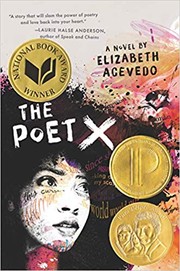
The Poet X
Harlem teen Xiomara finds voice in slam poetry against strict mother, church, and a love she must hide.
2,056-word summary · 9 min read

Yellow Crocus
In 1837 Virginia, an enslaved wet nurse is separated from her own son to raise a planter's daughter, and the two women build a love the law says cannot exist.
2,094-word summary · 9 min read
Wake
Seventeen-year-old Janie Hannagan is pulled into other people's dreams whenever they sleep near her. A nursing-home job, a secretive boy and a drug bust give…
2,488-word summary · 11 min read
Theft
Gurnah traces three linked lives in Tanzania, where a servant's accusation of theft opens a family history of love, duty and quiet betrayal.
2,454-word summary · 11 min read
The Woman Who Rides Like a Man
Newly knighted, Alanna heads south into Tortall's desert, where a broken sword and a dead shaman leave her responsible for a rebel tribe and three Gifted…
2,894-word summary · 13 min read
Red at the Bone
A girl's coming-of-age ceremony in a Brooklyn brownstone opens a family story shaped by Tulsa, teenage pregnancy, class and a second tragedy on September 11.
2,108-word summary · 9 min read
Pumpkinheads
Deja and Josiah have worked the Succotash Hut together every autumn. On their last Halloween shift, she pushes him to chase a crush and they discover something…
2,409-word summary · 11 min read

Just One Day
A carefully planned European tour unravels when a Dutch actor takes Allyson to Paris for one day and vanishes, leaving her a year of searching for answers.
2,561-word summary · 11 min read
Girls in Pants: The Third Summer of the Sisterhood
The four friends face their last summer before college, with art school, an old flame, a guilty conscience and a new baby in the balance.
2,382-word summary · 11 min read
Dreamland
A teenager slips out of her perfect sister's shadow and into a relationship that turns from thrilling to dangerous, in Sarah Dessen's dark 2000 novel about…
2,823-word summary · 13 min read
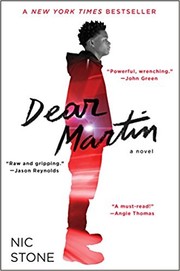
Dear Martin
Nic Stone's debut follows Justyce McAllister, a scholarship student at a mostly white Atlanta prep school, who starts writing letters to Dr. King after a…
2,596-word summary · 12 min read
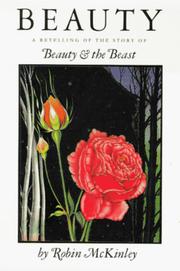
Beauty: A Retelling of the Story of Beauty and the Beast
Robin McKinley's debut retells Beauty and the Beast through a plain, book-loving girl whose nightly refusals of the Beast's proposals slowly become something…
2,100-word summary · 9 min read

Today Tonight Tomorrow
On the last day of senior year, academic rivals Rowan Roth and Neil McNair team up for a citywide Seattle scavenger hunt and start seeing each other…
2,233-word summary · 10 min read
This One Summer
Mariko Tamaki and Jillian Tamaki's graphic novel about two friends at a lake town, where a mother's grief and a pregnant teenager reshape one summer.
2,324-word summary · 10 min read
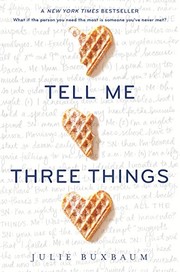
Tell Me Three Things
A grieving Chicago teen lands in her new stepfamily's Los Angeles mansion, then gets anonymous emails promising to guide her through a brutal private school.
2,292-word summary · 10 min read

Seraphina
A half-dragon court musician in Goredd helps investigate a royal murder while hiding the secret behind her gift.
2,246-word summary · 10 min read

What Happened to Goodbye
Mclean has reinvented herself in four towns since her parents divorced. In Lakeview she uses her real name, and for the first time staying put becomes a choice.
2,796-word summary · 12 min read
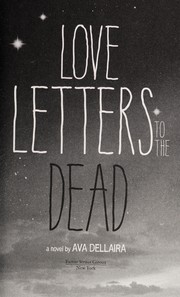
Love Letters to the Dead
A fifteen-year-old writes letters to dead artists because they cannot ask questions, and slowly tells the one story she has been hiding about her sister's…
2,520-word summary · 11 min read
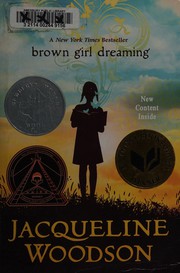
Brown Girl Dreaming
Jacqueline Woodson retells her childhood in verse, moving from Ohio to South Carolina to Brooklyn while the civil rights movement reshapes the world around her.
2,727-word summary · 12 min read
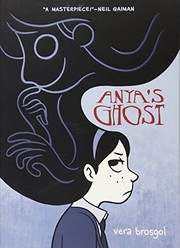
Anya's Ghost
A lonely Russian immigrant falls into a well, befriends the ghost trapped there, and discovers that the ghost's help comes with a dangerous price.
2,001-word summary · 9 min read
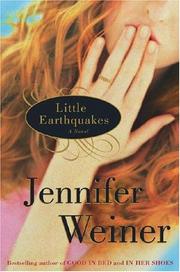
Little Earthquakes
Four Philadelphia women meet during pregnancy and discover that new motherhood is nothing like the plan, while friendship becomes the thing that holds them…
1,997-word summary · 9 min read