

Today Tonight Tomorrow
2,233-word summary 10 min read 384 pages in the book
- First published
- 2020
- Publisher
- Simon Pulse
- Pages
- 384
- ISBN
- 9781534440241
- Series
- Rowan & Neil (#1)
Reading options
What's inside (10 sections)
I went into this expecting a light rom-com, and got something more careful than that. The book was published in 2020 and is set almost entirely on the last day of senior year in Seattle. It is the first of the Rowan & Neil books, and the whole story fits inside roughly twenty-four hours. Solomon uses that tight frame well. The hours are marked off as the day goes on, so you always know how much time Rowan and Neil have left before the night ends and they go back to being two people heading in different directions.
A single day with a clock running
The premise is simple enough to explain in a sentence. Rowan Roth and Neil McNair have been academic rivals for four years, and on the final day of school there are only two contests left between them: who gets named valedictorian, and who wins Howl. Rowan wants both. She wants them badly, because winning would mean she got through high school on her own terms.
Solomon chooses a structure that puts pressure on every conversation. When a book covers a week or a summer, characters can put things off. Here they cannot. A conversation that goes badly at nine in the morning has to be carried around for the rest of the day. A decision made at midnight is the last decision there is. That ticking clock is what turns what could have been a collection of cute scenes into a story with actual shape.
The last day of school is also a good emotional container for a first love story. Everyone is leaving. Nobody knows exactly what the next year will look like. The certainty that usually comes with a happy ending is missing here, because these two are about to go to different colleges and leave the city they both know. The book is sweet, but it is not naive about what a beginning costs.
Rowan and Neil, rivals for four years
The rivalry is specific and a little ridiculous, which is what makes it funny. Neil wakes Rowan up every morning with a taunting text. They have fought over test scores, student council elections, and even pull-up contests in gym class. Rowan's friends think she is obsessed with him, which she insists is not true. Anyone who has had a rival like that knows the truth is somewhere in between. You think about the person constantly, and you tell yourself it is only because you want to beat them.
Neil wins valedictorian. That happens early in the book, and Rowan is crushed by it. Her last chance to beat him is Howl, the senior class game she believes she is built to win because she knows Seattle better than anyone. Her confidence is not just bravado. She has spent years building this competence, and losing to Neil one more time would mean losing the version of herself she has been perfecting since freshman year.
What surprised me is how well Solomon makes the rivalry feel like real feeling rather than a cute setup. Their banter is fast, but underneath it there is years of having watched each other closely. They know each other's habits, a little too well in some cases. That familiarity is what makes the shift toward something else believable. They are not strangers who suddenly notice each other. They are two people who have been paying attention to each other the whole time and calling it competition.
Howl and the streets of Seattle
Howl is a citywide senior class event, organized by the juniors and played on the last day of school. Publishers Weekly describes it as part Assassin, part scavenger hunt. Seniors follow clues around Seattle, and players can tag each other out. It is not a matter of life and death, though the book has fun treating it as if it might be. The stakes are social and personal, and for Rowan that is more than enough.
A group of seniors decides to take Rowan and Neil out early. So the two of them form a temporary team, with an agreement that they will turn on each other once the others are gone. This is a good engine for a romance. They have to cooperate, they have to talk, and they have to trust each other with the clues while still pretending that the arrangement is temporary. The city itself becomes part of the story. Their route takes them through parts of Seattle that mean something to them, and the game gives Solomon an excuse to move the characters through a place that clearly matters to her.
The game also gives the book its physical momentum. The earlier chapters are full of school corridors and small humiliations. Once Howl starts, the story is outside, moving, and a little chaotic. Two scenes that could have felt like a standard scavenger hunt instead feel like a tour of a city seen by people who are about to leave it. The lectures on Seattle geography never show up, but the affection does.
The hours in between
The best parts of the book are not the clues. They are the pauses between them. During the long night of Howl, Rowan and Neil meet each other's families, talk honestly about the last four years, and share a dance. Solomon understands that a first romance is mostly made of these interruptions. You do not fall for someone because of a clue. You fall for them because you see how they behave with their parents, or because they say one unguarded thing while you are both tired.
Rowan learns that Neil is more than the awkward opponent she has spent years mocking. He is a linguistics nerd who has his future mapped out, but his present is far messier than she realizes. That gap between the plan and the reality is where his character lives. He is not the boy she thought she knew, and the fact that she was wrong about him is one of the book's quieter surprises.
These scenes are also where the rivalry starts to look like something else. Every time Rowan catches herself caring about what Neil thinks, she has to reinterpret the feeling. She has a whole vocabulary prepared for him, and none of it fits anymore. Solomon writes that recalculation with a light touch. It is funny, but it is also the emotional centre of the book.
Both characters are Jewish, and the novel treats that as part of their ordinary lives rather than a problem to be solved. It shows up in the details of family and food and expectation. That choice gives the story a texture it would not have if everyone were written as a blank default. It also matters because Solomon has spoken about wanting to put Jewish protagonists in contemporary young adult fiction, where they have been thin on the ground. Here it simply is one of the things that makes these two who they are.
Rowan's secret
The subplot I liked most concerns Rowan's writing. She wants to write romance novels, and she is embarrassed about it. Her parents are children's book authors, so books are already part of her family identity in a way she cannot escape. She has opinions about the genre she wants to work in. She sees romance as feminist in its focus on female desire, and she is also aware that people dismiss it as trash. That tension is real, and it gives her more depth than the typical smart-girl lead.
Her secret is that she is ashamed of wanting the thing she wants most. She hides it from people who are close to her, including, for a while, Neil. Because the book is about a girl learning to stop treating honesty as a weakness, the writing plot and the romance plot are really the same plot. Rowan has to say the true thing out loud before either can work.
This is where Solomon's book earns the praise it got from critics. Publishers Weekly called Rowan and Neil complex and believable characters, and that is a fair description. Rowan can be vain and insecure and generous in the space of a few pages. She is not a character designed to be admired. She is designed to be understood, which is a harder and better job.
There is also a smart piece of criticism built into the story. Rowan's view of romance as a genre that takes female desire seriously is not presented as a slogan. It is presented as something she has thought about, and it shapes the way she judges her own ambitions. When she finally starts telling the truth about what she wants to write, the book is arguing that the thing people laugh at can still be worth taking seriously. That argument is made through a character, not a speech.
Neil up close
Neil starts as the object of Rowan's resentment and slowly becomes a person with his own problems. He is good with words, and he knows exactly where he is going. That kind of certainty can look like arrogance from the outside, and Rowan has been looking at him from the outside for four years. The night of Howl lets her see the cost of his plans. He has expectations to meet, and the tidy version of his future does not leave much room for the life he is actually living.
Solomon does not hand us a tidy explanation for him either. He stays slightly harder to read than Rowan, which is right for a character seen through someone else's attention. What we get are moments: how he handles the game, how he speaks to his family, how he talks to Rowan when the banter stops. The accumulation matters more than any single reveal.
That restraint is one of the book's strengths. A lesser version of this story would have given Neil a single wound to explain everything. Here he is allowed to be a collection of contradictions, just as Rowan is. Their connection works because they are both more complicated than the roles they have assigned each other.
The ending and what it costs
By the end of Howl, Rowan has to decide what she believes about Neil and about the night they have spent together. There is a moment where the old rivalry reasserts itself, and she has to work through the feeling of having been fooled before she can see him clearly. Solomon handles this without turning it into a big melodrama. The argument, when it comes, sounds like two people who have known each other for years and are tired of performing.
The resolution is gentle. Rowan admits, mostly to herself, that she may already have fallen for him. The last pages leave them facing a future that is not neatly solved. They have a night, and a beginning, and a city they both love. That is enough. The book does not pretend that a single day fixes everything or that a first love settles the question of who they will become. It ends with the chance, which is exactly what the last day of high school offers.
I appreciated that the ending trusts the reader. There is no grand declaration designed to be quoted, and no last-minute twist to force a happy shape onto things. Rowan has learned to tell the truth about her writing and about Neil, and that is the victory the story is really about. The romance is the reward, but the growth is the point.
What works and what doesn't
What works most is the voice. Solomon writes teenagers who sound like people, not like adults imitating them. The banter is quick without being written in a style that no actual person uses. The hour markers keep the story moving and give it a heartbeat. Seattle is drawn with affection but without the long descriptive passages that slow books like this down.
The book is also better on the anxiety of leaving home than I expected. Rowan's fear that she has done high school wrong, that she has missed something everyone else got, is handled with real sympathy. Graduation is a strange kind of loss, and Solomon does not rush past it to get to the kiss. That patience is what makes the romance feel earned.
For criticism, the trope is familiar, and the book does not do much to hide that. Academic rivals who secretly care about each other is not a new idea, and a few of the supporting friends are drawn lightly, mostly there to react to Rowan's obsession. The stakes of Howl are low by design, which will frustrate readers who want a plot with more bite. The last third also leans a little heavily on misunderstandings that could have been cleared up with one honest sentence, though that is a common cost of keeping a story inside one day.
None of that bothered me much. This is a book that knows what it is: a warm, funny, carefully built story about two people who had to stop competing long enough to see each other. It is funny without being shallow, and serious without becoming heavy. If you want a romance with a real sense of place and two leads who are allowed to be awkward, this one delivers.
FAQ
Is Today Tonight Tomorrow part of a series?
Yes. Goodreads lists it as book one of the Rowan & Neil series, and the follow-up is Past Present Future.
How much time does the story cover?
Almost all of it happens over one day, the last day of senior year, with chapters marked by the hour as the clock runs down.
What is Howl?
It is the citywide senior class game, described as part Assassin and part scavenger hunt, that sends players across Seattle on the last day of school.
Similar books
More from Rowan & Neil first, then related titles.

Dumplin'
Willowdean Dickson enters her town's beauty pageant as a protest and discovers that confidence is harder to keep once she lets someone close.
1,922-word summary · 9 min read

Since You've Been Gone
Shy Emily spends summer finishing her vanished best friend Sloane list of thirteen dares, finding Frank, Dawn, and courage.
2,566-word summary · 11 min read
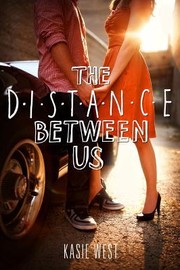
The Distance Between Us
Seventeen-year-old Caymen Meyers distrusts rich people, then a wealthy boy keeps proving her wrong while her mother's doll shop struggles to survive.
2,231-word summary · 10 min read
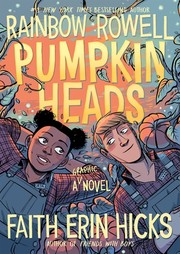
Pumpkinheads
Deja and Josiah have worked the Succotash Hut together every autumn. On their last Halloween shift, she pushes him to chase a crush and they discover something…
2,409-word summary · 11 min read
Impulse
Three teenagers in a Reno residential hospital tell in free verse how they arrived there after suicide attempts and what recovery costs.
2,030-word summary · 9 min read

Girls in Pants: The Third Summer of the Sisterhood
The four friends face their last summer before college, with art school, an old flame, a guilty conscience and a new baby in the balance.
2,382-word summary · 11 min read
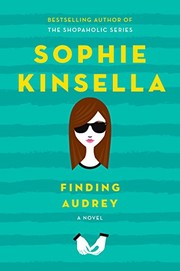
Finding Audrey
A fourteen-year-old who cannot leave the house or remove her dark glasses finds her way back through therapy, a film project and a patient new friend.
2,559-word summary · 11 min read
Dear Martin
Nic Stone's debut follows Justyce McAllister, a scholarship student at a mostly white Atlanta prep school, who starts writing letters to Dr. King after a…
2,596-word summary · 12 min read
Betting on You
Bailey and Charlie clash on a flight to Omaha over whether guys and girls can be friends. Three years later, a wager at a waterpark changes everything.
2,293-word summary · 10 min read
Tell Me Three Things
A grieving Chicago teen lands in her new stepfamily's Los Angeles mansion, then gets anonymous emails promising to guide her through a brutal private school.
2,292-word summary · 10 min read

Rules of Attraction
Carlos Fuentes moves from Mexico to Boulder to live with his brother Alex, then falls for a car-loving tomboy while a gang from his past closes in.
2,345-word summary · 10 min read

What Happened to Goodbye
Mclean has reinvented herself in four towns since her parents divorced. In Lakeview she uses her real name, and for the first time staying put becomes a choice.
2,796-word summary · 12 min read

Anya's Ghost
A lonely Russian immigrant falls into a well, befriends the ghost trapped there, and discovers that the ghost's help comes with a dangerous price.
2,001-word summary · 9 min read

I Kissed Shara Wheeler
Shara Wheeler kisses her rival Chloe Green at prom and disappears, leaving a scavenger hunt that forces Chloe to rethink everything she knew about her.
2,083-word summary · 9 min read
The Second Summer of the Sisterhood
Four friends share the traveling pants through a summer of grandmothers, first loves, and mothers who are learning to let go.
2,209-word summary · 10 min read

Aristotle and Dante Dive into the Waters of the World
Ari and Dante return for senior year in El Paso, navigating first love, AIDS, family grief, and the cost of being openly gay in 1987 Texas.
2,188-word summary · 10 min read

Someone Like You
Halley and her best friend Scarlett face a summer of grief, a surprise pregnancy, and Halley's dangerous first romance in Sarah Dessen's 1998 young adult novel.
2,218-word summary · 10 min read
Loveless
Georgia starts university sure she wants love, then learns she is aro-ace.
2,539-word summary · 11 min read
Every Last Word
A girl with OCD finds poetry and friends who know her secrets.
2,434-word summary · 11 min read
The Upside of Falling
Two teens fake-date for a summer dare and end up facing grief, family secrets, and first love.
2,274-word summary · 10 min read

Me and Earl and the Dying Girl
A self-protective Pittsburgh senior is pushed to befriend a classmate with leukemia, and a clumsy film with Earl changes all three.
2,773-word summary · 12 min read
Lola and the Boy Next Door
Costume maker Lola must choose between older Max and inventor Cricket while her two dads hold home steady.
2,045-word summary · 9 min read

I Am the Messenger
Nineteen year old Ed stops a robbery, then gets playing cards sending him to help strangers.
2,124-word summary · 9 min read
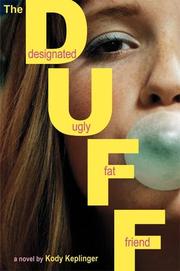
The DUFF
Bianca Piper hates Wesley Rush for calling her the DUFF, until a secret arrangement during her parents' divorce forces both teens to grow up.
2,323-word summary · 10 min read
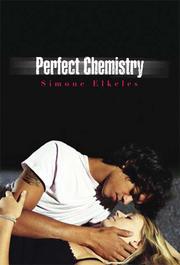
Perfect Chemistry
Perfect rich girl and gang tied boy tutor each other into love that must survive threats.
2,029-word summary · 9 min read

Always and Forever, Lara Jean
Senior year brings college letters, distance from Peter, and a dad wedding Lara Jean helps hold together.
2,037-word summary · 9 min read
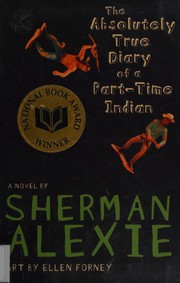
The Absolutely True Diary of a Part-Time Indian
Fourteen-year-old Junior leaves his Spokane reservation school for an all-white farm town, drawing cartoons through grief, basketball, and divided loyalty.
3,224-word summary · 14 min read

Stargirl
Leo Borlock likes blending in until homeschooled Stargirl Caraway arrives at Mica High with a ukulele, a pet rat, and kindness that tests them both.
2,980-word summary · 13 min read
Will Grayson, Will Grayson
Two Chicago teens with one name collide, with Tiny Cooper's musical stealing every scene.
2,742-word summary · 12 min read
Simon vs. the Homo Sapiens Agenda
Closeted Simon Spier trades emails with Blue while Martin blackmails him over Abby and the school musical nears.
2,952-word summary · 13 min read