
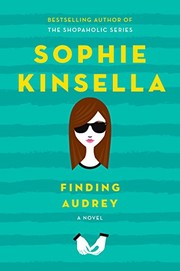
Finding Audrey
2,559-word summary 11 min read 304 pages in the book
- First published
- 2015
- Publisher
- Delacorte Press
- Pages
- 304
- ISBN
- 9780553536515
Reading options
What's inside (9 sections)
I picked this up because I remembered the odd feeling of seeing Sophie Kinsella's name on a teenage book. Until then she was the Shopaholic writer, the woman who had made me laugh about handbags, disastrous dates and impossible bosses. Then in 2015 came Finding Audrey, published in the United States by Delacorte Press as her first young adult novel, a story about a fourteen-year-old girl who cannot leave the house. It runs a little over three hundred pages. The back cover promised a girl who could not remove her dark glasses even indoors. I assumed the glasses were a quirky device. By the time I finished, I had changed my mind about nearly everything in the book.
The story opens with Audrey doing something that feels enormous to her. Her parents and her older brother have gone out for the day, so she takes her key, her money and a camera, and walks alone to Starbucks. It is twenty minutes away on foot. She does not stride. She just keeps putting one foot in front of the other, left, right, left, right, with her dark glasses on, her hands jammed in her hoodie pockets and the hood pulled up for cover. She keeps her eyes on the pavement. In a line I keep coming back to, she says her "lizard brain is poised to curl up in fright." She is terrified, and she is doing it anyway. That small walk is the whole book in miniature.
A girl who cannot leave the house
Audrey has been out of school since February. Something happened there, and the book is careful not to say what at first. All we know is that three girls were expelled from her all-girls school and that her parents, Anne and Chris, pulled her out. She spent six weeks in the mental health wing of a local hospital. Now months have passed, she has not been to school since, and she wears sunglasses inside the house, even around her own family, because she cannot bear to make eye contact with anyone. She sees a therapist named Dr. Sarah, not always every week but regularly enough that the sessions mark the rhythm of her days.
What gradually comes out is the cause. Audrey was bullied viciously and persistently by three girls, one of them called Izzy. The bullying was not a single bad afternoon. It was a campaign that wore her down until she could no longer face the corridors or the classroom, and eventually could no longer face much of anything. Her anxiety and depression are the aftershocks of that experience. The illness is not a mystery in the book. It is a response to something that was done to her.
I thought Kinsella handled this part with more care than I expected. She does not explain Audrey's condition in clinical language or turn her into a case file. We see it in behaviour. Audrey flinches when someone new enters a room. She flees when a stranger looks at her. She can meet the gaze of her four-year-old brother Felix, and almost no one else. The sunglasses are less a fashion choice than a visor she pulls down over her whole life. When she later asks herself why she hides behind them, the answer is plain: eyes are how people reach you, and she is not ready to be reached.
Her parents are around, and they love her, but they are also exhausted and awkward. Anne fusses. Chris is well meaning and a little absent, often distracted by his BlackBerry. The house is warm and noisy and completely unstructured, which is both Audrey's safety and her prison. She is safe inside it because nothing is asked of her. She is imprisoned because nothing is asked of her. That tension is the quiet engine of her recovery.
The war over Frank's computer
While Audrey is trying to get through each day, her older brother Frank is fighting a different battle. Frank is obsessed with a computer game called Land of Conquerors. He plays on a team with friends from school, including a boy named Linus, and the team is training for a local tournament that could qualify them for an international event in Toronto with a prize pot of six million dollars. To Frank this is a sport. To his mother Anne, after she reads an article about video game addiction in the Daily Mail, it is a disorder that needs stamping out.
The argument between them supplies most of the book's comedy, and it is broad, physical comedy of the kind Kinsella has always written. Anne forbids Frank to play. Frank plays anyway. Anne bans the game for ten days. Frank sneaks sessions while she is out. The escalation ends with Anne seizing his computer and throwing it out of a second-storey window while the neighbours gather to watch, which is funny until you remember that this is the same woman who is tiptoeing around her daughter's mental illness. The scene made me laugh and then made me uneasy, and I think that unease is deliberate.
Frank is the most fully realised member of the family once the pressure is off him. He is not a lazy addict. He is a boy with a genuine passion and a real goal, and the moment his parents stop treating the game as a shame, he starts to grow. By the end he is talking about becoming a chef and getting a job in a restaurant. The subplot about Frank's gaming is not filler. It is a mirror of Audrey's story: both children are judged for the thing they love, and both flourish when the people around them stop trying to fix them by force.
Chris, the father, drifts through the quarrel with a vagueness that is probably meant to be endearing. He is the one who eventually buys Frank a new computer, and he is less anxious and less critical than Anne. He is also glued to his own screen, which the book notices without making a speech about it. Little Felix, aged four, is the one person whose face Audrey can look at, and he spends much of the story ferrying notes between his sister and the boy who is falling for her. He also repeats swear words he overhears, to Anne's horror, which is a small joke that lands every time.
Linus and the notes
Linus is Frank's friend and teammate, and he first appears at the house to play games. On his first visit he wanders into the den, finds Audrey sitting there, and she bolts from the room. He does not chase her or make a scene. Instead he sends a note through Felix, apologising for upsetting her. She writes back. The notes become the book's courtship, a slow exchange of jokes and small truths that lets Audrey know him without having to look at him. I liked this a great deal. It is a patient, clever solution to the problem of how a girl who cannot face people falls in love.
Kinsella gives Linus an "orange-slice smile," and that is about all the physical description he gets. He is defined instead by his steadiness. He does not try to cure Audrey. He simply keeps turning up, keeps writing, keeps making her laugh, and waits until she is ready to take the next step. When her mother bans gaming at the house and Linus stops coming, Audrey is the one who asks for a phone so she can contact him. That is an important turn. Her recovery stops being something done to her by doctors and starts being something she wants for her own reasons.
The romance is gentle, which suits the rest of the book. There are no grand gestures or jealous quarrels. The tension comes from Audrey's fear and Linus's refusal to be frightened by it. When he slips a note under the front door saying he would like to kiss her, she is thrilled and still not ready to open the door. That moment says more about where she is than any paragraph of therapy talk could. The book understands that wanting closeness and being able to bear it are two different things.
Starbucks and the camera
Dr. Sarah gives Audrey an assignment. She is to make a film, using a cheap camera, about anything she likes. The point is not art. The point is that a camera gives Audrey something to look through instead of looking directly at people, and a project gives her a reason to approach them. She calls her documentary My Serene and Loving Family, and the transcripts of her filming are scattered through the story. She films the kitchen, the house, her parents talking in their bedroom, and the comedy of her family plays out in front of the lens. It is a neat device because it lets Kinsella be funny and lets Audrey stay just behind her shield.
The film leads her to Linus. She asks if he would be interviewed, he says yes, and they arrange to meet at Starbucks, the place she is supposed to use as therapy homework for facing public spaces and strangers. The first meeting goes well until Linus asks her to take off her sunglasses. She has an anxiety attack and runs out. It is a hard scene because the reader has been enjoying the budding romance and suddenly sees how fragile the progress really is. Kinsella does not soften it.
After that, Linus keeps leaving notes, and they keep meeting. They develop a game in which they dare each other to ask strangers ridiculous questions, a silly way of practising talking to people. A woman in a queue is asked something absurd. A man in the street is baffled. The game is funny, but it is also exposure therapy disguised as a joke, and Audrey is doing it because she chooses to. Slowly, the walks to Starbucks get easier. The glasses stay on, but she is out in the world.
The day everything slipped
Just as Audrey begins to feel better, the book takes a deliberate turn. She tells Dr. Sarah she is ready to stop therapy. She stops taking her medication without telling anyone. She is convinced she has recovered, which is the most dangerous frame of mind available to someone in her position, and the novel knows it.
Around the same time, Audrey overhears her parents discussing an email and gets Frank to help her break into her father's account. The message is from the parents of Izzy, one of the girls who bullied her. Izzy wants to speak to her. Anne and Chris have replied that they do not think it is a good idea. Audrey, buoyed by her new confidence, decides to go behind their backs. She arranges to meet Izzy at Starbucks, with Frank in tow. She asks Linus to come too, but he thinks it is a bad idea and refuses. They argue.
The meeting is a disappointment in the most painful way. Izzy has not come to apologise. She and her parents want to make the whole encounter about Izzy's feelings and Izzy's difficulties, as though Audrey were the one who had done something wrong. Audrey and Frank leave. Audrey texts Linus to say he was right, but he does not reply, and the silence sends her anxiety spiralling. At one in the morning she cannot sleep, so she goes for a walk.
By morning she is gone. Her parents wake to find her bed empty, Frank explains about the meeting, and the police are called. Linus arrives and learns that Audrey's texts had not gone through until recently, so he had no idea she had been trying to reach him. Anne, frightened and angry, blames him for the whole thing and sends him away. Then the police phone: Audrey has been found asleep in a park. She is unhurt. The crisis passes, but it does real work in the story. It shows that recovery is not a straight line, that stopping medication without guidance is a serious mistake, and that even a supportive family can say the wrong thing when it is scared.
What Kinsella gets right, and where she strains
The strongest part of Finding Audrey is its refusal to make Audrey either a tragedy or a lesson. She is funny, impatient, rude, generous and often very like a normal fourteen-year-old. Her anxiety is real without becoming the whole of her. Kinsella keeps the tone light even in the dark passages, and the comedy comes from character rather than from jokes about her illness. The notes with Linus are charming, the family rows are recognisable, and the film transcripts give the book a playful structure that stops the therapy material from getting heavy.
Fair criticism is easy here. The mother, Anne, sometimes feels like a caricature of the controlling parent, and her video game crusade is drawn so broadly that it can seem like a sitcom plot parked beside a serious novel about trauma. The bullying backstory is revealed late and in pieces, which keeps mystery but also feels a little engineered. The book is a comedy about mental illness, and there are readers who will find that the laughter undercuts the gravity of what happened to Audrey. I did not always know whether the tone was brave or simply unable to leave its comfort zone. It is probably both.
There is also a question about how much the ending resolves. Once the setback has happened, the family draws together, Frank gets his computer, Anne drops her crusade, and even Chris starts playing games. The tournament becomes a warm family event. The lessons arrive quite neatly: take your medication, do not rush recovery, be kind to your children. A book this funny can get away with a tidy ending more than a grim one could, but I felt the machinery working.
The ending, and who this is for
The final scene is Audrey's film. She speaks directly to the camera and says what the last few months have taught her. She is conspicuously not wearing her sunglasses. She says she feels like herself again, and she talks about eyes as a way into a person, a small idea that the book has been building toward since page one. It is a gentle close, and it earns its place because she has done the work. Nobody cures her. She simply reaches a point where she can face the lens without hiding.
I would hand this to a teenage reader who likes funny, warm books about families, or to anyone who wants a gentle introduction to the idea that anxiety can be carried and managed rather than simply defeated. It is not a clinical account of social anxiety and it should not be read as one. Its parents are exaggerated, its romance is very sweet, and its view of recovery is more hopeful than most real stories allow. What it offers instead is a girl whose fear is specific and understandable, a family that is chaotic and loving, and the quiet pleasure of watching someone take the hood down, lift her gaze from the pavement and meet the world one ridiculous Starbucks question at a time.
FAQ
Is Finding Audrey a young adult novel?
Yes. It was Sophie Kinsella's first book for teenagers, published by Delacorte Press in 2015, and it is narrated by a fourteen-year-old girl.
What happened to Audrey at school?
Three girls, including one named Izzy, bullied her relentlessly. She left school, spent six weeks in a hospital mental health wing and developed social anxiety and depression.
Does the book give a realistic picture of anxiety?
It shows therapy, medication, avoidance and small daily victories in a way that feels believable, but the tone stays comic and the ending is more hopeful than most real recoveries.
Similar books
Every Last Word
A girl with OCD finds poetry and friends who know her secrets.
2,434-word summary · 11 min read

The Distance Between Us
Seventeen-year-old Caymen Meyers distrusts rich people, then a wealthy boy keeps proving her wrong while her mother's doll shop struggles to survive.
2,231-word summary · 10 min read
Second First Impressions
A risk-averse retirement-villa manager and the developer's tattooed son are thrown together at work, where her fear of the outside world meets his relentless…
2,073-word summary · 9 min read
Impulse
Three teenagers in a Reno residential hospital tell in free verse how they arrived there after suicide attempts and what recovery costs.
2,030-word summary · 9 min read

Girls in Pants: The Third Summer of the Sisterhood
The four friends face their last summer before college, with art school, an old flame, a guilty conscience and a new baby in the balance.
2,382-word summary · 11 min read
Today Tonight Tomorrow
On the last day of senior year, academic rivals Rowan Roth and Neil McNair team up for a citywide Seattle scavenger hunt and start seeing each other…
2,233-word summary · 10 min read

What Happened to Goodbye
Mclean has reinvented herself in four towns since her parents divorced. In Lakeview she uses her real name, and for the first time staying put becomes a choice.
2,796-word summary · 12 min read

Dumplin'
Willowdean Dickson enters her town's beauty pageant as a protest and discovers that confidence is harder to keep once she lets someone close.
1,922-word summary · 9 min read

Big Swiss
A transcriptionist for a sex coach falls for one of his clients, the tall Swiss gynecologist she calls Big Swiss, in a funny novel about work and secrets.
2,523-word summary · 11 min read

The Second Summer of the Sisterhood
Four friends share the traveling pants through a summer of grandmothers, first loves, and mothers who are learning to let go.
2,209-word summary · 10 min read

Aristotle and Dante Dive into the Waters of the World
Ari and Dante return for senior year in El Paso, navigating first love, AIDS, family grief, and the cost of being openly gay in 1987 Texas.
2,188-word summary · 10 min read

Someone Like You
Halley and her best friend Scarlett face a summer of grief, a surprise pregnancy, and Halley's dangerous first romance in Sarah Dessen's 1998 young adult novel.
2,218-word summary · 10 min read

Since You've Been Gone
Shy Emily spends summer finishing her vanished best friend Sloane list of thirteen dares, finding Frank, Dawn, and courage.
2,566-word summary · 11 min read

The Statistical Probability of Love at First Sight
Hadley misses a flight, meets Oliver to London, and faces her father wedding in one day.
2,002-word summary · 9 min read
Solitaire
Gloomy Tori Spring hunts school prank group Solitaire with odd Michael Holden while brother Charlie heals.
2,068-word summary · 9 min read
Lock and Key
Abandoned Ruby moves in with her sister and learns to trust Nate and Cora.
2,407-word summary · 11 min read
The Silver Linings Playbook
A man leaves a mental facility sure his wife waits, then dance practice and hard truths reshape him.
2,981-word summary · 13 min read
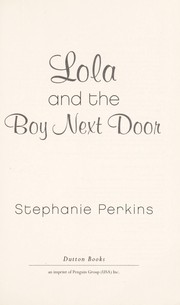
Lola and the Boy Next Door
Costume maker Lola must choose between older Max and inventor Cricket while her two dads hold home steady.
2,045-word summary · 9 min read

Girl in Pieces
After treatment ends early, seventeen-year-old Charlie Davis tries to rebuild in Tucson through work, drawing, and fragile friendships.
2,730-word summary · 12 min read

Always and Forever, Lara Jean
Senior year brings college letters, distance from Peter, and a dad wedding Lara Jean helps hold together.
2,037-word summary · 9 min read
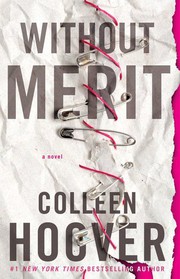
Without Merit
Merit Voss feels invisible in a crowded converted church home until Sagan, Luck, and a painful night force the truth out.
3,300-word summary · 15 min read
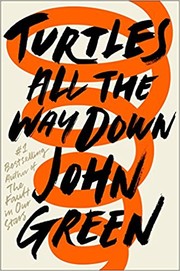
Turtles All the Way Down
Aza Holmes lives with intrusive thoughts while chasing a missing billionaire with Daisy.
2,007-word summary · 9 min read
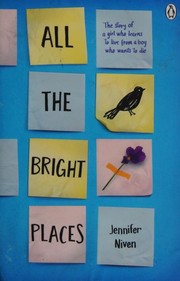
All the Bright Places
Grieving Violet and struggling Finch wander Indiana for a school project and each other.
2,208-word summary · 10 min read

To All the Boys I've Loved Before
Lara Jean's secret love letters get mailed and she fake-dates Peter Kavinsky to dodge Josh.
3,683-word summary · 16 min read

The Wilderness
Four Black women move through twenty years of friendship in Angela Flournoy's discontinuous, widely praised second novel.
2,141-word summary · 10 min read
The Vacationers
A New York family's two-week stay in Mallorca turns into a comedy of exposed secrets when a magazine editor's affair and a son's debts come to light.
2,324-word summary · 10 min read
The Survivor Wants to Die at the End
The third They Both Die at the End novel follows two nineteen-year-olds who would rather not be alive, and the contract they sign to live for Begin Days…
2,986-word summary · 13 min read
The Collected Regrets of Clover
A death doula who writes down the last words of strangers keeps her own heart locked away, until a new neighbor, a dying photojournalist and a road trip to…
3,055-word summary · 14 min read

Pumpkinheads
Deja and Josiah have worked the Succotash Hut together every autumn. On their last Halloween shift, she pushes him to chase a crush and they discover something…
2,409-word summary · 11 min read

Nick and Norah's Infinite Playlist
Rachel Cohn and David Levithan trade chapters as two music-obsessed teenagers spend one long New York night together, from a five-minute fake date to something…
2,355-word summary · 10 min read