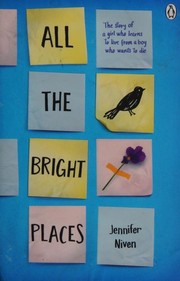
All the Bright Places
2,208-word summary 10 min read 388 pages in the book
- First published
- 2015
- Publisher
- Knopf Publishing Group
- Pages
- 388
- ISBN
- 9780385755887
Reading options
What's inside (6 sections)
I want to note content at the start because this book needs care. All the Bright Places is about teens living with grief, depression, bipolar disorder, and suicide, with a death that will hurt. It was published January 6, 2015 by Knopf Publishing Group, 388 pages in hardcover, ISBN 9780385755880, author Jennifer Niven. Violet Markey survives her sister's death and wants to quit living fully. Theodore Finch thinks about death daily and wants reasons to stay. They save each other once on a bell tower and then try to save each other for a school project wandering Indiana. I cried and underlined and set it down to breathe.
Violet is popular, pretty, guilty. Nine months ago her sister Eleanor died in a car crash on a road Violet suggested. Violet has not ridden in a car since, quit cheer and council, stopped writing. She stands on the bell tower ledge thinking about jumping, not because she plans every day but because grief makes the edge feel honest. Finch is there, wild haired, labeled freak, counting ways to die on his computer while also noticing everything alive. He talks her down with jokes and facts. The school decides Violet saved Finch. That misreading shapes everything. She becomes his reason in their story. He becomes her project partner by choice.
Their U.S. Geography project asks them to wander Indiana and write about special places. Finch proposes they do it together. They visit Hoosier Hill, the highest point, a homemade roller coaster, a Blue Hole for swimming, a bookmobile park, murals, diners. Wandering becomes dating. Driving becomes therapy Violet did not consent to but needs. Finch pushes her to ride in cars again, to write again, to talk about Eleanor. Violet pushes Finch to show up, to laugh, to stay. Their banter is quick and literary. They leave notes. They make playlists. They fall fast in the way grieving teens do when someone finally sees.
Finch lives with undiagnosed bipolar disorder, though the book uses his terms Awake and Asleep more than labels at first. Awake is bright, fast, funny, sleepless, driving all night, painting walls. Asleep is heavy, slow, absent, missing school, staring. He is abused by his father who hits and belittles, misunderstood by his mother who loves but minimizes, bullied at school for weirdness. He writes facts about suicides of famous people, methods, what worked. He thinks about a good death as kindness to others. Those passages are hard and precise. Niven, who lost someone herself, writes them without glamour. Pain as fact, not poetry.
Violet heals in visible steps. She rides in a car with Finch gripping door. She writes about her sister. She talks to her parents who grieve separately and cannot reach her. Her mother cries while cooking. Her father works late. They love Violet but tiptoe. Finch barges through with humor that helps where caution failed. A scene where Violet finally tells the truth about the night Eleanor died, that she suggested the route, that she lived, is plain and devastating. Finch listens without fixing. That listening lets her breathe.
Wandering Indiana
The places matter less than motion, but a few stayed. Hoosier Hill with wind and view. A giant ball of paint. A bookmobile. The Blue Hole, clear water in woods where they swim and laugh and where later Violet returns alone. Finch plans routes with care, bringing snacks, blankets, books. He photographs Violet laughing. She writes descriptions that get better each trip. School project as excuse for exposure therapy works narratively and emotionally. Movement counters rumination. New sights interrupt loops. For a while, it helps both.
Daisy style friendship is absent here. Violet's old friends are kind but distant. They do not know how to talk about Eleanor, so they talk about parties. Finch has few friends, a sister who worries, a mother who tries. Their isolation makes their bond intense and fragile. No buffer when fights come. When Violet's parents forbid seeing Finch after they stay out all night, neither has backup. That ban starts Finch's final slide. Love without community is thin shelter.
Finch's attempt and disappearance are told without sensationalism. He takes pills, regrets, goes to ER, gets stomach pumped. He tries a support group, sees a schoolmate, feels exposed. He fights Violet when she worries, ashamed of need. He runs, sends cryptic texts tied to project places, emails goodbye to many. Violet decodes too late and finds him at Blue Hole drowned. Niven does not describe body in detail. She describes Violet's scream, water cold, phone dropped. Grief as fact again. After, Violet finds his song at last project site. She swims alone in Blue Hole and feels peace without feeling better. Healing as direction, not destination.
What makes this more than sad romance is how it shows help limits. Violet cannot save Finch by loving well. Parents cannot save by worrying. Teachers notice late. Doctors are mentioned but not engaged because Finch refuses labels. The book does not blame Violet for missing signs. It shows she saw some and missed others while dealing with her own wound. That nuance matters for young readers who may feel responsible for friends. Love helps. It does not cure illness. Professional help and honesty are needed, and even then loss happens.
Style and reception
Niven writes in alternating short sections, Violet and Finch, present tense that feels immediate. Violet's voice is careful and observant. Finch's is fast and associative, with facts about death interrupting. The contrast teaches. You feel Violet lighten and Finch darken even as they love. Indiana details, corn, quarries, diners, winter light, ground the story. No glamour. Just small towns with bright spots if you look.
Reception was huge. Goodreads Choice, bestseller lists, Netflix film with Elle Fanning and Justice Smith. Comparisons to Fault in Stars and Eleanor and Park are fair for pairing damaged teens, though this book is bleaker about saving. Some critics note manic pixie boy trope risk, Finch saving Violet while dying. Niven partly counters by giving Violet agency and future. She writes after, swims, lives. Finch does not get fixed by love, which resists trope. Still, the structure leans on his death for her growth, a pattern worth naming. The author's note about her own loss softens but does not erase.
Pacing is steady for 388 pages. Bell tower, wandering, romance, ban, search. Middle wanders a little long with place visits that repeat. A coaster, a hill, a hole. I skimmed one diner. The last hundred pages tighten painfully. Texts, emails, search. I read fast with dread. The final swim is quiet and earned. No speech. Just water.
Criticisms beyond trope include parental thinness. Violet's parents love but hover at edges. Finch's father is monster with little backstory. His mother is tired with little arc. Given mental illness and abuse drive plot, more adult depth would help. School counselors appear briefly. A fuller system would model help seeking. As written, teens carry too much alone, which is realistic and also risky as model. An afterword with resources helps, and readers should use them.
Content guidance is essential. Suicide, self harm thoughts, abuse, grief, bullying. No graphic method detail beyond pills and drowning mention. No self harm instructions. Suitable for mid teens up with adult to discuss, or adults who remember. Do not read alone in crisis. Call local helpline or trusted person. The book wants you alive to finish wandering.
If you need company in grief or language for bipolar lows and highs, this offers both with care. If you need hope without loss, look elsewhere. Violet lives and writes. Finch dies and is loved. Bright places remain, visited and remembered, not owned.
Hospital, parents, and after
Finch's hospital night after pills deserves careful retelling without detail that harms. He takes, regrets quickly, tells someone, rides in ambulance with lights strange. Stomach pumped. Bright ER. Forms. A nurse who is kind without fuss. He calls Violet and cannot speak well. Shame fills more than nausea. The book shows regret as immediate and physical, not romantic. Help arrives because he asks, barely in time. That barely matters for readers. Ask early, ask messy, keep asking. Support group after feels exposing. Strangers in circle. Amanda from school there, which makes honesty harder. He leaves feeling seen in wrong way. Violet tries to visit and he pushes. Pushing as protection that harms. Those cycles will read familiar to anyone who loves someone depressed. Love offered, refused, offered again.
Violet's parents grieve Eleanor separately and fail Violet in ordinary ways. Mother cries cooking and hides. Father works late to avoid quiet. They love Violet but tiptoe around Eleanor's room kept same. When Violet starts wandering with Finch, they worry about grades and curfew more than sorrow, because practical worry is easier. After Finch dies, they finally talk about Eleanor with Violet at kitchen table, saying they missed signs with both kids. That late honesty does not fix, but opens. Family systems thaw slowly. A scene where mother holds Violet while she cries about Blue Hole without trying to explain helped me trust the book's view of parents. Imperfect, present late, trying.
School after Finch is hard in realistic ways. Hallways whisper. Teachers assign grief counselor. Friends bring casseroles and leave fast. Violet's ex boyfriend says wrong kind things. She returns to writing, first for class, then for herself. She visits project places alone to finish map Finch started. Hoosier Hill. Bookmobile. Blue Hole. Each visit aches and steadies. At Blue Hole she swims alone, floats, feels peace without feeling better. Healing as direction, not destination. That line, earned across 388 pages, is the book's gift. You do not get over. You go on with love carried.
I also kept thinking about Finch's facts project. He collects suicides of famous people with dates and methods on his computer. That file horrifies Violet when she finds it. Is it research or plan. Both, depending on day. The book does not show contents in detail, wisely. Lists as symptom, not guide. If you keep such files, please tell someone and delete. Finch's sister finds his computer and gives to Violet, who deletes after reading once. Deleting as care for others left. Small mercy.
The film adaptation with Elle Fanning and Justice Smith captures wandering and swimming well, though it softens some edges. Book remains fuller on interior loops. If you watch after reading, notice what voiceover cannot carry. Finch's Awake speed. Violet's guilt quiet. Indiana light. Both versions want you alive. Choose book for depth, film for company.
A final practical note. If Finch were my friend, I would want a script. Say I care. Ask about plans. Stay. Call adult or crisis line. Do not promise secrecy about dying. The book models some of this through Violet's mistakes. She promises not to tell, then tells late. Learn from lateness. Tell early. Resources in author's note and in front matter matter more than plot. Bright places are real parks and hills you can visit with others in daylight. Go with others.
Sisters, counselors, and lists
Violet's sister Eleanor haunts in photos and habits. Perfect student, cheerleader, driver. Violet remembers her laugh in kitchen, her advice on eyeliner, her choice of road that night. Guilt says Violet suggested route, so Violet should have died. Grief counseling says survivor guilt lies. Both live in Violet's head on loop. A scene where Violet wears Eleanor's sweater to school and gets hives from perfume still in wool shows body keeping score. Smell as memory trigger. She washes sweater and keeps it. Love washed but kept.
Finch's sisters, Kate and others, watch with worry and teasing. They share bathroom, steal fries, notice when he does not come home. Kate covers once, then tells mother when scared. That sibling tattling as care is well drawn. No one wants to be snitch. Everyone wants brother alive. After Finch dies, Kate gives Violet his computer and notes. Passing archive as trust. Sisters as keepers in both families. Eleanor kept by Violet. Finch kept by Kate. Keeping as burden and honor.
Counselors and teachers appear briefly but matter. A geography teacher assigns wandering project that saves Violet for months. A counselor offers group that Finch tries once. A principal suspends after fight without asking why. Systems help and miss in turns. The book does not indict schools, just shows limits. One caring assignment can open world. One suspension can close. Adults reading should note power of project based learning here. Give kids real places to go with guidance. Wandering with purpose heals more than detention.
Finch's lists of suicides on computer need a safe framing note from me. The book does not detail methods, wisely. It names that he collects. If you collect similar, please delete and tell someone. Curiosity can tip to planning. Violet deleting file after reading once models care for others left. Do not share lists. Share worry with adult or helpline. Bright places include clinics and crisis lines visited in daylight with others. Go with others holds for help too.
Facts held: first published January 6, 2015 by Knopf Publishing Group in the United States, 388 pages in hardcover, ISBN 9780385755880, author Jennifer Niven. Summary follows that text.
FAQ
When was All the Bright Places published?
It was first published January 6, 2015 by Knopf Publishing Group. The hardcover runs 388 pages with ISBN 9780385755880.
Who are the main people?
Violet Markey, Theodore Finch, her parents, his family, and school friends.
Is it part of a series?
No. It is a standalone novel.
Similar books
More like All the Bright Places →
Slammed
Grieving Layken falls for neighbor Will, then learns he is her teacher, and poems carry them.
2,793-word summary · 12 min read

Heartstopper: Volume Four
Nick and Charlie face eating disorders, coming out, and first love in Oseman's tender fourth volume.
2,393-word summary · 11 min read

Just for the Summer
Emma and Justin date to break a matching curse, then face sudden guardianship and illness on Lake Minnetonka.
3,090-word summary · 14 min read

Better than the Movies
A rom com obsessed senior hires her annoying next door neighbor to win her crush, then finds real love is messier and kinder than any movie plot.
2,438-word summary · 11 min read

Anna and the French Kiss
Anna Oliphant is sent to Paris boarding school and falls for Etienne while misreading Bridget and Matt.
3,262-word summary · 14 min read

Turtles All the Way Down
Aza Holmes lives with intrusive thoughts while chasing a missing billionaire with Daisy.
2,007-word summary · 9 min read