

Finding Perfect
2,315-word summary 10 min read 96 pages in the book
- First published
- 2019
- Publisher
- Atria Books
- Pages
- 96
- ISBN
- 9781668013380
- Series
- Hopeless (#2.6)
Reading options
What's inside (9 sections)
I picked this up expecting a quick, sweet tie-in, the kind of short novella a popular writer puts out to give her devoted readers one more hour with characters they already love. What I found was a story that fits in under a hundred pages and carries more emotional weight than plenty of full-length romances I have read. It is the last piece of Colleen Hoover's Hopeless series, told from the point of view of Daniel Wesley, and it closes the loop on a secret that has been hanging over two of the series' best characters for years. It was first published in 2019 and later reissued by Atria as a slim 96-page paperback, and it works as an ending, though not everything in it is as tidy as the premise suggests.
A Thanksgiving that already feels wrong
The story opens on Thanksgiving break. Daniel, nineteen and in college, is stuck at home with too much time on his hands. His friend Breckin is over playing video games, but Breckin wants to head home for what he calls "family shit," and Daniel is already dreading the week ahead. The whole group plans to gather for Friendsgiving at the home of Sky's parents, Karen and Jack, and that prospect is no comfort either. His relationship with his girlfriend, Six Jacobs, has gone quiet and strained. He keeps avoiding texting her because he half expects her to end things, and putting off the conversation feels easier than actually having it.
He finally cracks and tells his older sister Hannah, a medical student, what is bothering him. This is where the book reaches back to the earlier novella Finding Cinderella, because the trouble between Daniel and Six goes back to high school. Daniel had a secret encounter with a girl in their school's maintenance closet, a girl whose face he never saw and whose name he never learned. It was only later, after the two of them started dating, that he realized the girl was Six, and that the encounter had produced a child she had carried alone. Six had discovered the pregnancy while studying abroad in Italy, given birth there, and placed the baby for a closed adoption. Neither of them had any way to find out where their son had gone. Hannah, practical and calm, tells him the most useful thing anyone says in this book: go to Six, ask what she needs, and offer support without attaching conditions to it. As he heads out, he discovers that his younger sister Chunk has been hiding under the covers on Hannah's bed and has heard every word. Before he leaves, he makes both sisters swear to keep it quiet.
That opening is small and domestic, and that is clearly the intention. Hoover is not dropping us into a courtroom or a crisis. She is showing us a young man sitting around his house, avoiding a text message, and letting the weight of an old secret sour a holiday. It is a quiet way into a story that is really about what happens when two people finally stop avoiding the thing between them.
Six finally tells Daniel what happened in Italy
Daniel goes to Six's house, and the first thing they establish is that neither of them wants to break up. The distance is not about a lack of love. Six explains that the holidays make it worse, because they remind her constantly of the son she has never seen. Daniel pushes gently, and for the first time she opens up and tells him the whole story of what happened overseas.
She talks about the fear and loneliness of discovering she was pregnant while studying far from home, about keeping it hidden, and about the American teacher at her school, Ava Roberts, who helped arrange the closed adoption. She describes the delivery and the goodbye, including the detail that she was allowed to hold their son for about an hour before he was handed over to his adoptive parents. That one hour is the emotional centre of the novella. It is the only time she ever got to be a mother to him, and it is the memory she has been carrying ever since.
Daniel does not offer solutions. He offers his love and his support, and that turns out to be what she needs. Their conversation is tearful and honest, and it mends the rift between them in a way that feels earned rather than convenient, because the whole problem was that they had been circling the secret without naming it. Once it is out in the open, the air changes. Hoover writes this section with a light touch. She does not milk the reunion or pile on melodrama, and the restraint is what makes the scene work.
Daniel decides to find their son
The next morning, Daniel decides that words of support are not enough. If Six's grief comes from not knowing whether their son is safe and happy, then the answer is to find out. He enlists Hannah and Chunk, and the three of them start calling adoption agencies and lawyers in Italy. They hit the same wall again and again: a closed adoption is closed for a reason, and the legal restrictions stop them at every turn.
Hannah suggests a different angle. Instead of chasing agencies, they start calling schools in Italy, and Daniel eventually gets through to Ava Roberts, the teacher who helped Six. Ava is cautious. She explains that she is bound by the legal limits of the arrangement and at first resists saying anything at all. Daniel makes an emotional plea, describing Six's sadness and the fact that she has never had any closure, and that plea is what moves her. Ava agrees to pass Daniel's contact information along to the adoptive family through the agency, while warning him not to expect a reply. As a backup, Hannah even floats the idea of DNA testing. Daniel chooses not to tell Six what he is doing, because he does not want to raise her hopes if this turns out to be a dead end. That choice is understandable, but it also seeds the tension that follows, and the book is honest enough to let it sit there for a while.
Friendsgiving, and a call from the adoptive father
The Friendsgiving dinner brings the whole group together: Daniel, Six, Breckin, Holder and Holder's girlfriend Sky, plus Sky's parents. Daniel is a bundle of nerves. He drops eggs while trying to help Six and Sky cook, and he retreats to play video games with Holder and Breckin. His stress comes out as insensitive joking. He keeps calling Breckin "Powder Puff" because of his puffy jacket, calls Sky a crude nickname, and at one point uses a slur against Breckin, who is gay. This time the others push back. Holder is the one who finally kicks him out of the game, and Six follows, apologizing for his behaviour. Daniel is genuinely surprised by the backlash, and his reaction is one of the few moments where the novella shows its age and its hero's blind spots at the same time. He thinks through what he has just learned about how people see him, and the list he comes up with is blunt: he is insensitive, he is an asshole, he is annoying, he is a guy. It is a small, human moment of self-awareness in an otherwise very controlled hero.
Then his phone rings with an unknown number. He steps outside, and the caller identifies himself as Graham Wells, the boy's adoptive father. Graham is calling without his wife's knowledge, and he wants to understand what Daniel is after before he says or promises anything. He is careful and a little cold, and for good reason: he is trying to protect his wife from being hurt. Daniel explains that his only goal is to ease Six's suffering by confirming that their son is happy and well cared for. Graham asks why they adopted, and Daniel learns that they had tried to have children of their own and could not, and that his wife's hysterectomy left adoption as their only path. Graham agrees to talk it over with her, but he makes no guarantees.
After the call, Daniel is overwhelmed and empty. He still decides not to tell Six, because he does not want to hurt her further if the couple never writes back. When she finds him, she is worried, because it is the first time she has ever seen him cry. He wipes away the tears and asks her to trust him without explaining why. It is a good scene, tense and quiet, and it shows how much the secret is costing him too.
Quinn's email gives their son a name
Later that evening, back at Six's house, Daniel receives a long email from Quinn Wells, the adoptive mother. That is when he finally tells Six everything: the calls to Italy, the conversation with Ava, and the phone call from Graham. Together they read Quinn's message. She introduces herself and her husband, reveals that Ava Roberts is her sister, and describes the painful struggle with infertility that led them to adopt. She writes that their son is a miraculous gift, and she tells them his name: Matteo Aaron Wells. She says she wants Matteo to know his biological parents one day, and she invites Daniel and Six to come and meet him. She attaches several photographs.
The shift is immediate. Daniel and Six go from anxiety to joy, passing the phone back and forth and looking at pictures of a boy they have never seen. They call Quinn and Graham, who now live in Connecticut, and arrange to visit during their Christmas break in three weeks. They rush back to the Friendsgiving table to tell their friends and Sky's parents, and then they go to Daniel's parents to announce that they are grandparents. His parents are shocked at first, but they soften quickly once they see photos of Matteo, and they end up comforting Six and offering to pay for the plane tickets. Hoover keeps all of this moving briskly. There is none of the drawn-out confrontation a different writer might have milked, and for a novella that pacing is probably the right call.
Meeting Matteo in Connecticut
Three weeks later, Daniel and Six fly east and arrive at the Wells family home in Connecticut. Quinn and Graham greet them warmly, and after all the build-up Daniel and Six finally meet their son. The moment lands mostly on Six, who holds Matteo and cries, and the scene works because Hoover has spent the whole novella making us understand what that one hour in Italy cost her. They spend the day getting to know Matteo and the family that has raised him.
In a private conversation, Graham admits to Daniel that he had fully intended to refuse contact. He had called Daniel only to size him up, and he was prepared to shut the door. What changed his mind was the sincerity of Daniel's love for Six, which reminded him of his own devotion to Quinn. It is a neat bit of mirroring between the two couples, and it is the clearest statement of the book's idea that family is built through love and commitment rather than biology alone.
That evening, Six tells Daniel that seeing Matteo so happy and so loved has finally given her peace. She says she feels connected again, and the novella closes on the two of them, secure in their relationship and in the resolution they have found. It is a happy ending, and the book earns most of it, even if the final beat is a little too polished for the messy situation it is resolving.
What works, and what does not
The strongest thing here is the focus on communication. The entire conflict exists because Daniel and Six each hold back from the other, and the story moves forward only when they start telling the truth. Hannah's advice to Daniel, that he should ask Six what she needs instead of trying to fix things, is simple but it gives the novella its spine. Daniel's search is an act of love, but it is also an act of listening, and Hoover is good at showing how much courage it takes for a young man to say that he does not know what to do.
The weakness is the same as the strength: this is a short book, and it shows. At roughly ninety-six pages in the Atria edition, it reads more like a set of loose ends tied off than a fully developed story, and the adoption plot resolves with a speed that real life rarely allows. Closed adoptions are complicated, and the legal and emotional realities are waved away here in a handful of phone calls and one email. Daniel's insensitive joking is set up as a real flaw and then dropped almost immediately once it has served its purpose. Readers looking for a full-length romance with slow-building chemistry will not find one; this is a novella built around one difficult conversation and its consequences.
That said, I would not call it a shallow cash grab. Hoover gives the closure that fans of Sky, Holder, Daniel and Six have been waiting for, and she lets the grief around Six's pregnancy and the adoption have real weight before she resolves it. It helps to have read Finding Cinderella and All Your Perfects first, since the emotional payoff depends on knowing these people and the history between them. On its own it still works as a clean, moving story about a couple learning to talk to each other, and that is enough to recommend it to readers who want to see this particular family get its ending.
FAQ
Is Finding Perfect part of the Hopeless series?
Yes. It is the final novella in the series, told from Daniel's point of view, and it ties together characters from Hopeless, Finding Cinderella and All Your Perfects.
Who are Matteo's adoptive parents?
Quinn and Graham Wells, the couple at the centre of All Your Perfects. They live in Connecticut and adopted Daniel and Six's son after struggling with infertility.
Do I need to read the other Hopeless books first?
It helps, because the emotional payoff depends on knowing Daniel, Six and their history, but the novella can be read on its own as a story about a couple learning to talk.
Similar books
More from Hopeless first, then related titles.
Hopeless
Homeschooled Sky starts public school and falls for Holder, whose past links to hers in painful ways.
2,015-word summary · 9 min read
Losing Hope
Holder retells Hopeless from his side, grieving Less and searching for Hope.
2,492-word summary · 11 min read

Finding Cinderella
Daniel hunts a laugh he heard in the dark years ago, and it leads him back to Six.
2,129-word summary · 9 min read
Point of Retreat
Will and Layken keep love and two brothers together through bills, jealousy, and a pregnancy scare.
2,037-word summary · 9 min read

Slammed
Grieving Layken falls for neighbor Will, then learns he is her teacher, and poems carry them.
2,793-word summary · 12 min read
Thank You for Listening
A former child star turned audiobook narrator takes a final romance job to help her grandmother, only to fall for the secretive voice reading opposite her.
2,148-word summary · 10 min read

On Dublin Street
A guarded young woman in Edinburgh agrees to a no-strings fling with her roommate's brother, and finds the past she fled catching up with her.
2,491-word summary · 11 min read
This Girl
Honeymoon retelling as Will recalls first love, classroom ban, loss, fights, and vows that stick.
2,526-word summary · 11 min read


Maybe Someday
Sydney moves across the hall after betrayal and writes songs with deaf guitarist Ridge.
2,077-word summary · 9 min read

Heart Bones
Poor Beyah spends summer in Texas with distant father and falls for secretive Samson.
2,072-word summary · 9 min read

Confess
A young mother fighting to see her son takes a job with a Dallas artist who turns anonymous confessions into paintings.
2,733-word summary · 12 min read

November 9
Fallon and Ben meet every November 9 for five years with no contact between, until his novel reveals the fire that scarred her.
2,547-word summary · 11 min read
Ugly Love
Colleen Hoover's Ugly Love retold: Tate and Miles, the rules, the past with Rachel, and the lake letter.
2,339-word summary · 10 min read
Reminders of Him
Kenna returns after prison to meet the daughter she lost, facing the family that blames her.
2,168-word summary · 10 min read

Reckless
Kiera and Kellan marry in secret as the D-Bags explode onto the charts, then fight to keep their private life from becoming the band's best publicity.
2,231-word summary · 10 min read


Wrecked
A reckless Formula 1 driver meets the PR specialist hired to shadow him, and both are forced to face the grief they have been outrunning.
2,329-word summary · 10 min read

The Collected Regrets of Clover
A death doula who writes down the last words of strangers keeps her own heart locked away, until a new neighbor, a dying photojournalist and a road trip to…
3,055-word summary · 14 min read

Ten Tiny Breaths
Four years after a drunk-driving crash took her parents, boyfriend and best friend, Kacey flees to Miami with her sister and falls for a neighbor hiding a…
2,599-word summary · 12 min read

Release Me
A guarded engineering graduate newly arrived in Los Angeles is used as bait at an art gala, then offered a million dollars to pose for a powerful man's private…
2,070-word summary · 9 min read

Daydream
A bookish junior tutors a hockey captain in exchange for dating lessons, with one rule: do not fall in love. Daydream finally gives Henry Turner his own Maple…
2,611-word summary · 12 min read

Breathe
A seventeen-year-old takes her pregnant mother's housekeeping job on an Alabama island and meets the owner, a teen rock star who wants nothing more than to be…
2,983-word summary · 13 min read
The Mermaid Chair
Jessie Sullivan returns to her childhood home on Egret Island to care for her agoraphobic mother, then finds her marriage, her faith, and a monk's vow thrown…
2,237-word summary · 10 min read

Forever Too Far
Engaged and pregnant, Blaire Wynn expects a quiet life in Rosemary Beach with Rush Finlay, but his loyalty to his troubled sister Nan puts their wedding at…
2,342-word summary · 10 min read

Sam's Letters to Jennifer
A grieving journalist reads her grandmother's letters and finds a decades-long love affair that changes how she sees her family.
2,310-word summary · 10 min read

Amy & Roger's Epic Detour
Amy Curry has not driven since the crash that killed her father. With Roger at the wheel and a box of maps between them, a cross-country trip becomes a slow…
3,034-word summary · 13 min read
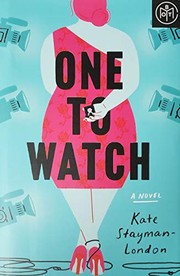
One to Watch
A plus-size fashion blogger takes the lead role on a reality dating show to prove she belongs on television, and finds she might want what the cameras offer.
2,478-word summary · 11 min read

Rule
A tattoo artist still grieving his twin and the polished girl who has loved him since she was thirteen finally collide one drunken night in Denver.
2,014-word summary · 9 min read

The No-Show
Three women are stood up on Valentine's Day by the same man, but the timeline is not what it seems. O'Leary's warmest book with a knife in it.
2,127-word summary · 9 min read