
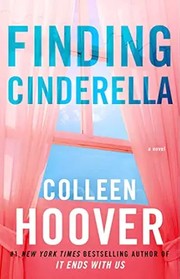
Finding Cinderella
2,129-word summary 9 min read 176 pages in the book
- First published
- 2013
- Publisher
- Atria Books
- Pages
- 176
- ISBN
- 9781476783284
- Series
- Hopeless (#3)
Reading options
What's inside (10 sections)
I came to Finding Cinderella feeling wrung out. I had read Hopeless and Losing Hope back to back, both published in 2013 by Atria Books, both heavy with buried memories and grief, and I needed a breath. A friend told me the third book in the Hopeless series was short, funny, and light. I did not believe her. How light could a 176 page companion novella be when the first two books dealt with kidnapping and loss? I started it on a Saturday morning with coffee, planning to read half. I finished it before lunch, smiling in a way the first two books never made me smile.
Colleen Hoover published Finding Cinderella in 2013 with Atria Books, 176 pages in the standard paperback, as a companion to Hopeless (2012) and Losing Hope (2013). It follows Daniel and Six, the best friends of the earlier leads. Holder was Sky's love interest and the narrator of book two. Daniel is his closest friend, funny where Holder is intense. Six is Sky's best friend, sharp and loyal, the girl who stood by Sky when school turned mean. Their story was teased in the margins of the earlier books. This novella pulls them forward.
If you have not read the series, you can still follow this one. It helps to know that Sky grew up homeschooled, met Holder in her senior year, and uncovered painful truths about her childhood with Six beside her. Losing Hope retold that story from Holder's side. Finding Cinderella steps sideways. Same town, same friend group, different couple, different mood.
The dare in the dark
The book opens with Daniel remembering a strange afternoon from high school. There was a dare, the kind of stupid game teenagers play at parties or after school when adults are gone. He ended up in a dark storage room or closet with a girl he could not see. I will keep the physical details vague here, because the point is not the mechanics. The point is that they talked and laughed in the dark without names or faces, and something clicked.
Daniel remembers her laugh most. He remembers feeling at ease in a way he rarely felt sober and in daylight. Then it ended. Lights, noise, friends pulling them apart. He never learned who she was.
He carried that memory for years. Not in an obsessive way. More like a song you heard once and keep humming. He told Holder about it in pieces. Holder teased him. Daniel pretended it did not matter.
What I liked about this opening is how Hoover writes teenage boys when they are not performing. Daniel is loud in groups. Alone with his thoughts, he is softer. He replays the conversation. He wonders if he imagined the connection. He checks yearbooks in his head. That mix of confidence and doubt felt true to seventeen.
Six and her armor
Six enters the earlier books as Sky's anchor. She is the friend who brings food, who sits through silence, who says the blunt thing when everyone else dances around it. In Losing Hope we see her through Holder's eyes, funny and tough. Here we get closer.
Six has her own weight. She grew up fast. She works hard. She jokes to deflect. Hoover does not give her the same buried trauma plot as Sky, and I was glad. Not every character needs the same wound. Six's struggles are more ordinary and therefore easier to sit with. Money pressure. Family friction. The feeling of watching your best friend pair off while you stay single and pretend it is fine.
She and Daniel orbit each other for a long stretch without realizing they already met. They bicker in group scenes. He flirts. She shuts him down with one liners. Friends watch and roll their eyes. I have seen this dynamic in real life, two people who are clearly fond of each other and equally determined not to say so first.
Hoover writes banter well here. Better than in the heavier books, I think, because the stakes are lower and she lets jokes land without undercutting them with grief. Daniel teases Six about her lists and her temper. Six teases Daniel about his ego and his fear of commitment. The texts and notes they trade carry half the romance.
The shoe and the search
The Cinderella part arrives when Daniel meets a girl under odd circumstances and loses track of her again. I am being deliberately general, because the novella leans into fairy tale coincidence and the specifics work best discovered fresh. The broad shape is this. Daniel encounters someone who charms him, the moment breaks, and he is left with a token and a feeling. A missing shoe, in the stories people tell about this book, though the actual object and setting matter less than what Daniel does next.
He decides to find her. Not in a grand stalker way. In a goofy, determined, ask-everyone way that annoys Holder and amuses Six. He describes her laugh to anyone who will listen. He checks places she might be. He makes a fool of himself more than once.
This is where the book is most fun. Daniel is not Holder. Holder broods and carries guilt like a backpack. Daniel deflects with humor and then surprises you with sincerity. Watching him try to explain to his friends that he recognized a stranger by her laugh, knowing how it sounds, made me laugh out loud. He knows it sounds thin. He follows it anyway.
Six watches this search with complicated feelings. She likes Daniel. She will not admit it. Seeing him chase a mystery girl stings, even if she tells herself it should not. Hoover writes that jealousy without making Six small. Six keeps showing up for her friends, keeps working, keeps joking, while privately sorting out what she wants.
When the reveal comes, that the girl in the dark years ago and the girl now are connected, it lands the way fairy tale reveals should. Of course, you think. Of course it was her. Hoover plants it fairly. The laugh. The timing. A line Six says that Daniel heard before. I guessed it about twenty pages early and still enjoyed watching Daniel catch up.
Why the tone feels so different
Readers who found Hopeless heavy should know this book is built differently. The first two books dealt with suppressed memories, panic, and the long work of telling truth about harm done to children. They earned their tears. They also exhausted me.
Finding Cinderella deals with lighter material. Misunderstandings. Pride. Fear of looking foolish. The question is not whether the leads can survive their pasts. It is whether they can admit they like each other without games.
That shift divided some fans. A few reviews I saw called it too slight after the big themes. I get that. If you came for the intensity of Sky and Holder, Daniel and Six can feel like dessert after a heavy meal. But I needed dessert. The humor gave the friend group room to breathe. We see Holder relaxed. We see Sky happy. We see Breckin and others in easy scenes that the earlier books rarely allowed.
Hoover also uses the short length well. At 176 pages there is no room for the repeating middle that slowed Losing Hope, where scenes from book one replayed from a new angle. Here every scene moves forward. Dare, years pass, search, reveal, choice. The pace stays quick without feeling rushed, because the emotional question was set up years earlier in story time.
Fresno and the high school halls feel lived in by now. Hoover does not over describe. A parking lot, a kitchen table, a phone screen. The focus stays on voices. That suits a novella. You are here for the people, not the place.
The parts that wobble
Short books get forgiven a lot, but a few things still bugged me.
First, coincidence does heavy lifting. The fairy tale frame excuses some of it. Cinderella stories run on lost shoes and timely bells. Still, Daniel failing to recognize Six for so long while spending time with her daily asks a lot. Hoover explains it with changed hair, changed context, years passing. I accepted it enough to finish happily, but I noticed the seams.
Second, Six deserves more interior life. We get her jokes and her loyalty, but her chapters can feel thin next to Daniel's longer pining. I wanted one more scene of Six alone, not performing for friends, saying what she fears about being second choice. There are hints. A late night call. A quiet drive. I wanted the camera to stay longer.
Third, the steam and the sweetness sit oddly together at times. Hoover writes open door scenes between consenting adults, which fits new adult romance. After the playful chase, the shift into intense physical scenes felt abrupt to me in a book this short. Not unwelcome, just quick. One more bridge scene would have helped.
None of this ruined the read. It is a novella doing novella work. Meet, charm, complication, reveal, happy choice. Judged as that, it succeeds.
Who should pick it up
Read Hopeless first. Then Losing Hope if you want Holder's side. Then come here for relief and a smile. You will appreciate Daniel's jokes more once you have seen him steady Holder through dark stretches. You will appreciate Six's happiness more once you have seen her hold Sky up.
New readers could start here and follow the plot. The book explains enough. But the emotional payoff depends on knowing these people. A stranger meeting Daniel mid search gets a funny romance. A series reader gets a reunion.
I finished it and sat quiet for a bit, not because I was sad but because the contrast struck me. Hoover spent two books showing how secrets rot. Here she shows how a kept memory can ripen instead. Daniel held a kind afternoon in the dark for years without knowing whose it was. When he learns, he does not feel tricked. He feels lucky. That turn, from loss to luck, is the whole book in one move.
It is not her deepest book. It does not try to be. It is warm, quick, and kind to characters who spent two books supporting others. Six gets her dance. Daniel gets his answer. The glass shoe fits because both of them finally stop running. If you need a short romance that leaves you lighter than it found you, this one does the job. Just do not start it at midnight unless you are fine finishing before lunch, like I did.
A note on where it sits
Publication order helps. Hopeless came in December 2012 from Atria. Losing Hope followed in July 2013. Finding Cinderella arrived later in 2013, with Finding Perfect closing related threads in later years. Reading in that order lets the jokes stack. A line Daniel drops here echoes a scene Holder fumbled earlier. A kindness Six shows here pays back a cruelty Sky faced before.
At 176 pages it also works as a palate cleanser between longer books. I have since recommended it exactly that way. Finished something heavy? Read this. Miss the Hopeless crew without wanting to cry? Read this. Want to test Hoover's voice before committing to a full novel? Read this.
What I kept thinking about after
What stayed with me was not the shoe. It was the idea that Daniel remembered kindness correctly. He met someone briefly, in poor light, with no name to attach, and he stored the evening as good. Years of school and work and group hangs did not overwrite it. When life gave him a second chance to place the memory, he took it without irony.
I liked that Hoover lets Six be the one who is found without making her passive. Six chooses Daniel back. She could have laughed off his search or punished him for taking so long. Instead she hears him out, checks his story against her own memory of that dark room, and decides he earned an answer. That choice matters more than the token. Fairy tales often leave the girl waiting. Here both of them move. He searches. She answers. They meet in the middle, which feels more honest than rescue.
One caution. This is new adult, not young adult shelved in school libraries. The characters are older teens moving into adult life, and the romance includes adult scenes. That matches the series lane. Hopeless was sold as new adult as well. If you are buying for a younger teen, skim first or pick another Hoover title aimed younger. For adult romance readers who like friend groups, banter, and fairy tale bones, the fit is easy.
FAQ
When was Finding Cinderella published?
It was published in 2013 by Atria Books. The standard paperback runs 176 pages with ISBN 9781476783284.
Is it part of a series?
Yes. It is a Hopeless companion novella, book three after Hopeless and Losing Hope, following Daniel and Six.
Do I need to read Hopeless first?
Read Hopeless first, then Losing Hope for Holder's side, then this for relief. New readers can follow it, but series readers get more.
Similar books
More from Hopeless first, then related titles.
Hopeless
Homeschooled Sky starts public school and falls for Holder, whose past links to hers in painful ways.
2,015-word summary · 9 min read
Losing Hope
Holder retells Hopeless from his side, grieving Less and searching for Hope.
2,492-word summary · 11 min read
One to Watch
A plus-size fashion blogger takes the lead role on a reality dating show to prove she belongs on television, and finds she might want what the cameras offer.
2,478-word summary · 11 min read
Pushing the Limits
Scarred Echo and foster kid Noah take on tutoring, family secrets, and a custody fight in this 2012 debut about trust after harm.
2,831-word summary · 13 min read
Wait for You
Avery flees Texas for college to bury her past, but patient Cam Hamilton refuses to stay a stranger.
2,866-word summary · 13 min read

Magnolia Parks
London socialite Magnolia Parks and BJ Ballentine keep hurting each other while trying to move on.
2,459-word summary · 11 min read
Hook, Line, and Sinker
Fisherwoman Hannah helps Fox stay sober while both dodge naming what they feel.
2,740-word summary · 12 min read
Never Never
Charlie and Silas wake with no memory of each other, and the notes their past selves left raise darker questions in part one of the Hoover and Fisher series.
2,516-word summary · 11 min read
This Girl
Honeymoon retelling as Will recalls first love, classroom ban, loss, fights, and vows that stick.
2,526-word summary · 11 min read
Point of Retreat
Will and Layken keep love and two brothers together through bills, jealousy, and a pregnancy scare.
2,037-word summary · 9 min read
Slammed
Grieving Layken falls for neighbor Will, then learns he is her teacher, and poems carry them.
2,793-word summary · 12 min read

Maybe Someday
Sydney moves across the hall after betrayal and writes songs with deaf guitarist Ridge.
2,077-word summary · 9 min read

Heart Bones
Poor Beyah spends summer in Texas with distant father and falls for secretive Samson.
2,072-word summary · 9 min read
Confess
A young mother fighting to see her son takes a job with a Dallas artist who turns anonymous confessions into paintings.
2,733-word summary · 12 min read
November 9
Fallon and Ben meet every November 9 for five years with no contact between, until his novel reveals the fire that scarred her.
2,547-word summary · 11 min read
Ugly Love
Colleen Hoover's Ugly Love retold: Tate and Miles, the rules, the past with Rachel, and the lake letter.
2,339-word summary · 10 min read

Her Soul to Take
A paranormal vlogger in a cult-run town summons a bound demon, and the only way to survive the god beneath the mine is to give him her soul.
2,089-word summary · 9 min read

Dumplin'
Willowdean Dickson enters her town's beauty pageant as a protest and discovers that confidence is harder to keep once she lets someone close.
1,922-word summary · 9 min read

Lick
Evelyn wakes up married to the lead guitarist of Stage Dive after a Las Vegas birthday she cannot remember, and the annulment gets complicated.
1,989-word summary · 9 min read

Blood Bonds
Oleander is chained in a Resistance camp, and her five Bonds have to find her before Silas Davies finishes what he started in this third Bonds that Tie book.
2,018-word summary · 9 min read
Ricochet
Lily Calloway tries to stay celibate for ninety days while Loren is in rehab, leaning on Rose, Connor, and Ryke as therapy forces her to face her childhood.
2,575-word summary · 11 min read

Cruel Beauty
A girl raised to kill the demon prince who rules her cursed land instead falls in love with him, in a retelling that mixes Beauty and the Beast with Bluebeard…
2,669-word summary · 12 min read
Under Locke
Iris Taylor moves to Austin broke and wary, takes a front-desk job at a tattoo shop, and spends the book learning that Dex Locke’s blunt cruelty and unexpected…
2,591-word summary · 12 min read
Reason to Breathe
Emma Thomas is a star student with a careful, invisible life at home. Evan Mathews notices the cracks, and the novel follows what happens when kindness gets…
2,197-word summary · 10 min read
Nightfall
Emory Scott wakes in Blackchurch, a remote house for the sons of the powerful, where the boy she once loved is imprisoned and the story she told about him…
2,339-word summary · 10 min read

Deviant King
A scholarship student at an elite boarding school is targeted by the king of the Four Horsemen, who seems to know her forgotten past.
2,384-word summary · 11 min read
Bet Me
A sharp actuary agrees to dinner with a charming serial bettor, then spends the next month pretending the wager does not matter.
2,710-word summary · 12 min read

Beneath This Man
Ava returns to Jesse after five days apart and finds his drinking, jealousy, and a hidden deception that changes what she can forgive.
2,341-word summary · 10 min read
The Casanova
Kate Landon's boss is also the pen pal she falls for online, hiding behind fake names, until family secrets and a trip to Paris get in the way.
2,274-word summary · 10 min read