
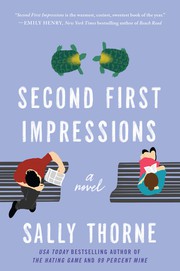
Second First Impressions
2,073-word summary 9 min read 384 pages in the book
- First published
- 2021
- Publisher
- William Morrow (HarperCollins)
- Pages
- 384
- ISBN
- 9780062912855
Reading options
What's inside (8 sections)
The woman who checks the padlock
Ruthie Midona is twenty-five and the acting office manager at Providence Retirement Villa. Her boss, Sylvia Drummond, is on a cruise, which is where the book finds her. Ruthie is a creature of routine. Each night she checks the dumpster padlock, and each night she stands at the window looking out at the town lights. It is a ritual with no practical purpose, and that is exactly what makes it important. The lights are a way of looking at the outside world without going into it.
Providence is a retirement villa with an uncertain future. Prescott Development Corporation bought the property eighteen months earlier, and every tenancy agreement expires on December 31 of the following year. The residents are elderly, eccentric and attached to the place. Ruthie has made herself indispensable to them, partly out of kindness and partly because being indispensable is the only security she understands.
She has a secret life. Under a pseudonym she co-founded and administers Heaven Sent You Here, the longest-running online forum for a television show called Heaven Sent. The show concerns Pastor Pierce Percival, his wife Taffy, their daughter Francine and eight-year-old twins Jacinta and Bethany, whose marshmallow-Jesus episode is an annual event for the fans. The yearly global rewatch is a major occasion in Ruthie's calendar. It is a lovely detail, because it shows that the woman who fears the outside world has built an elaborate life inside it, with other people who care about the same small things.
Sally Thorne published this novel in 2021, and it is a standalone. It has a different texture from The Hating Game, though the same gift for banter is everywhere. This book is about fear, obligation and the slow process of letting another person into a life that has been sealed shut.
The man at the gas station
The meet happens at a gas station. Ruthie pays the twenty-dollar fuel bill of a long-haired, heavily tattooed man on a motorbike whose card has been declined. She does it because she remembers a stranger who once paid for her and said "Pay it forward." The man thanks her, mistakes her for an elderly woman at a costume party, and mocks her "granny shoes," comparing her to Tweety Bird's granny. It is a terrible first impression, and Ruthie, humiliated, looks at her own reflection and half agrees with him.
She gives him a business card, Sylvia's card with her own email scribbled over it, and drives away. The next day she learns that the tattooed man is Theodore Prescott, son of the property owner, and that he is coming to work at the villa as part of an arrangement with his developer father. The man who insulted her shoes is now her colleague, and soon her neighbor, because he moves into a maintenance cottage right next to her office.
The forced proximity is the engine of the book, and Thorne has fun with the specifics. Teddy's tattoos are catalogued with affectionate precision: a scorpion, a knife and fork, a diamond ring, butterflies, a switchblade, a donut, an unfurled rose, and GIVE and TAKE across his knuckles. He rides a motorcycle he calls Dream Girl and wears BALMAIN jeans. He is an absurd figure, and that is deliberate. Against Ruthie's carefully controlled world, he is all surface and noise.
The Parloni sisters make the arrangement stranger. Renata and Aggie are ninety years old and advertise repeatedly for a male assistant to take them boutique shopping, buy fast food and flatter them. Nobody lasts a week. Ruthie is always at their beck and call because she hopes to become the manager someday. When Teddy arrives, they set their sights on him immediately, and his willingness to play along becomes one of the sources of Ruthie's irritation.
What Ruthie is afraid of
The book takes its time explaining why Ruthie lives the way she does. There are panic attacks, a fear of abandonment, strained relations with her parents, and an old church-money scandal involving Sylvia and a trial connected to Pastor Pierce. These are not incidental details. Ruthie's caution is a survival strategy built out of experiences she has never processed. The dumpster padlock and the view of the town lights are ways of keeping a world she cannot trust at a manageable distance.
The residents of Providence give the book its warmth. There are golden bonnet tortoises on the grounds, whose endangered status becomes an argument for preserving the villa. There is a community of old people whose lives are being threatened by a development deal, and Ruthie's loyalty to them is genuine. This matters because her eventual choice about whether to leave with Teddy is not a simple romantic decision. She would be abandoning people who depend on her.
Thorne writes the bickering between Ruthie and Teddy with a great deal of energy. He is the sunshine to her grump, a cheerful man with Tennessee roots and a relentless optimism that she finds exhausting. He wears bow ties and describes himself in terms borrowed from rodeo clowns and daddy-longlegs. She keeps waiting for him to be like everyone else, which is to say unreliable. Their banter is the book's most consistent pleasure, and it works because both of them are funny even when they are being cruel.
What gradually emerges is that Teddy is not the carefree man he appears to be. His family is wealthy, judgmental and invested in the development of Providence. He struggles to speak up for himself and secretly wants something more meaningful than the hollow corporate role his father has handed him. His cheerfulness is a kind of armor too. The two characters are more alike than either wants to admit.
One of the things Thorne does well is let the small humiliations accumulate. Ruthie is not only afraid of the world. She is regularly made to feel ridiculous by it. A man at a gas station calls her an old woman. Her employer's absence leaves her doing a job she has no authority to do. The residents ask her for favors she cannot refuse. Each of these is minor, and together they explain why she has built a life around a padlock and a view of the lights. When Teddy arrives and laughs at her, he is initially just one more person making her feel small. It takes a while for the book to earn the shift, and it does earn it.
The online forum is another piece of this. Ruthie has created a place where she is an expert, where people want her opinion and her knowledge matters. Heaven Sent You Here is not an escape from her life so much as a version of it in which she is in charge. The annual rewatch, with its marshmallow-Jesus episode, gives her a calendar of events she can look forward to. When the book eventually has her deactivate the forum, the act reads as growth rather than loss. She no longer needs the part of the internet where she was safe, because she has built something in the world.
The review
The plot tightens when Rose Prescott, Teddy's half-sister, arrives to conduct a financial review. Head office locks the network, an auditor named Duncan O'Neill turns up, and the income and expenses do not match. Rose admits she has been monitoring Ruthie's outgoing emails, which is a creepy and effective piece of workplace tension. It also means that Ruthie's secret forum, and the person she has become in it, are closer to being exposed than she knows.
Rose discovers the relationship between Ruthie and Teddy and gives him an ultimatum: leave by tonight, or Ruthie gets notice. Teddy asks Ruthie to come with him to Fairchild, where there is an opportunity at a reptile zoo. She refuses out of duty to the residents, and he walks out. It is the right decision for both of them and it feels terrible, which is what a good romance breakup should do.
The vintage-prom Christmas party is where the book's threads converge. Renata gifts Ruthie a Chanel dress. The Parlonis arrive hand in hand and reveal that they are a long-term couple, not sisters; they have let everyone assume otherwise for decades, and they propose to each other on the dance floor. It is the sweetest moment in the book and it gives Ruthie a model of a relationship that has lasted by refusing to explain itself.
Then the harder revelations come. Ruthie confronts Rose about Teddy's rose tattoo and the childhood heartbreak behind it. Jerry and Rose reveal that Sylvia was embezzling and will be arrested, with Ruthie as a witness. The woman who hired her, the woman whose absence created Ruthie's precarious position, turns out to have been stealing from the people she was supposed to protect.
The ending
Teddy returns with a haircut. He offers to sell his tattoo studio and work for PDC in order to save Providence, but his father refuses the deal and releases him from the family obligation. Rose and Teddy reconcile, with Rose saying they should be brother and sister from now on. Ruthie announces that she is leaving to apply for a veterinary internship, and she and Teddy kiss under the mirror ball. Melanie arrives late in a yukata and a beehive hairdo and is horrified by the haircut, which is the book's final joke.
The epilogue moves forward. Ruthie lives in a Fairchild apartment and interns at the Reptile Zoo, funded partly by Renata's inheritance. She deactivates the old forum and plans to meet her parents at Christmas, which is a small but real act of courage. Teddy is a tattoo artist and business owner who asks her to move in with him. Melanie is shopping her Sasaki Method manuscript to agents. Renata has died, and Aggie is described as her wife. Rose recommends preserving Providence and building affordable housing on the site.
That epilogue does a lot of work. It resolves the fate of the villa without pretending the threat was imaginary, and it lets every character end up somewhere that fits them. The Rom-com machinery is satisfied, but the book also cares about what happens to a community of old people when a developer buys their home. That is more than most books in this genre would bother with.
I want to say a word about the ending's treatment of work. Ruthie does not stay at Providence, and Teddy does not take the corporate role his father wanted for him. Both of them end up doing something they chose: a veterinary internship and a tattoo business. That is a refreshing resolution for a romance set around a development deal, because it refuses the easy answer that love makes everything else irrelevant. The book cares about what its characters do all day. Renata's inheritance funding the zoo internship is a particularly generous touch, one old woman's money making another woman's new life possible.
What I thought
The book is long for a contemporary romance, and the middle occasionally circles the same misunderstandings. Ruthie's fear of the outside world is established thoroughly, then established again several more times. Teddy's cheerfulness is fun for a while and then starts to feel like a performance the author keeps asking us to applaud. The Locus-style review language that would call this "a feel-good read" fits it, but the book has more on its mind than feeling good.
What saves it is the residents. Providence is populated with people who are funny and demanding and real, and Ruthie's loyalty to them makes her choices matter. The Parlonis in particular are a delight. Their revelation is handled with such matter-of-fact warmth that it reframes everything we have seen of them. And the golden bonnet tortoises are a perfect example of Thorne's method: a strange, specific detail that turns out to be a reason to save a place.
I finished it believing that Ruthie and Teddy might actually be happy, which is the basic promise of the genre. I also finished it thinking about the retirement villa and the people who would lose it, which is not a promise the genre usually makes. That extra weight is what makes this more than a collection of banter and bow ties.
FAQ
Is Second First Impressions part of a series?
No. It is a standalone contemporary romance by Sally Thorne, the author of The Hating Game. It was first published in Australia and New Zealand in March 2021 and in the US in April 2021.
What is the forum Ruthie runs?
It is called Heaven Sent You Here, a fan forum for a fictional television show about a pastor's family. Ruthie co-founded it and administers it anonymously, and its annual global rewatch is important to her.
What happens to Providence Retirement Villa?
Sylvia's embezzlement is exposed and Teddy's father refuses his proposed deal. In the epilogue, Rose recommends preserving the villa and building affordable housing on the site.
Similar books
Finding Audrey
A fourteen-year-old who cannot leave the house or remove her dark glasses finds her way back through therapy, a film project and a patient new friend.
2,559-word summary · 11 min read
Winter Street
Kelley Quinn's Nantucket inn is ready for Christmas until he finds his wife kissing the man hired to play Santa. The whole family comes apart in the best way.
2,340-word summary · 10 min read

Big Swiss
A transcriptionist for a sex coach falls for one of his clients, the tall Swiss gynecologist she calls Big Swiss, in a funny novel about work and secrets.
2,523-word summary · 11 min read
Dial A for Aunties
A wedding photographer accidentally kills her blind date, and her mother and three aunties help her hide the body during the biggest wedding of their careers.
2,076-word summary · 9 min read
The Silver Linings Playbook
A man leaves a mental facility sure his wife waits, then dance practice and hard truths reshape him.
2,981-word summary · 13 min read
Get a Life, Chloe Brown
A chronically ill woman recruits her gruff handyman neighbor to help her finish a bold Get a Life list.
2,147-word summary · 10 min read
Yours Truly
Divorced ER doctor Briana Ortiz fake dates anxious newcomer Jacob Maddox, trading honest letters while her brother waits for a kidney donor.
2,475-word summary · 11 min read
The Kiss Quotient
Stella Lane hires escort Michael Phan to practice dating and learns logic fails where touch and family press in.
2,716-word summary · 12 min read
The Hating Game
Two executive assistants share an office, a rivalry, and a promotion neither will concede without a fight.
1,945-word summary · 9 min read
The Rest of Our Lives
A law professor drives his daughter to college, then heads west instead of home, testing a private promise he made twelve years ago.
2,238-word summary · 10 min read
My Roommate Is a Vampire
A struggling artist takes a cheap room in Chicago and discovers her polite, nocturnal roommate is a vampire with a proposition.
2,502-word summary · 11 min read
The Vacationers
A New York family's two-week stay in Mallorca turns into a comedy of exposed secrets when a magazine editor's affair and a son's debts come to light.
2,324-word summary · 10 min read
Rachel's Holiday
Rachel Walsh calls her cocaine use recreational until an overdose and a stay at a Wicklow rehab clinic force her to hear what her family and boyfriend have…
2,792-word summary · 12 min read
Chasing Harry Winston
Three friends turn thirty in Manhattan and make a wild pact: Emmy will sleep her way around the world, Adriana will settle down, and Leigh watches from the…
2,185-word summary · 10 min read
Watermelon
A woman left by her husband on the day their daughter is born retreats to her chaotic Dublin family, then slowly learns to stop believing his version of the…
2,295-word summary · 10 min read
The Mermaid Chair
Jessie Sullivan returns to her childhood home on Egret Island to care for her agoraphobic mother, then finds her marriage, her faith, and a monk's vow thrown…
2,237-word summary · 10 min read
Say You'll Remember Me
A vet who writes off a sick kitten falls for the woman who saves it, then follows her into the hard, funny work of caring for a mother with dementia.
2,293-word summary · 10 min read

Saving 6
Joey Lynch protects his siblings from a violent father while falling for his boss's daughter Aoife, in the third Boys of Tommen novel.
2,680-word summary · 12 min read

What Happened to Goodbye
Mclean has reinvented herself in four towns since her parents divorced. In Lakeview she uses her real name, and for the first time staying put becomes a choice.
2,796-word summary · 12 min read
Size 12 Is Not Fat
Former teen pop star Heather Wells investigates two dorm elevator deaths while juggling her ex, her crush, and a size-12 wardrobe.
2,805-word summary · 12 min read
Alone With You in the Ether
Two people in Chicago agree to six conversations, and the experiment becomes a love affair that is also a study of bipolar disorder, obsession, and the shape…
2,713-word summary · 12 min read
The Ex Talk
Two rival public radio producers pretend to be exes for a dating show, then fall for each other while the lie grows.
2,389-word summary · 11 min read

Sam's Letters to Jennifer
A grieving journalist reads her grandmother's letters and finds a decades-long love affair that changes how she sees her family.
2,310-word summary · 10 min read
Mr. Maybe
Libby Mason wants a rich husband, but the wealthy man who proposes is dull and the broke writer she cannot forget is not offering forever.
2,322-word summary · 10 min read
Act Your Age, Eve Brown
Eve Brown crashes into a Lake District bed and breakfast, breaks the owner's arm, and talks her way into his kitchen. A grumpy-sunshine romance about work,…
2,474-word summary · 11 min read
Between Sisters
Estranged sisters Meghann and Claire reunite in Washington when Claire announces a rushed wedding, then face their mother's desertion and a medical crisis.
2,467-word summary · 11 min read
Eligible
Austen's Bennet sisters move to modern Cincinnati, where marriage is a reality show and the house is losing its value.
2,293-word summary · 10 min read

2 States: The Story of My Marriage
A Punjabi boy from Delhi and a Tamil Brahmin girl from Chennai meet at IIM Ahmedabad, and turn a love marriage into a campaign to convince two families.
2,634-word summary · 12 min read
Wedding Night
Lottie marries an old flame days after a breakup, then flies to a Greek island while her sister quietly works to sabotage the honeymoon. A farce about memory,…
2,213-word summary · 10 min read