
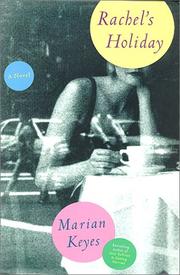
Rachel's Holiday
2,792-word summary 12 min read 570 pages in the book
- First published
- 1998
- Publisher
- Morrow
- Pages
- 570
- ISBN
- 9780688180713
- Series
- Walsh Family (#2)
Reading options
What's inside (9 sections)
I read Rachel's Holiday right after finishing Watermelon, mostly because I wanted to know what became of the Walsh family's most chaotic daughter. She gets her own book here, published in 1998, and the Morrow edition I have runs 570 pages. I expected more of the same loud, warm family comedy. What I got was something stranger and darker: a book about addiction told almost entirely by someone who refuses, for a very long time, to admit she has a problem. Rachel Walsh is funny, vain, sharp about other people and almost blind about herself. Keyes lets her narrate her own collapse, and that choice is what makes the novel work.
A bad night in New York
Rachel is twenty-seven and living in New York, where the party never seems to stop. She has a fondness for recreational drugs and good-looking men, and she describes her life as if it were one long joke she is in on. Cocaine, Valium and alcohol are part of the furniture. She insists none of it is serious. This is the voice Keyes gives her from the first page: quick, self-mocking, always ready with a joke before a feeling can land.
The joke stops one night. Rachel takes cocaine that is stronger than she expects, cannot sleep, and starts swallowing sleeping pills in escalating doses. Her roommate Brigit cannot wake her the next morning. On the floor or the desk Brigit finds a piece of writing, a scrambled, childlike scrawl that she reads as a suicide note. She calls an ambulance, Rachel's stomach is pumped, and she wakes in hospital with no clear memory of how she got there.
What happens next is a series of small catastrophes that Rachel insists are misunderstandings. Brigit, who has run out of patience, calls Rachel's parents in Dublin and tells them their daughter has a serious drug problem. Her father Jack phones and says she has been fired, after speaking to her boss himself. Her boyfriend, Luke Costello, ends things and tells her she is not the person he thought she was. Brigit no longer wants her sharing the apartment. Rachel has lost her job, her best friend, her boyfriend and, briefly, her health, and she still mostly sees herself as someone everyone is overreacting to.
That is the book's starting position, and it is a difficult one to stay sympathetic to. Rachel is not a sweet narrator making a relatable mistake. She is scared and defensive and often unkind. I found myself getting impatient with her in the early chapters, which I think is exactly the response Keyes is after. We are meant to hear the gap between what Rachel says and what the people around her do.
The drive out to the Cloisters
The Walsh family decides that Rachel needs to come home. Her sister Margaret flies in from Chicago to collect her, and Rachel agrees to go because, as she tells it, she could use a holiday. Her family has paid for a stay at the Cloisters, a rehabilitation centre in County Wicklow that the book describes as Dublin's answer to the Betty Ford Clinic. Rachel has heard that rehab means jacuzzis, gyms, celebrities going through a polite withdrawal, and she pictures a rest cure with room service.
The reality is a shock. The Cloisters is a grey Gothic house behind high walls, not a spa. There is no gym, no pool, no massage, and the food is institutional. Residents do their own housework. Rachel is assessed by the eccentric Dr Billings, who is not impressed by her insistence that she is there by mistake, and she signs a contract committing her to a stay of at least three weeks. When she tries to walk out, Billings points to the contract and threatens an injunction. Rachel is stuck, and she spends her first weeks counting down the days and complaining to anyone who will listen.
The other residents are mostly middle-aged men, many of them alcoholics, and Rachel initially looks down on all of them. Her roommate Chaquie insists her husband sent her there unfairly. There is Vincent, who is volatile, and John Joe, older and evasive about his drinking. Rachel decides their problems are far worse than hers and that she clearly does not belong among them. She also develops a crush on Chris, a fellow resident with a mysterious past and the sort of looks that make Rachel briefly believe she has landed in a romantic drama rather than a clinic.
Keyes is very good on the physical dullness of the place. The routine, the chores, the bad food, the long afternoons with nothing to do but sit in a room with people you would not choose: all of it is there. The boredom is not filler. It is the condition under which Rachel's defences slowly wear down. Removed from New York and its distractions, she has nothing left to do but listen to herself talk.
The group sessions and the meaning of denial
Group therapy is led by Josephine, a nun whose gentle manner hides a very direct mind. Josephine asks precise questions and does not let a vague answer stand. When John Joe claims he only drinks now and then, she asks about the brandy and what it has cost his family. She turns the same attention on Rachel, who keeps insisting that she is a party girl who made one bad mistake.
The other residents' stories chip away at Rachel's certainty. One of the most important arrivals is Neil, a new patient who says he is only there to keep his wife happy. When his wife comes in as an Involved Significant Other, or ISO, to describe what his drinking has been like at home, she talks about the physical abuse she and the children have suffered. Neil had told Rachel he drank four pints a week. He eventually admits to a bottle of vodka a day, with cocaine on top. What strikes Rachel most is not the scale of it but the fact that Neil genuinely seems unable to see his own behaviour. That is her first real lesson in what denial looks like from the outside.
Josephine also goes back to Rachel's childhood. Rachel carries a belief that her jealousy of her baby sister Anna caused her mother's distress and helped drive her father away to Manchester, which means, in her private logic, that everything is her fault. Josephine suggests a plainer reading: Rachel's mother was grieving her own father's recent death, and Jack's trip to Manchester was a business trip. When her parents come to the Cloisters as ISOs, her father confirms those facts. The harder moment comes when neither parent can name a single good quality in Rachel, while they easily list her sisters' achievements. Josephine points out that the family assigned Rachel the role of the one who would come to nothing, and that years of low self-esteem have helped drive her using.
I found this part of the book both convincing and a little too neat. The idea that a family role can push someone toward addiction is persuasive, and Keyes handles the parents' awkward, loving failure well. At the same time, Josephine sometimes sounds like a therapist in a novel who has read the same case study twice, arriving at the right interpretation in very few sessions. The sessions work dramatically even when they feel slightly too tidy.
How Rachel and Luke began
The story of Rachel's relationship with Luke arrives in flashbacks, scattered between her weeks at the Cloisters. At first she and her friend Brigit mock him and his circle, calling them the Real Men because of their long hair and tight denim. At a party Rachel meets him unexpectedly and feels an attraction she finds embarrassing. The next morning, mortified by what she has done, she writes down her phone number, crumples the paper and throws it away. Luke retrieves it from the bin and calls. She turns down his invitation.
Weeks later they meet again, and the attraction becomes impossible to ignore. They start seeing each other, and Luke turns out to be funny, thoughtful and romantic. The trouble is that Rachel keeps measuring him against a standard of coolness that he never meets. She worries he is not fashionable enough, and she cannot quite bring herself to say she loves him, even when Brigit points out that she plainly does. All the while she keeps using drugs and hiding how much from him.
Those flashbacks do more than fill in a love story. They show how early Rachel began editing the truth for the people closest to her. The relationship she idealises was built on a version of herself she was maintaining with considerable effort. When Luke later tells the clinic what that relationship was actually like, the reader already knows enough to believe him.
The visitors who tell the truth
The central confrontation comes when Luke and Brigit fly from New York to act as Rachel's ISOs. Until then Rachel has been able to treat everything as a misunderstanding and everyone as overreacting. In a single session that position collapses.
Brigit describes the drug use Rachel has kept hidden: taking drugs alone, stealing money and drugs, lying constantly, being impossible to live with. Luke adds his own account. He talks about Rachel stealing cocaine from his friend Joey, about the way she would flirt compulsively when she was high, and about her shame at being seen in public with him. He says he assumed the drugs were recreational for a long time, because that is what she told him.
Then Josephine asks him whether he loved her. Luke says no. After a pause he explains that he could have loved the version of Rachel who was not always intoxicated, but that version was rarely around, and now it is too late. It is a brutal line, and Rachel cannot wave it away the way she has waved away everything else. Josephine is blunt with her afterwards, naming the selfishness and dishonesty in her behaviour and tying them back to her low opinion of herself.
What follows is not an instant cure. Rachel's denial crumbles over several weeks rather than in one scene. At a Narcotics Anonymous meeting she hears a speaker named Nola describe how heroin took over her life, and Rachel recognises her own daily preoccupation with getting and hiding drugs. Josephine makes her look again at the scrawled note from the night of her overdose, and the childish writing frightens her. Only then does Rachel say the words that she is an addict. She expects relief and gets none. What she feels instead is horror, rage and grief, and the book is honest about how little comfort a diagnosis brings on its own.
On her last day at the Cloisters, Josephine tells Rachel privately that she is a recovering addict and alcoholic herself. It is a small, quiet revelation, and it works because it is offered without ceremony.
The relapse and the slow work after
Rachel leaves after roughly two months, optimistic and convinced she has been given a new life. Back at her parents' house she is quickly bored and low. She meets Chris again at Club Mexxx, the restaurant where her sister Helen works, and they sleep together. The encounter is a miserable failure, and the next morning her mother tells her that Chris is married with three children. Shattered and ashamed, Rachel steals money from her mother's purse, buys cocaine and sedatives, and spends the day drinking and using. She is knocked down by a car and ends up in hospital.
This relapse is the most important stretch in the book for me. Keyes could have ended with the clinic and a triumphant departure. Instead she shows that leaving treatment is not the same as staying well, and that the first weeks outside are full of traps. Rachel's old habits are still there, waiting for a bad afternoon and a little cash.
In hospital her sisters Helen and Anna help her see something she has never been able to see: their mother says similarly harsh things to all her daughters, and Rachel is not the family's designated failure in quite the way she believed. Rachel manages a reconciliation with her mother. She calls Nola, who becomes her sponsor and takes her to Narcotics Anonymous meetings every day.
The months that follow are deliberately unglamorous. Rachel goes to meetings, starts psychotherapy, works as a hotel chambermaid and applies to study psychology. Nola tells her to stay out of romantic relationships for a year, and Rachel, after a fashion, listens. Her self-respect builds slowly, through routine rather than revelation. Around Christmas she notices she is no longer angry with Luke or Brigit. On New Year's Day Brigit visits, and the two women make peace. Brigit apologises for having quietly enjoyed being the more stable friend, and Rachel tells her that the ISO visit was the best thing anyone ever did for her.
At fifteen months of sobriety, Nola encourages Rachel to return to New York and face what she left behind. Rachel writes Luke a letter apologising and asks to meet. He is cold at first, then gradually warmer. He admits he was in love with her and said otherwise out of anger, and tells her that on a good day there was nobody better. They part with a fierce embrace, and Rachel assumes that is the end of it. Two weeks later Luke turns up at her hostel and shouts up that he loves her and will move to Ireland. She tells him she loves him too. He comes upstairs, drops to one knee and asks whether getting naked together is completely out of the question. It is a typical Keyes ending: romantic, silly, and careful to keep the seriousness in place.
What works, and what grates
The great strength of Rachel's Holiday is its narrator. Keyes writes a woman who is very clever at seeing other people and almost incapable of seeing herself, and she sustains that voice for hundreds of pages without making Rachel dull or wholly unsympathetic. The humour is constant, but it is also a defence mechanism, and the book lets us watch it fail. The ISO session with Luke and Brigit is brutal, and it lands because Rachel's self-mocking has trained us to hear what she is leaving out.
The family material is strong too. The Walsh household is noisy, unfair, loving and exhausting in equal measure, and the scenes where Rachel's parents try to name her virtues are painful because they are so ordinary. I also liked that the novel refuses to make Luke the answer. Rachel's recovery does not begin and end with a man coming back. Nola, the sponsor, and the dull daily discipline of meetings and work matter far more to the ending than the romance does.
There are things that drag. The book is long, and some of the New York flashbacks repeat the same pattern of Rachel being attracted to Luke and then backing away. The supporting residents at the Cloisters are drawn broadly, and a few of them feel like types rather than people, there mainly to give Rachel a contrast. Josephine's insights sometimes arrive too smoothly, as though the therapy is written backwards from the conclusions it needs to reach. Chris is clearly designed as a temptation and a trap, and his storyline is less subtle than the rest.
The tone can also be a problem. Rachel's jokes about her own behaviour are funny, but there are points where the comedy seems to soften the damage she does to other people, especially in the material about stealing from friends and family. Readers with direct experience of addiction may find the balance uneasy. Keyes is writing a comic novel about a serious subject, and the two aims do not always sit comfortably together. That said, the relapse and its aftermath are handled without glamour, and the final stretch earns its hopeful note by making Rachel do the unexciting work first.
I would hand this to someone who liked the Walsh family in Watermelon and wants a fuller, darker book about the same household. I would be cautious with a reader looking for a light romantic comedy, because the middle of this novel is about denial, shame and a woman hitting a wall. The ending offers a chance, not a guarantee, and Keyes is wise enough to leave it there. Rachel's holiday turns out to be the point where her life actually begins, and the book takes that idea seriously even while it is making jokes about jacuzzis and rock stars.
FAQ
Is Rachel's Holiday part of a series?
Yes. It is the second Walsh Family novel, following Watermelon, and Marian Keyes returns to the same chaotic Dublin family she introduced there.
Does Rachel get back together with Luke?
The ending leaves the door open. After fifteen months of sobriety Rachel meets Luke in New York, and he later turns up at her hostel declaring his love and promising to move to Ireland, but the book presents this as a chance rather than a guarantee.
Is this a light comedy about rehab?
Not entirely. Rachel's narration is very funny, but the novel treats overdose, denial and relapse seriously, and it includes a relapse after treatment that sends her back to hospital before she begins the slower work of recovery.
Similar books
More from Walsh Family first, then related titles.
Watermelon
A woman left by her husband on the day their daughter is born retreats to her chaotic Dublin family, then slowly learns to stop believing his version of the…
2,295-word summary · 10 min read
The Rest of Our Lives
A law professor drives his daughter to college, then heads west instead of home, testing a private promise he made twelve years ago.
2,238-word summary · 10 min read
When Life Gives You Lululemons
Emily Charlton leaves Runway for Hollywood and ends up in Greenwich, where a supermodel's DUI and a senator husband's ambitions draw three women into a…
2,028-word summary · 9 min read
The Vacationers
A New York family's two-week stay in Mallorca turns into a comedy of exposed secrets when a magazine editor's affair and a son's debts come to light.
2,324-word summary · 10 min read
The Rachel Incident
A funny, sharp novel about two twenty-somethings in recession-era Cork whose bookshop friendship, tangled romance and a married professor's lie leave a secret…
2,346-word summary · 10 min read
Second First Impressions
A risk-averse retirement-villa manager and the developer's tattooed son are thrown together at work, where her fear of the outside world meets his relentless…
2,073-word summary · 9 min read
Everyone Worth Knowing
A young woman quits her banking job after a friend's engagement and lands in a New York PR firm where everyone is paid to know everyone.
2,360-word summary · 10 min read
Chasing Harry Winston
Three friends turn thirty in Manhattan and make a wild pact: Emmy will sleep her way around the world, Adriana will settle down, and Leigh watches from the…
2,185-word summary · 10 min read

Winter Street
Kelley Quinn's Nantucket inn is ready for Christmas until he finds his wife kissing the man hired to play Santa. The whole family comes apart in the best way.
2,340-word summary · 10 min read
Saving 6
Joey Lynch protects his siblings from a violent father while falling for his boss's daughter Aoife, in the third Boys of Tommen novel.
2,680-word summary · 12 min read

Size 12 Is Not Fat
Former teen pop star Heather Wells investigates two dorm elevator deaths while juggling her ex, her crush, and a size-12 wardrobe.
2,805-word summary · 12 min read
Mr. Maybe
Libby Mason wants a rich husband, but the wealthy man who proposes is dull and the broke writer she cannot forget is not offering forever.
2,322-word summary · 10 min read
Wedding Night
Lottie marries an old flame days after a breakup, then flies to a Greek island while her sister quietly works to sabotage the honeymoon. A farce about memory,…
2,213-word summary · 10 min read
Dial A for Aunties
A wedding photographer accidentally kills her blind date, and her mother and three aunties help her hide the body during the biggest wedding of their careers.
2,076-word summary · 9 min read
Bridget Jones: The Edge of Reason
Bridget doubts Mark, takes a job with Daniel, and lands in trouble in Thailand.
2,198-word summary · 10 min read
Jemima J
Overweight London journalist Jemima Jones invents a slim online self for a California lover, starves to match the photo, then faces betrayal and learns to…
2,883-word summary · 13 min read
The Guncle
A sitcom star takes his niece and nephew for a summer and learns presence beats punchlines.
2,779-word summary · 12 min read
Twenties Girl
Dumped and flailing, Lara Lington is haunted by her great-aunt Sadie, a 1920s ghost who wants her lost necklace back.
2,938-word summary · 13 min read
Get a Life, Chloe Brown
A chronically ill woman recruits her gruff handyman neighbor to help her finish a bold Get a Life list.
2,147-word summary · 10 min read
The Kiss Quotient
Stella Lane hires escort Michael Phan to practice dating and learns logic fails where touch and family press in.
2,716-word summary · 12 min read
Can You Keep a Secret?
Emma blurts every secret to a stranger on a turbulent flight, then finds him running her company.
3,114-word summary · 14 min read

The Wilderness
Four Black women move through twenty years of friendship in Angela Flournoy's discontinuous, widely praised second novel.
2,141-word summary · 10 min read

The Nix
A stalled novelist and community college professor goes looking for the mother who left him and finds a radical activist whose rock thrown at a governor made…
2,214-word summary · 10 min read
The Long Haul
Greg Heffley's summer road trip goes sideways with a towed boat, a live pig, and a family in a purple van.
2,311-word summary · 10 min read
Only Son
A brief, funny, melancholy debut about a boy whose father dies in 1982 Florida, and the man he becomes, still trying to read the mystery of that loss.
2,170-word summary · 10 min read
Dad Is Fat
A comic essay collection about raising five kids in a two-bedroom New York apartment, delivered in Gaffigan's dry, deadpan voice.
2,196-word summary · 10 min read
Barefoot
Three women spend a summer on Nantucket facing chemotherapy, a lost career and a pregnancy shadowed by affairs.
2,323-word summary · 10 min read
Three Days in June
A Baltimore mother loses her job, and her ex-husband turns up with a rescue cat, in Anne Tyler's short, funny novel about the three days around her daughter's…
2,867-word summary · 13 min read
The Emperor of Gladness
Ocean Vuong's second novel follows a young addict pulled back from a bridge in a dying Connecticut mill town and into the home of an elderly immigrant woman…
2,693-word summary · 12 min read