
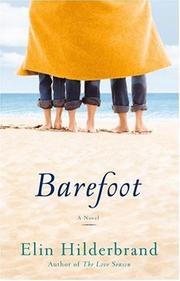
Barefoot
2,323-word summary 10 min read 416 pages in the book
- First published
- 2007
- Publisher
- Little, Brown and Company
- Pages
- 416
- ISBN
- 9780316018586
Reading options
What's inside (8 sections)
The opening of Barefoot is a good one. Three women come down the stairs of a plane at Nantucket airport on a hot June day, loaded down with small children and straw hats, and a twenty-two-year-old working there named Josh Flynn watches them arrive. He takes them for the most miserable-looking people he has ever seen. It is a funny, slightly mean first impression, and it turned out to be the right frame for the whole book, because these three women are in bad shape and mostly hiding it.
Elin Hilderbrand published this in 2007 through Little, Brown and Company, and the hardcover runs 416 pages. It was the first of her books to come out with that publisher, after years of St. Martin's Press novels set on Nantucket. I had read a few of her later books first, so this one felt heavier than I expected. The cover and the July setting promise something light. What you actually get is a book about cancer, a career wrecked by an affair, and a pregnancy arriving at the worst possible moment.
Three women, three problems
Vicki is the one holding the group together, though she is in the worst physical shape. She has been diagnosed with lung cancer despite never having smoked, and she has come to the island to start chemotherapy away from home, with her two young sons, Blaine and Porter. Her husband, Ted, stays behind in Connecticut and comes out on weekends. Vicki is scared that this will be her last summer, and she tries to pack a year of beach days into each week between treatments.
Brenda is Vicki's younger sister. She was a professor until an affair with one of her students, an Australian named John Walsh, ended her career. The student was actually a year older than she was, which does not change the problem, and the fallout includes a lawsuit over damage to an art collection during a dispute at her university. She has come hoping to write a screenplay and make the whole mess disappear.
Melanie is Vicki's best friend. After seven rounds of in vitro fertilization, she is finally pregnant. Almost at the same time, she learns that her husband, Peter, is having an affair with a woman at his office named Frances. She comes to Nantucket rather than stay in the house with him, and she arrives carrying both a long wanted pregnancy and a marriage she does not know what to do with.
That is a lot of trouble to unload in the first chapter, and I know readers who bounced off the book for exactly that reason. Three crises in three pages can feel like a stack of problems rather than a story. I stuck with it because the setting is so specific and because Josh, the young man at the airport, gives the book an outside point of view.
The rented house is small enough that everyone can hear everyone else. Hilderbrand uses that closeness well. There is no real privacy for Vicki's chemotherapy, Brenda's phone calls to Walsh, or Melanie's arguments with Peter. The two boys are in and out of every scene, which keeps the adult problems from becoming too self-important. I appreciated that. A summer with children in the house is never a retreat, whatever the brochure says.
Josh becomes part of the household
Josh Flynn is twenty-two, home from college for the summer, and working at the airport while he figures out what to do next. He wants to be a writer. His mother killed herself some years earlier, which the book treats as the reason he is drawn to women in trouble, and he has a girlfriend back home named Didi. He meets the women at the airport, runs into them again, and ends up hired to look after Vicki's two boys for the summer.
He turns out to be very good with them. The children take to him quickly, and the arrangement frees the women to spend hours at the beach or drinking on the deck while he handles the afternoons. That is where the moral mess of the book starts. Vicki hired a sitter, but Brenda and Melanie treat Josh as something more: a listener, a flirt, and eventually a comfort for each of them in different ways. He is young, and he is clearly flattered.
The days have a shape to them. Josh takes the boys to the beach, makes lunch, and covers for the women when they need to be somewhere else or simply cannot face another hour of company. In return he gets a place at the table and, for a while, the feeling that he belongs to something. His mother's suicide sits behind all of this, and the book hints that he is looking for a family he can fix. I thought that was a believable motive for a twenty-two-year-old, even if it makes him an easy person for the others to use.
I found these chapters uncomfortable in a way I think Hilderbrand intended. Josh is good with the boys and patient with all three women, and they lean on him far more than they admit. When the summer ends, they do not quite know what to do with him. Several reviewers I have seen were angry on his behalf, and I understand it. He is the one person who actually shows up for everybody, and he gets the least say in how things finish.
Vicki's summer of treatment
The strongest thread in the book is Vicki's. She drives to her chemotherapy appointments on the island, feels terrible afterward, and still tries to be the person her sons remember. Hilderbrand does not make her noble about it. Vicki is scared, sometimes cross, and prone to checking whether her husband is being straightforward with her. There is a stretch where she is too sick to do the things she planned, and the book stays with her through those days instead of cutting away.
What moved me was the ordinary scale of her fear. She is not wondering whether she will be famous or fulfilled. She is wondering whether she will be around to see her boys grow, and whether the treatments will let her enjoy what is left of the summer. Her husband comes on weekends, and their time together is interrupted by the illness and by her own suspicions. It is the most honest writing in the novel, and it gives the lighter scenes their weight.
The two other women are supposed to be helping her, and that is where the book gets messy. Brenda and Melanie have their own crises, and both of them spend a good deal of the summer tending to those instead. Josh ends up doing much of the caretaking. I do not think Hilderbrand is pretending the friends are selfless. She is writing people who are barely holding themselves together, which is fair, but it makes for some frustrating reading.
There is a scene where Vicki has a bad day and the house keeps going around her that I found hard to shake. The children still want lunch, the phone still rings, and the women still have their own arguments to finish. Hilderbrand does not turn it into a lesson. She lets the illness be an inconvenience to other people for a page or two, which is crueler and more honest than writing everyone as a saint. Vicki herself seems to know it, and that awareness is what makes her chapters work.
Brenda's second chance and Melanie's choice
Brenda spends the summer half working on a screenplay and half waiting for word from Walsh. He does eventually come to the island, and the two of them find their way back to each other. She also gets a break on the screenplay through a late night call to a former student. Of the three women, Brenda is the one whose story resolves with the least fuss, and also the one I believed least. Academic disgrace and a lawsuit are serious consequences, and the book waves them away fairly quickly.
Her affair is the storyline I found least comfortable. The book keeps reminding us that Walsh was a year older than she was and that he waited all summer for her to call, as if those details reduce what she did. They do not. She was his professor, and the power in that relationship ran one way. Hilderbrand seems to know this, since Brenda loses her job and faces a lawsuit, but the narrative keeps siding with her anyway. I finished her chapters understanding her better than I trusted her.
Melanie's storyline bothered me more. She and Josh grow close over the summer, and the relationship becomes physical. He is patient with her pregnancy and with her anger at Peter, and there is a real tenderness in the scenes where he pays attention to her body and the baby. Then Peter turns up and apologizes, and Melanie decides to go back to him. The apology is thin, and the book seems to accept it at face value. I closed that section wishing Hilderbrand had let Melanie make the choice for reasons that had something to do with her own life rather than with a man saying the right words at the right time.
This is a fair criticism of a lot of Hilderbrand's work, I think. The men are often sketched in broad strokes, and the women's decisions are framed around them. Here, Peter cheats and is forgiven, while Josh cares for everybody and is let go. That imbalance is the part of Barefoot I would argue about with another reader.
Melanie's pregnancy is handled with more care than her marriage. Hilderbrand writes the physical facts of it plainly, the nausea, the fatigue, the way everyone starts treating her as fragile, and there is a version of this novel that could have been about that alone. Instead the pregnancy becomes another thing for the women to fight over, because Peter's apology arrives just as Melanie is deciding what kind of life she wants for the baby. It is a strong setup and a disappointing payoff.
Didi, and the end of the summer
Late in the book, news comes that Didi, the girlfriend Josh left behind, has died of an overdose. It is a sudden, ugly event, and it makes Josh look again at what he wants from the women he has been helping. The death pulls the novel toward a darker place for a few chapters, and it is the moment when Josh stops being the helper and becomes a person with his own grief.
He and Melanie part when the summer ends. He leaves a note rather than a speech, and the book moves on without him in the epilogue. Several readers have said they felt he was simply dropped, and that matches my reaction. He was the best company in the novel, and his exit is handled so lightly that it feels like an afterthought. The book does give the other women a look at where they end up, with Vicki surviving and facing the future with her family, but Josh is mostly a memory.
The epilogue tries to answer some of that by telling us where each woman lands, but it does not give Josh much beyond that note. I know this is a deliberate choice, because the book is built around the three women. It still left the summer's most generous character feeling like a device. A page of his own at the end would have made the trade feel fairer.
There is also a book within the book, a title called The Innocent Imposter that Josh reads and that gets a surprising amount of space. I could see what Hilderbrand was doing, using a story inside the story to echo the themes of identity and second chances, but the passages stalled me. When I wanted to know what would happen between the people on the beach, I was being given the plot of another novel. That is the main reason the middle of Barefoot dragged for me.
What stays with me
The beach writing is the reason to read this. Hilderbrand knows the sound of a Nantucket summer and the rhythm of a day that starts early with children and ends with a drink on the deck. Even when I was impatient with the plot, I believed the place. The scene of the three women arriving at the airport, tired and already overdressed for the heat, tells you more about them than a page of description would.
The book has real weaknesses. The first hundred pages pile on crises faster than the characters can react to them, the middle repeats the same arguments about the same men, and the ending tidies up choices I wanted to see wrestled with longer. The characters are not always easy to like, which is not a fault by itself, but their best moments are often given to Josh, and then he is pushed aside.
I still think about Vicki's chapters. A woman undergoing chemotherapy who keeps getting out of bed to take her boys to the beach is a hard thing to write without sentiment, and Hilderbrand manages it. The food and beach detail is not filler either. Meals are how these women check in with each other when talking directly is too hard, and a lobster picnic says more about Vicki's marriage than a confrontation would. Hilderbrand's habit of putting emotion into objects and routines is at its best here, even when the plot around it turns melodramatic.
Barefoot is not the easiest entry point to this author's work, and it is a longer, sadder read than the cover suggests. If you can accept that the summer is not going to fix everything, there is a lot here worth sitting with.
FAQ
When was Barefoot published and by whom?
Little, Brown and Company published it in 2007. The hardcover is 416 pages with ISBN 9780316018586.
Is Barefoot part of a series?
No. It stands alone, like most of Hilderbrand's Nantucket novels, though she reuses the island setting across her work.
Does Melanie end up with Josh?
No. Despite a summer relationship, she returns to her husband Peter after he apologizes, and Josh leaves at the end of the season.
Similar books

Winter Street
Kelley Quinn's Nantucket inn is ready for Christmas until he finds his wife kissing the man hired to play Santa. The whole family comes apart in the best way.
2,340-word summary · 10 min read

The Rumor
Two Nantucket best friends, Madeline and Grace, watch a summer of small indiscretions get retold into gossip that reshapes both their households.
2,017-word summary · 9 min read

Summer of '69
Four Levin siblings split for summer 1969 as Vietnam, pregnancy and first love pull the family apart.
2,886-word summary · 13 min read

Golden Girl
A dead novelist watches her three kids for one summer with three nudges to help.
2,052-word summary · 9 min read

The Vacationers
A New York family's two-week stay in Mallorca turns into a comedy of exposed secrets when a magazine editor's affair and a son's debts come to light.
2,324-word summary · 10 min read

Hollow Bones
On 11 September 2001, two-month-old Molly Fitzgerald loses her mother at the World Trade Center. She grows up planning for disasters, until a crisis in her new…
2,703-word summary · 12 min read

That Summer
A restless Philadelphia wife befriends a glamorous consultant who found her through a misdirected email and an old secret.
2,372-word summary · 11 min read

A Spool of Blue Thread
Four generations of the Whitshank family in Baltimore, and the silences, resentments and quiet love they hand down without ever saying so.
2,408-word summary · 11 min read

The Paper Palace
Elle faces Jonas choice at Cape Cod while assault memory returns.
2,588-word summary · 12 min read

Big Little Lies
In Pirriwee three mothers collide over school, marriage, and secrets until a trivia night death forces the truth about Perry abuse, Celeste fear, and Jane past.
2,582-word summary · 11 min read

The Identicals
Twin sisters swap Nantucket and Martha Vineyard lives for a summer.
2,556-word summary · 11 min read

The Perfect Couple
A Nantucket wedding turns into a murder case when the maid of honor is found dead hours before the ceremony.
2,659-word summary · 12 min read

Whisper Network
Four women at a Dallas sportswear company decide to name their boss in an anonymous spreadsheet of bad men, and the office turns on itself.
2,152-word summary · 10 min read

The Wilderness
Four Black women move through twenty years of friendship in Angela Flournoy's discontinuous, widely praised second novel.
2,141-word summary · 10 min read

The Rest of Our Lives
A law professor drives his daughter to college, then heads west instead of home, testing a private promise he made twelve years ago.
2,238-word summary · 10 min read
The Moonlight Child
On a cold January night, Sharon Lemke sees a child washing dishes in a neighbour's kitchen and decides she cannot ignore it.
2,169-word summary · 10 min read

Whistler
Ann Patchett's eleventh novel follows a New York teacher who reconnects with a former stepfather at the Met and hears the strange story of a chestnut mare.
2,697-word summary · 12 min read

The Bookstore Sisters
A short, warm story about a woman who returns to her family's failing Maine bookstore and the sister she has spent years avoiding. Books, baking and old…
2,335-word summary · 10 min read
Second First Impressions
A risk-averse retirement-villa manager and the developer's tattooed son are thrown together at work, where her fear of the outside world meets his relentless…
2,073-word summary · 9 min read

Rachel's Holiday
Rachel Walsh calls her cocaine use recreational until an overdose and a stay at a Wicklow rehab clinic force her to hear what her family and boyfriend have…
2,792-word summary · 12 min read

Lone Wolf
A wolf expert lies in a coma after a crash, and the son who left home years ago returns to end his life support while his sister fights to keep him alive.
2,761-word summary · 12 min read

King of Ashes
A Virginia crematorium, a debt owed to the Black Baron Boys and a family secret pull Roman Carruthers back into a war where everything burns.
2,229-word summary · 10 min read

Girls in Pants: The Third Summer of the Sisterhood
The four friends face their last summer before college, with art school, an old flame, a guilty conscience and a new baby in the balance.
2,382-word summary · 11 min read

Finding Audrey
A fourteen-year-old who cannot leave the house or remove her dark glasses finds her way back through therapy, a film project and a patient new friend.
2,559-word summary · 11 min read

Dreamland
A teenager slips out of her perfect sister's shadow and into a relationship that turns from thrilling to dangerous, in Sarah Dessen's dark 2000 novel about…
2,823-word summary · 13 min read

Dream Count
Four women narrate the 2020 lockdown in their own voices: a travel writer, a friend in early labor, a banker cousin and a housekeeper assaulted in a hotel room.
2,286-word summary · 10 min read

Breathe
A seventeen-year-old takes her pregnant mother's housekeeping job on an Alabama island and meets the owner, a teen rock star who wants nothing more than to be…
2,983-word summary · 13 min read

Watermelon
A woman left by her husband on the day their daughter is born retreats to her chaotic Dublin family, then slowly learns to stop believing his version of the…
2,295-word summary · 10 min read

This One Summer
Mariko Tamaki and Jillian Tamaki's graphic novel about two friends at a lake town, where a mother's grief and a pregnant teenager reshape one summer.
2,324-word summary · 10 min read
The Mermaid Chair
Jessie Sullivan returns to her childhood home on Egret Island to care for her agoraphobic mother, then finds her marriage, her faith, and a monk's vow thrown…
2,237-word summary · 10 min read