
Reading options
What's inside (8 sections)
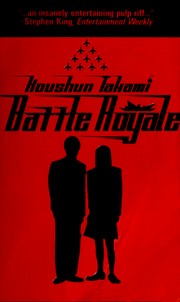
I came to this book late, well after the film and long after the argument about which came first, the novel or The Hunger Games. A friend pushed the Viz paperback on me with one instruction: read it fast, before the premise gives you a reason to quit. That turned out to be good advice. A class of junior high students forced to kill one another on an island sounds like a dare, and Takami knows it. He spends his opening chapters making the absurd setup feel like a school trip going mildly wrong, then lets the horror arrive in small administrative steps.
The story was finished in 1996 and first published in Japan in April 1999 by Ohta Publishing, where it became a surprise bestseller and sold more than a million copies. The English translation by Yuji Oniki came from Viz Media in 2003. That gap is worth keeping in mind. The book was written before the wave of teen survival contests that followed it, and it has a plain, procedural faith in the logic of its own game. The Japanese original is titled バトル・ロワイアル, romanized as Batoru Rowaiaru, a name Takami took from a friend who said his concept sounded like a pro wrestling battle royal. The facts I cite here come from the Viz English paperback, 624 pages, ISBN 9781569317785.
Where the idea came from
Takami has said the story started with a half-awake image of a teacher from an old school drama grinning and telling his class to kill each other. He built the world around that image from things he knew. The totalitarian government in the book draws on the student protests and police clashes of 1960s Japan, and he has named Stephen King's The Long Walk as a model for the idea of a state-run contest with a fatal price.
The dream detail matters because it explains the teacher. Takami has described lying half asleep in his futon and seeing a man from an old school drama grin as he told a class to kill one another. The image amused and frightened him at the same time, and he has said that was when he knew he had a story. Sakamochi carries that grin into the book. He is not a grand villain with a speech about power. He is a cheerful functionary who is good at his job, and that is worse.
That origin shows in the tone. This is not a book that treats its premise as a clever puzzle to be solved. It treats it as a system a government built on purpose, and the system is the real subject. The Republic of Greater East Asia is a fictional Japan that won an alternate World War II and then crushed a rebellion. Rock music is banned unless it flatters the state. The government runs something called the Battle Experiment No. 68 Program, in which fifty randomly chosen classes of third-year junior high students are kidnapped, dropped on a remote island, and made to fight until one student from each class is left.
The stated reason is research into survival skills and battle readiness. The actual reason is terror. Every family in the country knows their child could be taken, and that a friend might be the one who kills them. Takami makes this explicit early, which is one of the book's strengths. He never pretends the Program has a noble motive hidden somewhere, and that refusal to soften the idea gives the novel a cold clarity.
The trip that is not a trip
The class we follow is from Shiroiwa Junior High in a Kagawa Prefecture town. They are on what they think is a field trip when they are gassed unconscious. They wake in a classroom on an empty island, wearing metal collars, with troops outside. The teacher in charge, Kinpatsu Sakamochi, is a stocky, long-haired sadist who explains the rules with the calm of a man reading a bus schedule.
The rules are simple and cruel. Each student gets a survival pack and a random weapon or tool. Most draw guns or knives, but some get a boomerang, darts from a dartboard, or a fork. Hiroki Sugimura draws a radar device that tracks nearby students, and Toshinori Oda gets a bulletproof vest. The collars track position and transmit sound back to the organizers, so escape plans get heard. If a student removes a collar, it explodes. Forbidden Zones are marked on the map and increase in number over time, shrinking the safe area and forcing movement. If twenty-four hours pass with no killing, every collar detonates at once and there is no winner. Sakamochi mentions that only about half of one percent of Programs end that way, a detail that tells the students, and us, how rarely anyone refuses.
The randomness of the weapons is the first real joke in the book, and it is a nasty one. A fork against a rifle is not a contest. Takami keeps that imbalance in view instead of pretending every student has a fair shot, and the unfairness is part of the point. The Program does not want a fair fight. It wants fear.
The students worth following
Shuya Nanahara is the closest thing the novel has to a hero. He is an orphan whose parents were killed for anti-government activity, and he plays and listens to rock music in defiance of the ban. He calls himself a rock star, which is both a joke and a shield. His best friend is Yoshitoki Kuninobu, who is killed early, and Shuya promises to look after Kuninobu's crush, Noriko Nakagawa. That promise is the first thing that keeps him acting like a person instead of a player.
Noriko is quiet and reserved, and she is shot in the leg by a soldier before the Program even begins. She and Shuya team up almost immediately. Their partnership is the emotional spine of the book, and it stays gentle even as the bodies pile up. Neither of them wants to kill, and the novel never pretends otherwise.
Kuninobu deserves a mention even though he is gone early. He is the friend whose death turns Shuya's promise into a duty, and the book shows how a teenager responds to losing the one person he trusted. Yoshitoki is more than a plot device in those first chapters, and his absence is felt for the rest of the novel. That is one of the quieter achievements here. The people who die early keep a weight in the story long after their names stop appearing.
Shogo Kawada is the transfer student with scars, a year older than the rest of the class. He keeps to himself and avoids the fighting, which makes him seem merely cautious. It turns out he won the Program the previous year, and he has spent the time since working out how to end it. When he joins Shuya and Noriko, he brings a plan rather than just courage, and he is the one character who has seen what victory actually costs.
Against them are the two students who most want the game. Kazuo Kiriyama leads the delinquents, is the smartest and one of the most athletic, and feels almost nothing after a brain injury suffered before birth that left him with a partial lobotomy. He hunts without hesitation. Mitsuko Souma leads a girl gang, uses her looks to get close to boys, and kills them. Her violence is rooted in childhood sexual abuse, and the book gives that history real weight without ever making her sympathetic.
The middle of the game
Once the students are released onto the island, the pace changes. Takami moves from one death to the next with a businesslike speed. Some scenes are tense and built with care, like Shinji Mimura's attempt to hack the Program's system and bomb the building where Sakamochi and his staff are working. Mimura is the athlete friend who might have been a second lead, and his death at Kiriyama's hand is one of the sharper blows in the book because it ends a plan that had a real chance.
Other deaths arrive so quickly that the students barely register as people before they are gone. This is the part of Battle Royale that tests a reader. The roll call of the dead is long, and Takami sometimes gives a kid one distinctive habit and then uses it as the whole of a death scene. As the rules reset and the Forbidden Zones close in, the island starts to feel less like a place and more like a machine for producing corpses. That is the intention, but it also makes the middle sag for readers who want to spend time with the cast.
There is a fair criticism here, and Takami himself has acknowledged a version of it. He has described his characters as all somewhat alike, static people whose different clothes and hobbies do not change them much. He argues the manga adaptation, drawn by Masayuki Taguchi, gives the cast more variety. On the page, that means a reader can finish a stretch of chapters remembering what happened to people more clearly than who they were. The book loses something when the deaths stop feeling like losses, and no amount of gore makes up for it.
The ending and what it means
By the third day, only Shogo, Shuya, Noriko, and Kiriyama remain. Kiriyama hunts the trio, and a car chase ends with him shot down. Then Shogo holds Shuya and Noriko at gunpoint and criticizes them for trusting anyone in the Program. The collars record the gunshots and the two flatlining, so Sakamochi declares Shogo the winner.
That declaration is a fake. Shogo had found a way to disable the collars, and his supposed executions were a trick to get him off the island and create a moment to kill Sakamochi. He does kill the teacher, but Shuya and Noriko, hidden nearby, hijack the boat and kill the soldiers on it. They sail toward the mainland with Shogo bleeding out from wounds he took during the fight with Kiriyama. Before he dies, he thanks them for being his friends. The last plan is to reach a democratic America, with the government still hunting them.
The ending is deliberately warm after a cold book, and it works because Shogo's death pays for it. It is also the place where the novel's politics show their age. America as a safe democratic destination is a hopeful idea rather than an argued one, and Takami does not do much to earn it. Still, the escape matters less as a geopolitical claim than as a refusal of the Program's final rule. The government wanted one winner. Three people leave together.
Why the book lasted
Battle Royale was rejected in the final round of the 1997 Japan Horror Fiction Awards because of its subject, and the judges admitted it was the best work in the running. One of them compared it to a near-future manga. That controversy followed the book into print and helped make it a bestseller. Stephen King put it on his 2005 summer reading list and called it a pulp riff that combines Survivor with professional wrestling, while noting its kinship with his own The Long Walk. Later, the novel and the 2000 film by Kinji Fukasaku were widely compared to The Hunger Games when Suzanne Collins's book appeared in 2008. That argument is real, and it is also mostly an argument about premises. Both put children in a state-run fight to the death. They differ in nearly everything else, with Collins building a televised spectacle and an interpreter of trauma where Takami writes a dry account of a system doing what systems do.
There have been several versions of the novel in English, and they are worth telling apart. Yuji Oniki's 2003 translation is the one discussed here. A revised edition from Haikasoru in 2009 added an afterword by Takami and an interview with the film's director, and Viz published a new translation by Nathan Collins in 2014 under the title Battle Royale: Remastered. If a friend recommends a different page count than the one I give, that is probably why. The story is the same, but the editions are not.
The book's longer shadow is the battle royale genre itself. The term now describes stories and games where a group is whittled down to one survivor, and it is hard to talk about PlayerUnknown's Battlegrounds or Fortnite without passing through this novel and its film. Hwang Dong-hyuk cited Battle Royale, especially the manga, as an inspiration for Squid Game. That is a strange legacy for a book whose own government program is meant to frighten children into obedience.
I would hand this to a reader who likes their dystopias blunt and their thrillers fast, and who can accept that the middle portion is built out of deaths that arrive faster than grief. I would be careful with younger readers. The violence is frequent and specific, and Mitsuko's storyline in particular deals with abuse in a way that is not gentle. The Viz paperback is a long book for a premise this simple, and the translation can read stiffly in the rule-explaining chapters. But the core idea holds up. A state that trains children to kill each other as a lesson to the rest of the country is a horrifying enough thought that it does not need decoration, and Takami mostly trusts it to do the work.
FAQ
When was Battle Royale first published?
Takami completed it in 1996 and Ohta Publishing first published it in Japan in April 1999. Viz Media released Yuji Oniki's English translation in 2003.
What is the original Japanese title?
The original is バトル・ロワイアル, romanized as Batoru Rowaiaru. Takami took the name after a friend said his story sounded like a pro wrestling battle royal.
Is Battle Royale part of a series?
No. It is Takami's only novel, though he wrote the manga adaptation himself. Later English editions added a revised translation, an afterword, and new material.
Similar books
The Long Walk
One hundred boys walk until one remains, watched by soldiers and the Major, in Bachman's 1979 contest story.
3,056-word summary · 14 min read
Bird Box
A mother and two small children risk a blindfolded river trip after sight itself turns deadly.
3,229-word summary · 14 min read
Wake Up and Open Your Eyes
A Brooklyn father drives to Richmond to find his parents lost in a cable news trance, in Chapman's splatterpunk horror about possession spread through…
2,381-word summary · 11 min read
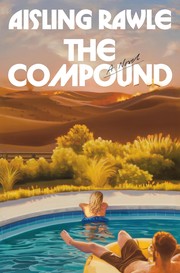
The Compound
Aisling Rawle's debut follows a bored, shallow contestant through a brutal reality show in a desert compound, where the rules get crueler and the world outside…
2,150-word summary · 10 min read
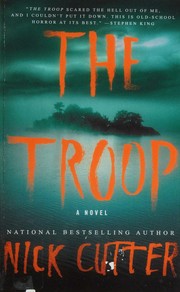
The Troop
A Boy Scout troop on a Canadian island takes in a stranger who cannot stop eating, and the worm inside him turns a camping trip into a war.
2,457-word summary · 11 min read
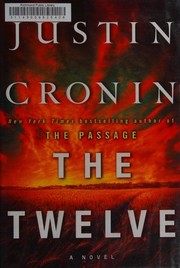
The Twelve
The middle volume of the Passage trilogy braids the year America died, a picnic massacre decades earlier, and the survivors' war against the twelve master…
2,089-word summary · 9 min read
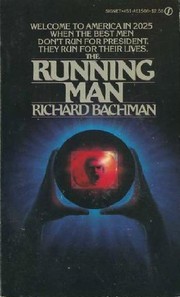
The Running Man
Out of work in a broken 2025, Ben Richards enters a televised manhunt where each hour alive pays cash.
2,922-word summary · 13 min read
Nowhere Burning
Siblings flee to a burnt ranch commune in the Rockies where old fires still smolder.
2,232-word summary · 10 min read
The Passage
A failed Army experiment makes blood-hungry virals, and a quiet girl named Amy may hold the answer a century later.
2,755-word summary · 12 min read
Final Girls
A survivor of a cabin massacre tries to live normally until another Final Girl dies and a second one shows up at her door.
2,176-word summary · 10 min read
Tender Is the Flesh
After a virus makes animal meat lethal, states legalize breeding humans for meat. Marcos Tejo grieves at a processing plant when he is given a live female…
2,372-word summary · 11 min read
Under the Dome
Chester's Mill is sealed under an invisible dome as cook Barbie and editor Julia face Big Jim Rennie's rule.
2,731-word summary · 12 min read
Cujo
A rabid St. Bernard traps a mother and her young son in a broken-down car at a lonely Maine garage.
2,910-word summary · 13 min read
Wayward
With Ethan Burke now sheriff, Wayward Pines runs on cameras, fear and a founder's private plan, until a murder forces him to choose between order and the truth.
2,252-word summary · 10 min read
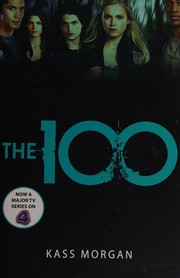
The 100
Three centuries after a nuclear war, a hundred teenage prisoners are sent from a failing space colony to test whether Earth is livable again.
2,152-word summary · 10 min read
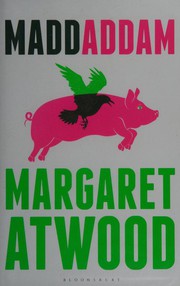
MaddAddam
Toby and Ren rebuild a camp after the plague while Zeb reveals the past and the Crakers invent a religion around Oryx and Crake.
2,201-word summary · 10 min read
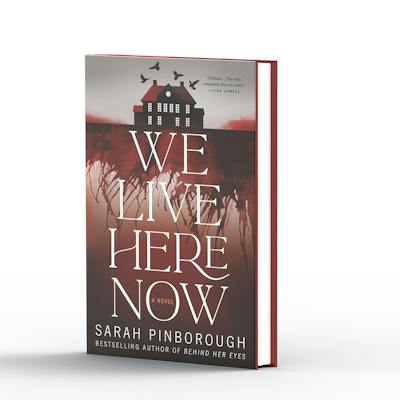
We Live Here Now
After a near-fatal fall, a woman moves with her husband to a remote Dartmoor house where strange events happen only when she is alone, and a raven watches from…
2,016-word summary · 9 min read
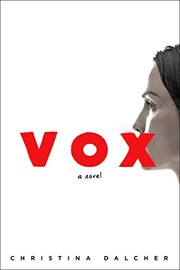
Vox
In a near-future America, women are fitted with counters that allow them a hundred spoken words a day. A linguist fights to reclaim her voice and save her…
2,434-word summary · 11 min read
These Silent Woods
A father and his eight-year-old daughter live off-grid in the Appalachian woods, hiding from a past he cannot outrun. When their yearly supply run fails, their…
2,274-word summary · 10 min read
The Prince
Kiera Cass's 2013 novella replays the opening of The Selection from Prince Maxon's side, from his nerves before the lottery to his sharp first meeting with…
2,651-word summary · 12 min read
The Other Black Girl
An editorial assistant at a white publishing house hopes for a friend when another Black woman is hired, then starts receiving notes telling her to leave.
2,244-word summary · 10 min read
The Forest of Hands and Teeth
A girl in a fenced village dreams of an ocean she has never seen while the dead press against the walls and a secretive Sisterhood decides her future.
2,337-word summary · 10 min read
The Cabin at the End of the World
A family vacation in a New Hampshire cabin turns into an impossible choice when four strangers arrive demanding a sacrifice to stop the apocalypse.
2,571-word summary · 11 min read
Sunrise on the Reaping
Twenty-four years before Katniss, sixteen-year-old Haymitch Abernathy is swept into the fiftieth Hunger Games, where District 12 must send four tributes and…
2,198-word summary · 10 min read
Stolen
A sixteen-year-old is drugged at a Bangkok airport and taken into the Australian Outback by a man who has watched her for years. Lucy Christopher tells it as a…
2,284-word summary · 10 min read
Nightmares and Dreamscapes
King's 1993 collection runs from a man buried alive in a Cadillac to a town of dead rock stars, mixing horror, science fiction and dark humor across 816 pages.
3,232-word summary · 14 min read
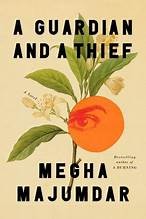
A Guardian and a Thief
Over one week in near-future Kolkata, a mother's flight plan and a homeless young man's hunger collide over a set of stolen travel documents.
2,306-word summary · 10 min read
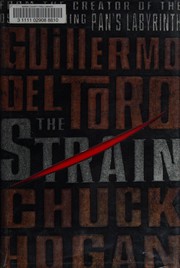
The Strain
A silent Boeing 777 lands at JFK with almost everyone aboard dead, and a CDC team finds an old vampire war following it into New York.
2,272-word summary · 10 min read
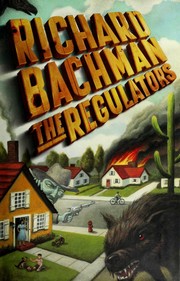
The Regulators
A suburban Ohio street turns into a violent Western set in this Richard Bachman novel, a mirror to Desperation in which an autistic boy hosts a creature called…
2,259-word summary · 10 min read