
Reading options
What's inside (7 sections)
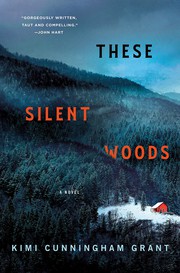
I picked this one up because a friend described it as a book where almost nothing happens for a long time and then the ending sneaks up and hurts. That is a fair description, though it leaves out how odd the middle gets. These Silent Woods came out in 2021 from Minotaur Books, and at 288 pages it looks like a tidy suspense novel. It is really a story about a father who has decided the safest place for his daughter is a spot where nobody can find them, and about what happens when the world keeps refusing to stay outside.
The book opens in a cabin deep in the Appalachian woods, on a stretch of land so remote that the nearest neighbor is a long walk away. Cooper lives there with his daughter Finch, who is eight years old and has known no other home. There is no electricity, no running water, no school, and no town trips. They hunt, they grow what they can, and they stay warm through winters that would be hard for a large family let alone two people alone in a cabin. Cooper calls it a good life. The book spends enough time in the daily work of that life that you can almost believe him.
A life measured in supply runs
The rhythm of their days depends on Jake, an old friend from the military who shows up once a year with a truck full of things Cooper and Finch cannot make or grow. Flour, salt, batteries, medicine, clothes Finch has outgrown. Jake is the only reliable thread back to the world they left, and the one person Cooper trusts enough to let near the cabin. When the year comes around and Jake does not appear, Cooper has to make a trip he has been putting off for a long time. It is only the second time he has gone into town since they came to the woods.
That trip to a Walmart is one of the best scenes in the book, and it tells you more about Cooper than any explanation could. He takes Finch along but makes her hide under blankets in the back of the truck, then tries to shop while the lights and the crowds and the endless shelves press in on him. A man notices Finch moving under the blankets, and Cooper has to talk his way out of a conversation he is badly equipped to have. On the way home he lets Finch come inside a store with him. It is her first time in a shop and her first time near strangers other than Jake. She is curious. Cooper is terrified that someone saw them, and the whole drive back feels like a door left ajar.
Their other regular visitor is Scotland, an older man who lives nearby and comes by without warning, usually with a rifle and a pet crow on his shoulder. He brings gifts for Finch and newspapers that carry stories about Cooper's past, which he leaves where Cooper will find them. Cooper cannot decide whether the man is a neighbor, a threat, or something in between. Finch likes him immediately. That difference in judgment is one of the quiet engines of the book, because the reader is never quite sure whose instincts to trust.
The past that will not stay buried
The story moves between the cabin and the years before it, and the flashbacks are where the book shows its hand. Cooper served in Afghanistan with Jake and killed two civilians during a firefight. He cannot shake the memory. Civilians with weapons keep appearing in his nightmares and in his waking moments, and at one point he pulls a gun on someone in a crowded diner because he is convinced the person is a threat. This is a man whose mind keeps handing him the wrong picture of the world.
After he came home, Cooper and his girlfriend Cindy had Finch. A few months later Cindy was killed in a car accident while Cooper was driving. He does not describe that section of his life in a way that asks for sympathy. He was grieving, he was coming apart, and he was trying to raise a baby while the people who had lost their daughter, Cindy's parents, started working to take Finch away from him. They are called the Judges in the family's private language, which is a bitter little joke because Cindy's father really is a judge. Child Protective Services eventually removes Finch from his care.
The accident that killed Cindy is handled with a kind of grim restraint. Cooper was driving. He does not offer a defense and he does not ask to be forgiven, but the loss sits behind every choice he makes afterward, including the choice to take a child who is not legally his to raise alone. The grandparents, for their part, are not cartoon villains. They are a couple who have lost a daughter and who genuinely believe they can give Finch a better life than a grieving father with a gun and a history of panic attacks. The book gives their case enough weight that you can see both sides of the argument.
What Cooper does next is the act that sends them both into the woods. He goes to the grandparents' house, ties up the old couple, takes Finch, and disappears. On paper that is a kidnapping, and the book never lets you forget it. It also does not let you forget that Cooper genuinely believes he is saving his daughter. Both things are true at once, and Grant keeps them in the same frame instead of picking a side. That refusal to simplify Cooper is what makes the early chapters so unsettling. You want him to be a good father, and you keep catching yourself hoping he gets away with a crime. Jake's role in all of this is quietly important too. He is the one who offers them the land and the cabin, and his yearly trips are an act of loyalty that the book treats as ordinary decency rather than heroics.
Scotland and the camera in the snow
Back at the cabin, Finch finds a camera lens cap half buried in the snow. Cooper is sure Scotland has been spying on them, and he takes Finch up to their hunting blind to watch the property. What they see is not Scotland. A young woman is out there taking photographs of the land and the cabin. Cooper has a panic attack, the kind that comes from a war he thought he had left behind, and Finch has to sit with him until it passes.
Scotland stays a puzzle for a long time. He knows things about Cooper that he should not know. He talks in a way that sounds like advice and like a warning at the same time. He has newspapers with Cooper's old name in them. When he shows up with blood on his hands one afternoon, it is hard to know whether to be grateful for his help or afraid of him. The book is at its strongest in these stretches, when the threat is a mood rather than a man with a weapon, and when Finch seems to understand more than her father gives her credit for.
Scotland's history, when the book finally offers it, is a strange mirror of Cooper's. He lost a partner and a child in a car crash involving a deer, and his mind did not come back whole from it. Before that he had been a priest and a taxidermist, two occupations that give his later habits a slightly grisly logic. He keeps a rifle, he collects newspapers, and he seems to know more about the law than any neighbor should. For a long time I assumed he was the villain of the piece, or at least the person who would force Cooper into the open. Grant lets that assumption sit and simmer for most of the book, which is why the eventual turn lands as hard as it does.
Then Jake's sister Marie arrives with a truck of supplies and news that Jake is dead. She had meant to turn around and go, but a snowstorm comes in and pins her at the cabin for several days. That forced stay changes the balance of the book. Marie bonds with Finch, and through her eyes Cooper finally sees how little contact his daughter has had with anyone who is not him, Jake, or Scotland. Finch is eight and has never had a friend, never sat in a classroom, never been alone with a woman. Marie also starts to draw Cooper out, and he begins to feel things toward her that his isolation has kept buried. He wants her to stay. He also wants the cabin to stay exactly as it is.
The missing girl and the decision
A sheriff comes to the cabin while Marie is still there, asking about a girl named Casey who has been missing for days. Cooper and Finch hide in the basement, and Marie has to stand in the doorway and say she is there alone. When the sheriff leaves, Marie wants answers. Cooper finally tells her the whole story, the war, Cindy, the grandparents, the day he took Finch. It is the first time he has put it all into words for another person.
Finch then admits something she had kept to herself. She recognized Casey from the flyer. She had been sneaking out to watch the girl, and the last time she saw her, Casey's boyfriend was fighting with her. Finch hit the boyfriend with a rock to make him stop. Now the pieces fit together in a way that puts everyone at risk. If Cooper goes to the police with what Finch knows, he has to explain who they are and how they got there. If he says nothing, the truth about Casey may never come out, and the boyfriend may stay free.
Cooper decides to turn himself in. He tells Marie to take Finch to her grandparents' house if he does not come back. This is the moment the whole book has been building toward, and it is a good one because it costs Cooper the thing he has spent years protecting. He is finally choosing Finch's good over his own fear. Before he can reach the police station, though, a bystander tells him that someone else has already been there.
Scotland's gift and a very tidy ending
That someone is Scotland. He has told the police how to find Casey's body, which points to her boyfriend as the person who killed her. He has also told them he killed Cooper and Finch after catching them trespassing, and he has produced physical evidence from the cabin to back up the story. He says he destroyed the bodies. Because of that confession, Cooper and Finch are presumed dead, the photographs on Casey's camera are explained away, and their real names stay out of the case. Scotland takes the fall for a pair of people he barely knows, and the book quotes a line from the Gospel of John about laying down one's life for a friend.
Marie stays. She and Cooper and Finch live together in the cabin for years afterward, and eventually Marie talks Cooper into letting Finch go back to her grandparents and attend school. By the end of the novel Finch is nineteen, done with high school and a year into college, and she comes back to visit the two people who raised her. It is a warm closing image, and it is also where a lot of readers part ways with the book.
I liked the setup more than the payoff. The slow burn works because Cooper is such an unreliable presence in his own story. You spend the first half unsure whether he is a devoted father or a dangerous man who has stolen a child, and Scotland's arrival makes that uncertainty worse in the best way. Grant writes the woods as a real place rather than a symbolic one, all cold and mud and the physical labor of staying alive. The Walmart scene alone is worth the price of admission.
The ending is another matter. Once Scotland turns out to be a figure of Christian grace and the killer boyfriend is dealt with off the page, the moral knots come untied rather too quickly. Finch emerges from a childhood of isolation and a close encounter with a murdered teenager with no visible scars, slides into school, and gets on with her life. Cooper is absolved of a crime by someone else's sacrifice and gets to keep his daughter and marry Marie. The last pages have a hard religious turn that some readers will welcome and others will feel coming as a bit of a sermon. If you want your suspense novel to leave the hard questions open, this one closes most of them with a smile.
Even so, I would recommend it to readers who like a thriller that takes its time and cares about the moral mess its characters are in. It is not really a thriller in the pulse pounding sense. It is a novel about a man who did a terrible thing for a reason he can defend, about the neighbor who sees him clearly, and about the girl who has to grow up in the space between them. Go in without expecting a clean answer about Cooper, and you will probably find the eight years in that cabin worth the trip.
FAQ
What is These Silent Woods about?
It follows Cooper and his eight-year-old daughter Finch, who have lived in a remote Appalachian cabin for years to hide from Cooper's past. A failed supply run, an odd neighbor, and a missing local girl force that past into the open.
Is These Silent Woods a conventional thriller?
It was published as suspense by Minotaur Books, but it unfolds far more slowly than most thrillers, mixing survival detail, family drama, and a study of PTSD. The tension comes from mood and moral uncertainty rather than constant action.
Does the book carry a religious message?
Yes, especially near the end, where one character's sacrifice is framed with a verse from the Gospel of John. Some readers find that turn moving, while others feel it makes the ending too neat.
Similar books
Before the Fall
A private jet falls off Martha's Vineyard. A painter and a small boy survive, then face grief and the news cycle.
2,185-word summary · 10 min read
The Moonlight Child
On a cold January night, Sharon Lemke sees a child washing dishes in a neighbour's kitchen and decides she cannot ignore it.
2,169-word summary · 10 min read
The Cabin at the End of the World
A family vacation in a New Hampshire cabin turns into an impossible choice when four strangers arrive demanding a sacrifice to stop the apocalypse.
2,571-word summary · 11 min read

Stolen
A sixteen-year-old is drugged at a Bangkok airport and taken into the Australian Outback by a man who has watched her for years. Lucy Christopher tells it as a…
2,284-word summary · 10 min read
King of Ashes
A Virginia crematorium, a debt owed to the Black Baron Boys and a family secret pull Roman Carruthers back into a war where everything burns.
2,229-word summary · 10 min read
Gone Before Goodbye
Reese Witherspoon's first novel, written with Harlan Coben, follows a bereaved surgeon whose griefbot guides her into a medical conspiracy stretching from…
2,648-word summary · 12 min read
The Troop
A Boy Scout troop on a Canadian island takes in a stranger who cannot stop eating, and the worm inside him turns a camping trip into a war.
2,457-word summary · 11 min read

Still Missing
A realtor is abducted at a Vancouver Island open house and held for more than a year. Told through therapy sessions, the novel follows her escape and the hunt…
2,466-word summary · 11 min read
Saving Noah
A seventeen-year-old swimmer confesses to molesting two girls he coached, and his mother must decide what unconditional love is worth.
2,976-word summary · 13 min read

The Best of Friends
Three lifelong friends discover their teenage sons were hiding more than anyone knew after a night that leaves one dead, one in a coma and one silent.
2,040-word summary · 9 min read
In an Instant
After a family camper crashes down a snowy mountain, sixteen-year-old Finn watches from the afterlife as survivors make impossible choices and try to live with…
2,130-word summary · 9 min read

The Woods
Twenty years after two teenagers were murdered and two vanished at summer camp, prosecutor Paul Copeland identifies a fresh corpse as one of the missing.
2,490-word summary · 11 min read
The Reappearance of Rachel Price
Bel films a doc when her missing mother walks back after years.
2,254-word summary · 10 min read
Keep It in the Family
Mia and Finn renovate a long empty house and find seven children hidden in the attic.
2,270-word summary · 10 min read

We Begin at the End
Thirteen-year-old Duchess Day Radley shields her little brother Robin after their mother dies, as freed killer Vincent King returns and sick chief Walk tries…
2,956-word summary · 13 min read
What Lies Between Us
Nina keeps mother Maggie locked upstairs for years, trading lies about sisters and deaths that unravel fast.
2,062-word summary · 9 min read
The Chain
Rachel must kidnap another child to save kidnapped Kylie, entering a chain where parents pass crime forward.
2,021-word summary · 9 min read
Pieces of Her
After her mother kills a mall shooter with shocking skill, Andy Oliver uncovers a hidden 1980s past of radicals and wealth.
2,791-word summary · 12 min read
The Family Remains
Lucy returns to London as bones on the Thames reopen the Chelsea mansion deaths.
2,304-word summary · 10 min read
I Found You
A man with no memory on a beach, a vanished husband, and a 1993 holiday collide in a seaside town.
2,990-word summary · 13 min read
Dear Debbie
Advice columnist Debbie Mullen loses her job, tracks her husband's secrets, and decides it is time for payback against those who wronged her.
2,432-word summary · 11 min read
All the Little Houses
In 1980s Longview, Texas, social queen Charleigh and daughter Nellie guard mean-mom secrets when a new family threatens their empire.
2,206-word summary · 10 min read
Stillhouse Lake
Acquitted wife of a serial killer becomes armed Gwen Proctor, but trolls and followers find her lake refuge.
2,086-word summary · 9 min read
Little Secrets
A mother missing a son finds her husband cheating and handles both herself.
2,008-word summary · 9 min read

Leave the World Behind
Two families share a Long Island rental during a blackout no one can explain.
2,015-word summary · 9 min read
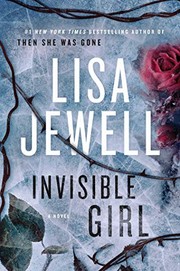
Invisible Girl
A missing teen, a strained marriage and a doxxed loner collide in London.
1,996-word summary · 9 min read
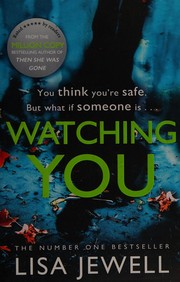
Watching You
A new wife in Bristol fixates on a charismatic neighbor while a teen boy logs every move before a murder.
2,363-word summary · 11 min read
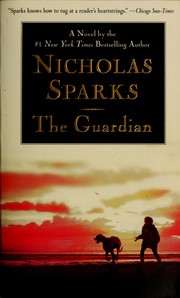
The Guardian
Widowed at twenty-five, Julie Barenson leans on a Great Dane named Singer, then dates two men and learns one of them is a killer.
2,221-word summary · 10 min read
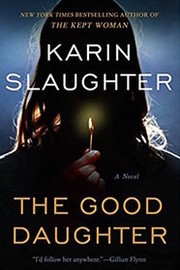
The Good Daughter
Twenty eight years after a home invasion shattered her family, a lawyer witnesses a school shooting that reopens old wounds.
2,505-word summary · 11 min read
Not a Happy Family
After a bitter Easter dinner, Fred and Sheila Merton are found dead and their three adult children each hold a motive.
3,764-word summary · 17 min read