
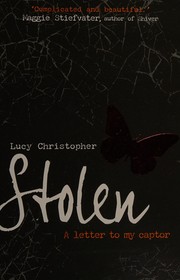
Stolen
2,284-word summary 10 min read 304 pages in the book
- First published
- 2009
- Publisher
- Chicken House
- Pages
- 304
- ISBN
- 9781906427139
Reading options
What's inside (8 sections)
I picked this one up with some reluctance. The cover and the blurb promised a kidnapping story with a romance growing out of it, and I have always found that combination hard to trust. I finished it in two sittings and spent the rest of the week arguing with it in my head, which is usually a sign that a book has done something worth arguing about. Stolen was Lucy Christopher's first novel, published in Britain in 2009 by Chicken House and later brought out in the United States by Scholastic. It won the Branford Boase Award and the Southern Schools Book Award in 2010 and was later given a Printz Honor, so it clearly struck a chord. What surprised me was how slippery it is about what it wants me to feel.
A letter addressed to you
The whole book is one long letter. Gemma Toombs, sixteen and British, writes to the man who took her, and she calls him "you" throughout. There is no first-person "I" narrating events in the usual way; there is a girl pouring out what happened into a letter she may never send. The subtitle, A Letter to My Captor, tells you the shape before you start. Christopher opens with Gemma remembering that he saw her before she ever saw him, and that detail colours everything after it. He was watching first.
The book's opening is blunt:
It happened like this. I was stolen from an airport.
The kidnapping happens at Bangkok airport. Gemma is travelling with her parents to Vietnam, and she has just been fighting with them. She goes to buy a coffee, does not have enough money, and a young man steps in and pays for it. He is careful about the small things. He offers to put sugar in her drink, and while she is sitting there he asks about her life. Her mother is a curator, her father a stockbroker. He says he travels, makes art and builds things. She notices that he is nervous and reads it as shyness, even charm, and that misreading is the first of many.
The coffee is drugged. As it takes hold, he takes her hand and leads her away. He changes her clothes, puts a wig on her, feeds her more drugs in chocolates and finally chloroforms her in the parking lot of another airport. He loads her into the trunk of a car and keeps drugging her through the flight. When she wakes properly, she is in a hot, strange place with no road in sight. He tells her, almost as an aside, that he has not touched her sexually. It is an odd thing to volunteer, and it tells you how carefully this man has thought about the story he will tell himself about what he is doing.
A house in the middle of nothing
The place is the Great Sandy Desert in the Australian Outback, and it is as empty as it sounds. Ty, as he asks her to call him, has built a small house there and a life that depends on solar panels, a generator, stored food and a hidden water hole. Gemma's first clear act is to run. She gets a short distance before the sand cuts her feet and the heat takes over. Ty follows in the truck, blocks her path and tackles her. He tells her she will die out there if she keeps going, and at this stage it is hard to argue with him.
He locks her in the bathroom. She smashes a bottle and cuts her wrists with a shard of glass, and he breaks in and stops her. She hits her head and passes out. When she comes to, she is tied to a bed with her wounds bandaged, and she refuses the food and water he brings. This stretch of the book is grim and very physical. Christopher is good on the small humiliations of captivity: the fear of what a man might do in the night, the hunt through a room for a knife or a set of keys, the way a girl starts counting the days by cutting notches into a bed frame.
Ty shows her the land anyway, because he wants her to see what he sees. He takes her to two big boulders he has named the Separates, and he tells her he found the place as a boy, living off the water in the rocks. He says she is like the land, beautifully separate, and that he wants company. He has no plan to let her go. A field guide in his house lets Gemma work out that she is in Australia, and she tries to shake him with talk of police and cameras, but he points out that she spent most of the journey under a tarp. The desert is not on any map she could name.
One of the stranger scenes comes in an outbuilding. Ty shoves her inside and tells her to keep still, and she screams, certain this is the end. When he pulls the curtains back, the room is covered in a painting he has been making for years, built from pigments he ground out of rock and plants. He cries in front of her. Gemma starts to understand that she is living with someone whose mind works in a way she cannot predict, and that he is not the straightforward monster she has been calling him. That does not make him safe, and the book never lets you forget it. Not long after, she climbs a tree and sees nothing but empty country in every direction, and then hears the truck putting up a fence to close her in. She tries to get over it, under it and through it before he drags her back, shivering, to the house.
Six years of watching
Slowly, Gemma starts asking the question that has been sitting under everything: why her? Ty's answer is that he has been watching her for six years, since she was ten. He followed her life from a distance and decided that the only way to have her was to take her. At first this reads as pure creepiness, and it is. Then he tells her about a night in a park when a boy named Josh Holmes, drunk and refusing to hear no, would not leave her alone. Gemma ran, and she remembers a tall figure pulling Josh off her, though she never stayed to see who it was. Ty tells her it was him, and that it was the moment he knew he wanted her and had to bring her here.
That single memory does a lot of work. Suddenly the man who kidnapped her also has a claim to having protected her, and Gemma has to hold both ideas at once. This is the most uncomfortable part of the book, and I mean that as a compliment to its honesty. Christopher is asking whether a person can be rewritten in someone else's eyes by one good deed, and whether the person being rewritten has any freedom left to refuse it.
Ty's own history comes out in pieces. His mother was from a wealthy English family and had him young, then signed him over to his Australian father. He grew up on a remote farm, learned the land from local Aboriginal people, and had no other children around. His father drifted into drugs and drink, and for about a year Ty lived alone in the bush, eating what he could catch, until the state took him in a net and put him in a group home, where he learned to fight. Gemma points out the obvious: he was stolen too. He does not accept the comparison. He insists that what he did was rescue.
The camel, the needle and the night of stars
The middle of the book shifts, and the balance of feeling starts to move. About three weeks in, Ty decides they need a camel for transport and meat. He drives fast toward a herd, shouts to Gemma to grab a rope, and singles out a young female. He ropes her and ties her to the truck. Gemma watches the animal struggle and thinks she could set it free, but she does not. She tells the camel that it is trapped too. It is a quiet, clever moment, because her pity for the captured animal is also pity for herself, and her failure to act on it says something about how far she has come.
She also explores the house properly and finds a sewing machine. She takes the needle, gets close enough to hold it at Ty's eye and demands the truck keys. He hands them over, and she runs, starts the engine and drives away. It is the most thrilling escape in the book, and it lasts only a few miles. The truck's tyres bog down in the sand. She sets off on foot, collapses in the heat and begins to hallucinate that she is back home under her duvet. Ty finds her by following her footprints. She is badly sunburned and bruised, and instead of punishing her he carries her back and tends to her until the burns heal.
After that, the ground shifts in ways that made me uneasy and also completely believable. Ty has a nightmare and wakes screaming, and Gemma gets up and consoles him. He thanks her. She later helps him paint his back while he works on the great painting that includes him, and she lets him mark her face with paint. That night they lie out on the sand and he points out the patterns in the stars. She ends up lying on his chest, listening to the sound of his voice until she falls asleep in his arms. Christopher writes this section with real warmth, and that is exactly why it is troubling. The tenderness is not fake. It is just growing in the wrong soil.
The snake and the drive to the mine
The turn comes on a morning when Gemma wakes to find Ty gone, with a note saying he has gone to catch a snake. He needs venom for the antivenom he has been preparing. She goes looking for him near the water reserve and finds him working with a poisonous snake, which turns on her and bites. Suddenly the book races. She is on the kitchen table with a makeshift drip in her arm while Ty fights to keep the venom from spreading. The serum he has saved is out of date. She slips into a coma, and he makes the decision to take her to the mine site, the one place that can get her real help.
Getting there is an ordeal, and the arrival is chaotic. Clinical staff work to pull them apart. Ty says goodbye, and Gemma refuses to let him go, grabbing his arm and pulling him down to kiss him in front of everyone. It is a strange, slightly embarrassing scene, and it lands because the book has earned it. Ty is arrested. Gemma is taken to a hospital in Perth, where her parents and family are waiting, and while she recovers she is told that what she felt for him was Stockholm syndrome.
The argument the ending starts
The last stretch is made of letters rather than action. Gemma thinks about the testimony she will give. She could say she planned the whole thing with Ty, or she could tell the truth: that he watched her for years, drugged her in Bangkok and stole her. She decides on the truth, but she also means to tell the parts that complicate it, that he never touched her improperly and that he was gentle with the camel. She says she hopes her words send him to a prison with a window or near his land, and that she cannot save him in the way he wants her to.
This is where the book divides people, and I understand both sides. Some readers find the whole premise a dangerous soft sell on stalking and abduction, a romance that asks a girl to fall for the man who deprived her of every choice. There is a real case for that. Others, including the young reviewers at The Guardian who called the book confusing but excellent, felt that it never asks us to approve of Ty, only to understand how a captive mind can attach itself to a captor. The question at the heart of the book is never settled, which is what keeps the argument alive. It also ends abruptly, with Gemma back with her parents and Ty in custody, and much of the emotional reckoning left off the page. If you want a tidy resolution, you will not get one here.
What I do admire is the discipline of the writing. The second-person letter could have tipped into melodrama at any moment, but Christopher keeps it grounded in concrete things: a needle from a sewing machine, a note on a table, the heat of sand, the taste of drugged coffee. Stolen is a short, intense book about a girl whose choices are taken away and the strange, uncomfortable ways she tries to get some of them back. I would hand it to an older teenager or an adult who is willing to sit with a moral mess rather than have it cleaned up. I would be careful with a younger reader, and with anyone looking for a straightforward love story. This is a book that locks you in a room with a difficult question and then declines to leave you with an easy answer.
FAQ
Is Stolen based on a true story?
No. It is a work of fiction and Lucy Christopher's debut novel, first published in Britain in 2009 by Chicken House.
Who are Gemma and Ty?
Gemma Toombs is a sixteen-year-old British girl kidnapped from a Bangkok airport, and Tyler MacFarlane is the twenty-seven-year-old man who has watched her for years and takes her to the Australian Outback.
Why do some readers find Stolen controversial?
Because it grows a romance out of an abduction and leaves the question of Stockholm syndrome unsettled, some readers feel it glamorizes stalking, while others argue it never asks us to approve of Ty.
Similar books
These Silent Woods
A father and his eight-year-old daughter live off-grid in the Appalachian woods, hiding from a past he cannot outrun. When their yearly supply run fails, their…
2,274-word summary · 10 min read
The Obsession
After a childhood in the shadow of her serial killer father, photographer Naomi Carson puts down roots in a coastal town, only to face a copycat killer…
2,230-word summary · 10 min read
Opposition
In the Lux finale, Katy and Daemon face a fractured species, a government that hunts them, and a choice between their love and the future of mankind.
2,513-word summary · 11 min read
The Valley of Horses
Exiled from the Clan, Ayla survives alone in a hidden valley, tames a horse and a cave lion, and nurses a wounded stranger back to life.
2,311-word summary · 10 min read
Wither
In a future where women die at twenty, sixteen-year-old Rhine is sold as a bride to a wealthy stranger and plots an escape from a beautiful prison.
2,395-word summary · 11 min read
Fable
Abandoned on a lawless island at fourteen, Fable spends four years diving for gems to buy passage off it, straight into the cutthroat trade of the Narrows.
2,320-word summary · 10 min read
Five Survive
Six teens on spring break get a flat tire, a red dot sight, and one ultimatum in an RV.
2,867-word summary · 13 min read
Does It Hurt?
Running Sawyer hitches a sailboat with guarded Enzo and wrecks off the Australian coast.
2,251-word summary · 10 min read
The Unbecoming of Mara Dyer
Sole survivor of a collapse that killed her friends, Mara Dyer moves to Miami, where visions that come true suggest her grief hides something darker.
2,152-word summary · 10 min read
Pandemonium
Lena survives the Wilds and spies in New York after losing Alex at the fence.
2,314-word summary · 10 min read
Crossed
Cassia crosses the Outer Provinces canyons seeking Ky after labor camp, while Xander returns as medic with Rising secrets to shift her search.
2,322-word summary · 10 min read
Hatchet
A plane crash leaves thirteen-year-old Brian alone in the Canadian wild with only a hatchet.
2,770-word summary · 12 min read

The Forest of Vanishing Stars
A girl raised in the Polish wilderness uses her survival skills to hide Jewish refugees, until a secret from her own past catches up.
2,250-word summary · 10 min read
The Distance Between Us
Seventeen-year-old Caymen Meyers distrusts rich people, then a wealthy boy keeps proving her wrong while her mother's doll shop struggles to survive.
2,231-word summary · 10 min read
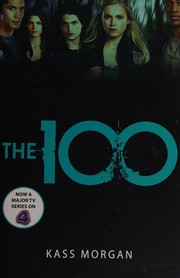
The 100
Three centuries after a nuclear war, a hundred teenage prisoners are sent from a failing space colony to test whether Earth is livable again.
2,152-word summary · 10 min read
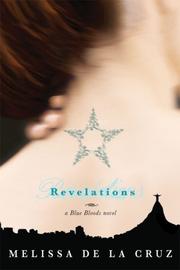
Revelations
Schuyler is pulled into the Force household as Silver Bloods rise, and a Conclave gathering in Rio ends in bloodshed.
2,166-word summary · 10 min read
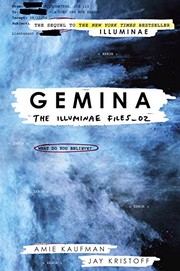
Gemina
A commander's daughter and a crime boss's son team up when BeiTech attacks a remote station, told through chats, reports and redacted files.
2,221-word summary · 10 min read
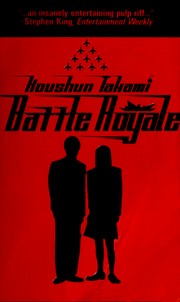
Battle Royale
A Japanese dystopian thriller about a class of students forced to kill one another on an island, and the three who refuse to play the game.
2,266-word summary · 10 min read
Wings
A homeschooled fifteen-year-old grows a blue flower from her back and learns she is a faerie sent to guard a hidden gate. Pike's debut makes plant lore feel…
2,506-word summary · 11 min read

White Hot Kiss
Layla is half Warden, half demon, and one kiss from her steals a soul. A demon prince warns that Hell is hunting her, and she must choose between the clan that…
2,299-word summary · 10 min read
Wake
Seventeen-year-old Janie Hannagan is pulled into other people's dreams whenever they sleep near her. A nursing-home job, a secretive boy and a drug bust give…
2,488-word summary · 11 min read
The Tunnel
A painter in a Buenos Aires prison recounts the glance, the woman and the jealousy that led him to murder the only person who understood him.
2,313-word summary · 10 min read
The Prince
Kiera Cass's 2013 novella replays the opening of The Selection from Prince Maxon's side, from his nerves before the lottery to his sharp first meeting with…
2,651-word summary · 12 min read
The Iron Knight
Winter prince Ash journeys to the End of the World to earn a soul and a mortal body so he can stand beside Meghan, the Iron Queen.
2,564-word summary · 11 min read
The Heart of Betrayal
Held captive in Venda, Lia must survive the Komizar's scrutiny while Rafe hides his identity and Kaden, the assassin who spared her, risks everything to keep…
2,702-word summary · 12 min read
The Hand on the Wall
In the finale of the Truly Devious trilogy, Stevie Bell stays at Ellingham as a blizzard traps her with a killer, a hidden diary and the truth about Alice…
2,219-word summary · 10 min read
The Girl of Fire and Thorns
Rae Carson's debut follows Elisa, an insecure princess born with a godstone in her navel, who is married to a foreign king and must grow into the leader a…
2,331-word summary · 10 min read
The Forest of Hands and Teeth
A girl in a fenced village dreams of an ocean she has never seen while the dead press against the walls and a secretive Sisterhood decides her future.
2,337-word summary · 10 min read