
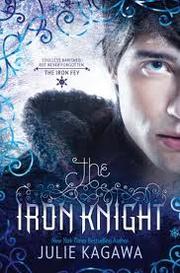
The Iron Knight
2,564-word summary 11 min read 394 pages in the book
- First published
- 2011
- Publisher
- Harlequin Teen
- Pages
- 394
- ISBN
- 9780373210367
- Series
- The Iron Fey (#4)
Reading options
What's inside (8 sections)
I nearly skipped this one. By the time I reached book four I felt like I had heard Meghan Chase's story from every angle, and the thought of another quest with the same crew made me want to set the series down for a while. Then I turned to the first page and realized Ash was the one telling it. That changed my mind. Julie Kagawa published The Iron Knight in 2011 with Harlequin Teen, and the first paperback runs 394 pages. It is the fourth book in The Iron Fey series, and it is the only one that hands the story to the Winter prince instead of the girl who keeps saving everybody. I finished it in two sittings, then went back and read the last chapter again, which is not something I expected to do when I started.
A prince who cannot follow
Begin with where the third book left off. Meghan Chase has killed the false Iron King and taken his throne. She is the Iron Queen now, ruler of a place where cold iron runs through everything, and no Summer or Winter fey can breathe there for long. Ash, the last son of Mab and Queen of the Unseelie Court, loves her and has sworn to stand at her side. He also cannot go with her. When things looked hopeless at the end of the last book, Meghan cut their bond to keep him alive, and now he is the one left outside the door.
That is the engine of this book. Ash is not trying to save a kingdom or kill a tyrant this time. He wants a body that can survive iron and a soul to go with it, because the only way he can keep his vow to Meghan is to stop being a faery. Kagawa tells the whole thing in Ash's own voice, and the change is striking. Meghan was a girl learning what she was. Ash is a man who has spent centuries believing that feelings are a weakness, and who now has to learn the machinery of being mortal from the inside.
He is not a warm narrator. He is clipped and dry, given to flat observations about how stupid everyone around him is, and it took me a few chapters to settle into him. That turns out to be the point. The book slowly takes that armor apart, and because we are stuck in his head the whole way, we feel each crack. When he admits something he would never have said in the earlier books, it lands harder than any battle.
There is a practical problem too, and Kagawa does not let us forget it. Ash has nowhere to live while he searches. Mab has cast him out, the Iron lands would kill him, and the Summer Court is not exactly friendly either. So he goes where exiles and strays go, which means the Nevernever, and specifically the Bone Marsh.
Baba Yaga and a bargain
The opening stretch sends Ash and Puck looking for Grimalkin, the cait sith cat who has guided the group before and who always knows more than he says. They find him in the Bone Marsh, keeping company with Baba Yaga, the witch who lives there and who is not pleased to see Puck. Ash is polite, Puck is his usual infuriating self, and the witch makes it clear that nothing in her house comes free. I liked this section because it drops us straight into the rhythm of these characters. Puck jokes until the joke stops being funny. Ash measures every word. Grimalkin appears out of nowhere, having heard the entire conversation, and agrees to help for a favor he names later, which anyone who has read the other books knows is never good news.
What Ash needs is a Seer. Grimalkin knows one, and he points them toward her, with a warning that the road will cost something. Ash takes the bargain without asking too many questions, and that is characteristic. He is a knight under oath, and once he decides on a path he walks it even when the sense of it is thin.
They do not travel alone for long. The Big Bad Wolf, a figure from an earlier novella, turns up shadowing them and eventually admits that Mab sent him. This amused me, because it is exactly the kind of help Ash would rather refuse. The Wolf is in it for the story and for the power that comes with a good tale, and he follows Ash around hoping for a chance to fight something worthy. He becomes a genuine member of the company though, and his presence gives the middle of the book a lighter note when things get heavy.
The deeper they go, the more Ash's past comes up. Kagawa keeps circling back to Ariella, the woman Ash loved before Meghan, whose death is the thing that froze him into the cold prince he became. Puck was blamed for that death, and the two of them have carried the argument for years. On the road Ash keeps seeing her, or thinks he does, and the line between memory and actual haunting gets thin. That is fair enough in a book about dreams, but I will say the repeated visions started to feel like padding after a while. I was ready to meet whoever was pulling the strings.
Down the River of Dreams
The travel chapters are the strongest stretch of the book, in my opinion. Grimalkin leads them out of the marsh and toward the River of Dreams, and Kagawa has a good time with the strange logic of the place. Hobyahs hunt them. Nightmares leak out of the water and take shapes that mean something to whoever is looking. Ash keeps his guard up, Puck makes a joke of everything until he does not, and the Wolf treats the whole trip like a chance to build his legend.
Then they reach Phaed, the land where forgotten fey go to wait out the end of their days, and the mood changes. This is a place for names that nobody remembers anymore, and Ash is forced to consider that losing his faery nature might mean losing himself entirely. It is a smart worry for this particular quest. He is giving up more than a body. The name and the history go with it, and he knows it.
The emotional turn comes at a hollow full of mist. Grimalkin peels away, leaving Ash, Puck, and the Wolf to find the Seer on their own. Ash hears his name called and chases a figure into the fog, where he finds the bones of a wyvern and realizes where he is standing. This is where Ariella died. Puck finds him there, and the old grief and blame come out as a fight, with Ash deciding he will kill his former friend and Puck refusing to defend himself properly. It is a raw scene, and it works because both of them have earned the anger.
Then the Seer appears, and it is Ariella. She is alive. She explains that she has always been able to see a version of what comes next, and that she faked her death and let Puck take the blame because the path she saw required it. I had mixed feelings about this reveal. On one hand it recontextualizes years of resentment between Ash and Puck in one stroke, and the argument that follows has real weight. On the other hand, a death that gets undone can feel like a cheat, and I spent a chapter or two waiting for the cost to show up. It does, later, in a way I did not see coming.
Ariella joins the company. She tells Ash that to become mortal he has to reach the End of the World and pass the trials set by the Guardian there. So they go, down the river and onward, with the two men who once loved her walking a few steps apart and trying not to look at each other.
The End of the World
Getting to the Guardian is its own trial. At the End of the World the group has to run the Gauntlet, a passage full of sphinxes, fire, Fu Dogs, and other things built to stop anyone who is not meant to get through. This is the most purely fun part of the book. Kagawa stops worrying about the essay questions and lets Ash fight his way across a room with a sword, and the pace picks up accordingly. The door to the far side is closing when they arrive, and the Wolf throws himself under it to hold it open long enough for the rest to pass. It is a good moment for a character who wanted a heroic tale, though it also set up a rescue I knew was coming.
Inside, the Guardian lays out the terms. Ash must face three tests, and if he passes he can have his soul. What follows is quieter than the Gauntlet, and I think that is where some readers will lose patience. The first test makes him feel what a mortal body is like. He is slow, weak, and easily hurt, and the humiliation of it bothers him more than the pain. He has spent his life being stronger than everyone around him, and the test is designed to show him that being human means being fragile.
The second test is the one that stuck with me. The Guardian makes Ash feel remorse for everything he has done. Faeries do not carry that feeling the way people do, so this is genuinely foreign to him, and the people he has hurt parade through his head. He wants to quit. Grimalkin shows up in the dark and tells him something along the lines of asking whether his victims care if he lives or dies, because they are dead and he is not, and the only way to avoid becoming the thing he hates is to finish what he started. He tells Ash to earn his soul and prove he can learn from his mistakes. I marked that page. It is the clearest statement of what this book is actually about.
The third test shows Ash the life he could have if he stays as he is. It is a good one, full of power and certainty and none of the aches he just discovered. He has to look at it and decide that a shorter, softer life with Meghan is worth more. Ariella is the one who talks him through it. She reminds him that he will always love her but that Meghan is the one he is in love with, and she points out that being physically weaker is not the same as being weak, using Meghan herself as proof, since she did her hardest work while her faery magic was sealed away.
Ash says yes. He wants the soul.
What the soul costs
Then the Guardian names the last condition, and it is the one nobody in the group saw coming. A soul cannot grow out of nothing. For one to be born in Ash, a life must be given freely and without reservation by someone who loves him. Ash tries to refuse outright. He cannot accept that someone would die for him, given what he believes about himself. Ariella steps forward. She has seen this ending all along, which explains the calm she has carried since the hollow, and she will not be talked out of it. Ash begs her, and she dies anyway.
That is the book's central bargain, and it is the reason the reveal of Ariella being alive earlier matters. If she had simply died in the past, her death here would be a footnote. Because we got her back for a few chapters, the loss is ours too. I found the scene hard to read in a good way, and also a little manipulative, since Kagawa stacks every emotional lever at once. Fair enough. I forgave it because Ariella gets to choose, and the book is careful to say that the choice is hers, not Ash's guilt to carry forever.
The Guardian gives Ash a globe that will take him back to the mortal world when broken. Before they leave, the group goes back for the Wolf, still pinned under the closing door, and frees him. He heads back to the Deepwyld on his own terms. Ash discovers that he can still work glamour even as the change settles in, which caught me off guard and made me wonder what exactly he gave up and what he kept.
The way back is brisk. They land in a mortal city, get stopped by thugs, and fight them off together, which is the last time Ash and Puck scrap side by side as faeries. Grim finds a trod back into the Nevernever and takes his leave, and Puck walks Ash to the edge of the Iron lands and then goes too. That matters. Ash has spent the book with people who love him in complicated ways, and the final approach to Meghan is something he does alone.
Glitch leads a cloaked figure into Meghan's throne room. It is Ash, and he tells her he is mortal now, that he can stay. He proposes, and the book closes on their marriage. There is a coda back at the hollow where Grim returns to the wyvern bones and speaks to a cherry blossom tree in bloom. It is Ariella, and it is a gentle, wordless way of saying she is still somewhere. I did not expect to be moved by that after everything, but I was.
What I think of it now
Read this book after the other three, not instead of them. It leans on you knowing who Puck and Grimalkin and Mab are, and half the pleasure comes from seeing familiar figures tilted toward a new point of view. Ash is a better narrator than I expected, and the decision to give him the whole book is what makes a fairly standard quest feel worth the trip. The first-person voice keeps the focus on what losing immortality actually costs, down to the small humiliations of a body that bruises.
The middle is uneven. The run of visions and repeated arguments about Ariella slows things down, and the three trials are less exciting on the page than the setup promises, especially after the Gauntlet right before them. Readers who came for the court politics and the Iron war will find very little of either here. This is a road book, and a good chunk of it is two old rivals working out years of baggage between fights.
For what it is, though, I think Kagawa sticks the landing. The book takes a question that could have been simple, how do we get the boy to the girl, and turns it into a harder one about what a person is willing to give up to belong somewhere. The answer involves friendship, grief, and a death that nobody can take back, which is more than I expected from the fourth book in a series. If you liked Meghan's story, give Ash his. You may find, as I did, that his is the one that stays with you.
FAQ
Is The Iron Knight the fourth Iron Fey book?
Yes. It is book four in The Iron Fey series, published in 2011 by Harlequin Teen, and it is narrated by Ash instead of Meghan.
Why does Ash need to become human?
Meghan is the Iron Queen, and no Winter or Summer faery can survive in her Iron lands. Ash must gain a mortal body and a soul to stay at her side.
Does The Iron Knight have a happy ending?
Ash becomes mortal and marries Meghan, but Ariella dies so he can have a soul, so the ending mixes joy with real loss.
Similar books
More from The Iron Fey first, then related titles.
The Iron King
Meghan Chase follows her stolen brother into the Nevernever and bargains with a Winter prince to face the Iron King.
2,720-word summary · 12 min read
The Iron Daughter
Exiled with Ash after the scepter theft, Meghan hunts the Iron stronghold as iron magic wakes inside her.
2,995-word summary · 13 min read

The Iron Queen
Meghan faces the Iron King past while Ash pays a winter price.
2,548-word summary · 11 min read
A Court of Thorns and Roses
Sarah J. Maas's A Court of Thorns and Roses retold: Feyre, Tamlin's Spring Court, the curse, and the trials Under the Mountain.
2,442-word summary · 11 min read
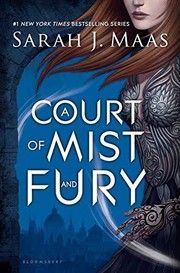
A Court of Mist and Fury
ACOTAR book 2 retold: Feyre in the Spring Court, the bargain with Rhysand, Velaris, and war with Hybern.
2,218-word summary · 10 min read
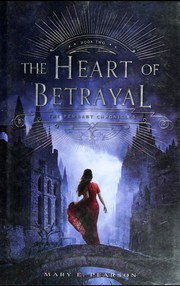
The Heart of Betrayal
Held captive in Venda, Lia must survive the Komizar's scrutiny while Rafe hides his identity and Kaden, the assassin who spared her, risks everything to keep…
2,702-word summary · 12 min read
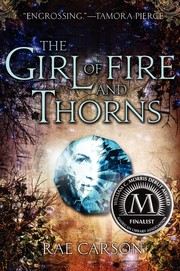
The Girl of Fire and Thorns
Rae Carson's debut follows Elisa, an insecure princess born with a godstone in her navel, who is married to a foreign king and must grow into the leader a…
2,331-word summary · 10 min read

Magic Study
Sentenced to die in Ixia, Yelena returns to the land she was stolen from to learn the magic that made her an outlaw.
2,542-word summary · 11 min read

Vow of Thieves
Kazi and Jase return to Tor's Watch to find it occupied, and their marriage is tested by captivity, betrayal, and a war for the town of Hell's Mouth.
2,059-word summary · 9 min read
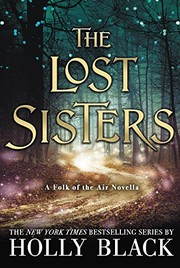
The Lost Sisters
Taryn Duarte writes a letter to her twin, Jude, explaining how she fell for Locke and why she stayed silent while he used them both.
1,914-word summary · 9 min read

Archenemies
Nova steals for the Anarchists while Adrian hides his Sentinel identity, and a serum that erases prodigy powers puts them both at risk.
2,485-word summary · 11 min read

The Rose & the Dagger
Shahrzad is pulled from her Caliph husband and left in a desert camp of rebels, needing to break his curse and end a war before it ends her.
2,520-word summary · 11 min read

We Hunt the Flame
In a fractured Arabia-inspired world, a disguised huntress and a prince-assassin race to find a magic-restoring book and confront an ancient evil.
2,195-word summary · 10 min read

Lore
Lore Perseous, the last of a hunted bloodline, is pulled back into the Agon when a wounded Athena offers her revenge against the god who killed her family.
2,188-word summary · 10 min read
Fable
Abandoned on a lawless island at fourteen, Fable spends four years diving for gems to buy passage off it, straight into the cutthroat trade of the Narrows.
2,320-word summary · 10 min read

The Winner's Curse
An aristocratic girl buys a slave who is secretly a prince plotting rebellion.
2,124-word summary · 9 min read

A Winter's Promise
Ophelia reads objects and is sent to marry Thorn on a cold ark.
2,502-word summary · 11 min read
Daughter of the Siren Queen
Alosa hunts the last map pieces toward Isla de Canta while defying her father Kalligan, facing her brother Draxen, and choosing her loyal crew and Riden at…
2,643-word summary · 12 min read
Daughter of No Worlds
A former slave with rare magic hires exiled warrior Max to train her for a daring rescue, sparking slow burn love and wider war in this big 520-page fantasy…
2,529-word summary · 11 min read
The Stolen Heir
Feral ex-queen Suren joins Prince Oak on a frozen quest to stop her mother, Lady Nore.
2,305-word summary · 10 min read
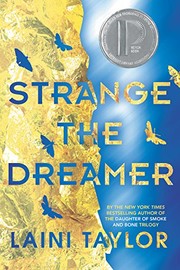
Strange the Dreamer
Orphan librarian Lazlo Strange joins a quest to the lost city of Weep, where blue-skinned godspawn haunt dreams.
2,221-word summary · 10 min read
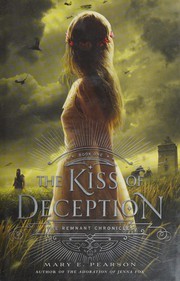
The Kiss of Deception
Princess Lia flees an arranged marriage and hides in a village, unaware one stranger is a prince and the other an assassin.
2,196-word summary · 10 min read

Wicked Lovely
Aislinn sees faeries and must decide whether to become Summer Queen while loving mortal Seth.
2,059-word summary · 9 min read
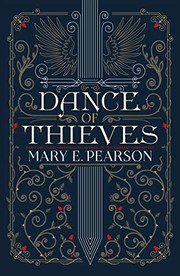
Dance of Thieves
Queen's thief Kazi infiltrates Ballenger lands while young leader Jase plays her right back.
2,005-word summary · 9 min read

Poison Study
Sentenced to die, Yelena becomes the Commander's poison taster and learns survival in Ixia has a daily price.
2,501-word summary · 11 min read
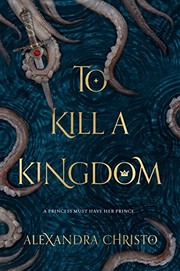
To Kill a Kingdom
A siren princess turned human must steal a siren-hunting prince's heart to win back the sea.
2,248-word summary · 10 min read

Fire
A human monster who reads minds is pulled into war in the Dells and must decide how to use her power.
2,727-word summary · 12 min read
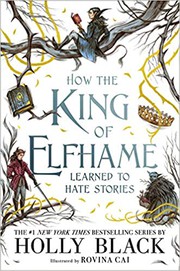
How the King of Elfhame Learned to Hate Stories
Cardan recalls a harsh boyhood and an uneasy crown in this short illustrated companion to the Folk of the Air trilogy, told wholly from his side.
2,902-word summary · 13 min read
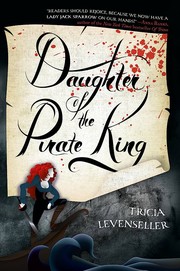
Daughter of the Pirate King
A pirate captain daughter lets herself be captured to find a map, then spars with a strict young pirate prince.
2,156-word summary · 10 min read
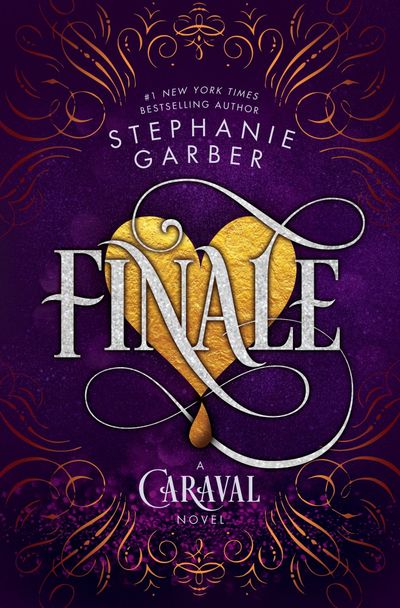
Finale
Sisters face waking Fates with debts due, loving princes, and choices that break immortal math.
1,995-word summary · 9 min read