
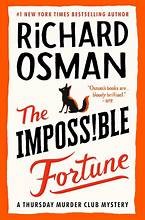
The Impossible Fortune
2,685-word summary 12 min read 368 pages in the book
- First published
- 2025
- Publisher
- Viking Press
- Pages
- 368
- ISBN
- 9780593653258
- Series
- Thursday Murder Club (#5)
Reading options
What's inside (9 sections)
I came to the fifth Thursday Murder Club book with the same feeling I imagine a lot of regulars brought to it: real affection for the four pensioners at Coopers Chase, plus a quiet worry that the well might be running dry. Viking Press published it on 30 September 2025, and it runs 368 pages in hardcover. It is billed as the fifth mystery in the series, and the title promises something grand. What I found was a smaller, more domestic book than that promise suggests, one that spends as much time on seating plans and family rows as it does on a puzzle. That is largely where its charm lives, and it is also where some readers will start to lose patience.
A quiet year at Coopers Chase
The book opens on a stretch of calm, and Osman takes his time settling into it. Coopers Chase is the retirement village in Kent where the Thursday Murder Club gathers, and the four friends at its centre are exactly who returning readers will expect. Elizabeth Best is the former spy whose instincts never fully switch off. Ron Ritchie is the ex-trade-union leader, a man who has spent a lifetime reading people in rooms full of noise. Ibrahim Arif is the psychiatrist, quietly the most careful listener of the group. Joyce Meadowcroft is the retired nurse, the one whose ordinary competence keeps getting underestimated by everyone around her.
The trick of this opening is that nothing has happened yet. Osman gives each of the four a private worry to carry instead of a case to solve. Joyce is consumed by table plans and first dances for her daughter Joanna's wedding. Elizabeth is grieving her husband Steven, and the loss sits under everything she does. Ron is tangled up in troubles with his son Jason and his grandson Kendrick, a knot of family friction that the book keeps returning to. Ibrahim, meanwhile, keeps providing therapy to Connie Johnson, a recently paroled drug dealer whose progress is never quite straight.
I liked this slow start more than I expected to. The earlier books moved fast, and there is something welcome about a book that lets its people be unhappy and distracted before it asks them to be clever. The domestic detail gives the older characters room to be more than a set of detecting habits. Joyce worrying about a first dance is not filler; it tells you why she is so ready to be useful when the trouble starts. Elizabeth's grief gives her a reason to be drawn toward a stranger in distress. The quiet is doing character work.
It is worth saying, though, that the quiet also delays the mystery. If you picked up this book for the puzzle, you will wait a while. The wedding material in particular runs long, and I found myself skimming the finer points of reception planning. Osman clearly enjoys the texture of village life, and this book leans into it harder than its predecessors. That is a fair trade if the domestic side is what you came for. It is less fair if you were hoping the four friends would be off and running by chapter two.
A wedding, a stranger and a vanishing
The case begins at the wedding. A guest named Nick approaches Elizabeth and asks for her help, claiming that his life is in danger. Then he vanishes. It is a neat trigger, because it plays on the one thing Elizabeth cannot refuse: a person quietly asking her to notice that something is wrong. Her spy past is less a set of gadgets here than a habit of watching doorways and reading the faces of people who claim to be fine.
From there the club starts doing what it does. A missing person is the hook, and the absence of a body or a clear crime scene means the work is mostly about asking the right people the right questions. Nick's cagey business partner becomes the gang's next stop, and the partner's evasiveness is the first real clue that there is more to the disappearance than a wedding guest having second thoughts. Osman is good at this stage of a mystery. The conversations have bounce, the older characters play off one another, and you can feel the group figuring out how much to share with the authorities and how much to keep to itself.
What I noticed on a second pass is how little of the detection depends on the younger characters at this point. The initial pull comes from Elizabeth, Ron, Ibrahim and Joyce acting like people who have solved crimes before and know the rhythm of it. When the book is on this track, it feels like the series at its best. There is a pleasure in watching four pensioners quietly outthink everyone who has written them off, and that pleasure is intact here.
The vanishing itself is handled with restraint. Osman does not go in for a gruesome reveal or a dramatic set piece at the wedding. He lets the strangeness of a guest asking a stranger for protection, then disappearing, do the work. That restraint suits a book that is more interested in the people left behind than in the mechanics of how someone was taken. It also sets up the central question of the plot, which is less about who Nick was than about what he and his partner were guarding.
The code and the Bitcoin
That question leads to the book's most modern element. Nick and his business partner were guarding an uncrackable code tied to a valuable Bitcoin holding, and the hunt for that code drives a good stretch of the middle. Osman follows the trail through a car bomb, a missing person, an unopenable safe and an unscrupulous aristocrat, with Joanna joining the search alongside her new husband Paul.
The safe is the best of these devices. An unopenable safe is a wonderfully old-fashioned puzzle object, and putting it next to a cryptocurrency secret creates a nice clash of eras. The four detectives approach a twenty-first-century problem with twentieth-century instincts, and the mismatch is part of the fun. Ron in particular has the air of a man who would rather interview a witness than read a white paper, and the book is at its liveliest when the clues are physical rather than digital.
The Bitcoin material is where the book starts to creak. Explaining how a code protects a crypto holding takes a fair number of pages, and the explanations slow the pace noticeably. You can feel Osman trying to make the technology legible to a readership that mostly came for the characters, and the effort shows. I never felt lost, but I did feel the book pressing pause on the story to walk me through something that mattered more to the plot than to the people in it. The unscrupulous aristocrat, by contrast, is pure series comfort food: a ripe character for the club to circle, and a good excuse for Elizabeth to be dangerous in a polite way.
The car bomb raises the stakes without changing the tone. That is a delicate balance in a cozy mystery, and Osman mostly holds it. The threat is real, but the book does not turn grim. What keeps it light is the way the friends process danger through their usual banter and their usual habits. Nobody becomes a different person because a bomb went off. For fans of the series, that consistency is reassuring. For a reader expecting the puzzle to deepen as the danger grows, it can feel as though the book is determined to stay in its comfort zone.
Ron's family and Connie's conscience
If the code is the book's machinery, its emotional centre sits with Ron and with Connie. Ron's troubles with his son Jason and grandson Kendrick run through the whole novel, and the book leans on that fractured family for a good deal of its weight. Osman writes Ron's frustration with a light touch that never quite lands on bitterness. Ron wants to do right by people he loves who keep making choices he cannot approve of, and the retirement village setting gives that struggle a quiet, steady backdrop.
Connie Johnson is the other source of feeling. She is a recently paroled drug dealer, and Ibrahim's therapy sessions with her are where the book asks its most direct questions about whether a person can change. Connie's conscience wavers throughout. She wants something better, but the pull of the life she knows is strong, and Ibrahim's job is to guide her without pretending he can make the choice for her. The scenes between them are among the most sincere in the book. They also give Ibrahim more to do than he sometimes gets in a series where Elizabeth tends to dominate.
The Connie thread widens when she starts mentoring a teenager named Tia who wants to move into higher-paid crime. That relationship gives the book a clear moral argument about influence and responsibility, and it ties Connie's private struggle to something outside herself. She is no longer just trying to stay out of trouble; she is deciding what kind of person a younger person will become because she is around. It is a good strand, and it connects the criminal plot to the character plot more neatly than the Bitcoin does.
Here is the fair criticism, and it is a real one. The Ron storyline never actually shows Ron and his daughter interacting, even though that relationship is meant to carry so much feeling. We hear about the fracture and its effects, but we are rarely in the room for it. That distance keeps the emotion at arm's length. I noticed it while reading, and it is the main reason the book's emotional weight feels lighter than it wants to be. A few scenes on the page between Ron and the people he is at odds with would have done more than pages of description. The same complaint applies, in a smaller way, to Connie: the arcs are strong on paper but often reported rather than shown.
Joanna joins the hunt
Joanna, Joyce's daughter, joins the investigation alongside her new husband Paul. On paper this should be a natural extension of the series, since family members have drifted in and out of these books before. In practice it is the most divisive choice here. Joanna is given a real share of the detective work, and Paul is folded into the group quickly, which means the four pensioners spend less of the story driving the case than regulars may expect.
There is a good argument for this. Bringing the family into the hunt gives the wedding plot a payoff and lets Joyce's private life intersect with the mystery she is working on. It also makes sense that a woman planning her own wedding would be pulled into a case that starts at that wedding. Joanna is capable, and the book treats her as an equal rather than as a helper who needs everything explained.
The other side of the argument is that the older regulars get sidelined. This is the most common complaint I have seen from readers, and I understand it. The appeal of the series is four people in their seventies and eighties quietly running rings around everyone, and this book gives that dynamic less room than its predecessors. Joyce in particular gets pulled toward the wedding plot in a way that leaves her detecting instincts underused. If your favourite of the four is Elizabeth or Ibrahim, you may find them present but not central for long stretches.
Paul is the weaker addition. He arrives as the new husband and is folded into the group with a warmth that felt a little quick to me. The book wants him to belong, and it mostly succeeds, but I never quite believed the ease with which the club accepts him into the hunt. He functions as a partner for Joanna more than as a character with his own reasons for being there. That is fine for a supporting role, but it means the new blood on display here is less compelling than the old guard it displaces.
What the critics argued about
The reception was genuinely split, and the split maps neatly onto the strengths and weaknesses I have been describing. Kirkus gave the book a starred review, praising the way Osman ties the disparate strands together, and Booklist starred it as well. That praise tracks the book's best quality: it holds a lot of loose threads, a wedding, a missing guest, a crypto code, a family feud and a probation story, and it mostly brings them into the same room by the end. For a book this keen on domestic detail, that act of gathering is a real achievement.
The negative reviews were blunt. Motherbooker rated it two out of five, calling the mystery "a bit boring" and the final reveal pointless, while also noting that the Ron storyline never shows Ron and his daughter interacting. I Read, Therefore I Blog called the puzzle "underpowered" and the ending "a little hand wavy." Those are fair readings. The reveal at the end does not have the snap of the best Thursday Murder Club endings, and the book asks you to accept certain leaps in the crypto plot that it has not fully earned. If the puzzle is the main attraction for you, this is a weaker entry than the ones that came before.
The complaints that come up again and again are the ones I have already flagged: the older regulars are pushed aside for Joanna and the new faces, and the crypto explanations slow the pace. There is also a sense that the book is more comfortable with its side stories than with its central case. The Connie and Tia material has more life than the unopenable safe, which is a slightly odd imbalance for a mystery. I would put it this way: the book is at its best when it is about people changing and at its weakest when it is about a code being cracked.
That does not make it a bad book. It makes it a different kind of Thursday Murder Club book, one that has drifted toward the domestic and the character driven. Readers who want the old balance may come away disappointed, and that disappointment is legitimate. Readers who take the four friends as the reason to show up will find plenty of the old pleasure, even if the case around them is less tidy than usual.
Is it worth your time?
I would hand this to a returning fan who enjoys the quieter side of the series, the parts where these friends talk to one another and worries about family sit beside a murder investigation. The Elizabeth scenes, the Ron material when it is on the page, and the Connie and Ibrahim sessions are enough to justify the book for that reader. There is warmth here, and Osman's ear for the way older people speak to one another is still sharp.
I would be more careful with a reader coming fresh to the series, or with someone whose main pleasure is a tightly built puzzle. This book assumes you already care about these four, and it asks for patience with a plot whose central secret is more technical than emotional. Starting here would be a strange introduction, since so much of the feeling depends on history the book does not retell. The earlier entries do the job better as a first taste.
On balance, I finished it glad that I had spent the time and aware that I would probably not reread it. It is a comfortable, well-made book that leans on affections built over four previous novels. It does not add much to the series, and it does not damage it. For a fifth outing, that is a reasonable outcome, and the book's best scenes remind you why the club was worth following in the first place.
FAQ
Is The Impossible Fortune part of a series?
Yes, it is the fifth Thursday Murder Club mystery, following four earlier novels about Elizabeth, Joyce, Ibrahim and Ron at Coopers Chase.
When was The Impossible Fortune published?
Viking Press published it on 30 September 2025, and the hardcover edition runs 368 pages.
Why did some readers dislike this entry in the series?
Common complaints were that the older regulars were sidelined for Joanna and new faces, that the puzzle felt underpowered and that the Bitcoin explanations slowed the pace.
Similar books
More from Thursday Murder Club first, then related titles.
The Thursday Murder Club
Four residents of Coopers Chase meet weekly to solve cold cases until developer Tony Curran is murdered and the Thursday Murder Club must work with police…
2,739-word summary · 12 min read
The Man Who Died Twice
The Thursday club chases missing diamonds as an old spy friend dies and professionals close in.
2,027-word summary · 9 min read
The Bullet That Missed
The Thursday club reopens a ten year old missing journalist case while Elizabeth faces a kill or be killed threat.
3,022-word summary · 13 min read
The Last Devil to Die
The club hunts an antiques murder while Elizabeth faces Stephens decline.
1,917-word summary · 9 min read
Mother-Daughter Murder Night
A grandmother with cancer moves in with her estranged daughter and granddaughter, then turns detective when a body turns up on the family's kayak tours near…
2,762-word summary · 12 min read

Heist Society
A teenage art thief gets expelled from boarding school, then has two weeks to steal five paintings back from a London museum and clear her father.
2,781-word summary · 12 min read
Vera Wong's Unsolicited Advice for Murderers
A widowed teashop owner pockets a flash drive from a dead man and mothers her suspects into confessing.
2,564-word summary · 11 min read

Me and Earl and the Dying Girl
A self-protective Pittsburgh senior is pushed to befriend a classmate with leukemia, and a clumsy film with Earl changes all three.
2,773-word summary · 12 min read
The Unlikely Pilgrimage of Harold Fry
A retired man in Devon walks to Berwick to visit a dying friend, hoping his steps keep her alive.
2,246-word summary · 10 min read

Where the Forest Meets the Stars
A grieving bird researcher hosts a strange child who claims to be alien in an Illinois cabin.
1,910-word summary · 8 min read
The No. 1 Ladies' Detective Agency
Precious Ramotswe opens a detective agency in Gaborone and solves small cases with tea, patience, and kindness.
2,029-word summary · 9 min read
The Maid
Hotel maid Molly Gray finds a dead guest and must use her eye for detail to clear herself.
2,031-word summary · 9 min read

Remarkably Bright Creatures
A widowed night janitor, a lost young man, and a grumpy octopus circle the same old loss in a small seaside town.
2,012-word summary · 9 min read
The Rest of Our Lives
A law professor drives his daughter to college, then heads west instead of home, testing a private promise he made twelve years ago.
2,238-word summary · 10 min read
The Midnight Train
An eighty-one-year-old bookshop magnate dies and wakes young again aboard a train that carries him back through the moments that mattered most.
2,299-word summary · 10 min read
The Long Haul
Greg Heffley's summer road trip goes sideways with a towed boat, a live pig, and a family in a purple van.
2,311-word summary · 10 min read
Our Souls at Night
A widow asks her widower neighbor to lie beside her at night, not for sex but for company, and two lonely people in a small Colorado town begin again.
2,582-word summary · 11 min read
Only Son
A brief, funny, melancholy debut about a boy whose father dies in 1982 Florida, and the man he becomes, still trying to read the mystery of that loss.
2,170-word summary · 10 min read

I Feel Bad About My Neck: and Other Thoughts on Being a Woman
In short, funny essays written just after her sixty-fifth birthday, Nora Ephron takes on aging, vanity, a White House summer, and the daily upkeep of looking…
2,099-word summary · 9 min read
When Life Gives You Lululemons
Emily Charlton leaves Runway for Hollywood and ends up in Greenwich, where a supermodel's DUI and a senator husband's ambitions draw three women into a…
2,028-word summary · 9 min read

Visions of Sugar Plums
A strange man named Diesel appears in Stephanie Plum's kitchen days before Christmas and pulls her into hunting a bail-jumping toy maker. A short, silly, warm…
2,193-word summary · 10 min read

The Winter People
A century-old ritual for calling back the dead connects a Vermont farmhouse, a girl who came back from the well and a modern investigation into a…
2,037-word summary · 9 min read

The Vacationers
A New York family's two-week stay in Mallorca turns into a comedy of exposed secrets when a magazine editor's affair and a son's debts come to light.
2,324-word summary · 10 min read

The Travelling Cat Chronicles
A stray cat with a crooked tail and the man who rescued him drive across Japan to visit old friends, each stop hiding part of a secret neither can say aloud.
2,865-word summary · 13 min read
The Staircase in the Woods
Twenty-five years after a friend vanished at the top of a staircase in the woods, four estranged adults are summoned back to climb another one.
2,023-word summary · 9 min read
The Rachel Incident
A funny, sharp novel about two twenty-somethings in recession-era Cork whose bookshop friendship, tangled romance and a married professor's lie leave a secret…
2,346-word summary · 10 min read
The Girl in the Ice
A young socialite is found frozen beneath the ice in a south London park, and DCI Erika Foster returns to work to lead the case. Grief, privilege and three…
2,492-word summary · 11 min read
The Emperor of Gladness
Ocean Vuong's second novel follows a young addict pulled back from a bridge in a dying Connecticut mill town and into the home of an elderly immigrant woman…
2,693-word summary · 12 min read
The Correspondent
A retired lawyer in Annapolis writes letters across a decade to family, literary heroes, and one recipient she never mails. Evans's debut turns correspondence…
2,296-word summary · 10 min read
The Collected Regrets of Clover
A death doula who writes down the last words of strangers keeps her own heart locked away, until a new neighbor, a dying photojournalist and a road trip to…
3,055-word summary · 14 min read