
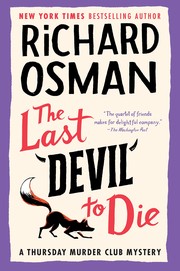
The Last Devil to Die
1,917-word summary 9 min read 352 pages in the book
- First published
- 2023
- Publisher
- Pamela Dorman Books
- Pages
- 352
- ISBN
- 9780593299425
- Series
- Thursday Murder Club (#4)
Reading options
What's inside (6 sections)
I came to the Thursday Murder Club late, after friends kept lending me the first book and telling me it was cozy but not soft. They were right. By the time I reached The Last Devil to Die, the fourth book in the series, published in 2023, I knew the rhythm. Elizabeth, Joyce, Ibrahim, and Ron meet in the Jigsaw Room at Coopers Chase, poke at cold cases, annoy the police, and stumble into live ones. This one starts with a murder that feels personal and ends with a goodbye that felt earned. I used the Pamela Dorman Books hardcover, 352 pages, ISBN 9780593299425, but the series home is Viking in the UK, and the tone is very English retirement village with teeth.
The victim is Kuldesh Sharma, an antiques dealer and old friend of Stephen, Elizabeth's husband. He is found dead, and the case pulls in art forgery, drug lines hidden in antiques, and a local dealer named Connie Johnson who is frightening in a calm way. While Joyce, Ron, and Ibrahim chase boxes and provenances, Elizabeth is mostly with Stephen, whose dementia is worsening. That split, usual club banter on one side and a private decline on the other, gives the book its weight.
The club as I found them in book four
If you have not read the earlier books, you can still start here, but you will feel the history. Elizabeth Best is ex intelligence, used to running people, now learning she cannot run illness. Joyce Meadowcroft is warm, funny, and far sharper than her chat about cakes suggests. Ibrahim Arif is a retired psychiatrist who likes rules and is learning to break them for friends. Ron Ritchie is ex union, loud, loyal, still angry at the right things.
Bogdan, the builder who helps with digging in every sense, is now with Donna De Freitas, one of the two police officers, with Chris Hudson, who cover the official side. Donna and Chris have grown across the series from comic foils to real partners. In this book Donna has to balance loyalty to the club with a career that could break on one wrong leak. Chris has to be the adult in rooms where Joyce is performing innocence.
What I like is how Osman lets them age. Ibrahim is slower after being attacked in an earlier book. Stephen forgets names mid sentence. Joyce talks about death more plainly. Ron's knees hurt. Jokes about hearing aids sit next to stakeouts. The coziness is not denial. It is people deciding to be useful and kind while bodies fail. That is why the series sells, I think, more than the puzzles.
The Jigsaw Room scenes are still funny. Joyce brings food to meetings where food does not belong. Ron argues with everyone about politics and then does the driving no one else wants to do. Ibrahim takes minutes. Elizabeth redirects. If you have read three of these, you know the beats. Osman varies them just enough. In this one a meeting about Sharma's boxes keeps getting interrupted by real grief, and the humor thins at the edges without vanishing.
Sharma, antiques, and Connie Johnson
The mystery itself is about value and fakes. Sharma dealt in small antiques, some real, some forged, some used as containers. A box, a statue, a painting with the wrong stretcher, all become ways to move drugs or money while looking respectable. The club, with Joyce's eye for domestic detail and Ibrahim's patience with paper, follows provenances the way younger detectives follow phones.
Connie Johnson is the best villain Osman has written so far in my view. She is in prison for much of the book and still runs things through visits, lawyers, and fear. She does not shout. She remembers birthdays and debts. When she offers a deal, you understand why people take it even knowing the cost. The scenes where Joyce visits her are tense because Joyce insists on being polite to someone who is deciding whether to have people hurt. Politeness as armor is very Joyce, and very English, and it works.
There is also art forgery talk that I enjoyed more than expected. How to age a frame, how to copy a signature just badly enough to look real, how a dealer's reputation launders objects. Bogdan, who knows how things are built, gets good moments spotting joins and weights. Ron, who knows how workplaces steal, spots who gets paid off. It is a nice change from earlier books where the crime turned on phones or care home gossip. Here the crime turns on hands.
For fairness, the middle has one too many warehouse visits. A van is followed, a lockup is opened, boxes are empty, another lockup is tried. I skimmed one drive because the geography blurred. Osman usually keeps locations distinct, a charity shop, a cemetery, a flat with too many cats, but two storage units in a row felt samey. The pace recovers once the club realizes what the forgers actually need, which is not the objects but the paperwork that makes them sellable.
Stephen and Elizabeth at the center
The thread that will stay with me is Stephen. His dementia, present since book one, sharpens here. He forgets the club, forgets danger, remembers love in flashes. Elizabeth, who has controlled everything for decades, cannot control this. She tries routines, notes, small lies to keep him calm. She considers illegal options to protect him and to punish those who used him. The title refers partly to this. The last devil to die is not only a killer. It is the part of Elizabeth that will do anything, and the question of whether she lets it die in time.
Osman writes this without sentimentality. Stephen has good mornings and bad afternoons. Elizabeth is sometimes tender and sometimes transactional. There is a scene where she brushes his hair and talks to him as if briefing an agent, because that is the language she has. It is funny and heartbreaking at once. Joyce, who has watched her own husband die in the past, gives Elizabeth the only advice that helps. Be there for the minutes that are clear. Do not bargain with the rest.
I found myself putting the book down during these chapters, not from boredom but to sit. My own parent had a bad year with memory, and the small details rang true. The way Stephen repeats a question he just asked and then apologizes for asking. The way Elizabeth answers fully each time as if it is the first. The way friends pretend not to notice while noticing everything. Osman gets the exhaustion right without making Stephen only an illness. He is still witty in flashes, still Stephen.
Ron and Ibrahim get quieter arcs around this. Ron, who distrusts authority, has to trust Donna's process and wait. Ibrahim, who trusts process, has to act without permission to protect friends. Neither arc shouts. They show in who drives whom home, who stays late, who lies to police by omission. That restraint suits book four. These people know each other now. They do not need speeches.
Humor that still lands in a sadder book
It is still funny. Joyce's diary entries and messages steal chapters. Her observations about funerals, about police tea, about how to get a builder to confess by feeding him, are specific and kind. She misunderstands modern slang just enough to be funny without becoming a joke about old people. When she says something startlingly wise about grief, it does not feel like a writer showing off. It feels like someone who has lived long enough to be plain.
Ibrahim has a running worry about risk assessments that pays off in a stakeout where he insists on high vis vests. Ron has a feud with a local councillor that keeps interrupting serious scenes in a good way. Donna and Chris have a will they or won't they weariness that Joyce openly meddles with. Even Connie gets a funny line about prison food that makes her scarier, because humor from her is control.
The balance tips sadder than books one to three. The Bullet That Missed, book three, was already moving this way, but here death is not a puzzle to solve so much as a presence to live with. Sharma's death matters, but Stephen's fading matters more. Osman does not hide that. The jacket copy promises a murder club mystery, and you get one, with twists and a clever reveal about who forged what and who ordered it. But the chapters people will remember are small. A walk with Stephen. A phone call Joyce makes and regrets. A decision Elizabeth makes about revenge and then unmakes.
For craft, Osman keeps chapters short and ends many on gentle cliffhangers. It reads fast for 352 pages. I finished in four evenings. The prose is plain, dialogue heavy, light on description beyond what you need to stage a room. If you want lush writing, look elsewhere. If you want people you would like to have tea with solving crimes without becoming superheroes, this is it.
Complaints besides the warehouses. One twist about a phone relies on a character not asking an obvious question for a day. I bought it because grief explains delay, but it is convenient. One new forger character arrives late and confesses a little too neatly. And if you dislike Joyce's voice, long cheerful messages with asides, you will struggle because she narrates a lot here. I love her, so I did not mind, but a friend who finds her twee will find this the tweeest.
Still, I closed it wet eyed, which has not happened with the series before. Not from the murder solution, which is satisfying and fair, with clues about boxes and signatures you can check back. From Elizabeth sitting with Stephen after everything, choosing care over payback. The club will meet again. The Jigsaw Room will fill. Someone will bring cake to a stakeout. And someone will be missing in a way that cannot be solved. That feels honest for a book about people in their seventies and eighties who refuse to stop looking, even when what they find hurts.
For who this is for. If you read the first three, do not skip. This is the emotional payoff for threads about Stephen and about Elizabeth's past. If you are new, start at The Thursday Murder Club. You need to love these four before this one will hit fully. And if you want hardboiled crime, this is not it. No one here is a genius with a dark past and a gun. They are neighbors with bad knees and good instincts, and in this book they learn when not to use them.
One detail I want to keep is how Coopers Chase itself functions as a character. The hallways, the notice boards, the staff who pretend not to hear, the visitors' parking politics, all shape what the club can do. In this book a staff member's small kindness, holding a door, passing a message, looking away at the right second, allows a key meeting. Osman never makes the village a joke. He makes it a place where people watch and choose to help, which is why the club can exist at all. That warmth is what lets the sadder chapters land without turning bleak. I also liked a tiny beat where Joyce saves Elizabeth the good chair without comment, a habit built over years.
FAQ
Where does The Last Devil to Die sit in the series?
Yes. It is book 4 in Thursday Murder Club, after The Thursday Murder Club, The Man Who Died Twice and The Bullet That Missed. Start at book one for full impact.
When was The Last Devil to Die published?
Pamela Dorman Books published it in 2023. The edition cited runs 352 pages with ISBN 9780593299425. In the UK it is Viking.
Who is murdered at the start?
Kuldesh Sharma, an antiques dealer and friend of Stephen, is found dead. His boxes pull the club into forgery and drug lines run by Connie Johnson.
Similar books
More from Thursday Murder Club first, then related titles.
The Thursday Murder Club
Four residents of Coopers Chase meet weekly to solve cold cases until developer Tony Curran is murdered and the Thursday Murder Club must work with police…
2,739-word summary · 12 min read
The Man Who Died Twice
The Thursday club chases missing diamonds as an old spy friend dies and professionals close in.
2,027-word summary · 9 min read
The Bullet That Missed
The Thursday club reopens a ten year old missing journalist case while Elizabeth faces a kill or be killed threat.
3,022-word summary · 13 min read
The Maid
Hotel maid Molly Gray finds a dead guest and must use her eye for detail to clear herself.
2,031-word summary · 9 min read

Heist Society
A teenage art thief gets expelled from boarding school, then has two weeks to steal five paintings back from a London museum and clear her father.
2,781-word summary · 12 min read
A Rule Against Murder
Gamache's anniversary at a remote lodge turns into a closed-circle murder when the family statue kills Julia, and everyone at the Manoir had a reason.
2,201-word summary · 10 min read

One of Us Is Dead
In Buckhead, Atlanta, five women narrate a murder among manicures, fundraisers, and social warfare. Jeneva Rose's 2022 thriller is a gossipy revenge fantasy…
2,471-word summary · 11 min read

Paper Girls, Volume 1
Four paper girls in 1988 Ohio chase a stolen walkie-talkie into a basement and stumble into a time war, flying dinosaurs, and an older version of themselves.
2,235-word summary · 10 min read
When You Reach Me
A sixth grader in 1970s New York gets strange notes that seem to predict the future.
2,456-word summary · 11 min read
The Cruelest Month
Gamache returns to Three Pines where a seance ends in murder.
2,529-word summary · 11 min read
At Bertram's Hotel
Miss Marple finds a luxury hotel fronting robbery and murder.
2,550-word summary · 11 min read
Vera Wong's Unsolicited Advice for Murderers
A widowed teashop owner pockets a flash drive from a dead man and mothers her suspects into confessing.
2,564-word summary · 11 min read

We Were Never Here
Best friends Emily and Kristen hide a backpacker death in Chile, then face another in Vietnam with trust cracking.
2,076-word summary · 9 min read
A Fatal Grace
Gamache returns to Three Pines for Christmas where hated CC de Poitiers is electrocuted on a frozen lake.
2,339-word summary · 10 min read
What Lies in the Woods
Naomi returns after Olivia vanishes to face what happened in the woods at eleven.
2,213-word summary · 10 min read
The Raven King
Gansey's fated death nears as Glendower wakes and the ley wakes hungry.
2,477-word summary · 11 min read
The Last House Guest
A year after her best friend dies in Littleport, Maine, a local woman finds a hidden phone that reopens the case.
2,596-word summary · 12 min read

Reckless Girls
Six young travelers chase paradise on remote Meroe Island, where old lies, smashed radios and hidden cash turn sun and sand deadly.
2,703-word summary · 12 min read

Big Summer
After a six-year rift, plus-size influencer Daphne becomes maid of honor at her ex-friend's Cape Cod wedding, where joy turns to mystery.
2,878-word summary · 13 min read
The Mysterious Benedict Society
Four gifted children pass strange tests and go undercover at a school hiding a mind control machine.
2,130-word summary · 9 min read
The House in the Pines
Maya's best friend died at seventeen; seven years later a video of Frank with another dead girl pulls her home.
2,081-word summary · 9 min read
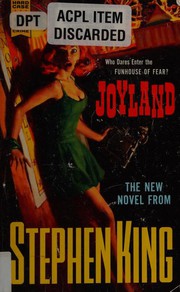
Joyland
Heartbroken Devin works a 1973 carny summer, probes an old Horror House murder, and befriends dying Mike.
2,059-word summary · 9 min read

I Am the Messenger
Nineteen year old Ed stops a robbery, then gets playing cards sending him to help strangers.
2,124-word summary · 9 min read

Blue Lily, Lily Blue
Blue searches for her missing mother while the Raven Boys wake a sleeper in the caves who is not the king they sought.
2,983-word summary · 13 min read
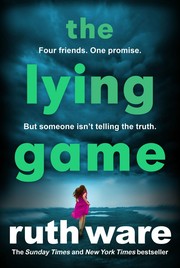
The Lying Game
Isa returns to Salten with her baby when bones surface in the marsh and force four school friends to face what they buried.
2,277-word summary · 10 min read

I'd Tell You I Love You, But Then I'd Have to Kill You
Cammie Morgan trains at a secret spy school and falls for a town boy she can never tell the truth.
2,179-word summary · 10 min read

Where the Forest Meets the Stars
A grieving bird researcher hosts a strange child who claims to be alien in an Illinois cabin.
1,910-word summary · 8 min read
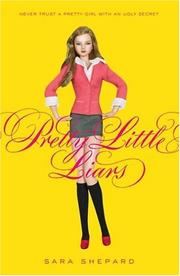
Pretty Little Liars
Four girls get texts from dead Alison a year after she vanished, and secrets start leaking.
1,922-word summary · 9 min read
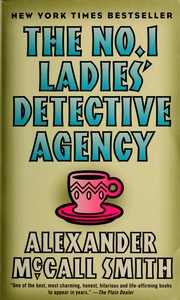
The No. 1 Ladies' Detective Agency
Precious Ramotswe opens a detective agency in Gaborone and solves small cases with tea, patience, and kindness.
2,029-word summary · 9 min read

Still Life
A beloved teacher found with an arrow in Three Pines looks like hunting accident until Gamache looks closer.
1,996-word summary · 9 min read