
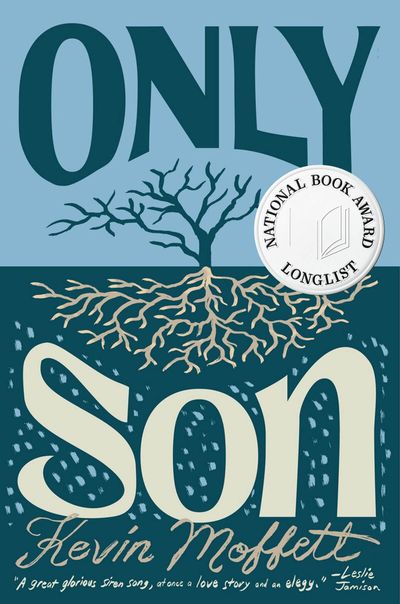
Only Son
2,170-word summary 10 min read 100 pages in the book
- First published
- 2025
- Publisher
- McSweeney's
- Pages
- 100
- ISBN
- 9781963270303
Reading options
What's inside (8 sections)
A friend handed me this book after my own father died and told me, fairly bluntly, that it was short enough to finish in an evening. She was right about the length. McSweeney's published it in November 2025 at around a hundred pages, and it reads so quickly that you can mistake it for something slight. It is not slight. It is a small, careful book about how a man inherits a father he never really understood, and about the moment he realizes he is repeating the same patterns with his own son.
The novel was longlisted for the 2025 National Book Award for Fiction and turned up on year-end lists from NPR and Garden & Gun. Those accolades make sense once you see what Moffett is doing, though the book itself never reaches for importance. It is a debut, and it has the confidence of a writer who knows exactly how much he can leave out.
A story told in fragments rather than chapters
Only Son is built from brief vignettes, and the form is the first thing you notice. There is no tidy plot with a beginning, middle and end. Instead you get a run of small scenes, some only a page or two long, each one catching a moment and holding it until the funny part turns into something sadder. The effect is unusual. You keep expecting the pieces to lock together into a conventional story, and they never quite do.
That refusal is deliberate. Moffett is interested in the way memory actually works, which is to say in flashes rather than in continuous narrative. His narrator returns to the same stretch of his childhood again and again, each time with a slightly different emphasis. A detail that seemed trivial in one vignette becomes the centre of the next. This is not a trick. It is the book's way of showing a man sorting through what he has been given.
The chapters have been compared to Zen koans, and the comparison is fairer than most. A number of them end on a line that refuses to explain itself, leaving you to sit with the oddness for a moment. Some are very funny. Others catch you off guard with a sudden ache. The balance shifts constantly, which is what keeps the short form from feeling like a gimmick.
That shifting tone is the hardest thing to describe and the easiest thing to feel. You might laugh at a line and then, a paragraph later, realize that the same line describes a wound that has never closed. Moffett writes dialogue the way people actually speak when they are avoiding something, with jokes arriving where an honesty would be unbearable. Reading the book slowly helps. The short chapters invite speed, but the meaning tends to arrive on a second look, after a phrase has had time to settle.
Florida, 1982, and the father who keeps receding
The book opens with a nine-year-old boy watching men carry his dead father's possessions out of the house. There are clothes and tools, and there is the faux-leather recliner, that most ordinary symbol of a man's place in a home. The boy is not overcome with grief in any way a novel usually describes. He is watching, taking in the logistics of removal, trying to work out what is being taken and why.
What follows is a series of lessons offered by the adults around him. His sensei tells him this is a perfect time to turn his weaknesses into weapons. His physical education teacher says he runs like a pregnant ostrich. His mother takes out a personals ad. Everyone, it seems, is trying to teach him something about how to live in the world, and everyone is getting it wrong in a way that is both comic and painful.
The boy is described as a slow learner, and that label is one of the book's quiet jokes. He is not slow at all. He simply cannot accept the lessons being handed to him, because they all assume a version of his father that he does not recognize. As the days pass, the father grows less plausible, almost a myth. The possessions leave the house, the adults move on, and the child is left with an absence that has no shape he can name.
This section is where Moffett's humour does its most important work. The line about the pregnant ostrich is funny on the page, and then it keeps returning, because it is exactly the kind of thing a boy remembers when he has nothing else to hold on to. An insult from a teacher becomes more reliable than a memory of the dead man. That is a strange and true observation about grief, and the book trusts you to understand it without explanation.
Twenty-five years on, in suburban Southern California
Then the novel jumps forward twenty-five years. The narrator is married, has a son of his own, and is adrift in suburban Southern California. He has not solved the problem of his father. He is still trying to sort through the fragments of that death, and he is passing along an education that is nearly as sketchy as the one he received.
Some of that education is practical. He tells his son which snakes are poisonous. Some of it is invented. He explains that Candyland is based on a true story, a small lie whose reason he cannot quite defend later. And some of it is a quiet record of failure: he notices that the boy has stopped asking him to go skateboarding with his friends. That detail lands hard because it is so unremarkable. Nothing dramatic has happened. A door has simply closed, and the father cannot say when.
This is the part of the book that connects the two halves. The grown man is not a different person from the child in Florida. He is the same observer, still collecting odd bits of information, still unsure which of them matter. Moffett never underlines the point, which is why it works. You see the repetition yourself, in the way the narrator notices what his son does and does not say, and in the way he reaches for the wrong lesson at the wrong moment.
The marriage and the wider suburban setting are sketched lightly. A friend of mine complained that she wanted more of the wife's interior life, and I understand the complaint. She is mostly present as a witness to the narrator's odd habits. But the book is narrowly focused, and that narrowness is a choice rather than an oversight. This is a story about a line of men and the things they fail to hand on.
The travel journal and the road trip that follows
The turn in the plot arrives when the narrator discovers a travel journal that his father kept and that he never knew existed. It is a small object with an outsized effect. Suddenly the myth has a text, a set of notes written by the man himself, and the son has something he can try to read.
Father and son set out on a road trip retracing the dead man's journey. The journey is described as mystifying, and that word matters. The notes do not produce a clear account of who the father was. They produce clues, partial and strange, and the narrator has to strain to decipher them while also paying attention to the boy sitting beside him. The road trip becomes two journeys at once: an attempt to read a parent, and an attempt to be one.
What I liked most is that Moffett refuses to make the father legible. The central mystery is resolved only partially, by implication rather than by revelation. You do not get a final scene in which everything is explained. Instead the narrator arrives at a kind of acceptance, the understanding that a parent can remain partly unknowable and still be loved. Publishers Weekly called it a quietly beautiful debut that traces the grace attained through the long arc of acceptance, and that seems exactly right.
The son's presence keeps the book from sinking into pure retrospection. Every move the narrator makes toward his father is also a move toward his own boy, and the final pages shift the weight from the dead to the living. The skateboarding detail returns in a different light. You realize the narrator has been watching his son the way he once watched the men removing the recliner, trying to read a person through the objects and habits he leaves behind.
The journal itself never becomes a satisfying key. That is the brave part of the design. A lesser book would have turned the dead man's notes into a puzzle with a clean solution, and the road trip into a sequence of revelations. Moffett understands that real families rarely work that way. What you get from a parent's papers is a voice, a handwriting, a few strange preoccupations, and the growing certainty that you will never finish the sentence. The narrator's act of decipherment is really an act of forgiveness, arrived at slowly and without ceremony.
What the form gives, and what it costs
The book's greatest strength and its main limitation are the same thing. At roughly a hundred pages, made almost entirely of short fragments, it has almost no conventional narrative momentum. If you sit down expecting a plot-driven account of a road trip, with escalating incidents and a clear payoff, you will find it slight. The journey is the frame, not the engine.
Moffett is writing something closer to a sequence of exact observations. Each vignette is built around a small, precise detail: a piece of furniture, a phrase from a teacher, a question about a snake, a game that a boy no longer asks his father to play. The pleasure comes from watching those details accumulate until they form a picture of a life. This is a different contract from the one a novel usually offers, and it is worth going in aware of it.
The humour also divides readers. Kirkus praised the playful, biting edge that the comedy gives the meditation, and I agree that it keeps the book from becoming maudlin. But there are moments when a joke arrives just as the emotion is deepening, and the timing can feel forced. A few of the funny lines seem to be protecting the narrator from his own feelings rather than revealing them, which may be the point, though it does not always land.
There is a related problem with scale. Because the book is so short and so determinedly elliptical, the secondary figures stay flat. The narrator's wife in particular is given almost no interior life of her own, and the boy's friends exist only as the sound of a skateboard rolling away. I kept wanting one more scene that would let these people push back against the narrator's version of them. Moffett declines, and the book is undoubtedly stronger for its discipline, but the choice does mean that some readers will find it closed off rather than spare.
Leslie Jamison called the book a love story and an elegy, a ballad of skate parks and snake nests, and that phrase captures its odd texture better than any summary could. Jonathan Lethem noted that the literature of American manhood is full of fathers, sons and road trips, but that few examples are as ruthlessly honest and as free of vanity. That is a large claim, and the book earns more of it than you might expect from something so short.
Who will love it, and who will not
I would hand this to anyone who has lost a parent, especially a father whose interior life remained closed to them. It understands a particular kind of grief, the kind that is mixed with irritation and embarrassment and a stubborn refusal to let the person become a story. It is also a good book for readers who enjoy short, experimental fiction and want an example that is accessible rather than cold.
I would be careful with readers who want a substantial narrative or a large cast. Nothing much happens in the ordinary sense, and the book asks you to find drama in a question about a board game or a boy's sudden silence. NPR described it as a suburban Buddha of a book, made of vignettes so simple and subtle and occasionally destabilizing that they resemble Zen koans. That is a fair description, and it also tells you who might find it too quiet.
For me, the book succeeded because it trusted small things. It does not tell you how to feel about a dead father or a distant son. It shows you a recliner being carried out of a house, a teacher's cruel joke, a question about Candyland, and lets you work out the rest. That is a modest achievement, and it is a real one.
FAQ
Is Only Son a novel or a collection of short stories?
It is a short debut novel published by McSweeney's in 2025, built from brief linked vignettes rather than conventional chapters. Its roughly 100 pages move between a boy's childhood in 1982 and his adult life in Southern California.
Does the book ever explain what happened to the father?
No. The narrator finds a travel journal and takes a road trip to retrace the journey, but the mystery is resolved only partially and by implication. The book is more interested in acceptance than in delivering a clean answer.
Is it a sad book?
It is funny as well as tender, and the comedy is central to how it handles grief. That balance occasionally wobbles when a joke arrives just as the emotion is deepening, which is a fair criticism of the book.
Similar books
The Rest of Our Lives
A law professor drives his daughter to college, then heads west instead of home, testing a private promise he made twelve years ago.
2,238-word summary · 10 min read

Good Girl
A nineteen-year-old artist in Berlin, grieving her mother, falls into an unequal romance with an American author who offers escape from the ideal of the good…
2,579-word summary · 11 min read
Dear Edward
Twelve-year-old Edward Adler survives a plane crash that kills his family, then learns how to live with grief, letters, and love.
2,903-word summary · 13 min read
Extremely Loud and Incredibly Close
Nine year old Oskar searches New York for a lock matching his father's key after 9/11.
2,999-word summary · 13 min read
The South
A seventeen-year-old moves to his family's failing fruit orchard in 1990s Malaysia, where a summer love affair unfolds as the household and the land around him…
2,903-word summary · 13 min read
The Nix
A stalled novelist and community college professor goes looking for the mother who left him and finds a radical activist whose rock thrown at a governor made…
2,214-word summary · 10 min read
Love Forms
A Trinidadian mother sent away at sixteen returns to the loss of her daughter forty years later, in Claire Adam's quiet, longlisted novel.
2,153-word summary · 10 min read
Whistler
Ann Patchett's eleventh novel follows a New York teacher who reconnects with a former stepfather at the Met and hears the strange story of a chestnut mare.
2,697-word summary · 12 min read
Three Days in June
A Baltimore mother loses her job, and her ex-husband turns up with a rescue cat, in Anne Tyler's short, funny novel about the three days around her daughter's…
2,867-word summary · 13 min read
This Is Where the Serpent Lives
Daniyal Mueenuddin's second novel follows an orphan who rises through Lahore and a gardener's son who becomes an outlaw, across a Pakistan of caste and capital.
2,257-word summary · 10 min read
Theft
Gurnah traces three linked lives in Tanzania, where a servant's accusation of theft opens a family history of love, duty and quiet betrayal.
2,454-word summary · 11 min read
The Vacationers
A New York family's two-week stay in Mallorca turns into a comedy of exposed secrets when a magazine editor's affair and a son's debts come to light.
2,324-word summary · 10 min read
The Rachel Incident
A funny, sharp novel about two twenty-somethings in recession-era Cork whose bookshop friendship, tangled romance and a married professor's lie leave a secret…
2,346-word summary · 10 min read
The Emperor of Gladness
Ocean Vuong's second novel follows a young addict pulled back from a bridge in a dying Connecticut mill town and into the home of an elderly immigrant woman…
2,693-word summary · 12 min read
Taste: My Life Through Food
Stanley Tucci's memoir traces his life through food, from a Calabrian family kitchen in Katonah to film sets, marriage and a cancer fight that cost him his…
2,503-word summary · 11 min read
Saving CeeCee Honeycutt
A twelve-year-old girl loses her mother and is packed off to Savannah, where a great-aunt, a housekeeper and a street of eccentric women teach her how to…
2,627-word summary · 12 min read
Red at the Bone
A girl's coming-of-age ceremony in a Brooklyn brownstone opens a family story shaped by Tulsa, teenage pregnancy, class and a second tragedy on September 11.
2,108-word summary · 9 min read
Oranges Are Not the Only Fruit
An adopted girl in a strict Pentecostal household learns to read the Bible, preach sermons and love women, then faces her church and mother for it.
2,384-word summary · 11 min read
King of Ashes
A Virginia crematorium, a debt owed to the Black Baron Boys and a family secret pull Roman Carruthers back into a war where everything burns.
2,229-word summary · 10 min read
Hollow Bones
On 11 September 2001, two-month-old Molly Fitzgerald loses her mother at the World Trade Center. She grows up planning for disasters, until a crisis in her new…
2,703-word summary · 12 min read
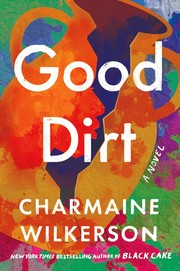
Good Dirt
A stoneware jar made by an enslaved potter links a prominent Black New England family across a hundred and fifty years of prosperity, grief and buried history.
2,069-word summary · 9 min read
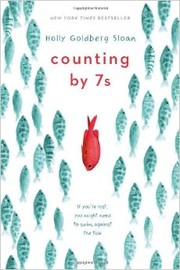
Counting by 7s
A gifted twelve-year-old who counts by sevens loses her parents in a car crash and gradually builds a new family with help from a counselor, a taxi driver, and…
2,306-word summary · 10 min read
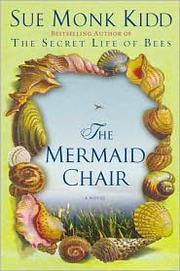
The Mermaid Chair
Jessie Sullivan returns to her childhood home on Egret Island to care for her agoraphobic mother, then finds her marriage, her faith, and a monk's vow thrown…
2,237-word summary · 10 min read
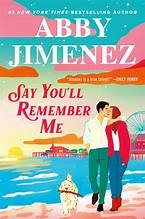
Say You'll Remember Me
A vet who writes off a sick kitten falls for the woman who saves it, then follows her into the hard, funny work of caring for a mother with dementia.
2,293-word summary · 10 min read
Boy Swallows Universe
In 1983 Brisbane, a boy with a mute brother, a jailed mother and a heroin-dealing stepfather tries to become a good man.
2,397-word summary · 11 min read
The Idiot
A Turkish-American freshman at Harvard falls in love through email with a Hungarian math student and spends a summer in Hungary trying to turn correspondence…
2,019-word summary · 9 min read
The Age of Miracles
A California girl grows up while the Earth's rotation slows, and ordinary adolescence continues alongside slow catastrophe.
2,417-word summary · 11 min read
Peace Like a River
An asthmatic boy in the early 1960s narrates his family's search for his older brother, who is accused of two killings and has escaped custody.
1,969-word summary · 9 min read

We Are Okay
Marin fled San Francisco after her grandfather vanished and stopped answering anyone. When Mabel visits her college dorm, she has to say what happened.
2,253-word summary · 10 min read

The Chosen
A shattered pair of glasses in a 1944 Brooklyn softball game starts a friendship between a Hasidic boy and his Orthodox neighbor, and their fathers pull them…
2,443-word summary · 11 min read