
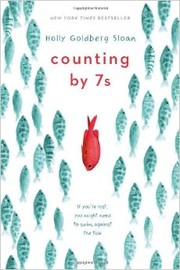
Counting by 7s
2,306-word summary 10 min read 384 pages in the book
- First published
- 2013
- Publisher
- Dial Books for Young Readers
- Pages
- 384
- ISBN
- 9780803738553
Reading options
What's inside (9 sections)
I had been told this was a book about a girl who counts by sevens, and I honestly thought the title was a gimmick. I could not have been more wrong about that, though in a way the number does end up meaning exactly what the title promises. Holly Goldberg Sloan published it in 2013 with Dial Books for Young Readers, a middle grade novel of 384 pages in its first hardcover edition, and it found a large audience, including a stretch on the New York Times bestseller list. Reading it now, I can see why people hand it to twelve-year-olds, but I also think plenty of adults will recognize the feeling it is describing, which is what it is like to be the odd person in a room and then, suddenly, to lose the few people who made that oddness feel safe.
A girl who counts by sevens
Willow Chance is twelve and brilliant, and the book does not let you forget either fact. She knows the Latin names of plants, she can rattle off the symptoms of rare medical conditions, and she finds the number seven soothing. When the world gets loud or confusing, she counts by sevens: seven, fourteen, twenty-one, and so on, until her breathing settles. It is a small private ritual, the kind a child invents before she knows why she needs it. Sloan treats it with respect rather than as a cute quirk.
Willow is not good at school in the way schools usually reward. She is new at Sequoia Middle School, and the other kids strike her as loud and unhygienic, which is how she sees most of them. She is not trying to be cruel; she is reporting what her senses tell her. When she earns a perfect score on a test, her teacher suspects her of cheating and sends her to see the school's behavioral counselor. That is how Willow first meets Dell Duke, a man who will become one of the most important people in her life despite being, at this point, almost comically unsuited to the job.
I liked this opening a lot. Sloan does not ask us to find Willow adorable. She gives us a child who is difficult, who judges people by their smell and their noise, and who is also clearly lonely under all that certainty. The tension between those two things carries the early chapters.
Dell, Mai, Quang-ha, and a runaway cat
Dell Duke is a school counselor with no real talent for counseling. He is lonely, disorganized, and deeply set in his routines, and he has a bachelor apartment full of things he never throws away. Willow unnerves him because she is smarter than he is and because she sees right through him. He does not know what to do with her, and that very uncertainty is the beginning of a change in him.
Two other students enter the story through Dell's office. Mai Nguyen is a high school girl with a blunt, fearless way of talking. Quang-ha is her brother, guarded and angry, and a regular visitor to Dell. Willow takes to Mai immediately and starts teaching herself Vietnamese so she can speak with her in her first language, and Mai eventually starts giving her lessons. This detail mattered to me because it shows how Willow shows love: not with hugs or words, but by mastering something that belongs to the person she cares about.
Dell tries to impress the kids one day by bringing in an orange cat he has adopted named Cheddar. The cat escapes, and Dell gives up looking for him almost at once, which tells you a lot about Dell. The kids search, and the search becomes one of their first shared activities. Willow also starts calling a taxi to get from school to Dell's office, and she gets to know the driver, Jairo Hernandez. She studies him the way she studies plants, noticing a suspicious mole on his skin and urging him to have it checked. That single act of attention, a listless girl telling a taxi driver to look at a spot on his arm, turns out to be one of the hinges of the whole book.
Then there is the ice cream. Mai talks Dell into taking the group for ice cream, and for a few pages the story is as light as anything. Dell drives Willow home afterward. When they pull up, there are police cars outside her house.
The news on the front walk
The officers tell Willow that her mother and father have been killed in a car crash. Her adoptive parents, Roberta and Jimmy, were the only people who had ever made her feel fully accepted, and now they are gone. Willow's response is not a movie scene. She goes quiet, she counts, and she keeps asking to rewind, as if the day were a recording she could play backward. Sloan lets that shock sit for a while before anything moves forward.
What happens next is the part of the book that could so easily turn sweet and soft, and mostly does not. Willow has no relatives who can take her. Mai, thinking fast, tells the police that Willow is part of her family. Mai's mother, Pattie Nguyen, runs a nail salon and lives with her two kids in a cramped garage behind it. Pattie agrees to take Willow in temporarily. Willow ends up sharing Mai's room, sleeping in a house that smells of polish and hair product, surrounded by red lanterns and photographs. It is nothing like the orderly home she knew, and it is exactly what she needs.
I want to be honest that there is a convenient quality to this. A child with no family is swept up by a classmate's mother within a single afternoon, and the legal system looks the other way. Sloan is writing a fable about chosen family, not a case file, and once I accepted that, the arrangement stopped bothering me. Readers who want a realistic account of foster care will find the machinery here very thin.
Cleaning up Dell's apartment
The Nguyens' real home, that garage, would never pass a child welfare inspection. Pattie solves the problem by putting down Dell's address, an apartment in a complex called the Gardens of Glenwood, as her own. When the social worker Lenore schedules a visit, the whole group has a few hours to turn Dell's junk-filled bachelor pad into something that looks like a family home. They clean, they rearrange, they shop for furniture, and they move Dell down the hall into a new room shared with a man named Sadhu. They pass the inspection. The lie on paper is the truth in practice, which is the book's favorite kind of joke.
During this period Willow is out of school and spends time at the library. She keeps taking taxis, and her friendship with Jairo deepens. After she helps him spot that dangerous mole, he goes to the doctor, and the news is good. Later he walks into a college bookstore on a whim, buys biology textbooks, and is named the store's one-millionth customer, winning twenty thousand dollars. He decides to use the money for school and to stop driving a cab, and he comes to see Willow as a kind of angel. It is a big coincidence, the lottery-style prize, and I noticed it as a strain on the story's credibility. Jairo's transformation still works because Sloan has earned it through all the small conversations between them.
Another small object does quieter work. Mai watches an acorn get run over by a car and stay intact, retrieves it, and hides it for Willow to find. Willow decides it is her lucky acorn, and she carries it. By the end it will have a job to do.
Sunflowers in the courtyard
The heart of the book, for me, is the garden. Willow looks at the dead courtyard outside the Gardens of Glenwood, with its lava rock and plastic liner, and decides to grow sunflowers there. This is not a cute hobby. It is the first time since her parents died that she plans for a future, since seeds are a bet on months she cannot see. Sloan understands that a garden is a strange and hopeful thing for a grieving child to want.
The project is absurdly complicated. Dell worries about digging up property the bank owns, so Willow writes a proposal and makes Dell present it to the bank. He becomes the building representative, which is the first real responsibility the story gives him, and he rises to it. The group hauls containers from a recycling dumpster, tests and tills the soil, and then pressure washes the building after a dirt storm, which reveals peeling paint and turns one job into a whole exterior cleanup. Quang-ha, who has been angry and withdrawn, digs in. He refuses Willow's careful three-seed method and puts all his hopes into a single seed, and of course it is the strongest plant in the courtyard. Willow keeps his doodle of a seedling sprouting from a man's head pinned to her wall.
The garden changes people in ways that are funny before they are profound. Willow audits the lease at Pattie's nail salon and rewrites its health and safety guide, which brings in more customers. Dell starts running, first for eleven wheezing minutes, then every day, and quietly stops eating meatloaf and uses the computer Willow built from salvaged parts. He makes a new category in the private filing system he keeps in his head, calling himself a mutant, and you can feel him deciding he belongs somewhere. Willow herself tries running in a pair of blinding pink shoes, gets cramps and spasms before she finishes the first loop, and vows to keep going. Every seed sprouts.
That scene, where the group stands around dirt and argues about seeds, is the best thing in the book. Nobody gives a speech about grief. They just show up, week after week, and the sunflowers bloom, and then Willow keeps adding plants until the whole courtyard is a garden.
The courthouse and the number seven
The plot has been moving toward a court date that will decide where Willow lives. She is told that Child Services has found a permanent placement for her, and she assumes the worst, that she will be taken from these people and put in a facility. On the day of the hearing she senses that something is being kept from her. Pattie and Jairo, who have secretly been seeing each other, appear with Mai, Quang-ha, and Dell, and they ask the court for custody of Willow. The judge allows them to take her home. On the ride back, Pattie reveals that she has been saving money and has made an offer to buy the Gardens of Glenwood itself, so the household can stay exactly where it is.
Willow's last act is to plant the lucky acorn in the garden. She also counts again, and this time the counting has changed. She names seven people who hold her life together: her late parents Roberta and Jimmy, Mai, Dell, Quang-ha, Pattie, and Jairo. The number that once helped her organize a lonely world now counts the people she belongs to. It is a neat ending, and Sloan has done the work to make it feel earned rather than pasted on.
What works and what grates
I should say who this book is for and where it stumbles. It is middle grade fiction, aimed roughly at readers aged ten to fourteen, and it wears that age very well. The heroine is twelve, the problems are legible, and the humor is at the level of a smart kid's joke. Adults will notice the grown-up ache underneath, but a younger reader will mostly see a story about a girl who gets a family.
The criticism that sticks most came from Publishers Weekly, which said that Sloan's somewhat portentous storytelling gets in the way of letting readers reach their own conclusions about the ways people save each other. I felt that. There are moments when the book seems to nudge us toward a lesson about resilience and community a little too firmly. Kirkus called the conclusion bright and heartfelt but predictable, and that is fair too. Once the garden starts growing, you can see where the court hearing is headed. The coincidence of the twenty-thousand-dollar prize is the one plot turn I never fully bought.
The book also shifts viewpoints, moving from Willow's sharp first person into third-person chapters about Dell, Jairo, and Pattie. That choice lets us see how one strange girl changes the adults around her, which is one of the book's real strengths. It also slows some chapters down when I was eager to get back to Willow. And yes, the whole thing leans toward the sentimental. A child loses her parents, finds a loud patchwork family, and grows a garden in a courtyard. The praise from Booklist and School Library Journal called it graceful and free of cloying lessons, and I think that is mostly deserved, though not entirely.
What I keep coming back to is the acorn. Willow pockets small things, a feather, an acorn, and she counts by sevens, and at the end those habits turn out to be ways of holding on to people. Sloan never explains the number away. She just lets it become a measure of connection. That restraint is why I forgave the book its coincidences and its tidy ending. If you want a story about grief that refuses to be a tragedy, and you can accept a few convenient turns along the way, this one delivers.
FAQ
Is Counting by 7s appropriate for a twelve-year-old reader?
Yes. It is middle grade fiction aimed at readers aged ten to fourteen, though the grief at its center may feel heavier than the cheerful title suggests.
What does the number seven mean in the book?
Willow counts by sevens to calm herself, and at the end she uses the number to name the seven people who now make up her family.
Does Willow find a permanent home by the end?
Yes. Pattie Nguyen and Jairo Hernandez seek custody at the court hearing, and Willow returns to the Gardens of Glenwood with the family she has built.
Similar books
Saving CeeCee Honeycutt
A twelve-year-old girl loses her mother and is packed off to Savannah, where a great-aunt, a housekeeper and a street of eccentric women teach her how to…
2,627-word summary · 12 min read

Someone Like You
Halley and her best friend Scarlett face a summer of grief, a surprise pregnancy, and Halley's dangerous first romance in Sarah Dessen's 1998 young adult novel.
2,218-word summary · 10 min read
Walk Two Moons
Sal rides west with her grandparents telling Phoebe's story while facing her own mother's absence in Idaho.
2,554-word summary · 11 min read
The Long Haul
Greg Heffley's summer road trip goes sideways with a towed boat, a live pig, and a family in a purple van.
2,311-word summary · 10 min read
Only Son
A brief, funny, melancholy debut about a boy whose father dies in 1982 Florida, and the man he becomes, still trying to read the mystery of that loss.
2,170-word summary · 10 min read
The Emperor of Gladness
Ocean Vuong's second novel follows a young addict pulled back from a bridge in a dying Connecticut mill town and into the home of an elderly immigrant woman…
2,693-word summary · 12 min read

Good Girl
A nineteen-year-old artist in Berlin, grieving her mother, falls into an unequal romance with an American author who offers escape from the ideal of the good…
2,579-word summary · 11 min read

Girls in Pants: The Third Summer of the Sisterhood
The four friends face their last summer before college, with art school, an old flame, a guilty conscience and a new baby in the balance.
2,382-word summary · 11 min read

This One Summer
Mariko Tamaki and Jillian Tamaki's graphic novel about two friends at a lake town, where a mother's grief and a pregnant teenager reshape one summer.
2,324-word summary · 10 min read

The Boston Girl
Eighty-five-year-old Addie Baum tells her granddaughter how she grew up in Boston's North End, chased education and love, and became the woman she is.
2,439-word summary · 11 min read
Tell Me Three Things
A grieving Chicago teen lands in her new stepfamily's Los Angeles mansion, then gets anonymous emails promising to guide her through a brutal private school.
2,292-word summary · 10 min read
Say You'll Remember Me
A vet who writes off a sick kitten falls for the woman who saves it, then follows her into the hard, funny work of caring for a mother with dementia.
2,293-word summary · 10 min read
Kristy's Great Idea: A Graphic Novel (The Baby-Sitters Club Graphic Novels #1)
Raina Telgemeier adapts Ann M. Martin's first Baby-Sitters Club novel into a full-color graphic novel about four Stoneybrook friends who start a babysitting…
2,373-word summary · 11 min read
Hard Luck
Rowley has a girlfriend, so Greg turns to a Magic 8 Ball, a family Easter hunt and the school yearbook for answers.
2,586-word summary · 11 min read

We Are Okay
Marin fled San Francisco after her grandfather vanished and stopped answering anyone. When Mabel visits her college dorm, she has to say what happened.
2,253-word summary · 10 min read

The Second Summer of the Sisterhood
Four friends share the traveling pants through a summer of grandmothers, first loves, and mothers who are learning to let go.
2,209-word summary · 10 min read

Aristotle and Dante Dive into the Waters of the World
Ari and Dante return for senior year in El Paso, navigating first love, AIDS, family grief, and the cost of being openly gay in 1987 Texas.
2,188-word summary · 10 min read
Harriet the Spy
Eleven year old Harriet Welsch fills notebooks with honest, often cruel observations about her neighbors, until her classmates read one and turn her spy route…
2,510-word summary · 11 min read
Maame
Maddie Wright, 25, has spent years as the responsible one in her Ghanaian British family, and the year she finally tries to live for herself is the year…
2,108-word summary · 9 min read

Clap When You Land
Two half sisters, one in Sosúa and one in Queens, discover each other after their father dies in a plane crash, in Elizabeth Acevedo's novel in verse.
2,890-word summary · 13 min read
Summer Sisters
Vix and Caitlin share Martha's Vineyard summers from age twelve into adulthood, through first love, grief, marriage, and a disappearance that still haunts Vix.
3,633-word summary · 16 min read
Maniac Magee
Orphaned Jeffrey Magee runs to Two Mills, becomes a playground legend, and tests a town split by race while hunting for a real home.
2,219-word summary · 10 min read
Almond
Yunjae, born with alexithymia, navigates grief and friendship with troubled Gon after losing mother and grandmother.
2,088-word summary · 9 min read
The Great Believers
Yale builds a Chicago art collection as AIDS takes his friends, and Fiona searches Paris for her daughter thirty years later.
2,742-word summary · 12 min read
Tell the Wolves I'm Home
A grieving fourteen year old secretly befriends her late uncle's boyfriend in 1980s New York, testing family loyalty and love.
3,014-word summary · 13 min read

Me and Earl and the Dying Girl
A self-protective Pittsburgh senior is pushed to befriend a classmate with leukemia, and a clumsy film with Earl changes all three.
2,773-word summary · 12 min read

Ghosts
Catrina moves to foggy Bahía de la Luna for her sister Maya's health and learns to face the town's ghosts.
2,946-word summary · 13 min read
Fly Away
After Kate's death, Tully, Marah, and Dorothy face grief and addiction while trying to rebuild their lives.
2,940-word summary · 13 min read

Out of My Mind
Eleven-year-old Melody Brooks has cerebral palsy and cannot speak, but she remembers everything and fights to be heard in fifth grade.
2,298-word summary · 10 min read
The Elegance of the Hedgehog
A Paris concierge hides her brilliant mind while a gifted girl plans her death, until a new tenant sees through them both.
2,248-word summary · 10 min read