

The Boston Girl
2,439-word summary 11 min read 336 pages in the book
- First published
- 2014
- Publisher
- Scribner
- Pages
- 336
- ISBN
- 9781439199350
Reading options
What's inside (7 sections)
I picked this up because The Red Tent had stayed with me for years and I wanted to see whether Diamant could do the same thing with a century closer to home. She can, though not in the way I expected. The Boston Girl, published by Scribner in 2014, is not a historical pageant. It is one long conversation between an eighty-five-year-old woman and her granddaughter, and most of its power comes from the fact that the speaker refuses to tidy anything up.
The frame is simple enough to describe in a sentence. In 1985, Addie Baum sits down with a tape recorder because her twenty-two-year-old granddaughter Ava has asked her a question: how did you get to be the woman you are today? Ava is the youngest of five grandchildren, a doctor, a social worker, two teachers, and now her, and Addie claims she is her favorite while admitting she says that to all of them. Then she starts in on the family naming customs, which is where the book first surprised me. Ava was nearly named Addie, in a frantic hope that the angel of death would take the wrong baby when Addie was sick at Ava's birth. The family had to tell people Ava was named after a cousin named Arlene. Aunt Sylvia was named for a grandfather's mother who died in the flu epidemic. Ava's mother Clara is named after Addie's sister Celia. Names in this family are a way of keeping the dead near, which means every introduction carries a small ache.
That opening establishes the whole method. Addie tells stories the way people actually tell stories, circling back, correcting herself, remembering a name halfway through a sentence. She narrates in a voice that is wry and quick, and at first I wondered whether an eighty-five-year-old would really sound so much like a novelist. About thirty pages in I stopped wondering. The wit is a survival tactic, not decoration, and the novel keeps showing what it cost.
A one-room apartment and three sisters
Addie was born in Boston in 1900, the only one of three daughters born in America. Her father came from what is probably Russia in 1896 or 1897, bringing his older daughters Betty and Celia with him. Her mother followed a few years later. The family lives in a one-room tenement in the North End, the neighborhood Addie says you can hear in her accent to this day. Her mother distrusts America and everything it promises. Her father works, Betty strikes out on her own and takes a job in a downtown department store, and Celia works in a factory. Addie is the youngest, the one who wants more and is told she is ungrateful for wanting it.
The mother is the hardest figure in the book, and I mean that as a compliment. She is not a cartoon villain. She is a woman who crossed an ocean, lost a child, and decided that the safest thing was to hold very tightly to the old ways. Every time Addie reaches for something new, her mother names it as ingratitude. The moments when Addie pushes back are thrilling precisely because the cost is clear. She is not rebelling against a tyrant in a drawing room. She is arguing with her own mother at the dinner table in a room where everyone sleeps.
Celia's death hangs over the whole novel. Addie's mother calls it an accident and refuses to hear anything else. Addie says that whenever she heard her mother's version, her stomach turned. The reading between the lines is not subtle, and Diamant does not need to spell it out. What matters is the shape of the silence: a dead sister, a mother who cannot say the word, and a younger daughter who grows up understanding that some questions are not allowed. That lesson travels with Addie into every friendship she forms. She becomes a person who listens for what people will not say.
The flu epidemic of 1918 arrives in the middle of this, taking relatives and leaving the family to keep going. Diamant is good at this kind of history. She does not stop the story to give a lecture. The epidemic is a run on the household, extra bodies to feed, a name to say at prayers, a coat handed down.
The library club and the summer inn
The book's center is the reading club Addie joins as a teenager through a neighborhood settlement house. She wants an education and her parents want her working, so the club becomes her first act of quiet theft: hours spent with books that she will later use to build a life. The other girls are the best thing in the novel. Gussie is the one with a law degree and the bitter knowledge that no one will hire a lady lawyer. Filomena is Italian American, takes pottery lessons from a woman named Miss Green who works in the Arts and Crafts style, and thinks carefully about the difference between love and marriage. Tessa Thorndike is a Boston Brahmin who writes a women's page and can laugh at her own class, which Addie finds both appealing and suspicious.
These friendships are not background. They are the novel's argument. Addie's mother says a woman's place is in the home, and the club answers with girls who read, work, argue about clothing, and plan to be somebody. There is a scene where Addie tries on a pair of pants and feels the change in her body before she has words for it. Short skirts, movies, and the strange new celebrity culture are not frivolous details here. They are the visible signs that a generation of women is being allowed to take up more space, and the older generation can see it happening.
The club's summer trip goes to Rockport Lodge, which is a real place, a three-story white clapboard farmhouse in Rockport, Massachusetts, founded in the early 1900s to give girls of modest means an inexpensive, chaperoned holiday. Diamant researched the archives at the Schlesinger Library, and it shows in the small things: the rules, the meals, the way the girls are watched and still manage to be free. The cook, Mrs. Morse, admits to her sister that some of the immigrant boarders are nicer than Americans, a line that quietly redraws the boundary of who counts. At Rockport, Addie and her friends talk about birth control, about Margaret Sanger, about what they will do with their lives. The conversations are the point. Nobody hands them a future. They make one up together by the sea.
I loved these chapters, but I should note that the club can feel a little too purposeful at times, as if every conversation has been selected for a museum exhibit about early feminism. A girl in 1915 could think about boys and clothes without making a speech. Diamant mostly avoids that trap by letting the arguments get personal, but the occasional historical checkpoint, including a late nod to Betty Friedan, does make the novel feel like it is checking a syllabus.
Work, a first love, and the war
Addie leaves school to earn money, contributes her wages to the household, and eventually moves into a boarding house when her parents move to Roxbury. The move causes a real family rupture. Her father is furious at an offer from a man named Harold Levine to house the family, and Addie has to decide whether earning a living gives her the right to live on her own. The fight is about money and also about who gets to be the head of a household. Addie's sister Betty already lives independently, so the argument has a precedent in the family itself.
Her first serious relationship is a disaster, and Diamant treats it with admirable lack of romance. A date that begins with ordinary expectations nearly ends in an assault. The book does not linger, but it does not look away either. Addie learns that a young man's charm can be a form of pressure, and that the world offers women very few scripts for what to do next. This experience sits beside the abortions and losses the women whisper about, and it explains why Addie later listens so closely to other people's trouble.
Ernie is the love who hurts differently. He goes to war and comes back changed, suffering a nervous episode that the book describes through the family's helplessness rather than a diagnosis. Addie distances herself, then feels the full weight of what she has done when a community of veterans comes forward to help him. That remorse is one of the truest things in the novel. She is seventeen, she is frightened, and she makes the wrong choice, and forgiving herself takes longer than forgiving anyone else. Later she finds the love of her life, and the book is wise enough to know that a happy ending does not erase the earlier lessons. Her friend Filomena, before her wedding, tells her that you only get one great love in a lifetime. Addie does not buy it, and the novel stands with her.
Through all of this, Addie works as a newspaper typist and becomes a career woman in the plainest sense: she shows up, she does the job, and she refuses to be pushed around. The Publishers Weekly review calls her plucky, which is fair, though it undersells how stubborn she is. Standing up for her beliefs at a newsroom in that era means being called difficult. Addie wears it.
What Ava hears
The frame is easy to forget while the story is running, and then a sentence from Addie in the present pulls you back into 1985. She will break off to comment on Ava's life, on the program she hopes to get into, on the fact that Ava is named for her. Those interruptions are not decoration. They are the reason the novel has its particular shape. Addie is not remembering for herself. She is editing a life into a form she thinks her granddaughter can use.
That choice raises a question the book never fully answers: how much of this is true, and how much is what Addie decides to say? She admits at one point that people don't talk about sad memories, that it was a long time ago, and that Celia might be forgotten if she does not insist on being remembered. The novel sits with that tension rather than resolving it. An oral history is not a transcript. It is a performance for a listener, and the listener here is twenty-two, impatient, and curious about how to become a woman in a world that has changed again.
I found this layer compelling, and I also wanted more of Ava. She is mostly a set of prompts and soft interruptions, a warm presence who asks the right question and then gets out of the way. Diamant gives her a few lines about her own ambitions and then folds her back into the background. A granddaughter with a sharper edge, someone who pushed back on Addie's version of events, could have made the frame crackle. As it stands, Ava is a loving audience, which makes sense for the story Addie wants to tell but leaves one of the book's most interesting relationships underwritten.
Still, the device pays off in the final pages. Ava asked how her grandmother became the woman she is, and what she gets is not advice but evidence. The five grandchildren have become a doctor, a social worker, two teachers, and Ava, and the book quietly argues that their choices did not appear from nowhere. They are the result of a woman in a tenement deciding she wanted to finish high school, of a club that met in a settlement house, of friendships made on a summer porch in Rockport. The past is not a lesson delivered from a distance. It is a chain of small permissions, each one handed from one woman to another, and Addie is simply the one holding the tape recorder now.
The dead, the living, and what gets told
The last stretch brings the frame back into focus. Addie's mother dies, and the final meaningful conversation between them is an apology the mother meant for Celia but could never say to her. At the funeral Addie thinks that her mother will no longer be able to make her feel that something is wrong with her. It is a small, unsentimental victory, and it took eighty-five years to arrive. The scene made me put the book down for a minute. Not because it is sad, but because it is so exact about the way a parent's voice can keep speaking after the parent is gone.
Her friendship with Filomena gets the last word on this. They drift apart, as friends do when one moves and the other stays, and Addie observes that sometimes the distance stops mattering because the connection is still there. The line could have been mushy in another book. Here it is earned by decades of shared meals and arguments, by the pottery teacher and the Boston Brahmin and the girl who once slept in a room with three sisters and a secret.
The question Ava asked at the beginning finally gets its answer, and the answer is the life itself. Addie does not offer a formula. She offers a record: the tenement, the suicide nobody named, the club, the pants, the summer inn, the war, the men, the work, the funeral. She has become the woman she is by refusing the story other people tried to hand her, and by keeping the people who helped her see alternatives. The tape recorder keeps running. That is the whole ending, and it is enough.
For all that I liked it, The Boston Girl is not without drag. The middle moves slowly in places, and Addie's voice is sometimes too smooth, too ready with the perfect phrase for a woman reciting her life at eighty-five. The historical material can feel arranged rather than lived, especially when a famous name appears just to mark the decade. And some of the hardest episodes, including the assault and the abortions, get compressed into a few paragraphs when they deserved room to breathe. Still, the frame holds. Diamant understands that a life story is not a list of achievements but a series of choices about what to say out loud, and she gives those choices the weight of a whole century.
FAQ
When was The Boston Girl published and who published it?
Scribner, an imprint of Simon & Schuster, published it in 2014. The hardcover runs 336 pages and its ISBN is 9781439199350.
Who are the main characters?
Addie Baum, her granddaughter Ava, sisters Betty and Celia, and friends Gussie, Filomena, and Tessa Thorndike.
Is The Boston Girl part of a series?
No. It stands alone, though its author also wrote The Red Tent.
Similar books

The Wilderness
Four Black women move through twenty years of friendship in Angela Flournoy's discontinuous, widely praised second novel.
2,141-word summary · 10 min read

Witchcraft for Wayward Girls
In 1970 Florida, a girl sent to a maternity home for unwed mothers finds a spellbook, and the real horror turns out to be what the adults do to her and her…
2,077-word summary · 9 min read

Theft
Gurnah traces three linked lives in Tanzania, where a servant's accusation of theft opens a family history of love, duty and quiet betrayal.
2,454-word summary · 11 min read

The Kitchen God's Wife
Amy Tan's second novel pairs a San Jose speech therapist with her Chinese mother, whose account of war, an abusive husband, and a narrow escape comes out in a…
2,896-word summary · 13 min read
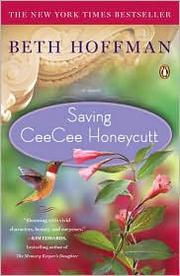
Saving CeeCee Honeycutt
A twelve-year-old girl loses her mother and is packed off to Savannah, where a great-aunt, a housekeeper and a street of eccentric women teach her how to…
2,627-word summary · 12 min read

Girls in Pants: The Third Summer of the Sisterhood
The four friends face their last summer before college, with art school, an old flame, a guilty conscience and a new baby in the balance.
2,382-word summary · 11 min read
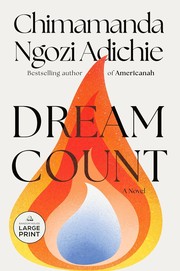
Dream Count
Four women narrate the 2020 lockdown in their own voices: a travel writer, a friend in early labor, a banker cousin and a housekeeper assaulted in a hotel room.
2,286-word summary · 10 min read

Counting by 7s
A gifted twelve-year-old who counts by sevens loses her parents in a car crash and gradually builds a new family with help from a counselor, a taxi driver, and…
2,306-word summary · 10 min read

By the Shores of Silver Lake
Twelve-year-old Laura leaves Plum Creek for Dakota Territory, rides a pony, mourns old Jack, and learns to be eyes for her blind sister Mary.
2,540-word summary · 11 min read

This One Summer
Mariko Tamaki and Jillian Tamaki's graphic novel about two friends at a lake town, where a mother's grief and a pregnant teenager reshape one summer.
2,324-word summary · 10 min read

The True Confessions of Charlotte Doyle
A sheltered thirteen-year-old sails from Liverpool in 1832 and finds herself the only woman aboard a ship with a charming, dangerous captain.
2,330-word summary · 10 min read

The Power of One
A boy in apartheid South Africa decides to become welterweight champion of the world, and the novel follows every mentor, fight, and loss that gets him there.
2,145-word summary · 10 min read

Little Town on the Prairie
In the spring after the Long Winter, fifteen-year-old Laura sews shirts, studies for a teaching certificate, and helps send her blind sister Mary to college.
2,071-word summary · 9 min read

The Second Summer of the Sisterhood
Four friends share the traveling pants through a summer of grandmothers, first loves, and mothers who are learning to let go.
2,209-word summary · 10 min read

Aristotle and Dante Dive into the Waters of the World
Ari and Dante return for senior year in El Paso, navigating first love, AIDS, family grief, and the cost of being openly gay in 1987 Texas.
2,188-word summary · 10 min read

A Painted House
In 1952 Arkansas, seven-year-old Luke Chandler picks cotton with his family and learns how quickly poverty, violence, and adult secrets can end a childhood.
2,060-word summary · 9 min read

Someone Like You
Halley and her best friend Scarlett face a summer of grief, a surprise pregnancy, and Halley's dangerous first romance in Sarah Dessen's 1998 young adult novel.
2,218-word summary · 10 min read

Cold Sassy Tree
In 1906 Georgia, fourteen-year-old Will Tweedy watches his widowed grandfather marry a much younger woman three weeks after his grandmother's funeral.
2,154-word summary · 10 min read
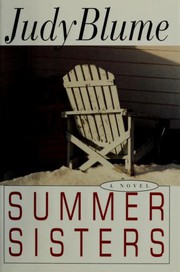
Summer Sisters
Vix and Caitlin share Martha's Vineyard summers from age twelve into adulthood, through first love, grief, marriage, and a disappearance that still haunts Vix.
3,633-word summary · 16 min read

Lady Tan's Circle of Women
Ming physician Tan Yunxian treats bound feet and births with midwife Meiling, defying male medicine rules.
2,330-word summary · 10 min read

Almond
Yunjae, born with alexithymia, navigates grief and friendship with troubled Gon after losing mother and grandmother.
2,088-word summary · 9 min read

The Great Believers
Yale builds a Chicago art collection as AIDS takes his friends, and Fiona searches Paris for her daughter thirty years later.
2,742-word summary · 12 min read
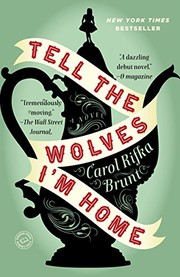
Tell the Wolves I'm Home
A grieving fourteen year old secretly befriends her late uncle's boyfriend in 1980s New York, testing family loyalty and love.
3,014-word summary · 13 min read

Summer of '69
Four Levin siblings split for summer 1969 as Vietnam, pregnancy and first love pull the family apart.
2,886-word summary · 13 min read

Those Who Leave and Those Who Stay
Elena publishes into Florence salons while Lila labors through Naples factories across the 1970s.
2,034-word summary · 9 min read
Ordinary Grace
In 1961 Minnesota, thirteen-year-old Frank Drum faces a summer of deaths that tests his minister family and forces him to weigh truth, guilt, and mercy.
2,948-word summary · 13 min read

The Elegance of the Hedgehog
A Paris concierge hides her brilliant mind while a gifted girl plans her death, until a new tenant sees through them both.
2,248-word summary · 10 min read

The DUFF
Bianca Piper hates Wesley Rush for calling her the DUFF, until a secret arrangement during her parents' divorce forces both teens to grow up.
2,323-word summary · 10 min read

The Cider House Rules
Homer Wells grows up in a Maine orphanage under Dr. Larch, who delivers babies and performs illegal abortions.
2,985-word summary · 13 min read

Are You There God? It's Me, Margaret
Twelve-year-old Margaret navigates puberty in New Jersey while trying to choose a religion on her own.
2,178-word summary · 10 min read