
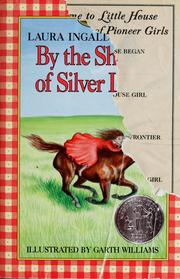
By the Shores of Silver Lake
2,540-word summary 11 min read 290 pages in the book
- First published
- 1939
- Publisher
- Harper & Brothers
- Pages
- 290
- ISBN
- 9780064400053
- Series
- Little House (#5)
Reading options
What's inside (10 sections)
The best scene in this book happens inside a moving train. Laura is twelve, and she has never been on one before. She presses her face to the window and watches the country slide past, and Wilder takes the trouble to show you why the experience is astonishing to a child who has known only horses and wagons. A distance that would eat up a whole day behind a team collapses into a few hours of rattling glass and fence posts. It is a small scene, and it is the hinge the entire book turns on. After this trip, the Ingalls family will never quite be a wagon family again.
I should tell you what kind of book this is, because the title promises one thing and the book delivers something quieter. There is a silver lake, and there are shores, but this is not a book about living beside the water. It is a book about getting somewhere. It was published in 1939 by Harper & Brothers, the fifth of the nine Little House books, and it covers a little over a year that starts near Walnut Grove, Minnesota, and ends in a claim shanty in Dakota Territory. Wilder called it autobiographical fiction, which is a polite way of saying that the bones are true and the seams have been smoothed. It was a Newbery Honor book in 1940, as were the fourth through eighth books in the series, a run that says more about the series than about this single volume.
Plum Creek and the fever
The book opens in the aftermath of illness. The family has come through what they believed was scarlet fever, and Mary, the oldest girl, has lost her sight. Wilder does not spend pages on the sickness itself. She starts with the household that the sickness left behind, and that is the more interesting choice. Mary sits in the house now, and the world has to come to her instead of the other way around.
Pa asks Laura to be Mary's eyes. That is the sentence I keep coming back to. He does not make a speech about it. He simply gives the job to the younger girl, and Laura starts describing what she sees, the sky and the fields and whatever is happening at the window. It is a chore, and she resents some of it, and it also changes her. You can watch her getting more patient through the year, not because anyone lectures her but because she has to make language do the work that her sister's eyes used to do. It is the quietest kind of growing up in these books, and for that reason it is the one I believe most.
There is a new baby in the house too. Grace is introduced here, the youngest Ingalls girl, and she is mostly a presence at the edges of the action, something to be carried and watched while the older children work. Wilder is sparing with her. I liked that restraint. A lesser writer would have made the baby into a whole subplot.
Then Aunt Docia arrives with an idea. Uncle Henry runs a railroad camp, and he needs a bookkeeper, and the job pays fifty dollars a month. That is real money to this family, and Pa begins to plan almost at once. Mary is too weak to travel, so the arrangement splits the family. Pa will go ahead with the wagon and the team. Ma and the children will follow later by train.
The morning Jack died
The morning Pa is due to leave, the old bulldog Jack dies in his sleep. If you have read the earlier books, this lands hard, because Jack has been around since the beginning. He is not a new dog brought in for a death scene. He is the family's dog, and Wilder knows exactly what she is doing by placing his death here, on the morning of a departure.
I looked into this afterward and found that the dog Jack was based on was no longer with the Ingalls family by then. Wilder moved the death into this book on purpose, to mark the line between Laura's childhood and her adolescence. Knowing that made me admire the choice more rather than less. A strictly factual account would have had the dog die at a different time, or not in this book at all, and the book would have lost its clean break. The death works as a piece of structure. It says that the era of the little house and the faithful dog is ending, and that what comes next will be different.
Laura grieves, and then the wagon goes, and the house has to go on. Wilder does not linger. That is her method throughout this book. She gives you the feeling for a paragraph or two and then returns to the work at hand, and the work is what fills the days.
The first train ride
Some months later, Ma takes the children to Dakota Territory by train. This is the passage I mentioned at the start, and it is still the part of the book I would hand to someone who thought these stories were all about churning butter. The children are thrilled by the train. It covers in hours what a horse and wagon would need a day to manage, and Wilder lets them be delighted by that fact without turning it into a lesson.
Pa meets them in town, and the next day they travel out to the railroad camp where he has been working. The camp is a rough place, full of men and noise and the business of laying track west. Laura's cousin Lena is there, and the two girls become a pair whenever the chores are done. The chores are not small. They fetch laundry that a neighbor has washed, and they milk cows, and there is always something to be fetched or scrubbed or carried.
The best of these episodes is the pony. Lena lets Laura ride her pony, and it is Laura's first time on a horse. Wilder writes the ride with the same attention she gave the train window. A child who has only walked behind a wagon suddenly has an animal moving under her, and the sensation is big enough to fill a chapter. I read these pages slowly. They are simple, and they are the reason people keep giving these books to children.
A camp that comes apart
Winter comes, and the railroad work ends, and the camp is taken down. Wilder describes the buildings coming apart, because everything in a railroad camp is made to be moved. The men who built the place strip it and head back east, and the Ingalls family suddenly has nowhere to stay. There is a moment of genuine uncertainty here. They had planned to go east as well, and then the surveyors change the shape of the decision.
The surveyors had intended to stay through the winter. Instead they are called back east, and they ask the Ingalls family to occupy their house and look after their surveying equipment. It is an odd arrangement, and it is the accident that gives the middle of the book its setting. The family moves into a house that is already stocked with provisions, and Laura is practically glowing at the thought of living somewhere so well supplied. It is one of the few moments in the book where she gets to be a child about comfort.
I want to flag one thing here, because it bothered me when I read it and it is worth knowing about. Wilder wrote that the surveyors left food in the house for them. Other accounts disagree, and some suggest Pa had to buy the supplies. This is a small example of how the book works. A detail that makes the story warmer and tidier gets kept, and the messier version of it does not. It is not a lie exactly. It is a choice about what kind of story this should be.
The surveyors' house
This is the longest stretch of ordinary life in the book, and I mean that as a compliment. The family settles in, and people arrive. Mr. and Mrs. Boast, newly married, turn up in the middle of a snowstorm and stay well past Christmas. They are young and poor and pleased to be together, and their presence gives Wilder a chance to write about a different kind of household than the one Laura knows. At New Year's the Ingalls family goes to the Boasts' small home for dinner.
Mrs. Boast becomes important to Laura for a reason that has nothing to do with adventure. She has a collection of newspapers, and she shares them, and she shows the Ingalls family how to make a what-not. If you do not know what a what-not is, it is a small shelf for keeping trinkets, and the making of it is exactly the sort of domestic craft that these books pause to describe. I used to skip those passages as a younger reader. Now I think they are the point. They are how people made a home out of a room in a strange territory.
Reverend Alden visits unexpectedly, and the conversation turns to Mary. When he learns that she is blind, he tells Ma about a college for the blind in Iowa. This is the moment when a possibility enters the family's life. Laura makes a private decision that she will teach school someday and help send Mary to that college. It is a very small declaration on the page, and it quietly sets up the next two books in the series. I like the way Wilder plants it here without making a ceremony of it.
The wolf on the lake
On a clear night in winter, Laura and Carrie go for a walk on the lake in the moonlight. They see a wolf. That is the whole event, and it is barely a page, but it is the most vivid thing in the book. The ice, the light, the animal at the edge of the clearing, and two girls standing still. Wilder understood that a scene does not need to be long to stay with a reader.
The next day Pa goes out to hunt the wolf. He does not kill it, as it happens. What he finds instead matters more. Out on the land he sees the perfect section for a homestead claim, and he begins to make plans to file on it at the land office in Brookings as soon as the weather allows. The wolf has led him to the place where the family will put down roots. I do not think Wilder is being subtle about the symbolism, and I do not think she needs to be. It is a children's book, and a wolf that points the way to a home is a fine piece of storytelling.
Underneath this is the machinery of the Homestead Act. For ten dollars and some fees, a man could claim a quarter section of land, which is to say one hundred and sixty acres, as long as he lived on it for five years. The Dakota Boom of the late 1870s and 1880s sent people west in numbers, and the Ingalls family was part of that rush. Wilder explains the arithmetic of a section plainly, and I appreciated it. Children deserve to know how the land actually changed hands, even if the book is gentler about the consequences than a modern reader might want.
Brookings and the claim shanty
Pa's trip to Brookings keeps getting delayed. Men are pouring west, and they need somewhere to sleep, and the surveyors' house has room. The family takes them in as boarders, and the money they earn is set aside for Mary's education at the Iowa school. It is a neat bit of bookkeeping, and it ties the boarding episodes back to the promise Laura made earlier. Every crowded night at the table is, in the logic of the story, a step toward Mary leaving home for college.
Pa finally reaches the land office and files the claim. Then he builds a store building in town, because the surveyors will be coming back and the family will need somewhere to live. The book ends with the Ingalls family settling into the snug claim shanty on their new land. It is a small, domestic ending, and it is deliberately ordinary. There is no grand speech about the future. There is a family in a small house on land they now hold, with the harder years still ahead of them.
That ending is what made me return to the title. The shores of Silver Lake are not a destination in this book. They are a threshold. The family has crossed a great deal of ground to get here, and the book closes just as the real work of staying begins. Read it alongside The Long Winter and you can feel the trap closing. Read it alone and it feels like an arrival, which is probably how Wilder wanted it to feel in 1939.
What the book smooths over
I loved reading this, but I would not hand it to a child without a few words first. The land the Ingalls family claims is not empty. Homesteading was a system for transferring land out of Native hands, and the book treats the prairie as a place where a man only has to file a paper to belong. That gap is not unique to this volume, but it is especially visible here, because so much of the book is about the mechanics of claiming land. A reader who knows the history will notice what is missing.
There are other softenings. Wilder's daughter Rose suggested leaving Mary's blindness out of the books altogether, and Laura refused, because the blindness changed the whole family, Mary most of all. I think Laura was right, and the result is the best thread in this book. But she still shaped the record. Laura apparently never visited the railroad grade in real life, though she goes to it with Pa in the novel. The food in the surveyors' house is another example. The book wants a world where the family is looked after, and it keeps the details that make that true.
Virginia Kirkus gave the book a starred review in 1939, calling it a splendidly written contribution to factual frontier material. Read now, that phrase about factual material is the interesting part. The book is factual in the way a well made memory is factual. The feelings are exact, the weather is exact, the work is exact, and the edges have been rounded off. I finished it wishing I could give a twelve year old both this book and a honest account of what the Dakota Boom actually cost. The two would sit well together, because this book is at its best when it is telling you what it felt like to be small in a very large country, and that feeling does not require the history to be tidied up first.
FAQ
How old is Laura in By the Shores of Silver Lake?
She is twelve years old when the story begins at Plum Creek. The book follows a little over a year in her life as the family moves toward De Smet, Dakota Territory.
Is By the Shores of Silver Lake based on real events?
Yes. It draws on the Ingalls family's move west in 1879, though Wilder changed details, such as having Laura visit the railroad grade with Pa.
Why does Jack the dog die in this book?
The real dog was no longer with the family by then. Wilder moved his death here to mark the boundary between Laura's childhood and her adolescence.
Similar books
More from Little House first, then related titles.

Little House in the Big Woods
The Ingalls family spends a full year in a Wisconsin log cabin, filling the attic, marking Christmas, and sugaring maples in spring.
3,884-word summary · 17 min read
Little House on the Prairie
The Ingalls family leaves Wisconsin for Kansas, builds a log house, and faces wolves, fire, and fever.
3,002-word summary · 13 min read
On the Banks of Plum Creek
The Ingalls family trades their horses for a dugout on Plum Creek and bets a single wheat harvest on a house above ground, in Wilder's fourth Little House book.
2,090-word summary · 9 min read

The Long Winter
Dakota Territory, 1880: seven months of blizzards cut a town off from the railroad, and a family survives on twisted hay, ground wheat, and a dangerous wheat…
2,210-word summary · 10 min read

Little Town on the Prairie
In the spring after the Long Winter, fifteen-year-old Laura sews shirts, studies for a teaching certificate, and helps send her blind sister Mary to college.
2,071-word summary · 9 min read
Little Women
Alcott's Little Women retold: Meg, Jo, Beth and Amy March through the Civil War years and beyond.
2,487-word summary · 11 min read

Theft
Gurnah traces three linked lives in Tanzania, where a servant's accusation of theft opens a family history of love, duty and quiet betrayal.
2,454-word summary · 11 min read
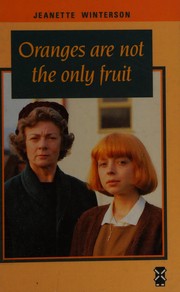
Oranges Are Not the Only Fruit
An adopted girl in a strict Pentecostal household learns to read the Bible, preach sermons and love women, then faces her church and mother for it.
2,384-word summary · 11 min read
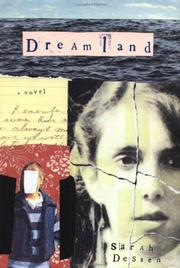
Dreamland
A teenager slips out of her perfect sister's shadow and into a relationship that turns from thrilling to dangerous, in Sarah Dessen's dark 2000 novel about…
2,823-word summary · 13 min read

The Boston Girl
Eighty-five-year-old Addie Baum tells her granddaughter how she grew up in Boston's North End, chased education and love, and became the woman she is.
2,439-word summary · 11 min read
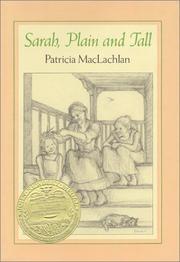
Sarah, Plain and Tall
A widowed prairie farmer advertises for a wife, and a woman from Maine answers for a one-month trial. This Newbery winner, told by his daughter, is about a…
2,331-word summary · 10 min read
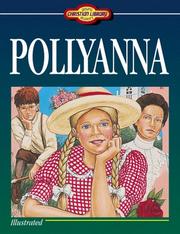
Pollyanna
An eleven year old orphan arrives in a stern Vermont town and teaches it the Glad Game, until an accident tests her own optimism.
2,262-word summary · 10 min read

The Shadow Sister
Star D'Apliese steps out of her sister's shadow and follows a bookshop clue into the Edwardian life of Flora MacNichol, a woman who gave up love for duty.
2,260-word summary · 10 min read

Mrs. Everything
Two Jewish sisters in Detroit grow up, apart and together, across seven decades of American life, from the 1950s to the 2016 election.
2,362-word summary · 10 min read

The Chosen
A shattered pair of glasses in a 1944 Brooklyn softball game starts a friendship between a Hasidic boy and his Orthodox neighbor, and their fathers pull them…
2,443-word summary · 11 min read
The Borrowers
A family of tiny people live under the floorboards of an English house, borrowing what they need until a lonely boy and a suspicious housekeeper change…
2,164-word summary · 10 min read

Old Yeller
Travis Coates takes in a stray yellow dog that protects his family on the Texas frontier, and learns about loyalty and loss.
2,165-word summary · 10 min read
A Painted House
In 1952 Arkansas, seven-year-old Luke Chandler picks cotton with his family and learns how quickly poverty, violence, and adult secrets can end a childhood.
2,060-word summary · 9 min read

The Storm Sister
Ally D'Aplièse loses her father and her lover within weeks, then follows a brass frog and a Norwegian biography into Anna Landvik's music and the world of…
2,376-word summary · 11 min read
Cold Sassy Tree
In 1906 Georgia, fourteen-year-old Will Tweedy watches his widowed grandfather marry a much younger woman three weeks after his grandmother's funeral.
2,154-word summary · 10 min read

Clap When You Land
Two half sisters, one in Sosúa and one in Queens, discover each other after their father dies in a plane crash, in Elizabeth Acevedo's novel in verse.
2,890-word summary · 13 min read
Anne's House of Dreams
Newlyweds Anne and Gilbert start in a seaside house with kind neighbors.
2,465-word summary · 11 min read

Song of Solomon
Milkman Dead leaves Michigan to hunt for family gold and finds instead the old song of his ancestor Solomon.
2,465-word summary · 11 min read
Roll of Thunder, Hear My Cry
In Depression-era Mississippi, nine-year-old Cassie Logan learns what her Black family's land costs and why they keep it.
2,273-word summary · 10 min read

All the Pretty Horses
John Grady and Rawlins ride to Mexico for ranch work, finding love, prison, and a code that costs all.
2,677-word summary · 12 min read

The Seven Sisters
Maia follows Pa Salt clue from Geneva to Rio and Christ the Redeemer.
2,210-word summary · 10 min read
Tell the Wolves I'm Home
A grieving fourteen year old secretly befriends her late uncle's boyfriend in 1980s New York, testing family loyalty and love.
3,014-word summary · 13 min read

Summer of '69
Four Levin siblings split for summer 1969 as Vietnam, pregnancy and first love pull the family apart.
2,886-word summary · 13 min read
Ordinary Grace
In 1961 Minnesota, thirteen-year-old Frank Drum faces a summer of deaths that tests his minister family and forces him to weigh truth, guilt, and mercy.
2,948-word summary · 13 min read
The Cider House Rules
Homer Wells grows up in a Maine orphanage under Dr. Larch, who delivers babies and performs illegal abortions.
2,985-word summary · 13 min read