Sarah, Plain and Tall
2,331-word summary 10 min read 58 pages in the book
- First published
- 1985
- Publisher
- Harper & Row
- Pages
- 58
- ISBN
- 9780060241025
- Series
- Sarah, Plain and Tall (#1)
Reading options
What's inside (9 sections)
A small book with a big reputation
Sarah, Plain and Tall is a very short novel with a very large reputation. Published by Harper & Row in April 1985, it runs to roughly fifty-eight pages in the first edition, and yet it collected the 1986 Newbery Medal, the Scott O'Dell Award for Historical Fiction, and the Golden Kite Award in the same year. Karen Cushman, who won a Newbery of her own, once called it a nearly perfect book, and the critic Martha Saxton wrote in the New York Times that the gentle story could not fail to touch readers. That kind of praise can make a book hard to approach. You half expect to be scolded for not feeling enough.
I picked it up expecting something simple, and in a sense it is simple. The vocabulary is plain, the sentences are short, and the whole thing is narrated by a child. But the restraint is doing real work. MacLachlan trusts a handful of images and a few quiet scenes to carry an emotional load that other writers would spell out in pages of explanation. The book is about a family learning to take in a stranger, and about what it costs a person to leave the place she loves. It manages both ideas without ever raising its voice.
That combination is why the book has lasted. It is short enough to read in one sitting and layered enough that adults keep finding things in it. MacLachlan began writing it while living in New England and missing her home in Wyoming, and she drew on stories her mother had told her about family history. She worked on a typewriter in the music room of her house with her dogs nearby. You can feel that origin in the finished book: it was written by someone thinking hard about distance, home, and the people who wait at the other end of a long journey.
The advertisement, and the woman who answered it
The story is set on an American prairie farm in the late nineteenth century. Jacob Witting is a widower whose wife died in childbirth several years earlier, and he has been struggling to manage the farm and raise his two children alone. The youngest, Caleb, lost his mother shortly after he was born, so he has no memory of her at all. The older child, Anna, does remember, and that difference between them shapes nearly everything that follows.
Jacob places an advertisement in a newspaper looking for a wife, a woman who will come to the farm and help hold the household together. This is the practice sometimes described as ordering a mail-order bride, and it is worth naming plainly because the book itself is reticent about the arrangements. Sarah Wheaton, a woman from the state of Maine, reads the advertisement and decides to answer it. Her own life has been set in motion by her brother William's marriage, which has left her with a reason to imagine a different future. She proposes a trial period of one month, a way for both sides to look before committing.
The neighbor, Matthew, is part of the same pattern. He had placed an advertisement of his own and found a wife, Maggie, who becomes Sarah's friend in the new place. That parallel matters. Sarah is not stepping into a world where such arrivals are unknown; she is following a road that other women have taken, which tells us something about the limited options available to her. MacLachlan never lectures on the subject, but the logistics are there if you look for them.
Sarah arrives by train, a outsider from a coast the children have never seen, carrying her own habits, her own sorrow, and a stubborn determination not to be pitied. The arrangement is practical on paper. In the house it becomes something much harder to categorize.
Anna learns to watch
Anna is the narrator, and the choice of narrator is one of the book's best decisions. She is old enough to remember her mother and young enough to be wary of any woman who might take her place. When Sarah first arrives, Anna watches her the way a careful child watches a new adult, noting what she says, what she does with her hands, whether she seems likely to stay. The narration filters everything through that alert, slightly guarded intelligence. We get the facts of Sarah's arrival and the smaller truth of what it feels like to witness it.
Caleb responds differently. He is excited from the start and badly wants Sarah to remain. Because he never knew his mother, he can welcome a new person without the same sense of betrayal. The gap between the siblings is one of the quiet tensions of the book. They want the same thing, which is for someone to stay, but they arrive at that want from opposite directions. Anna's caution and Caleb's hope play off each other in small exchanges rather than in dramatic confrontations.
This is where the book's form serves its subject. A child narrator notices concrete things: what people wear, what they say at supper, whether they hum while they work. MacLachlan uses that attention to build the relationship indirectly. We learn that Sarah is becoming part of the household not because a character announces it but because the details of daily life begin to include her. The approach is patient, and it asks the reader to be patient too. Children reading it will likely track the story without effort. Adults may notice how much is being communicated in how little space.
The sea inside a prairie house
What Anna notices first about Sarah is her loneliness. Sarah misses the sea, misses Maine, and carries that loss around the farm like a private weather system. She does not hide it exactly, but she does not make a performance of it either. She talks to the children about the coast, about boats and water and seals, and the children, who have never seen an ocean, turn her descriptions over and repeat them. The sea becomes a shared possession before it becomes a real place to them.
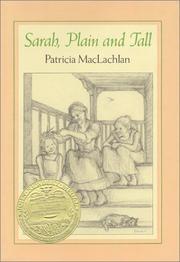
Sarah also works. She insists on learning the farm tasks and helping with them, and her persistence is what gradually wins Jacob over. She is described as stubborn, and the word fits. She is not a visiting saint who arrives to make everything pleasant; she is a woman with habits and opinions who is determined to earn her place by doing the work. There is a memorable image, preserved on the cover of the first edition, of Anna watching Sarah cut Caleb's hair. It is a small domestic act, but in the context of the story it is a declaration of intimacy. Someone is caring for these children in the ordinary way that a parent does.
The relationship with Jacob develops through such acts rather than through speeches. He is a man who has carried grief for years, and the book does not pretend that a new wife simply fixes him. What changes is the texture of the days. There is another person at the table, another voice in the room, someone who notices when the work is too much. MacLachlan is interested in the slow accumulation of ordinary evidence, and she is willing to let a whole emotional shift rest on a few lines of dialogue.
For all its quiet, the book is not without humor. Caleb's questions about the sea and about where Sarah came from have a child's bluntness, and Sarah's answers have a dry edge. Those exchanges keep the story from tipping into sentiment. The humor is one of the reasons the book works for the children it was written for; it never talks down to them, and never assumes they cannot handle a complicated feeling.
The wagon ride, and the fear she will not return
The emotional center of the novel is a single errand. Sarah goes to town by wagon, on her own, and the children are left at the farm. Anna tries to reassure Caleb that their new companion will come back, while privately fearing that she will not. That split, between what the older child says aloud and what she actually believes, is the truest thing in the book. Anna has learned that people leave. She has learned it more deeply than Caleb has, and she cannot unlearn it just because she wants Sarah to stay.
The waiting that follows is rendered with almost no adornment. The children go about their tasks, watch the road, and measure the daylight. MacLachlan understands how time stretches for a child who is waiting for a particular adult to come home. When Sarah returns by nightfall, the relief in the house is physical. It is one of those scenes that needs no explanation of its importance, because the author has already established exactly what is at stake for each of the three people involved.
After that, Sarah admits that she still misses the sea. She also says that she would miss the family more if she left. That sentence is the pivot of the whole book. It does not deny the pull of the life she gave up; it simply places another attachment beside it. The novel's emotional honesty lies in refusing to pretend that staying is costless. Sarah does not stop being a woman from Maine because she has learned to love a prairie farm. She becomes someone with two places in her, and the resolution depends on accepting that rather than resolving it.
Anna reveals near the end that Jacob and Sarah are married soon afterward. The news is reported in a single, matter-of-fact sentence, which is exactly right. The marriage is the formal conclusion of a process the reader has already witnessed in the small events of the household.
What the book leaves out
The case against Sarah, Plain and Tall begins with its size. At under sixty pages, it does not have room for much besides its central situation, and readers looking for a full historical world will not find one. The late nineteenth-century prairie is sketched in a few strokes: the farm, the town, the train, the neighbors. The novel is not really interested in the economic or political realities of the period, and the mechanics of the mail-order arrangement are treated lightly. A woman traveling hundreds of miles to inspect a stranger and decide whether to marry him is a startling premise, and the book smooths it into a practical footnote.
There is also the matter of point of view. The story is told entirely through Anna, and the inner lives of the adults remain partly closed to us. Some readers and teachers have noted that older Newbery winners can carry limited perspectives and old-fashioned attitudes, and the American Library Association has suggested pairing this book with works such as Linda Sue Park's Prairie Lotus to widen the frame. That is fair advice. The book is gentle, and gentleness can be a way of leaving hard questions alone. It is possible to enjoy the story thoroughly and still wish it said more about the woman at its center and the world she stepped into.
The prose itself divides readers. The short sentences and repetitions that make the book accessible to younger children can feel mannered to an adult. Anna's voice is deliberately plain, which is right for the character, but it limits the range of what can be expressed. MacLachlan is working inside a narrow form and does not try to escape it. Whether you see that as discipline or as limitation depends largely on what you want from a novel.
That last point is probably the fairest way to settle the question of who this book is for. It is a children's book in the most literal sense, written to be read by children and to be read aloud to them, and it succeeds on those terms. An adult who comes to it expecting the scope of a historical novel for grown-ups will find the frame painfully slight. An adult willing to notice how much MacLachlan places in a single line of dialogue will find something else entirely: a careful study of how grief makes people cautious, and how a new person can slowly give them a reason to take a risk.
The ending, and the life afterward
The book closes with the family remade, and MacLachlan let that family keep living on the page. There are four sequels: Skylark, Caleb's Story, More Perfect than the Moon, and Grandfather's Dance, taking the Witting family forward through drought, new arrivals, and Anna's own grown-up future. The series gives Sarah's arrival the weight of a beginning rather than a conclusion, which is how the single novel already treats it.
The story also travelled well beyond the page. A 1991 television film directed by Glenn Jordan starred Glenn Close as Sarah and Christopher Walken as Jacob, with a teleplay by MacLachlan and Carol Sobieski, and it drew nine Emmy nominations. A one-act musical with music by Laurence O'Keefe and Nell Benjamin ran off-Broadway in 2002. Those adaptations testify to how strong the central situation is: a stranger arrives, two children watch her carefully, and a household slowly becomes something new.
MacLachlan herself, writing about the book decades later, pointed to the continuing connection with children as the source of its life. She described receiving letters from young readers and drawings inspired by the story. That response makes sense. This is a book that treats a child's vigilance as serious business, and that refuses to make a new parent into a miracle. Sarah stays because she chooses to, and the choice is harder and more interesting for being small. Read it for that choice, and for the plain, patient way MacLachlan lets a family change one ordinary day at a time.
FAQ
Did Sarah, Plain and Tall win any awards?
Yes. It won the 1986 Newbery Medal, the Scott O'Dell Award for Historical Fiction, and the Golden Kite Award.
Is Sarah, Plain and Tall part of a series?
Yes. It is the first of five books, followed by Skylark, Caleb's Story, More Perfect than the Moon, and Grandfather's Dance.
Is this book only for children?
It is written for children, but its plain style and careful handling of grief give adult readers plenty to notice.
Similar books
More from Sarah, Plain and Tall first, then related titles.
By the Shores of Silver Lake
Twelve-year-old Laura leaves Plum Creek for Dakota Territory, rides a pony, mourns old Jack, and learns to be eyes for her blind sister Mary.
2,540-word summary · 11 min read

The Long Winter
Dakota Territory, 1880: seven months of blizzards cut a town off from the railroad, and a family survives on twisted hay, ground wheat, and a dangerous wheat…
2,210-word summary · 10 min read

Little Town on the Prairie
In the spring after the Long Winter, fifteen-year-old Laura sews shirts, studies for a teaching certificate, and helps send her blind sister Mary to college.
2,071-word summary · 9 min read
The Borrowers
A family of tiny people live under the floorboards of an English house, borrowing what they need until a lonely boy and a suspicious housekeeper change…
2,164-word summary · 10 min read
The War That Saved My Life
Ten-year-old Ada has never left her London flat, hidden away because of her clubfoot. Wartime evacuation sends her to Kent, where a reluctant guardian and a…
2,252-word summary · 10 min read
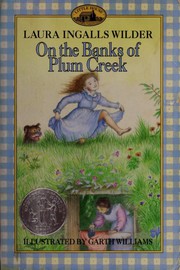
On the Banks of Plum Creek
The Ingalls family trades their horses for a dugout on Plum Creek and bets a single wheat harvest on a house above ground, in Wilder's fourth Little House book.
2,090-word summary · 9 min read

Esperanza Rising
Esperanza trades ranch life for farm labor camps in California.
2,338-word summary · 10 min read
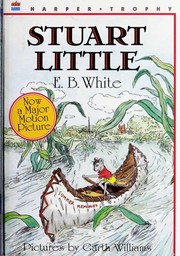
Stuart Little
A two-inch boy in a New York family befriends a canary, loses her, and drives off alone to find her.
2,591-word summary · 12 min read
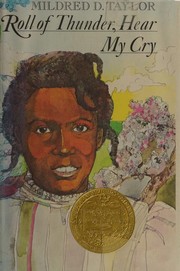
Roll of Thunder, Hear My Cry
In Depression-era Mississippi, nine-year-old Cassie Logan learns what her Black family's land costs and why they keep it.
2,273-word summary · 10 min read
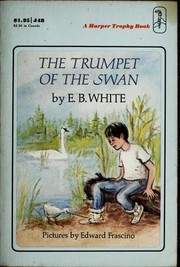
The Trumpet of the Swan
A mute trumpeter swan learns to read, write, and play a stolen trumpet to win a mate, in E.B. White's quiet 1970 tale of a boy who watches.
2,309-word summary · 10 min read
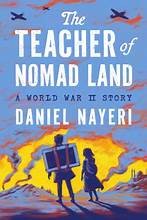
The Teacher of Nomad Land
In 1941 Iran, an orphaned boy straps a chalkboard to his back and sets off to teach nomads, hoping to keep his little sister with him.
2,534-word summary · 11 min read
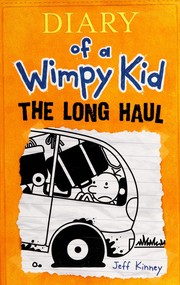
The Long Haul
Greg Heffley's summer road trip goes sideways with a towed boat, a live pig, and a family in a purple van.
2,311-word summary · 10 min read
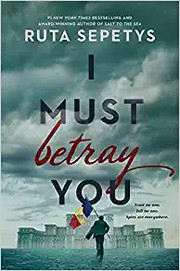
I Must Betray You
In 1989 Romania, a seventeen-year-old is forced to inform on an American diplomat's family and records the truth in a hidden notebook.
2,258-word summary · 10 min read

Yellow Crocus
In 1837 Virginia, an enslaved wet nurse is separated from her own son to raise a planter's daughter, and the two women build a love the law says cannot exist.
2,094-word summary · 9 min read
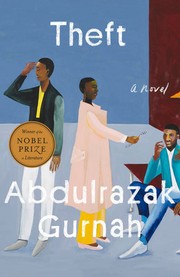
Theft
Gurnah traces three linked lives in Tanzania, where a servant's accusation of theft opens a family history of love, duty and quiet betrayal.
2,454-word summary · 11 min read
The Runaway Bunny
A little bunny says he will run away, and his mother promises to follow. This 1942 picture book turns a child's first wish for independence into a gentle,…
2,765-word summary · 12 min read

The Poky Little Puppy
One slow puppy misses the trouble and gets the desserts in this 1942 Golden Book that became the best-selling hardcover children's book in the United States.
2,322-word summary · 10 min read
The Night Watchman
A Chippewa night watchman in 1953 North Dakota recognizes a bill as an attempt to end tribal recognition, while a young woman searches for her missing sister…
2,036-word summary · 9 min read

The Kitchen God's Wife
Amy Tan's second novel pairs a San Jose speech therapist with her Chinese mother, whose account of war, an abusive husband, and a narrow escape comes out in a…
2,896-word summary · 13 min read
Land
O'Farrell's tenth novel follows a Famine-survivor mapmaker who abandons the British Ordnance Survey to chart Ireland in Irish, as his family begins to scatter.
2,438-word summary · 11 min read

Good Dirt
A stoneware jar made by an enslaved potter links a prominent Black New England family across a hundred and fifty years of prosperity, grief and buried history.
2,069-word summary · 9 min read

Flashlight
Susan Choi's Booker-shortlisted novel opens with a father and daughter on a breakwater in 1978, then follows the loss outward through four generations and…
2,849-word summary · 13 min read
Carnegie's Maid
An Irish immigrant answers to a dead woman's name and lands a job as lady's maid in Andrew Carnegie's Pittsburgh household, where her mind for business draws…
2,271-word summary · 10 min read
American Pastoral
Roth's Pulitzer winner follows a Newark glove maker's son whose perfect family life is broken by his daughter's antiwar bombing, retold by a narrator who…
2,660-word summary · 12 min read
A Bear Called Paddington
In Michael Bond's 1958 first book, a small bear arrives at Paddington Station with a label and a suitcase, and the Browns take him home to Windsor Gardens.
2,492-word summary · 11 min read
The True Confessions of Charlotte Doyle
A sheltered thirteen-year-old sails from Liverpool in 1832 and finds herself the only woman aboard a ship with a charming, dangerous captain.
2,330-word summary · 10 min read

The Mouse and the Motorcycle
A bored mouse named Ralph finds a boy's toy motorcycle in a hotel room and starts a secret life of night rides, mishaps, and unlikely friendship.
2,254-word summary · 10 min read
The Bronze Horseman
On the day Germany invades the Soviet Union, Tatiana Metanova meets a mysterious Red Army officer, and their love is tested by the Siege of Leningrad.
2,461-word summary · 11 min read

The Boston Girl
Eighty-five-year-old Addie Baum tells her granddaughter how she grew up in Boston's North End, chased education and love, and became the woman she is.
2,439-word summary · 11 min read