
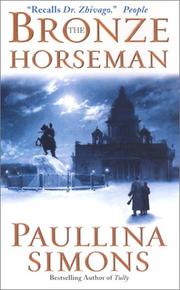
The Bronze Horseman
2,461-word summary 11 min read 912 pages in the book
- First published
- 2000
- Publisher
- HarperCollins
- Pages
- 912
- ISBN
- 9780061031120
- Series
- The Bronze Horseman (#1)
Reading options
What's inside (8 sections)
I put off this book for a long time because people who love it tend to describe it with a kind of warning in their voices. It is long, they say, and it will wreck you. That turned out to be fair. The paperback runs 912 pages, and Paullina Simons spends all of them on a love story set against one of the worst years of the twentieth century. I read it expecting a sweep-you-away historical romance and got something harder and more stubborn than that. The war is not decoration here. It is the force that keeps pushing the two main people apart, and the book is at its best when it refuses to let them have an easy moment together.
The story begins on 22 June 1941, the day Germany invaded the Soviet Union. Tatiana Metanova wakes up the morning before her seventeenth birthday in Leningrad. Her older sister Dasha comes home announcing that she is in love, and the family is busy making plans for Tatiana's twin brother Pasha, whom the parents are sending to a boys' camp to keep him out of the army's reach. Over the radio, Vyacheslav Molotov tells the country what has happened. Tatiana, who is young and rather romantic about the war at first, is sent out to buy food. She cannot find much, buys a scoop of ice cream instead, and misses her bus. While she waits for the next one, a Red Army officer watches her from across the street. He crosses over and introduces himself as Lieutenant Alexander Belov.
The bus stop and the officer's store
That first meeting is charming in a slightly awkward way. Alexander is self-possessed, and Tatiana is flustered. He takes her to the Officers' store, where she can get food that ordinary citizens cannot, and a friend of his named Dimitri insists on helping carry the boxes home. When they reach the Metanov apartment, Tatiana realizes that Dimitri is the man Dasha has fallen for. It is a cruel bit of staging. The officer she has just met is tied to her sister, and Tatiana decides she will not come between them.
Simons does a good job with the small, ordinary texture of this early section. Tatiana works at the Kirov factory. She walks home from work with Alexander for a few weeks, and neither of them says outright what is happening. She keeps telling him to stay with Dasha. He keeps coming back. The attraction is clear to everyone but Tatiana, or rather it is clear to her and she refuses to act on it. There is a lot of repetition here, and some readers will get impatient with how long it takes the pair to say the obvious. I did not mind it, because the delay gives the relationship a shape. This is not a love at first sight story that skips to the happy part. It is about two people who know they should not want each other and keep failing to stop.
There is a detail I kept coming back to in these early chapters. Tatiana is only days away from seventeen, and the adults around her are making decisions that will determine whether her brother lives. She is sent out to buy food and trusted with the household's survival for an afternoon, then treated as a child the rest of the time. That mix of responsibility and dismissal explains a lot about what she does later. When she decides to go after Pasha, she is taking literally the kind of errand the family has already given her. Simons never spells this out, but it sits in the way Tatiana moves through her own house, overhearing what her parents say when they think she is not listening.
Alexander tells Tatiana something important during this period: he is American, not Russian. He emigrated with his parents in 1930, they are dead now, and he is living in the Soviet Union under a false name. Dimitri knows the truth. That detail sits in the back of the book like a loaded gun, and Simons lets it wait a very long time before she fires it.
Alexander finally breaks with Dasha and stops coming to the apartment. The Metanovs are hurt and confused, and Tatiana is left to carry the knowledge of why. Then word comes that Pasha's camp has been under fire and nobody can reach him. Tatiana overhears her parents say they would rather lose her than Pasha, and she decides to go to the front herself to bring her brother home. This is the moment the book changes gear. The gentle courtship is over, and Tatiana is walking into the war.
Luga, the bomb, and the walk home
At the Luga front, the boys' camp is empty. Tatiana takes shelter in a building that is bombed and is badly injured. Dasha, who has guessed where her sister went, asks Alexander to find her. He does, and brings her back to Leningrad, and they share their first kiss on the way. It is one of the few soft moments the book gives them, and it arrives in the middle of a rescue, which tells you how Simons handles romance. Nothing is cleanly separated from the danger.
Back in the city, Alexander cannot stay away. He visits Tatiana in her hospital room one night, drunk, and the two become intimate. He tells her more about his past and about how Dimitri knows his real identity. Meanwhile her grandparents manage to evacuate to Molotov, but Tatiana's broken leg keeps her in Leningrad. Her parents, her sister Dasha, and she are trapped as the Siege of Leningrad closes in.
The siege sections are the strongest part of the novel, and also the hardest to read. Food runs out. The winter is brutal. People die in their apartments and on the streets, and the Metanov family does not escape it. Tatiana's parents die, and the book keeps going without softening the blow. Dasha, who has seemed oblivious for months, reveals that she has known about Tatiana and Alexander all along. The sisters are left alive, both in terrible health, and Alexander manages to find a convoy that can take them out of the city.
The slow reduction of the family is the emotional center of the book. Each stretch takes away something the Metanovs once counted on: their home, the ability to feed themselves, their parents, and finally any belief that they will all get out. Dasha begins the novel as the sister in a love triangle, and by this point she is the person Tatiana has to keep alive. That shift in the story's priorities is handled quietly, and it is the reason the romance still matters when the city is starving. There is no room here for the grand gestures of the opening chapters, only for the question of who will be left to bury whom.
There is a bargained cruelty in this part that I found hard to forget. To keep the promise he made to Tatiana, that he would never hurt Dasha, Alexander agrees to tell Dasha that he loved her and never Tatiana. Dasha makes him say it to get the sisters onto the convoy. He does. Tatiana has to stand by and listen to the man she loves tell her sister a lie that cuts her loose. Simons does not comment on it, which is the right choice. The scene speaks for itself.
Kobona, Lazarevo, and the ice hole
The convoy gets the sisters to Kobona, but Dasha is dying of consumption. She dies there, and Tatiana buries her in a hole in the ice, then sets out for Lazarevo, where her grandparents were evacuated. This stretch of the book is spare and bleak, and it moved me more than the grand romantic gestures do. A girl digging a grave in frozen ground is a stronger image than any kiss the novel gives us.
Alexander, on a month's furlough, goes looking for Tatiana and Dasha and has no word of either. He finds Tatiana in Lazarevo. He learns what happened to Dasha, that her grandparents are dead too, and that Tatiana is recovering from tuberculosis and pneumonia. Their reunion is not sweet. Tatiana is distrustful and angry, and in an argument she admits she never knew whether he loved her or Dasha. They work through it, make love for the first time properly, and he asks her to marry him. They marry on her eighteenth birthday and spend a month in a cabin in the woods near Lazarevo before he has to return to the front.
I wanted to believe them here, and the book wants you to. But Simons keeps a problem alive: Alexander is still living under a false name, Dimitri still knows it, and Dimitri is still angry. Every happy month in that cabin has a clock running under it. That tension is what keeps the later chapters from feeling like an unrelated second story.
Back to Leningrad, and the hospital
Tatiana goes back to Leningrad to find Alexander and ends up staying, working as a nurse at the Grechesky Hospital so she can be near him. He is upset and tries to talk her out of it, and fails. He returns to the front, now a major. He is injured while trying to save an American Red Cross doctor named Matthew Sayers, whom Tatiana has been working with. Tatiana convinces Sayers to operate and donates blood to keep Alexander alive. He survives, against expectation, and receives the Hero of the Soviet Union medal for what he did.
This is the part of the book where the romance and the war plot finally lock together. Tatiana is no longer waiting to be rescued. She is the one doing the rescuing, using her position at the hospital and her own blood to pull Alexander back. It is the clearest proof the novel offers that these two are a team, and it comes after hundreds of pages of them being kept apart by custom, family, and fear.
I also like what the hospital does for Tatiana as a person. For most of the novel she is the young woman someone else is guarding, chasing, or deceiving. Here she has a skill and a place that other people need. Alexander can be decorated and carried off the field, but Tatiana is the one who keeps him alive, and the book lets that matter more than any medal. It is a small change in the balance between them, and it arrives late enough that it feels earned rather than announced.
Then Tatiana asks Sayers for something enormous. She wants to leave the Soviet Union, with herself posed as a Red Cross nurse and Alexander posed as a Finnish prisoner of war. Alexander is frightened by the plan, and then he learns she is pregnant. The stakes stop being abstract. Now there is a child to think about, and every risk has a second person attached to it.
Dimitri's price and the goodbye
Dimitri visits Alexander while he is recovering and tells him he knows about the marriage. He threatens to expose Alexander's past to the NKVD unless he is allowed to flee with them. Then he raises the price: Tatiana must be left behind, supposedly because she would slow them down, really because he wants to break them apart. Alexander loses his temper, punches him, and nearly kills him before hospital staff pull him off. Arrest is now a matter of time.
What Alexander does next is the most painful thing in the book. He begs Sayers to tell Tatiana that he died while being transported for a promotion to lieutenant colonel. He says a final goodbye to her while she does not know it is a goodbye, and leaves her with the words about Orbeli that only the two of them understand. Sayers delivers the news. Tatiana refuses to believe it at first, but she is eventually persuaded, and she agrees to leave with Sayers and with Dimitri posing as the Finn.
The border crossing goes wrong. A guard recognizes Dimitri, and a firefight kills Dimitri and the guards on both sides and badly wounds Sayers. Tatiana drives herself and the dying doctor to Helsinki, where he dies. She goes on to Stockholm for a few months, then takes a ship to America. She arrives at Ellis Island in June 1943 and goes into early labor, giving birth to a boy she names Anthony Alexander Barrington, after his father.
That ending is a long way from a conventional romance payoff. I think it is the right ending for this book, though I can see why readers want more. Simons has spent nine hundred pages showing what the war costs people, and a clean reunion would undo that work. The last chapters leave Tatiana alive, free, and carrying a child, with the man she loves gone from her life as far as she knows. It is bittersweet in the literal sense, and it refuses to pretend otherwise.
What stays with me
The book is not without its flaws. The early courtship repeats itself, and some of the supporting characters, especially Dasha before the reveal, are kept at arm's length longer than they should be. Simons also leans on coincidence at a few key turns, including the way people find each other in a city of millions. And the length is real. There are passages in the middle where you can feel the author keeping the couple apart because the plot needs it, not because the characters do.
Still, the siege material earns the book's reputation. Simons writes hunger and cold without turning them into spectacle, and the scenes between the sisters, particularly the dreadful conversation on the convoy and the burial at Kobona, are better than most of the love scenes. Alexander is a complicated figure, charming and reckless and capable of both great tenderness and a terrible decision. Tatiana grows from a girl excited by the war into someone who can dig a grave, donate blood, and drive a dying man across a country. The historical setting is not a costume. It is the engine of the whole story.
If you like a romance that is willing to hurt you, this is one of the best. If you want a book where the couple gets a clear, uncomplicated reward for everything they suffer, look elsewhere. The Bronze Horseman is about loving someone in a time that does not permit it, and about the price of the choices people make when everything is scarce. I closed it tired, which is what a book this size and this sad should leave you feeling.
FAQ
Is The Bronze Horseman based on a true story?
No. It is a work of historical fiction by Paullina Simons, first published in 2000 by HarperCollins, that places fictional characters against the real events of the German invasion and the Siege of Leningrad.
Does the book have a happy ending?
Not in the usual sense. Tatiana survives the war, reaches America, and gives birth to a son, but she believes Alexander died at the border, and the book ends without a reunion.
How long is The Bronze Horseman, and when was it first published?
It was first published in 2000 by HarperCollins. The paperback edition runs 912 pages.
Similar books
More from The Bronze Horseman first, then related titles.

The Japanese Lover
A Polish refugee and the son of a Japanese gardener fall in love in San Francisco in 1939, then keep the affair secret for nearly seventy years.
2,286-word summary · 10 min read
Doctor Zhivago
A doctor and poet lives through revolution, war, and love in Pasternak's novel of private life under the pressure of Russian history.
2,213-word summary · 10 min read
The English Patient
In a ruined Italian villa in 1945, a burned man, a nurse, a thief, and a sapper trade pasts shaped by desert love and war.
2,006-word summary · 9 min read

The Girl You Left Behind
Two women a century apart fight for what they love, joined by a portrait painted in wartime France and claimed in modern London.
2,613-word summary · 12 min read
The Things We Cannot Say
A Florida mother travels to Poland to answer her silent grandmother's plea, uncovering a wartime love story and a decades-old identity swap.
2,365-word summary · 11 min read

Winter Garden
Two sisters keep a deathbed promise: hear their cold mother's Russian fairy tale to the end, and find besieged Leningrad inside it.
2,983-word summary · 13 min read

The Last Bookshop in London
A woman who has never cared for reading takes a job in a dusty London bookshop as the Blitz begins, and finds her place in it.
2,264-word summary · 10 min read
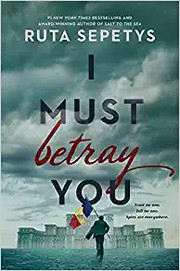
I Must Betray You
In 1989 Romania, a seventeen-year-old is forced to inform on an American diplomat's family and records the truth in a hidden notebook.
2,258-word summary · 10 min read
Birdsong
A love affair in Amiens before the First World War and a granddaughter's search through encoded journals decades later, joined by the tunnels of the Somme.
2,041-word summary · 9 min read

At the Water's Edge
A Philadelphia socialite follows her husband and his friend to wartime Scotland to hunt the Loch Ness monster, and finds herself instead: a novel of friendship…
2,906-word summary · 13 min read
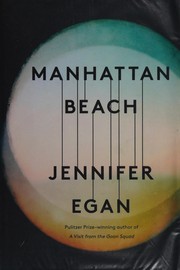
Manhattan Beach
A Brooklyn girl works the Navy Yard and dives for warships while chasing the gangster who may know why her father vanished.
2,251-word summary · 10 min read

Great Big Beautiful Life
Two rival journalists chase the biography of a reclusive media heiress on a Georgia island, only to find her family history holds a secret bigger than either…
2,394-word summary · 11 min read

Corelli's Mandolin
A British doctor's daughter on a Greek island falls for the Italian captain billeted with her, until the German arrival turns a gentle occupation into a fight…
2,247-word summary · 10 min read
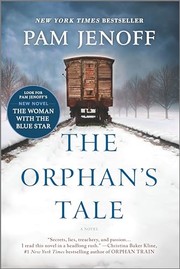
The Orphan's Tale
A Dutch teenager rescues a Jewish baby from a death train and joins a German circus, where a Jewish aerialist teaches her to fly.
2,943-word summary · 13 min read

The Shadow Sister
Star D'Apliese steps out of her sister's shadow and follows a bookshop clue into the Edwardian life of Flora MacNichol, a woman who gave up love for duty.
2,260-word summary · 10 min read

What the Wind Knows
Annie scatters her grandfather's ashes on Lough Gill and is pulled into 1921 Ireland, where she becomes the missing Anne Gallagher and falls for Dr. Thomas…
2,056-word summary · 9 min read

The Storm Sister
Ally D'Aplièse loses her father and her lover within weeks, then follows a brass frog and a Norwegian biography into Anna Landvik's music and the world of…
2,376-word summary · 11 min read
The War That Saved My Life
Ten-year-old Ada has never left her London flat, hidden away because of her clubfoot. Wartime evacuation sends her to Kent, where a reluctant guardian and a…
2,252-word summary · 10 min read

The Keeper of Happy Endings
Barbara Davis's 2021 standalone braids a Paris dressmaker's wartime losses with a grieving Boston artist who unlocks her family's secrets through an old row…
2,437-word summary · 11 min read

Anne's House of Dreams
Newlyweds Anne and Gilbert start in a seaside house with kind neighbors.
2,465-word summary · 11 min read
The Rules of Magic
Franny, Jet, and Vincent Owens test strict family rules and a love curse in 1960s Manhattan and Massachusetts in Alice Hoffman's warm prequel about love, loss,…
2,686-word summary · 12 min read

The Island of Missing Trees
A talking fig links 1970s Cyprus lovers Kostas and Defne with their grieving London daughter Ada years later.
3,172-word summary · 14 min read
The House at Riverton
In 1999, ninety eight year old maid Grace Bradley tapes the truth about a 1924 shooting at Riverton Manor, poet Robbie Hunter, two sisters and a lie held for…
2,433-word summary · 11 min read
Code Name Verity
In 1943 France, captured agent Verity writes a confession for von Linden to buy time. Her pilot friend Maddie survives the crash and searches for her by…
2,690-word summary · 12 min read

The Seven Sisters
Maia follows Pa Salt clue from Geneva to Rio and Christ the Redeemer.
2,210-word summary · 10 min read
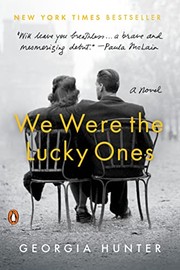
We Were the Lucky Ones
Based on her own family, Hunter follows the Kurc family of Radom as war scatters five siblings from Siberia to Brazil and back toward reunion.
2,805-word summary · 12 min read

The Henna Artist
In 1950s Jaipur, a henna artist to rich women rebuilds her life until the sister she never knew arrives.
2,104-word summary · 9 min read
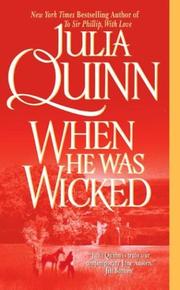
When He Was Wicked
Widowed Francesca Bridgerton falls for her late husband cousin Michael, who loved her silently for years.
2,055-word summary · 9 min read

The Things We Leave Unfinished
Georgia Stanton and Noah Harrison finish Scarlett's last novel while her WWII romance with pilot Jameson unfolds in letters. A dual timeline story of grief,…
2,565-word summary · 11 min read

The Fiery Cross
Jamie musters militia for Tryon while Brianna and Roger wed on the Ridge, ending at Alamance with a hanging that steals Rogers voice.
2,719-word summary · 12 min read