
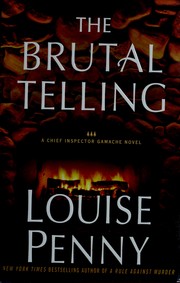
The Brutal Telling
2,287-word summary 10 min read 372 pages in the book
- First published
- 2009
- Publisher
- Minotaur Books
- Pages
- 372
- ISBN
- 9780312377038
- Series
- Chief Inspector Armand Gamache (#5)
Reading options
What's inside (8 sections)
I picked this one up expecting the usual Three Pines welcome, and finished it feeling as though I had been let into a room where everybody stopped talking when I entered. Published in 2009 by Minotaur Books, it is the fifth Chief Inspector Armand Gamache novel and the direct sequel to A Rule Against Murder. The first American edition runs 372 pages. It took the Agatha Award that year and the Anthony Award for Best Novel in 2010. The surprise, on a reread, is that the book is less interested in who swung the blow than in what happens to a village when one of its own has been lying for a very long time. What follows is the whole story, ending included.
A Body in the Bistro
The bistro in Three Pines is the village living room. Olivier Brulé runs it with his partner Gabri Dubeau, and in the earlier books it is the place where everybody eats, argues, and eventually tells the truth. Penny opens this novel by putting a corpse in the middle of that room.
A stranger has been beaten to death at a table. Beside him are a copy of Charlotte's Web, the remains of a meal, and one black feather. Nobody in the village recognizes him. His fingerprints match nothing, and he is carrying no identification. Gamache arrives from the Sûreté with Jean-Guy Beauvoir and Isabelle Lacoste, and the first problem is simply naming the dead man. The village closes in around the case the way villages do: everyone has an opinion, no one has a fact.
The timing matters. It is the end of summer, the leaves starting to turn, and the tourists have thinned out. Three Pines is itself again, which means the regulars are all present. Myrna Landers, who runs the bookstore, Ruth Zardo the poet, Clara and Peter Morrow, and the rest are in their usual places. That familiarity is what makes the next stretch uncomfortable. In a book that has trained us to find comfort in these people, the investigation starts pointing at one of them.
Olivier is the obvious suspect. The body was found in his restaurant. He has been seen near the victim. He answers questions badly, changes details, and seems more frightened of the police than an innocent man should be. Gamache, who has spent four books being patient with frightened people, is nevertheless struck by how many separate lies Olivier tells. The detective's habit is to offer new recruits four sayings that can lead to wisdom: I was wrong, I'm sorry, I don't know, I need help. Olivier can manage none of them.
The autopsy gives the Sûreté a blunt-force injury and very little else. There is no clear sign that the dead man fought back, which suggests he either knew the person who struck him or was not the sort to expect harm at a table in a restaurant. The villagers offer the police a wall of small courtesies. Food appears at the bistro. People repeat the dead man's nickname, the Hermit, as though a nickname were an answer. Gamache's method is to keep asking the same plain questions until the courtesies wear thin, and he is very good at waiting. The book's early chapters move slowly for a reason: everybody in Three Pines has had years of practice saying almost nothing.
The Man in the Cabin
The case turns when the dead man turns out to have lived deep in the woods, in a cabin that almost nobody knew about. He is mostly referred to as the Hermit, and the label is both accurate and unfair. He had built a life out there that was careful and strange. Searchers find valuable objects: old and beautiful books, carvings, and small treasures that someone had clearly spent a lifetime collecting. Among the books are first editions of Charlotte's Web and Jane Eyre, which is why the novel keeps circling back to children's literature and to the idea of a story told plainly enough to hurt.
The Hermit was not a Canadian by birth. In time Gamache learns that his name was Jakob and that he came from Czechoslovakia around the fall of the Berlin Wall. He had kept his treasures in Montreal before moving them into the cabin. That single biographical fact opens the historical layer of the book. Penny provisions the story with the kind of references she enjoys: the lost Amber Room, an Italian violin maker named Carlo Bergonzi, Haida totem poles, and the painter Emily Carr. They are not decoration. They are the vocabulary of Jakob's life, and eventually the vocabulary of his death.
The Amber Room was a room of amber panels taken from a Russian palace during the war and never recovered. Bergonzi was the name of a family of violin makers in Cremona. The Haida poles of the Queen Charlotte Islands were carved, collected, and carried away by outsiders for more than a century. Penny drops these names with the confidence of someone who expects the reader to look them up, and I did. The detour made Jakob's cabin feel less like a plot device and more like a man's attempt to hold on to a world that had taken everything else from him.
I have to admit this part of the book tested me on first reading. A murder mystery that pauses to discuss violin makers and a Canadian painter can feel like a lecture wearing a detective's coat. But the objects matter to the plot in a concrete way, because Jakob was not simply hoarding them. He was using them to say something, and the person he was saying it to was Olivier.
Codes, Carvings, and Charlotte
The carvings are the puzzle inside the puzzle. They are wooden pieces in the style of the poles Emily Carr painted on the Queen Charlotte Islands, and each one has a code carved into its base. Gamache works at the codes the way he works at most things, patiently and with other people's help, and eventually the key turns out to be the number sixteen. What emerges are the names Emily and Charlotte. The carvings, laid out in order, are telling a story, but nobody can yet say whose story or why it ends where it does.
Olivier's relationship with the Hermit is the messiest thread. He knew Jakob. He visited the cabin. He was given carvings, and he sold some of them online, which is a small crime that becomes a big one the moment a dead body is involved. He lied to the police about what he did with them, twice. He also admitted, when Gamache finally pushed him hard enough, that he was the one telling Jakob the story of the carvings. Jakob was afraid of something, and Olivier made up a tale to keep him frightened and isolated.
That admission is the moral center of the book. A brutal telling, Clara explains at one point, is something said to you that you cannot unhear. The phrase comes from Emily Carr, who was estranged from her father because of something unforgivable he said to her. Penny lets the phrase migrate from art history into the investigation until it is describing Olivier's behavior toward Jakob, and then, quietly, the behavior of several other people in the village. Gamache loses his temper with Olivier, pounds the table, and demands the truth, which is startling because he almost never does that. When he says afterward that he does not believe Olivier murdered Jakob but does believe Olivier has killed, the distinction is the whole book in one line.
The Hadley House
A second location pulls the investigation away from the cabin. The old Hadley house has been bought and turned into a spa by Marc and Dominique Gilbert, and the arrival of outsiders gives Penny a way to show the village from without. Marc Gilbert is the man who finds the body after Olivier moves it. That detail is important and easy to miss: Olivier did not leave Jakob where he died. He went back to the cabin, found the man dead, and dragged the body to the Hadley property so that someone else would discover it. He also took a menorah, a heavy ritual object that had been used to strike the blow, because his fingerprints were all over it.
The weapon turns up much later, hidden in the bistro fireplace along with a sack containing the last carving, the one Olivier had never seen. By then the case against him looks very bad indeed. He has concealed a body, hidden a weapon, sold stolen goods, and lied repeatedly. He has also, by his own account, kept a frightened old man frightened on purpose. Gabri, who knows him best, keeps insisting that Olivier could not have killed anyone, and the insistence becomes harder to hear as the evidence stacks up.
The Gilberts and the Parras, another family with a connection to the cabin, cycle through the investigation as possible suspects. Vincent Gilbert, who has been drifting through the series, ends up deciding to live in Jakob's cabin. That choice reads as a small act of atonement or perhaps just a man looking for a place to be, and Penny does not explain it too neatly.
Clara, Peter, and the Other Wounds
Penny runs a parallel story through Clara Morrow's career, and it is one of the sharper things in the book. Clara is an artist whose work is finally getting attention. A man named Fortin tells her she needs to reconsider her upcoming show, and her husband Peter, asked for advice, is slow to give it. When he finally suggests she speak to Fortin directly, she does, and Fortin says exactly what Peter seems to have expected: that the show may not happen. The scene is less about one rival artist than about a marriage in which a husband can quietly undermine his wife while keeping his hands clean. You do not need to like Peter to feel how carefully Penny sets the trap.
Myrna's advice to Clara is simpler and steadier: she would have said nothing either. The bookstore owner understands that some advice is another form of interference. Later, Therese Brunel contacts Clara, and there is a chance the show might still go ahead, which is the book's small merciful gesture toward the woman who has been most patient with everyone else's crises.
Ruth Zardo's duck Rosa, a running joke and then a genuine fixture of the series, takes flight at the end. Gabri is with Ruth when it happens. It is a strange note to close on after an arrest, but Penny has always trusted animal behavior to say what her people cannot. The duck leaves, the bistro stays open, and the village has changed without anything visible about it changing.
What It Does to Three Pines
The book ends with Olivier in custody and Gamache unconvinced. I want to be careful here, because the settlement of this case belongs to the next novel, Bury Your Dead, and this one deliberately stops short of it. What The Brutal Telling does resolve is the question of what the village has become. A Rule Against Murder took Gamache away from Three Pines and showed that the world outside was cold. This book brings him home and shows that home is not simple either. Readers who came for the gentle version of the series were right to notice the change.
It helps to read this one back to back with Bury Your Dead, where Gamache leaves Three Pines for Quebec City and is drawn back into the Jakob case. The two novels argue with each other about loyalty: whether protecting a friend is the same as betraying the truth, and whether a detective who loves a village can still do his job there. On its own, the fifth book can feel unfair to Olivier. Paired with the sixth, it looks more like the first half of a hard conversation Penny wanted her readers to have.
The craft is mostly excellent. Penny is very good at the way a small kindness can be corrupted by being repeated for the wrong reason, and Gabri's kitchen, where he spends the whole crisis putting up jars of preserves, is the best thing in the book. The man cannot stop sealing things in glass while his partner's life comes apart, and the image does more work than a page of explanation would. The dialogues between Gamache and Olivier have a real edge to them, and the detective's rare flash of anger lands because we have seen him hold it back so often.
What drags is the density of the art-history material. The codes on the carvings take a long time to pay off, and when the answer arrives it is more interesting as a clue about Jakob's state of mind than as a step toward the killer. The Gilbert and Parra households add noise rather than suspicion. And ending with the central murder unresolved is a gamble that pays off only if you keep reading immediately; on its own, the book feels interrupted.
That interruption is also what makes it memorable. This is the book where Penny decided that Three Pines could contain something uglier than a dead body, namely a friend who has been lying to protect someone and a husband who knows exactly which words will wound. I closed it less eager to solve the puzzle than to find out whether the village could survive what it had just learned about itself. On that question, the author keeps her cards close, which is more than I can say for Olivier.
FAQ
Is The Brutal Telling part of the Gamache series?
Yes. It is Chief Inspector Armand Gamache book five, after A Rule Against Murder and before Bury Your Dead, and it returns to Three Pines.
Does this book solve the murder by the last page?
No. Olivier Brulé is arrested, but Gamache remains unconvinced and the case is resolved in the next novel, Bury Your Dead.
What does the title mean?
It comes from Emily Carr's estrangement from her father over something unforgivable he said to her, and it describes how Olivier used a made-up story to keep Jakob isolated and afraid.
Similar books
More from Chief Inspector Armand Gamache first, then related titles.

Still Life
A beloved teacher found with an arrow in Three Pines looks like hunting accident until Gamache looks closer.
1,996-word summary · 9 min read
A Fatal Grace
Gamache returns to Three Pines for Christmas where hated CC de Poitiers is electrocuted on a frozen lake.
2,339-word summary · 10 min read
The Cruelest Month
Gamache returns to Three Pines where a seance ends in murder.
2,529-word summary · 11 min read
A Rule Against Murder
Gamache's anniversary at a remote lodge turns into a closed-circle murder when the family statue kills Julia, and everyone at the Manoir had a reason.
2,201-word summary · 10 min read
Bury Your Dead
Recovering from a failed raid that killed his officers, Gamache investigates a murder in a Quebec City library while Beauvoir reopens a case in Three Pines.
2,022-word summary · 9 min read
A Trick of the Light
In the seventh Gamache novel, a woman is found dead in Clara Morrow's garden after her first solo show, and the case leads back through old reviews, AA amends,…
2,200-word summary · 10 min read
The Beautiful Mystery
In a cloistered Quebec monastery, a chant-singing monk is murdered and Gamache must break a vow of silence to find the killer. Eighth in the Chief Inspector…
2,262-word summary · 10 min read

How the Light Gets In
Gamache investigates the murder of the last Ouellet quintuplet while the Sûreté he served is dismantled from inside by the man who took his protégé.
2,279-word summary · 10 min read
The Last Coyote
On stress leave, Harry Bosch reopens the unsolved murder of his mother, a prostitute strangled when he was twelve, and finds corruption reaching the DA's…
2,069-word summary · 9 min read
The Keeper of Lost Causes
Jussi Adler-Olsen introduces Carl Mørck and Department Q, a Copenhagen cold-case unit in a basement, and a missing politician whose file refuses to stay closed.
2,759-word summary · 12 min read

The Ice Princess
Camilla Läckberg's debut follows writer Erica Falck and detective Patrik Hedström as a frozen bathtub in a small Swedish town unravels a secret kept for…
2,321-word summary · 10 min read

The Girl in the Ice
A young socialite is found frozen beneath the ice in a south London park, and DCI Erika Foster returns to work to lead the case. Grief, privilege and three…
2,492-word summary · 11 min read

The Fix
Amos Decker watches a government contractor shoot a teacher outside FBI headquarters, then turn the gun on himself. The DIA wants the case shut.
2,315-word summary · 10 min read
The Secret Place
Two Dublin detectives revisit a murder on the grounds of a girls' boarding school, where a bulletin board note and rival cliques hide the truth.
2,271-word summary · 10 min read

The Black Ice
Harry Bosch works a Christmas-night death the Robbery-Homicide Division does not want him near, and the trail runs from a dead cop to a drug operation across…
2,399-word summary · 11 min read
Nightshade
Connelly launches Detective Stilwell on Catalina Island, where a beheaded buffalo and a Jane Doe in the harbor pull a quiet sheriff's post into violence and…
2,272-word summary · 10 min read
Hallowe'en Party
A girl boasts she once saw a murder, then drowns in an apple-bobbing bucket. Poirot investigates both the claim and the killing.
2,232-word summary · 10 min read

The Trespasser
A Dublin Murder Squad detective investigates a staged dinner-party killing and finds a cover-up that reaches into her own department.
2,051-word summary · 9 min read

Rules of Prey
Minneapolis detective Lucas Davenport hunts a killer who leaves a new rule at every scene and treats murder as a game of wits.
1,914-word summary · 9 min read

The Late Show
Exiled to the LAPD night shift after accusing her supervisor, Renée Ballard keeps two cases that were meant to be handed off at dawn: a brutal assault and a…
2,563-word summary · 11 min read
The Last Mile
Melvin Mars is hours from execution for his parents' murder when another man confesses, and FBI cold case detective Amos Decker goes looking for the trap.
2,746-word summary · 12 min read

Worth Dying For
Reacher stops for one night in rural Nebraska and finds a family that runs the county, a missing girl and a shipment worth killing for.
2,021-word summary · 9 min read

Say You're Sorry
A widowed prosecutor defends the teenager accused of killing her babysitter, uncovering a small town's secrets and a killer hiding in plain sight.
2,116-word summary · 9 min read
The Survivors
Kieran Elliott returns to Evelyn Bay twelve years after a storm killed his brother, and a young woman's murder forces the town to face what it has concealed.
2,571-word summary · 11 min read

Men at Arms
The City Watch gets new recruits and a murder case when the Disc's only handgun turns up in Ankh-Morpork, in the fifteenth Discworld novel.
2,216-word summary · 10 min read
Triptych
A GBI agent with dyslexia hunts a rapist while two Atlanta cops hide pasts.
2,576-word summary · 11 min read
Blindsighted
Sara and Jeffrey hunt a killer staging women in small-town Georgia.
2,400-word summary · 11 min read
At Bertram's Hotel
Miss Marple finds a luxury hotel fronting robbery and murder.
2,550-word summary · 11 min read
The Bat
Oslo detective Harry Hole aids Sydney police after a young Norwegian woman is murdered and finds a wider pattern. Grief, drink, and a lost partner shape the…
2,766-word summary · 12 min read
Memory Man
Amos Decker, a detective who cannot forget, hunts the link between his family murder and a school shooting.
2,931-word summary · 13 min read